A single leaking toilet in your Phoenix home can waste up to 6,000 gallons of water per month—enough to fill a backyard swimming pool—while silently driving up your water bill by $70 or more each month. With Arizona’s water hardness exceeding 200 ppm and extreme desert climate, toilet leaks develop faster here than almost anywhere in the United States.
Most Phoenix homeowners don’t realize their toilet is leaking until they receive a shocking water bill or notice their water meter spinning even when no water is being used. Arizona’s exceptionally hard water (14.9 grains per gallon in Phoenix) accelerates the deterioration of toilet flappers and fill valves, causing leaks that can go undetected for months. Whether you manage a commercial property with multiple toilets or own a residential home in Maricopa County, understanding how to detect toilet water waste is essential for protecting both your budget and Arizona’s precious water resources.
Key Information
If you’re experiencing unexpectedly high water bills or suspect your toilet might be leaking, the simple dye test provides immediate answers. Drop 10-15 drops of food coloring into your toilet tank, wait 15 minutes without flushing, and check if any color appears in the bowl. Color transfer confirms a leak that could be wasting 200-400 gallons daily.
Phoenix’s 200+ ppm hard water causes toilet components to fail 30-50% faster than the national average. Flappers typically last just 2-3 years in Arizona homes compared to 5-7 years in soft water regions. The EPA WaterSense program estimates that 10% of homes waste over 90 gallons daily from toilet leaks alone, with average household leaks wasting 10,000 gallons annually.
As licensed Arizona plumbing contractors with over 20 years serving Phoenix, Glendale, Peoria, and surrounding Maricopa County communities, Rapid Fire Plumbing has diagnosed and repaired thousands of toilet leaks in both residential homes and commercial facilities including hospitals, schools, and government buildings. Understanding how to detect these leaks early can save you hundreds of dollars while protecting Arizona’s water supply.
Overview
This comprehensive guide provides Phoenix-area homeowners and commercial property managers with authoritative information you won’t find in generic plumbing articles. Unlike national content written by general contractors, this resource is developed by Arizona ROC-licensed dual commercial/residential plumbers who have installed and repaired toilet systems in everything from single-family homes in Surprise to multi-unit facilities at Phoenix hospitals and government buildings.
You’ll learn professional detection methods used by licensed contractors, understand how Phoenix’s 200+ ppm hard water affects toilet components differently than national averages, and receive transparent cost information for both DIY repairs and professional service. This guide also covers current Arizona code compliance requirements, City of Phoenix water conservation rebates worth up to $200 per toilet, and provides clear guidance on when to attempt repairs yourself versus when to contact a licensed professional.
By understanding Arizona-specific water conditions and climate challenges, you’ll be able to confidently detect toilet leaks, make informed decisions about repairs versus replacement, and access conservation programs designed specifically for Phoenix residents. If you discover a leak requiring immediate attention, Rapid Fire Plumbing provides 24/7 emergency service throughout Maricopa County at 623-810-6166.
5 Proven Methods Licensed Phoenix Plumbers Use to Detect Toilet Leaks
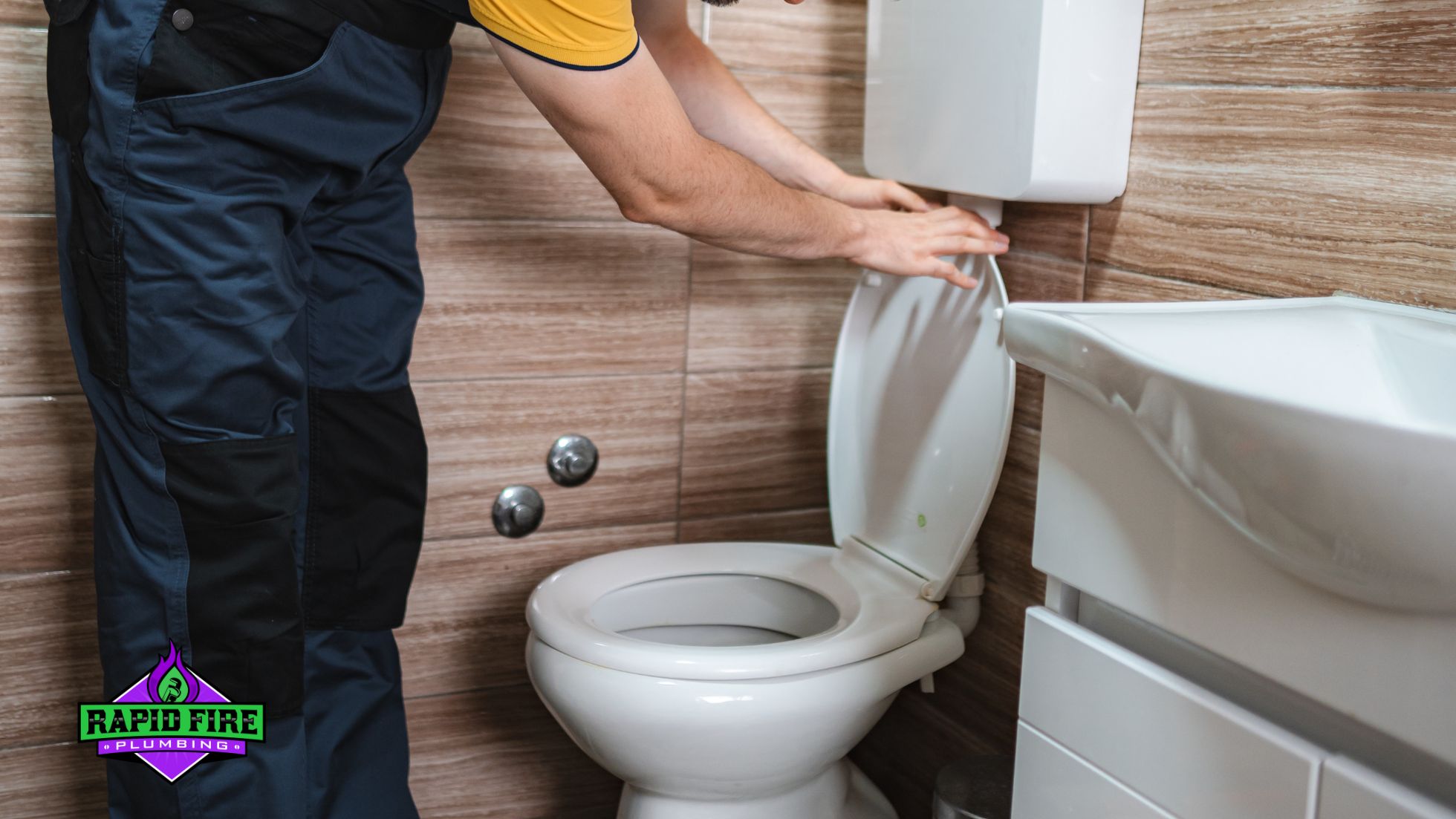
Professional leak detection combines multiple assessment methods to identify even the smallest water waste. These field-tested techniques help Phoenix homeowners catch leaks before they waste thousands of gallons or cause water damage.
The Dye Test Method (Most Reliable for Silent Leaks)
The dye test remains the most accurate method for detecting silent toilet leaks that produce no audible sounds. Add 10-15 drops of food coloring to your toilet tank—not the bowl—and wait 15 minutes without flushing. If any color appears in the bowl, you have a leak requiring attention.
This method works because it reveals flapper valve leaks that can waste 30-300 gallons daily. Phoenix’s low humidity means dye won’t evaporate quickly, providing ideal test conditions year-round. Any color transfer within 15 minutes confirms a leak, while immediate color appearance (under 2 minutes) indicates severe flapper failure.
Consider repeating the test 2-3 times over 24 hours to catch intermittent leaks common with hard water mineral buildup. Phoenix’s 200+ ppm water hardness creates calcium deposits on flapper seats that may seal temporarily but leak intermittently as water pressure fluctuates.
Listen for Continuous Running Water Sounds
Between flushes, your toilet should remain completely silent. Listen for hissing from the fill valve, trickling water sounds, or periodic refilling known as “phantom flushes” that indicate water slowly leaking from tank to bowl.
Phoenix’s hard water mineral deposits create unique whistling or screeching sounds as water passes through partially clogged fill valves. These sounds differ from normal post-flush tank refilling and signal components requiring replacement.
In commercial facilities with multiple toilets, you might need to isolate which fixture is leaking by shutting off water supplies individually. Sounds may be harder to detect during monsoon season (July-September) due to ambient noise from storms and air conditioning systems running constantly in Phoenix’s extreme heat.
Visual Inspection of Water Movement in Bowl
Watch for water ripples or movement in the bowl when no one has touched the toilet. Mark the water line with a pencil on the bowl interior, then check after 1 hour of no use to see if the level has dropped.
Phoenix summer temperatures exceeding 110°F do cause some evaporation, so level drops under 1/4 inch may be normal. Larger drops indicate active leaks. Lift the tank lid and observe if water runs down the overflow tube or if the flapper fails to seat properly.
Hard water creates distinctive white or brown mineral rings where water contacts porcelain. These rings indicate buildup affecting the seal between flapper and flush valve. In Arizona homes without water softeners, mineral accumulation becomes visible within 18-24 months of toilet installation.
Check Your Water Meter for Leak Confirmation
Your water meter provides definitive proof of leaks anywhere in your plumbing system. Turn off all water sources in your home or facility, locate your meter (typically near the street or property line), and observe the dial or digital readout for 30-60 minutes.
Any meter movement with all water off confirms a leak. According to EPA data, toilets cause 30% of household leaks. Most Maricopa County homes have digital LCD meters where one complete dial rotation equals 1 gallon.
Calculate leak size by counting rotations per hour, multiplying by 24 hours, then by 30 days to estimate monthly waste. Commercial properties may need submeter testing to isolate specific restroom zones. The City of Phoenix Water Services provides free meter testing to verify accuracy when high bills are suspected.
Analyze Your Phoenix Water Bill for Usage Spikes
A 20% or greater increase in month-over-month water usage without corresponding changes in household activities strongly suggests a leak. Phoenix’s tiered water rate structure means leaks become exponentially more expensive as usage pushes into higher pricing tiers.
Phoenix homes typically use more water May-September for irrigation and evaporative cooling. Compare current bills to the same period last year rather than the previous month. Toilet leaks create consistent daily usage increases unlike irrigation spikes that occur only on watering days.
Commercial properties managing multiple units should monitor per-unit usage to identify problem locations quickly. A moderate toilet leak wasting 200 gallons daily adds 6,000 gallons monthly. At Phoenix’s average water rate of $4.05 per 1,000 gallons, that’s $24.30 monthly or $291.60 annually in wasted water costs alone.
The 7 Most Common Causes of Toilet Leaks in Phoenix (Hard Water Impact)
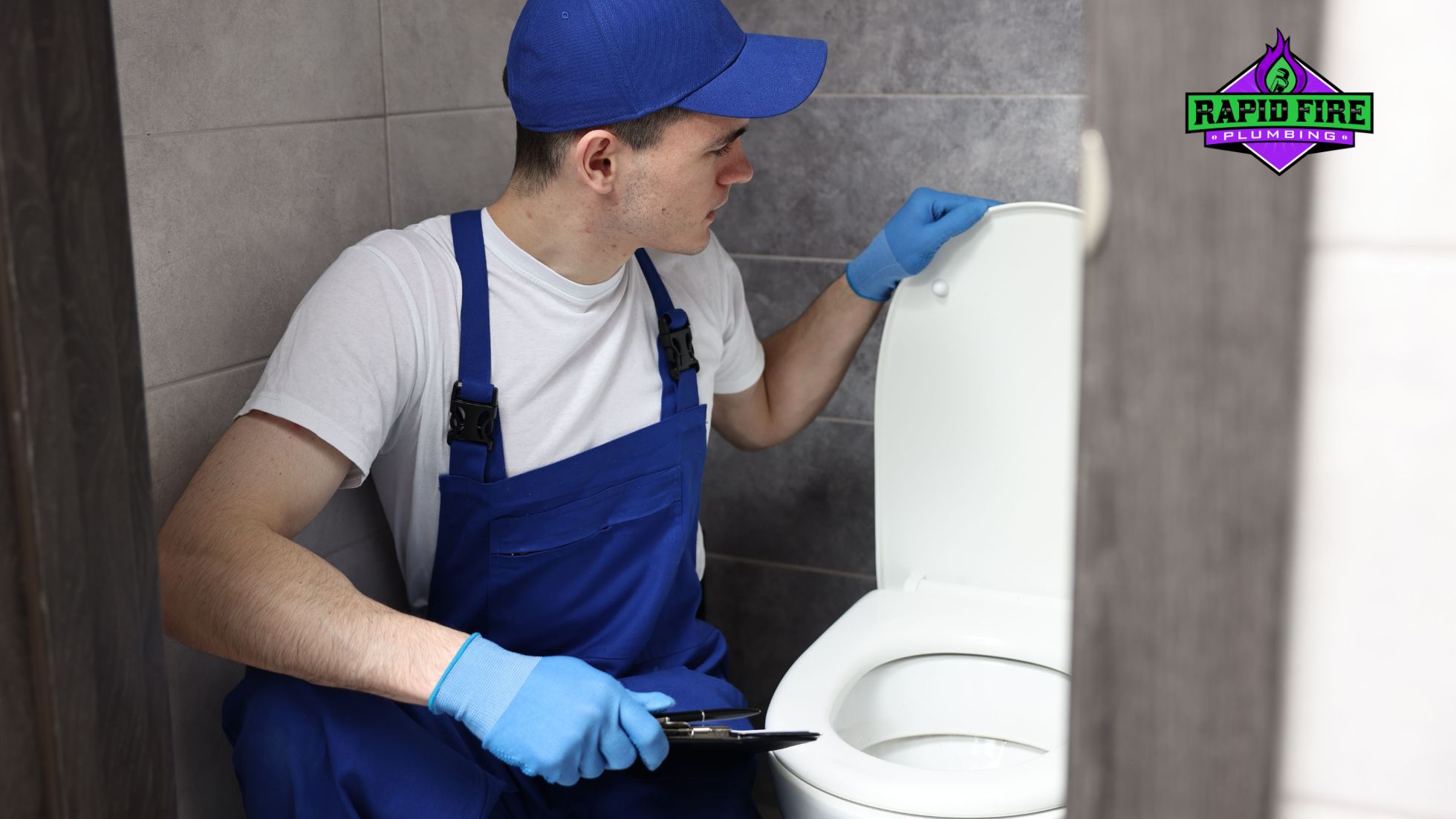 Phoenix’s 200+ ppm water hardness accelerates toilet component deterioration significantly faster than national averages. Understanding these Arizona-specific failure patterns helps homeowners recognize problems early and make informed repair decisions.
Worn Flapper Valve (Most Common – 80% of Toilet Leaks)
The rubber or silicone flapper seals the flush valve opening at the bottom of your tank. When you flush, it lifts to release water, then settles back to stop flow. In Phoenix’s hard water, mineral deposits prevent proper seating while chlorine and minerals deteriorate rubber in just 2-3 years compared to 4-5 years nationally.
Visual inspection reveals flappers feeling slimy or coated with minerals, visible buildup on edges, or rubber showing cracks and brittleness. A failed flapper can leak 30-200 gallons daily yet costs only $5-$20 to replace as a DIY-friendly repair.
Consider replacing flappers every 2 years in Phoenix homes as preventive maintenance. Silicone flappers rated for hard water last approximately twice as long as standard rubber versions. This simple maintenance prevents leaks before they waste hundreds or thousands of gallons.
Defective Fill Valve (Mineral Buildup Causes Continuous Running)
The fill valve automatically refills your tank after flushing to a preset water level. Phoenix’s 200+ ppm calcium and magnesium content clogs the valve mechanism over time, preventing proper shutoff. You’ll hear continuous hissing, observe water temperature feeling warm from constant flow, or see water overflowing into the overflow tube.
A stuck-open fill valve wastes 200-400 gallons daily. Arizona homeowners should expect fill valve replacement every 3-4 years compared to 7-10 years in soft water regions. Replacement costs $15-$30 for DIY repairs or $150-$250 for professional installation.
High-traffic commercial facilities like schools and hospitals may need annual fill valve replacement due to frequent cycling combined with hard water exposure. Mineral-resistant valves designed specifically for hard water conditions extend service life in Phoenix’s challenging water environment.
All timelines and service cost ranges are provided for general information only. Actual service duration and costs will depend on the specific plumbing issues, project complexity, scheduling availability, and agreed-upon scope of work as set forth in the written service agreement.
Overflow Tube Deterioration (Sediment Accumulation)
The overflow tube prevents tank overfill by directing excess water to the bowl. Phoenix’s mineral-heavy water creates sediment that narrows tube diameter over time, causing water to trickle continuously. White crusty buildup inside the tube becomes visible when inspecting the tank interior.
If water level in your tank touches or exceeds the overflow tube top, adjustment is needed. Cleaning with vinegar solution quarterly helps prevent buildup, but tubes narrowed by 30% or more require professional replacement. According to Phoenix’s 2024 Uniform Plumbing Code adoption, fixture maintenance provisions include sediment management requirements.
Corroded Flush Handle and Chain Mechanism
The handle and chain connect to your flapper, lifting it when you flush. When chains tangle or become slack, or handles stick in partial-flush position, the flapper stays slightly open. Phoenix’s mineral-rich water corrodes metal chains faster than in soft water areas, with visible corrosion appearing in just 5-7 years.
Symptoms include handles requiring jiggling to stop water flow or chain tangling that prevents complete flapper closure. This moderate leak wastes 50-100 gallons daily but represents the easiest DIY repair at $5-$10 for replacement parts.
Plastic-coated chain alternatives resist corrosion better than bare metal in hard water environments. After 20+ years servicing Phoenix toilets, licensed contractors observe handle corrosion in as little as 5 years in homes without water softeners.
Cracked Tank or Bowl (Thermal Stress from Extreme Heat)
Phoenix’s extreme climate creates unique stress on porcelain fixtures. Summer days exceeding 110°F followed by 70°F nights cause expansion and contraction cycles that crack older toilets. Hairline cracks leak slowly (10-30 gallons daily) while through-cracks leak rapidly, wasting hundreds of gallons.
Detection methods include water pooling at the toilet base, visible crack lines found during flashlight inspection, or tank and bowl water levels dropping noticeably. Phoenix’s hard water mineral deposits can temporarily seal small cracks, which then fail suddenly as deposits dissolve or dislodge.
Cracks require complete toilet replacement as repair attempts fail in over 90% of cases. Rapidly expanding cracks constitute plumbing emergencies. Shut off the water supply valve behind the toilet immediately and contact emergency plumbing service at 623-810-6166 to prevent water damage to flooring and subfloors.
Sediment Buildup in Tank Bottom (Phoenix Water Quality Issue)
Phoenix water’s 200+ ppm dissolved minerals settle as calcium and magnesium sediment on tank bottoms. This gritty brown or white material prevents flappers from seating fully, clogs fill valve inlets, and corrodes metal components through constant contact.
Homes without water softeners accumulate 1/4 inch or more of sediment in just 2-3 years. Annual tank flush-out removes buildup before it affects performance. According to Arizona Department of Health Services water quality reports, Phoenix water hardness consistently exceeds 200 ppm (14.9 grains per gallon).
Commercial facilities with multiple toilets require quarterly tank maintenance to prevent sediment-related failures in high-use environments. Water softener installation reduces sediment accumulation by 70% or more by removing minerals before they enter fixtures.
Improper Toilet Installation (Code Compliance Issues)
Common installation errors include incorrect wax ring seals, loose bolts allowing toilet rocking, or over-tightened supply lines. These mistakes manifest as base leaks from failed wax rings, tank-to-bowl leaks from deteriorated rubber gaskets, or supply line leaks at connections.
Phoenix’s 2024 International Plumbing Code requires permits for new toilet installations in some municipalities. DIY installation risks include improperly installed toilets failing 2-3 times faster than professional installations, with water damage repairs potentially costing $2,000-$10,000 when leaks go undetected.
According to Arizona Registrar of Contractors regulations, only licensed plumbers holding CR-37 or R-37 credentials can perform permit-required plumbing work. Verify contractor credentials at azroc.gov before hiring to ensure code-compliant installation protecting your investment.
All timelines and service cost ranges are provided for general information only. Actual service duration and costs will depend on the specific plumbing issues, project complexity, scheduling availability, and agreed-upon scope of work as set forth in the written service agreement.
The True Cost of Toilet Leaks in Phoenix: Water Waste and Bill Impact
Understanding the financial impact of toilet leaks helps Phoenix homeowners prioritize repairs appropriately. Arizona’s tiered water rate structure means leaks become exponentially more expensive as usage increases.
Water Waste by Leak Severity
Slow or minor leaks from slight flapper wear waste 30-50 gallons daily, totaling 900-1,500 gallons monthly. At Phoenix’s average water rate of $4.05 per 1,000 gallons, this costs $3.65-$6.08 monthly or $44-$73 annually. Dye tests remain positive after 15 minutes, but no audible sounds occur. Consider scheduling repair within 2 weeks.
Moderate leaks from failed flappers or fill valve issues waste 200 gallons daily, reaching 6,000 gallons monthly. This costs $24.30 monthly or $291.60 annually. You’ll hear audible running water or notice phantom flushes every 30-60 minutes. Schedule repair within 3-5 days to prevent costs from escalating.
Severe leaks from completely failed components waste 400+ gallons daily, exceeding 12,000 gallons monthly. Costs reach $48.60 or more monthly—over $583 annually. Constant loud running water and tanks that never stop filling characterize severe leaks. Emergency repair is recommended to prevent water damage. Contact 24/7 service at 623-810-6166 for immediate response.
All timelines and service cost ranges are provided for general information only. Actual service duration and costs will depend on the specific plumbing issues, project complexity, scheduling availability, and agreed-upon scope of work as set forth in the written service agreement.
Phoenix Water Rate Tier Structure (Why Leaks Cost More)
The City of Phoenix uses tiered pricing to encourage conservation. Tier 1 (0-5,000 gallons) applies base rates, Tier 2 (5,001-10,000 gallons) adds approximately 20% premium, and Tier 3 (10,000+ gallons) adds roughly 35% premium to water costs.
Moderate or severe toilet leaks push household usage into higher tiers exponentially, increasing costs. A Phoenix home using 8,000 gallons monthly (Tier 2) with a 200 gallon-daily toilet leak adds 6,000 gallons, pushing total usage to 14,000 gallons (Tier 3). Instead of paying $32.40, the bill jumps to $56.70—a 75% increase from a single toilet leak.
Summer irrigation combined with toilet leaks can double typical bills as both water uses push households into Tier 3 pricing. Commercial properties face different rate structures, with high-volume users like hotels and hospitals paying premium rates that make toilet leaks extremely expensive for business operations.
Environmental Impact (Arizona’s Water Crisis Context)
Arizona receives 36% of its water supply from the declining Colorado River, with Lake Mead at historic lows and federal shortage declarations in effect. Phoenix metro’s rapid population growth strains water resources while the region works to reduce per capita consumption.
The EPA estimates that 10% of Phoenix homes waste 90+ gallons daily from leaks, affecting approximately 170,000 households. If each fixed leaks saving 10,000 gallons yearly, collective savings would reach 1.7 billion gallons annually. Phoenix has already reduced per capita water use by 30% since 2007 through conservation programs administered by City of Phoenix Water Services.
Fixing a moderate toilet leak saves 6,000 gallons monthly (72,000 gallons annually per toilet). Upgrading to WaterSense toilets saves an additional 13,000 gallons yearly compared to older 3.5 gallon-per-flush models. Combined savings of 85,000 gallons yearly equals enough water to fill 2.5 residential swimming pools.
The Arizona Department of Water Resources oversees statewide groundwater management under the 1980 Groundwater Management Act. Conservation remains critical to long-term water security for Phoenix and all Arizona communities facing ongoing drought conditions.
Can You Fix It Yourself? Honest Guidance from Arizona ROC-Licensed Plumbers
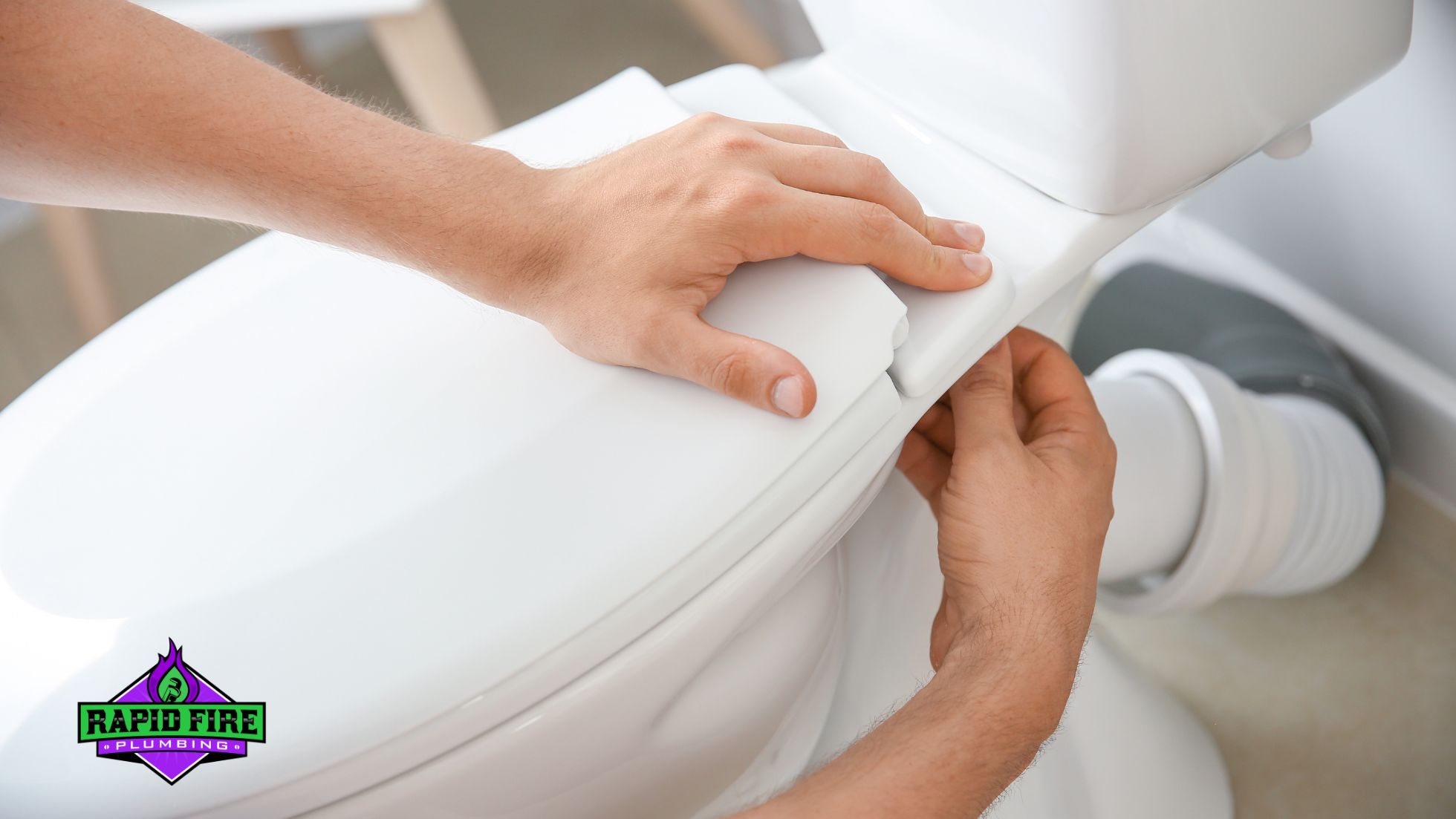 Making informed decisions about DIY repairs versus professional service protects both your budget and your home. Honest assessment of homeowner capabilities combined with Arizona-specific considerations helps you choose the right approach.
DIY-Friendly Repairs (When You Can Save Money)
Flapper replacement represents the easiest DIY repair with an 85% success rate for homeowners. This task requires no plumbing experience, takes 15-30 minutes, and costs $5-$20 for parts available at any hardware store. No tools are needed as flappers attach by hand.
Shut off the water supply valve behind your toilet, flush to empty the tank, unhook the old flapper from the chain and overflow tabs, install the new flapper, then test. In Phoenix’s hard water environment, choose silicone flappers specifically rated for hard water as they last approximately twice as long as standard rubber versions.
Consider calling a professional if the flapper seat (flush valve opening) shows corrosion or damage. A new flapper alone won’t fix leaks when the seat itself is damaged and requires specialized tools to repair or replace.
Fill valve replacement requires moderate DIY skill with approximately 60% success rate. This intermediate task takes 45-90 minutes, costs $15-$30 for parts, and requires an adjustable wrench, bucket, and towels. Choose mineral-resistant fill valves like Fluidmaster 400 series designed for Phoenix’s 200+ ppm water conditions.
Instructions include shutting off supply, disconnecting the supply line, removing the old valve, installing the new valve at the manufacturer’s specified height, reconnecting the supply, and adjusting the float. If supply line connections leak, tank-to-bowl bolts need replacement, or water pressure issues arise during installation, contact a licensed professional to prevent water damage.
Flush handle and chain adjustments offer the simplest DIY repair with 95% success rate. This beginner-level task takes 5-10 minutes, costs $5-$10 for parts, and requires no tools or possibly a basic screwdriver. Adjust chain length to allow 1/4 inch slack and ensure the handle returns to neutral position after flushing.
Replace corroded metal chains with plastic-coated versions that resist Phoenix’s hard water corrosion better. These simple repairs don’t require permits under Phoenix’s 2024 International Plumbing Code as they constitute routine maintenance rather than plumbing system modifications.
All timelines and service cost ranges are provided for general information only. Actual service duration and costs will depend on the specific plumbing issues, project complexity, scheduling availability, and agreed-upon scope of work as set forth in the written service agreement.
When Licensed Professional Required (Arizona Code and Safety)
Complete toilet replacement in remodels or bathroom additions requires permits in Phoenix. Changing fixture count by adding toilets where none existed, moving toilet locations that require drain line modifications, and commercial installations in public buildings all mandate licensed contractor involvement.
According to Arizona Registrar of Contractors regulations, only ROC-licensed plumbers holding R-37, C-37, or CR-37 credentials can pull plumbing permits. Unlicensed work voids permits and insurance coverage while potentially affecting home resale value. Verify contractor licenses at azroc.gov before hiring to ensure code compliance.
Complex repairs beyond DIY capability include cracked toilets requiring complete replacement, wax ring replacement that requires toilet removal where improper installation causes floor damage, and tank-to-bowl leaks needing precise bolt and gasket reassembly. Supply line replacement at wall connections risks significant water damage if connections fail.
Phoenix’s hard water creates additional complications including severely corroded flush valve seats requiring professional reseating tools, mineral-locked tank-to-bowl bolts that often break during removal requiring professional extraction, and sediment-clogged supply lines needing line replacement with proper pressure regulation.
Visible water damage at the toilet base may indicate subfloor rot requiring assessment beyond plumbing repairs. Multiple simultaneous toilet issues suggest systemic plumbing problems needing diagnostic expertise. Toilets 20+ years old may not meet current Phoenix water efficiency codes and require professional evaluation for replacement versus repair decisions.
True Cost Comparison (Phoenix Market Rates 2024-2025)
DIY toilet repairs cost $5-$20 for flappers, $15-$30 for fill valves, or $35-$50 for complete repair kits including flapper, fill valve, and supply line. However, DIY carries risk costs if incorrect installation causes water damage, with professional repairs of water damage often ranging $500-$5,000.
Professional licensed plumber costs in the Phoenix market include service call and diagnosis incorporated into repair quotes for transparent pricing. Flapper replacement typically costs $125-$175 including parts, labor, testing, and warranty. Fill valve replacement runs $175-$250 with complete parts, labor, adjustment, and warranty coverage.
Complete toilet replacement costs $350-$650 for standard efficiency toilets including installation and haul-away of old units. WaterSense high-efficiency toilet installation ranges $450-$800, qualifying for City of Phoenix $200 rebates when installed by licensed contractors. Emergency service adds $50-$100 premium for after-hours or weekend response, available 24/7 at 623-810-6166.
Professional service includes Arizona ROC-licensed contractors with CR-37 dual commercial/residential credentials, 20+ years Phoenix-area experience with hard water conditions, transparent upfront pricing without hidden fees, and the “beat any quote” guarantee. Workmanship warranties cover repair failures, proper disposal handles old components, and code-compliant installation protects resale value and insurance coverage.
According to Angi 2024 data, Phoenix-area toilet repairs average $150-$375 with emergency plumbers ranging $300-$1,400 depending on timing. If DIY flapper replacement fails and causes water damage requiring professional repair, total costs often exceed $500-$1,000. Professional repair at $150 eliminates risk and potentially saves $350-$850 in damage costs.
All timelines and service cost ranges are provided for general information only. Actual service duration and costs will depend on the specific plumbing issues, project complexity, scheduling availability, and agreed-upon scope of work as set forth in the written service agreement.
Rapid Fire Plumbing’s Honest Recommendation
Consider attempting DIY repairs first if your leak clearly relates to the flapper (dye test positive with no other symptoms), your toilet is under 10 years old with less mineral buildup, you have basic mechanical confidence, the situation isn’t urgent allowing time for parts and attempts, and you accept the risk of potentially needing professional backup.
Contact a licensed professional if the leak source remains unclear after inspection, multiple symptoms appear simultaneously like running water combined with base leaks and overflow, your toilet exceeds 15 years old likely indicating multiple failing components, you’ve attempted DIY without success, water damage is visible or suspected, time is critical due to high water bills or commercial property impact, or permits are required for your project scope.
Contact 24/7 emergency service at 623-810-6166 if severe leaks waste 400+ gallons daily, water pools around the toilet base creating damage risk, commercial properties face customer or tenant impact, water bills doubled month-over-month, or multiple toilets fail simultaneously suggesting systemic problems.
As a family-owned Phoenix business for over 20 years, Rapid Fire Plumbing succeeds through long-term customer relationships built on trust. If phone guidance can walk you through a simple DIY fix, we provide that assistance. Our goal focuses on informed customer decisions rather than maximizing service calls. When you need professional service, we’re available 24/7 with transparent pricing and the experience to complete repairs correctly the first time.
Why Phoenix Toilets Fail Faster: Arizona Water Quality and Desert Climate Impact
Phoenix’s unique environmental conditions accelerate toilet component deterioration significantly compared to national averages. Understanding these Arizona-specific factors helps homeowners anticipate maintenance needs and prevent costly leaks.
Understanding Phoenix’s 200+ ppm Hard Water
Water hardness measures dissolved calcium and magnesium mineral concentration in parts per million (ppm) or grains per gallon (gpg). The classification scale ranges from 0-60 ppm (soft), 61-120 ppm (moderately hard), 121-180 ppm (hard), to 181+ ppm (very hard). Phoenix water measures 200+ ppm (14.9 gpg), firmly in the very hard category.
Primary water sources include Salt River Project delivering Salt and Verde River water, plus Colorado River water via Central Arizona Project. High calcium, magnesium, and sodium content comes from desert geology as water travels through mineral-rich terrain. Untreated hardness can exceed 300 ppm in some Phoenix neighborhoods.
Geographic variations across the service area show Phoenix averaging 14.9 gpg, Glendale at 17.5 gpg (higher hardness), Peoria at 10.5 gpg (slightly softer), Mesa at 17 gpg, Goodyear at 24 gpg (highest in metro area), Surprise at 15 gpg, and Cave Creek at 16 gpg where well water often measures even harder.
The U.S. average measures 60-80 ppm (3.5-4.5 gpg), making Phoenix water 250-350% harder than typical American cities. This means toilet components deteriorate 2-3 times faster in Phoenix than in soft water regions, requiring more frequent replacement and preventive maintenance.
How Hard Water Destroys Toilet Components
Flapper valves deteriorate as mineral deposits create rough surfaces preventing proper seals. Calcium builds up on flapper seats (flush valve openings) while rubber becomes brittle from combined mineral exposure and chlorine treatment. Phoenix flapper lifespan averages just 2-3 years compared to 5-7 years in soft water areas. Visual signs include white crusty buildup, slimy coatings, and rubber cracking.
Fill valves clog as mineral particles block inlet screens and internal valve mechanisms. Calcium deposits on float arms prevent shutoff while internal seals deteriorate from abrasive mineral contact. Symptoms include valves that won’t shut off, slow tank filling, and continuous hissing sounds. Phoenix fill valve lifespan reaches only 3-4 years versus 7-10 years nationally.
Overflow tubes narrow as mineral scale builds up inside tube diameters, reducing water flow capacity and eventually causing constant water trickling. Chemical cleaning with vinegar solutions helps, but severely narrowed tubes require replacement. Visible buildup appears in Phoenix toilets within 18-24 months.
Tank interiors accumulate sediment as dissolved minerals settle on tank bottoms. This prevents components from functioning properly while providing abrasive surfaces that accelerate rubber wear. Phoenix homes require annual tank flushing compared to every 5 years in soft water areas.
Metal components including handles, chains, and tank-to-bowl bolts corrode faster in mineral-rich water. Galvanic corrosion accelerates with Phoenix’s water chemistry, causing metal component failures in 5-7 years compared to 15-20 years elsewhere. Research from the American Water Works Association shows hard water reduces plumbing component lifespan by 30-60% depending on hardness levels.
Extreme Climate Effects on Phoenix Toilets
Summer heat from May through October with temperatures reaching 90-120°F creates porcelain expansion from heat stress. Rubber components like flappers and gaskets deteriorate faster in high temperatures. Water evaporates from toilet tanks at rates of 1-2 inches weekly during peak summer, while increased overall water usage for irrigation can mask toilet leak detection.
Monsoon season from July through September brings humidity fluctuations causing expansion and contraction cycling in porcelain. Sudden temperature drops from 95°F to 75°F in hours stress fixtures. Heavy rains affect sewer lines and can create backup pressure on toilets. Moisture complicates visual leak detection while increased water table pressure affects building plumbing systems.
Winter temperature swings alternate between 70°F days and 35-40°F nights, creating thermal cycling stress. Unheated homes (snowbird properties) risk freeze damage during rare cold snaps. Attic-located toilet supply lines prove vulnerable during Phoenix “freezes” when nighttime temperatures drop to 32°F.
Year-round low humidity (10-30%) accelerates water evaporation from toilet bowls and tanks, potentially confusing homeowners checking for leaks where some water loss is normal. Arid conditions dry out wax ring seals faster than humid climates while making rubber components brittle more quickly than in moisture-rich regions.
Data from the Arizona State Climatology Office shows Phoenix averages 31 days annually exceeding 110°F. Building science research documents thermal stress effects on plumbing fixtures in extreme heat environments like the Sonoran Desert.
Prevention Strategies for Phoenix Homeowners
Water softener installation reduces hardness from Phoenix’s 15+ gpg to 0-3 gpg, extending toilet component lifespan by 200-300%. Installation costs typically range $1,500-$3,000, with return on investment through $200-$400 annual savings in avoided plumbing repairs and appliance replacement. Rapid Fire Plumbing installs and services water softeners providing full-service capability for Phoenix’s hard water challenges.
Preventive maintenance schedules should include dye testing for leaks and visual tank inspection every 6 months, annual tank flush-outs to remove sediment and mineral deposit cleaning with vinegar, flapper replacement every 2-3 years even without active leaking, fill valve replacement every 3-4 years, and metal component replacement (handle, bolts, supply line) every 5-7 years.
Component selection for Phoenix conditions should prioritize silicone flappers over rubber, rated specifically for hard water. Choose mineral-resistant fill valves like Fluidmaster 400 series or equivalent. Install plastic-coated chains instead of bare metal. Consider stainless steel braided supply lines rather than vinyl alternatives.
Professional inspection timing includes new home purchases where toilets should be inspected as part of overall plumbing assessment, toilets 15+ years old requiring annual professional inspection, after extended vacancy periods when snowbird properties need full inspection before seasonal occupation, and immediately upon noticing high water bills for professional leak detection.
Commercial properties require quarterly professional inspections for multi-stall facilities, annual preventive component replacement programs, water usage monitoring systems to detect anomalies, and maintenance log documentation for code compliance purposes. The International Association of Plumbing and Mechanical Officials recommends annual toilet inspections in hard water regions exceeding 150 ppm.
All timelines and service cost ranges are provided for general information only. Actual service duration and costs will depend on the specific plumbing issues, project complexity, scheduling availability, and agreed-upon scope of work as set forth in the written service agreement.
City of Phoenix Water Conservation Rebates
The WaterSense toilet rebate program offers $100 rebates for EPA WaterSense-labeled toilet purchases (1.28 gallons per flush or less), plus $100 rebates for licensed contractor installation, totaling $200 potential rebate per toilet. City of Phoenix residential water customers qualify by submitting receipts and contractor license numbers within 60 days of installation.
WaterSense toilets save an estimated 13,000 gallons yearly compared to older 3.5+ gallon per flush models. Rapid Fire Plumbing handles rebate paperwork as part of installation service, providing all required documentation including receipts, license numbers, and model certification. We help customers select qualifying WaterSense models with transparent pricing showing installation costs minus rebates for clear out-of-pocket cost disclosure upfront.
Additional Phoenix conservation programs include $75 rebates for WaterSense irrigation controllers, free toilet dye test tablets at City of Phoenix Water Services offices, free water conservation audits for high-usage customers, and tier-based pricing that incentivizes conservation through lower bills for reduced usage.
Phoenix reduced per capita water use by 30% since 2007. Each WaterSense toilet saves homeowners approximately $130 yearly in water costs. Cumulative Phoenix metro savings exceed 5 billion gallons annually from conservation programs, supporting Arizona’s long-term water security as Colorado River shortage declarations remain in effect. Details are available at phoenix.gov/waterservices or by calling 602-262-6251.
Should You Repair or Replace Your Toilet? Licensed Plumber’s Decision Matrix
Making economically sound decisions about toilet repair versus replacement protects your budget while ensuring reliable performance. Age-based assessment combined with condition evaluation provides clear guidance for Phoenix homeowners.
When Toilet Repair Makes Sense
Repair proves most cost-effective for toilets under 10 years old with single component failures like just the flapper or just the fill valve. If the toilet otherwise remains in good condition without cracks, flushes effectively, maintains a clean bowl, and already uses water efficiently at 1.6 gallons per flush or less, repair makes sense.
Repair costs under $250 for all needed repairs justify keeping functional toilets. First-time service for toilets without recurring issues indicates isolated component failure rather than systemic deterioration. Phoenix market repair costs typically include flapper replacement at $125-$175, fill valve replacement at $175-$250, both components plus supply line at $275-$375, wax ring replacement at $175-$250, and tank-to-bowl gasket and bolt replacement at $200-$300.
After professional repairs using quality components rated for hard water, expect flapper lifespan of 2-3 years in Phoenix, fill valves lasting 3-4 years, wax rings performing 5-10 years, and supply lines functioning 7-10 years when quality materials are installed properly. This repair-focused approach aligns with Arizona water conservation goals by extending functional fixture lifespan and reducing landfill waste.
All timelines and service cost ranges are provided for general information only. Actual service duration and costs will depend on the specific plumbing issues, project complexity, scheduling availability, and agreed-upon scope of work as set forth in the written service agreement.
When Toilet Replacement Is Better Investment
Replacement becomes the better investment for toilets 15+ years old where multiple components likely need replacement soon. Multiple simultaneous issues like leaking combined with cracking, inefficient flushing, and base movement indicate systemic failure. Inefficient models using 3.5-7 gallons per flush (pre-1994 models) waste significant water.
Frequent repairs, particularly third repairs within 5 years, suggest you’re investing in a failing fixture. Any crack present will expand over time, making replacement inevitable. Aesthetic updates during bathroom remodels often warrant matching new fixtures. Some municipalities require low-flow replacements during permitted remodels for code compliance.
Phoenix market replacement costs range from $350-$500 for standard 1.6 gallon per flush efficiency toilets installed, $450-$650 for WaterSense high-efficiency 1.28 gallon per flush models installed, $500-$700 for comfort height ADA-compliant models installed, and $650-$800 for premium dual-flush models installed. Prices include the new toilet, wax ring, bolts, supply line, professional installation, haul-away of the old toilet, and performance testing.
City of Phoenix rebates reduce net costs by $200 for WaterSense models installed by licensed contractors. Replacing a 3.5 gallon per flush toilet from 1990 with a 1.28 gallon per flush WaterSense toilet saves approximately 12,000 gallons annually based on 5 flushes daily per person in a 3-person household. At Phoenix water rates, this equals $48.60 annual savings.
The net cost of $450 after the $200 rebate divided by $48.60 annual savings yields a 9.3-year payback period. However, considering avoided repair costs of $200-$400 over 10 years, actual payback reaches 6-7 years. EPA WaterSense certification ensures toilets meet 1.28 gallon per flush standards while maintaining performance, with certified models eligible for Phoenix rebates.
All timelines and service cost ranges are provided for general information only. Actual service duration and costs will depend on the specific plumbing issues, project complexity, scheduling availability, and agreed-upon scope of work as set forth in the written service agreement.
Age-Based Assessment Guide
Toilets under 5 years old almost always benefit from repair rather than replacement. Common issues involve isolated component failures like flappers or fill valves. Repair costs of $150-$250 prove much more cost-effective than replacement at $450+. Expect another 10-15 years of service life after proper repairs.
Toilets 5-10 years old usually benefit from repair unless multiple simultaneous issues appear. First component failures from hard water wear are common at this age. If repair costs exceed $300, consider replacement economics. Remember that Phoenix’s hard water accelerates aging, making a 7-year-old Phoenix toilet equivalent to a 12-year-old toilet in soft water areas.
Toilets 10-15 years old require case-by-case assessment where repair versus replacement becomes a close economic decision. Multiple components often fail simultaneously while overall efficiency declines. Calculate total repair costs plus likely future repairs over the next 5 years compared to replacement costs. If current repairs exceed $350, replacement often provides better long-term value.
Toilets 15-20 years old warrant replacement recommendations unless repairs are simple and inexpensive. Porcelain shows wear, mineral buildup becomes extensive, and inefficient designs (1.6-3.5 gallons per flush) waste water. Even after repairs, expect frequent recurring issues. New WaterSense toilets save $40-$80 yearly in water costs, offsetting replacement investment.
Toilets exceeding 20 years old require replacement in most cases. These may not meet current Phoenix plumbing codes, and efficiency is poor (3.5-7 gallons per flush). Some bathroom remodels trigger mandatory low-flow replacement requirements. Modern toilets flush more effectively, use 60-75% less water, and require less frequent maintenance. After 20+ years serving Phoenix, licensed contractors observe that 1990s-era toilets often cost homeowners $500-$1,000 in repairs attempting to extend lifespan—money that could have purchased 2 new efficient toilets.
Phoenix’s 2024 International Plumbing Code adoption follows EPA WaterSense guidance recommending replacement of pre-1994 toilets using 3.5+ gallons per flush for water conservation purposes.
All timelines and service cost ranges are provided for general information only. Actual service duration and costs will depend on the specific plumbing issues, project complexity, scheduling availability, and agreed-upon scope of work as set forth in the written service agreement.
When a Toilet Leak Becomes a Plumbing Emergency (24/7 Service: 623-810-6166)
Understanding when toilet leaks require immediate professional response versus scheduled service helps prevent costly water damage. Clear emergency criteria guide appropriate action for Phoenix homeowners and businesses.
Emergency Criteria (Call Immediately)
Severe active leaks warrant immediate professional response. Water pooling around the toilet base beyond a few drops, water running continuously at high volume where tanks can’t keep up, visible cracks expanding with water spraying out, or multiple toilets failing simultaneously all indicate systemic issues requiring urgent attention. Shut off the toilet water supply valve located behind the toilet and call 24/7 emergency service at 623-810-6166.
Commercial or business impact creates emergency situations when the only restroom becomes unavailable, affecting customers or employees. Multi-stall facilities with 50% or more toilets malfunctioning, water damage affecting business operations in offices or retail spaces, or health code violation risks in restaurants and healthcare facilities all require immediate emergency service. Rapid Fire Plumbing responds to commercial emergencies 24/7 throughout Phoenix and Maricopa County.
High water bill shock situations include bills that doubled or more month-over-month, meters spinning rapidly even when water is shut off, or leaks wasting $50-$100+ monthly. While not life-threatening emergencies, same-day or next-day service is strongly recommended to stop financial losses from continuing.
Water damage risks appear when subfloors feel soft or spongy near toilet bases, ceilings below bathrooms show water stains, or mold and mildew smells indicate hidden moisture. Emergency service is needed because water damage repairs cost $2,000-$10,000+ when not addressed quickly. Arizona insurance policies typically require prompt mitigation of water damage, and delays can result in coverage denials.
All timelines and service cost ranges are provided for general information only. Actual service duration and costs will depend on the specific plumbing issues, project complexity, scheduling availability, and agreed-upon scope of work as set forth in the written service agreement.
Non-Emergency (Schedule Service Within 3-7 Days)
Minor detected leaks where dye tests prove positive but no visible leak appears, occasional phantom flushes occurring every few hours, small water waste under 100 gallons daily, and no active pooling or damage risk allow for scheduled service. Request same-day appointments if available, which Rapid Fire Plumbing often provides based on scheduling.
Routine component replacement for preventive purposes includes flapper replacement on schedule (2-3 years), fill valve replacement due to age (3-4 years), or mineral buildup cleaning. Schedule these during regular business hours Monday through Friday, 8 AM to 5 PM, for the most cost-effective service.
Toilet performance issues that don’t involve leaking include weak flushes requiring multiple attempts, slow tank refilling, or handles that stick. Address these within 1-2 weeks to prevent issues from worsening. Phoenix’s 2024 International Plumbing Code encourages routine maintenance to prevent emergencies, and scheduled service costs less than emergency service calls.
All timelines and service cost ranges are provided for general information only. Actual service duration and costs will depend on the specific plumbing issues, project complexity, scheduling availability, and agreed-upon scope of work as set forth in the written service agreement.
Immediate Action Steps Before Plumber Arrives
First, shut off the water supply at the oval-shaped valve behind the toilet, close to the floor, usually on the left side. Turn clockwise (righty-tighty) until fully closed. Test by attempting to flush—the tank shouldn’t refill. If the valve won’t turn due to corrosion from hard water, don’t force it as this can cause the valve to break. Call a plumber immediately for assistance.
Second, drain the tank if a major leak is occurring. Flush the toilet once to empty the tank, preventing water from continuing to leak from tank to bowl. Use towels to soak up pooled water around the base to prevent spreading.
Third, document damage for insurance purposes. Take photos of water damage, record meter readings, photograph wet areas, and note when you first discovered the leak. Timeline documentation proves important for insurance claims if damage becomes extensive.
Fourth, contain water spread by placing towels around the toilet base, moving stored items near the toilet to dry areas, turning on bathroom fans or ventilation to reduce moisture, and placing buckets to catch drips if ceiling below shows wetness.
Fifth, call Rapid Fire Plumbing’s 24/7 emergency line at 623-810-6166. Service is available 24 hours daily, 7 days weekly, 365 days yearly. Emergency calls receive priority dispatch. The service area includes Phoenix, Glendale, Peoria, Surprise, Avondale, Cave Creek, Black Canyon City, and all Maricopa County communities.
Commercial properties should post “Out of Service” signs on affected toilets after shutting off water, notify building occupants of alternate restroom locations, contact property managers or owners, and call Rapid Fire’s commercial emergency line at 623-810-6166.
Rapid Fire Plumbing’s 24/7 Emergency Service
Rapid Fire Plumbing provides 24/7/365 availability without exceptions, including Christmas, Thanksgiving, New Year’s, weekends, and holidays. Live answering ensures real people respond rather than voicemail. Priority dispatch sends emergency calls to on-call licensed plumbers immediately.
Typical response times reach 60-90 minutes in Phoenix metro areas and 90-120 minutes in extended service areas. Fully-stocked trucks enable 99% of toilet repairs to be completed in a single visit without return trips for parts.
Emergency service pricing uses a transparent structure of service calls plus repair costs without hidden fees. After-hours premiums add $50-$100 for nights, weekends, and holidays. Upfront estimates confirm pricing before work begins. The “beat any quote” guarantee applies even to emergency service calls when compared to licensed competitors.
Customers can expect the following process: Call 623-810-6166 and describe the emergency. A plumber is dispatched immediately with an estimated time of arrival provided. A licensed plumber arrives in a marked Rapid Fire vehicle. Assessment and diagnosis typically take 10-15 minutes. Transparent pricing is discussed and approval obtained. Repair completion typically requires 30-90 minutes depending on the specific issue. Testing and cleanup follow repairs. Payment and paperwork are handled with rebate assistance provided if replacement is needed.
Rapid Fire Plumbing holds Arizona ROC CR-37 dual commercial and residential licensing verified at azroc.gov. Over 20 years serving Phoenix metro establishes local reliability. As a family-owned business, owners and technicians are members of the Phoenix community. Full insurance coverage with $2 million liability protection safeguards property. Warranted work covers repairs if issues recur. Phoenix hard water expertise provides understanding of local conditions. Commercial experience with hospitals and schools demonstrates trusted 24/7 emergency response capability.
According to Arizona Registrar of Contractors requirements, licensed plumbers must carry minimum $750,000 general liability insurance, while Rapid Fire carries $2 million for enhanced property protection.
All timelines and service cost ranges are provided for general information only. Actual service duration and costs will depend on the specific plumbing issues, project complexity, scheduling availability, and agreed-upon scope of work as set forth in the written service agreement.
Frequently Asked Questions About Toilet Water Waste (Phoenix)
How do I know if my toilet is leaking?
Perform the dye test by adding 10-15 drops of food coloring to your toilet tank, not the bowl. Wait 15 minutes without flushing. If any color appears in the bowl, you have a leak. You can also listen for continuous running water sounds between flushes, watch for water movement in the bowl, or check your Phoenix water meter. If the meter moves when all water is shut off, you have a leak somewhere in your plumbing system.
According to EPA data, toilets cause 30% of household leaks. In Phoenix’s 200+ ppm hard water environment, mineral buildup on flappers often causes slow leaks detectable only through dye testing rather than audible sounds.
How much water does a leaking toilet waste in Phoenix?
Leak severity determines waste volume. Slow leaks from minor flapper wear waste 30-50 gallons daily, equaling 900-1,500 gallons monthly and costing $3.65-$6.08 monthly. Moderate leaks from failed flappers or fill valves waste 200 gallons daily, reaching 6,000 gallons monthly and costing $24.30 monthly. Severe leaks from running toilets waste 400+ gallons daily, exceeding 12,000 gallons monthly and costing $48.60+ monthly.
EPA data shows average household leaks waste 10,000 gallons annually, with toilets being the primary source. Phoenix’s tiered water pricing means leaks cost increasingly more as usage pushes into higher rate tiers, where Tier 3 pricing runs approximately 35% higher than Tier 1 baseline rates.
All timelines and service cost ranges are provided for general information only. Actual service duration and costs will depend on the specific plumbing issues, project complexity, scheduling availability, and agreed-upon scope of work as set forth in the written service agreement.
What causes toilets to waste water in Arizona?
The most common causes in Phoenix’s hard water environment include worn flapper valves causing 80% of leaks. Phoenix’s 200+ ppm water hardness deteriorates rubber in 2-3 years compared to 5-7 years nationally. Defective fill valves occur as mineral deposits clog mechanisms and prevent shutoff. Overflow tube deterioration happens as sediment narrows tube diameter over time.
Corroded flush handles and chains fail as hard water corrodes metal components faster. Cracked tanks or bowls develop from Phoenix’s extreme temperature swings of 110°F days to 70°F nights stressing porcelain. Sediment buildup occurs as calcium and magnesium settle in tank bottoms, preventing proper sealing. As Arizona ROC-licensed plumbers with 20+ years Phoenix experience, Rapid Fire Plumbing has observed hard water accelerating toilet component failures by 30-50% compared to soft water regions.
Does Arizona’s hard water affect toilet performance?
Phoenix water hardness averaging 200+ ppm (14.9 grains per gallon) is classified as very hard and measures 250-350% harder than national averages. This causes accelerated flapper deterioration as mineral deposits create rough surfaces preventing proper sealing. Calcium buildup on flush valve seats and rubber becoming brittle from mineral exposure plus chlorine means Phoenix flappers last 2-3 years versus 5-7 years nationally.
Fill valve clogging occurs as mineral particles block inlet screens and internal mechanisms. Phoenix fill valves last 3-4 years compared to 7-10 years elsewhere. Sediment accumulation happens as dissolved minerals settle on tank bottoms, preventing proper component function and requiring annual tank flushing in Phoenix versus every 5 years in soft water areas. Metal corrosion affects handles, chains, and tank-to-bowl bolts faster in mineral-rich water.
Water softener installation reduces hardness from 15 gpg to 0-3 gpg and extends toilet component lifespan by 200-300%. Rapid Fire Plumbing installs and services water softeners throughout Phoenix.
Do I need a permit to replace a toilet in Phoenix?
Permit requirements depend on the scope of work. Simple toilet replacement at the same location with the same fixture count requires no permit. Routine repairs like flapper, fill valve, or supply line replacement need no permits. Maintenance work is also permit-exempt.
Permits are required for bathroom additions or remodels that change fixture count, moving toilets to different locations requiring drain line modifications, new construction toilet installations, and commercial installations in public buildings. Under Phoenix’s 2024 International Plumbing Code adoption and Arizona Registrar of Contractors regulations, only ROC-licensed plumbers holding R-37, C-37, or CR-37 credentials can pull plumbing permits.
Verify contractor licenses at azroc.gov before hiring to ensure code compliance. Unlicensed work voids permits and can affect insurance coverage and home resale. When permits are required, Rapid Fire Plumbing handles all paperwork, inspections, and code compliance documentation as part of our service.
Are there water rebates available in Phoenix for new toilets?
The City of Phoenix offers $100 rebates for purchasing EPA WaterSense-labeled toilets using 1.28 gallons per flush or less, plus $100 rebates for licensed contractor installation, totaling $200 potential rebate per toilet. City of Phoenix residential water customers qualify by submitting receipts and contractor ROC license numbers within 60 days of installation.
WaterSense toilets save an estimated 13,000 gallons yearly compared to older 3.5+ gallon per flush models. Rapid Fire Plumbing handles rebate paperwork as part of installation service. We provide all required documentation including receipts, license numbers, and model certification, helping you select qualifying WaterSense models. Our transparent pricing shows installation costs minus rebates for clear net out-of-pocket cost disclosure.
Additional Phoenix conservation programs include $75 rebates for WaterSense irrigation controllers and free water conservation audits. Details are available at phoenix.gov/waterservices or by calling 602-262-6251.
All timelines and service cost ranges are provided for general information only. Actual service duration and costs will depend on the specific plumbing issues, project complexity, scheduling availability, and agreed-upon scope of work as set forth in the written service agreement.
Can I fix a leaking toilet myself or do I need a licensed plumber?
You can attempt DIY repairs for simple flapper replacement with 85% success rates, costing $5-$20 for parts and taking 15-30 minutes without tools required. Fill valve replacement has 60% success rates, costing $15-$30 for parts and taking 45-90 minutes with an adjustable wrench needed. Flush handle and chain adjustment has 95% success rates, costing $5-$10 and taking 5-10 minutes. These repairs don’t require permits under Phoenix’s 2024 International Plumbing Code as they constitute routine maintenance.
Licensed professionals are required for cracked toilets needing replacement, wax ring replacement requiring toilet removal where improper installation causes floor damage, tank-to-bowl leaks needing precise reassembly, permit-required work like bathroom remodels or fixture count changes, commercial and rental properties per Arizona law, and multiple simultaneous issues suggesting systemic problems.
Risk assessment shows DIY flapper replacement failures causing water damage often cost $500-$1,000 to repair professionally. Professional repair at $150 eliminates risk and potentially saves $350-$850 in damage costs. Rapid Fire Plumbing provides honest guidance at 623-810-6166, whether helping with DIY fixes over the phone or providing professional service when needed.
All timelines and service cost ranges are provided for general information only. Actual service duration and costs will depend on the specific plumbing issues, project complexity, scheduling availability, and agreed-upon scope of work as set forth in the written service agreement.
How much does it cost to fix a running toilet in Phoenix?
Professional licensed plumber costs in Phoenix include flapper replacement at $125-$175 with parts, labor, testing, and warranty included. Fill valve replacement costs $175-$250. Both components plus supply line run $275-$375. Complete toilet replacement costs $350-$650 for standard efficiency models or $450-$800 for WaterSense models. Emergency service adds $50-$100 premiums for after-hours or weekends.
Pricing includes Arizona ROC-licensed contractors with CR-37 credentials, 20+ years Phoenix experience, transparent upfront pricing without hidden fees, beat any quote guarantees, workmanship warranties, proper disposal, code-compliant installation, and same-day service when possible.
DIY costs include flappers at $5-$20, fill valves at $15-$30, and complete repair kits at $35-$50, but carry water damage risks if installed incorrectly. According to Angi 2024 data, Phoenix-area toilet repairs average $150-$375 with emergency plumbers ranging $300-$1,400 depending on timing. Rapid Fire Plumbing’s pricing is competitive and we guarantee to beat any written quote from licensed competitors.
All timelines and service cost ranges are provided for general information only. Actual service duration and costs will depend on the specific plumbing issues, project complexity, scheduling availability, and agreed-upon scope of work as set forth in the written service agreement.
How do I know when to replace versus repair my toilet?
Consider repair if your toilet is under 10 years old with single component failure, remains in otherwise good condition without cracks and flushes well, already uses 1.6 gallons per flush or less for water efficiency, requires repair costs under $250, and experiences its first service need without recurring issues.
Consider replacement if your toilet exceeds 15 years old with likely multiple failing components soon, shows multiple simultaneous issues like leaking plus cracking plus inefficient flushing, uses 3.5-7 gallons per flush (pre-1994 inefficient models), requires its third repair in 5 years indicating systemic failure, or has any cracks present that will inevitably expand.
Economic analysis shows replacing a 3.5 gallon per flush toilet with a 1.28 gallon per flush WaterSense toilet saves 12,000 gallons annually, equaling $48.60 yearly at Phoenix water rates. Net cost after the City of Phoenix $200 rebate reaches $450, yielding a 9.3-year payback period from water savings alone or 6-7 years when considering avoided repair costs of $200-$400 over 10 years.
After 20+ years serving Phoenix, licensed contractors have observed 1990s-era toilets costing homeowners $500-$1,000 in repairs attempting to extend lifespan—money that could have purchased 2 new efficient toilets. Honest recommendations focus on long-term value rather than maximizing service calls.
All timelines and service cost ranges are provided for general information only. Actual service duration and costs will depend on the specific plumbing issues, project complexity, scheduling availability, and agreed-upon scope of work as set forth in the written service agreement.
Should I get emergency plumbing service for a running toilet?
Call 24/7 emergency service at 623-810-6166 for severe leaks wasting 400+ gallons daily with constant loud running water, water pooling around toilet bases creating damage risk, commercial properties with customer or tenant impact, water bills that doubled month-over-month, multiple toilets failing simultaneously indicating systemic issues, visible cracks expanding with water spraying, or subfloors feeling soft and spongy from water damage.
Schedule regular non-emergency service if dye tests prove positive but no visible leak appears, occasional phantom flushes occur every few hours, small water waste under 100 gallons daily occurs, or no active pooling or damage risk exists.
Emergency service pricing includes standard repair costs plus $50-$100 after-hours premiums. Rapid Fire Plumbing provides 24/7/365 emergency service throughout Maricopa County with typical 60-90 minute response times in Phoenix metro. Live answering, priority dispatch, and fully-stocked trucks enable 99% of repairs to be completed in single visits.
The decision depends on damage risk and financial impact. Moderate leaks wasting $25-$50 monthly can wait for scheduled service. Severe leaks risking water damage require immediate professional response to prevent $2,000-$10,000+ in damage repair costs.
All timelines and service cost ranges are provided for general information only. Actual service duration and costs will depend on the specific plumbing issues, project complexity, scheduling availability, and agreed-upon scope of work as set forth in the written service agreement.
What makes a plumber qualified in Arizona and how do I verify ROC license?
Arizona Registrar of Contractors requirements include 4 years documented experience in the plumbing trade, passing business management and trade-specific exams, maintaining liability insurance with minimum $750,000 coverage (Rapid Fire carries $2 million), posting surety bonds protecting consumers, and complying with continuing education requirements.
License types include C-37 for commercial plumbing only, R-37 for residential plumbing only, and CR-37 for dual commercial and residential capability. Rapid Fire Plumbing holds CR-37 dual licensing.
Verify contractor credentials by visiting azroc.gov, clicking “Contractor Search,” entering the company name or license number, and verifying the license is active, no disciplinary actions exist, and insurance remains current. Licensing matters because only licensed contractors can pull plumbing permits, unlicensed work voids permits and affects insurance coverage and home resale, licensed contractors carry liability insurance protecting your property, and unlicensed plumbing work constitutes a Class 1 misdemeanor in Arizona per Arizona Revised Statutes Title 32, Chapter 10.
How often should I replace toilet parts in Phoenix’s hard water?
Recommended replacement schedules for Phoenix’s 200+ ppm hard water include flapper valves every 2-3 years even without active leaking as preventive replacement. Use silicone flappers rated for hard water lasting approximately twice as long as rubber. Fill valves should be replaced every 3-4 years, choosing mineral-resistant models like Fluidmaster 400 series or equivalent.
Flush handles and chains need replacement every 5-7 years, using plastic-coated versions instead of metal to resist corrosion. Tank-to-bowl bolts should be replaced every 5-7 years before corrosion makes removal difficult. Supply lines need replacement every 5-7 years, upgrading to stainless steel braided versions. Wax rings should be replaced every 5-7 years or whenever the toilet is removed for any reason.
Annual maintenance should include tank flush-outs to remove sediment, cleaning mineral deposits with vinegar solution, dye testing for leaks, and visual inspection of all components. Compare to national averages in soft water regions where flappers last 5-7 years (Phoenix: 2-3 years), fill valves last 7-10 years (Phoenix: 3-4 years), and other components last 15-20 years (Phoenix: 5-7 years).
Water softener installation reduces hardness from 15 gpg to 0-3 gpg, extending component lifespan by 200-300%. Investment of $1,500-$3,000 typically pays back in 5-7 years through reduced plumbing repairs and appliance replacement costs. Rapid Fire Plumbing offers preventive maintenance programs for both residential and commercial properties, with quarterly inspections reducing emergency repairs by 60-70%.
All timelines and service cost ranges are provided for general information only. Actual service duration and costs will depend on the specific plumbing issues, project complexity, scheduling availability, and agreed-upon scope of work as set forth in the written service agreement.
Take Action on Toilet Water Waste Today
Toilet leaks represent one of the most common yet easily preventable sources of water waste and high utility bills in Phoenix homes and businesses. With Arizona’s exceptionally hard water accelerating component deterioration and the Sonoran Desert’s extreme climate stressing plumbing fixtures, Phoenix toilets require more frequent attention than those in most other regions.
Detect leaks early using the simple dye test requiring just 15 minutes to identify leaks wasting 6,000+ gallons monthly and adding $24-$70 to Phoenix water bills. Understand Arizona’s unique challenges with 200+ ppm hard water deteriorating toilet components 30-50% faster, requiring preventive replacement every 2-3 years to prevent surprise leaks. Know when to attempt DIY repairs for simple flapper replacements versus contacting Arizona ROC-licensed contractors for complex repairs, permit-required work, and commercial properties.
Take advantage of City of Phoenix rebates worth up to $200 per toilet when upgrading to WaterSense models installed by licensed contractors. Act quickly on severe leaks as water damage from delayed repairs costs $2,000-$10,000+, making emergency service a wise investment preventing catastrophic expenses.
Why Choose Rapid Fire Plumbing for Your Toilet Leak Repair?
Arizona ROC-licensed authority with CR-37 dual commercial and residential plumbing licensing is verified at azroc.gov. Only licensed contractors can pull permits and provide code-compliant work protecting your investment. Over 20 years Phoenix experience means deep expertise with local water conditions, climate challenges, and Arizona plumbing codes, with thousands of toilet leak repairs completed from single-family homes in Surprise to multi-stall facilities at Phoenix hospitals and government buildings.
Phoenix hard water specialists understand how 200+ ppm water affects plumbing. Component recommendations and preventive maintenance schedules are specifically designed for Arizona’s very hard water conditions. 24/7 emergency service availability means toilet leaks don’t wait for business hours. Call 623-810-6166 anytime for immediate emergency response with live answering, priority dispatch, and 60-90 minute typical response times in Phoenix metro.
Transparent pricing and guarantees include upfront pricing before work begins without hidden fees, beat any quote guarantee when provided with competitor quotes from licensed contractors, service costs of $125-$175 for flapper replacement, $175-$250 for fill valve replacement, $350-$650 for complete toilet replacement less City of Phoenix $200 rebate if WaterSense model is chosen, and emergency premiums of just $50-$100 for after-hours service far less than water damage repair costs.
Family-owned local business means we’re your neighbors, not a national franchise. Success depends on long-term relationships built on trust, quality work, and honest recommendations. If phone guidance can walk you through a simple DIY fix, we provide that assistance. When professional service is needed, we respond with urgency and expertise.
Comprehensive service capabilities extend beyond toilet repair to water softener installation and service reducing hard water impact, permit-required remodel handling, preventive maintenance programs offered, and City of Phoenix rebate application assistance provided, delivering full-service plumbing for all Arizona home or commercial property needs.
Take the Next Step
For emergency toilet leaks with water pooling, severe running water, or commercial impact, call the 24/7 emergency line immediately at 623-810-6166. For scheduled service including leak detection, preventive maintenance, or replacement, call during business hours for same-day or next-day appointments at 623-810-6166. For questions or free consultation, contact us to discuss your toilet leak, receive transparent pricing information, learn about City of Phoenix rebates, or verify our Arizona ROC license (CR-37).
Service area includes Phoenix, Glendale, Peoria, Surprise, Avondale, Cave Creek, Black Canyon City, and all Maricopa County communities. Address: 2941 W Dailey St, Phoenix, AZ 85053. Website: rapidfireplumbing.com. ROC License: Verify at azroc.gov.
Don’t let a silent toilet leak waste thousands of gallons and hundreds of dollars. Arizona’s water is too precious and your money too hard-earned. Take 15 minutes today to perform the dye test. If you discover a leak, Rapid Fire Plumbing’s licensed professionals are ready to help with transparent pricing, 20+ years Phoenix experience, and the expertise to complete repairs correctly the first time.
All timelines and service cost ranges are provided for general information only. Actual service duration and costs will depend on the specific plumbing issues, project complexity, scheduling availability, and agreed-upon scope of work as set forth in the written service agreement.
Sources
Arizona Plumbing Resources
-
Arizona Registrar of Contractors – Arizona ROC licensing requirements, contractor verification, plumbing license types (C-37, R-37, CR-37), and permit authority
-
Phoenix Water Services – City of Phoenix water conservation programs, WaterSense rebates, water quality reports, and conservation resources
-
Salt River Project – Phoenix water hardness data, water quality information, and water source details for Arizona communities
Professional and Industry Association Sources
-
International Association of Plumbing and Mechanical Officials – Uniform Plumbing Code information, Phoenix 2024 building code adoption, and plumbing maintenance recommendations
-
American Water Works Association – Hard water impact research on plumbing components and fixture lifespan data
Government and Regulatory Authorities
-
EPA WaterSense Program – Toilet leak statistics, water waste data, WaterSense certification standards, and conservation guidance
-
EPA Residential Toilets – WaterSense toilet efficiency standards, water savings estimates, and rebate eligibility requirements
-
Arizona Department of Water Resources – Arizona water supply data, groundwater management, conservation programs, and drought information
-
Arizona Department of Health Services – Arizona water quality reports, Phoenix water hardness data, and health standards
-
Arizona State Climatology Office – Phoenix climate data, extreme temperature statistics, and weather impact information
-
Angi Emergency Plumber Cost Data – Phoenix-area plumbing service cost data, emergency plumber pricing, and market rate information
Service Consultation Disclaimer
This article provides general information about Arizona plumbing services and should not be considered as specific service advice for your project. Plumbing issues, costs, and procedures vary significantly based on individual circumstances, jurisdiction within Arizona, and specific project details. Service schedules, project timelines, and plumbing processes can be affected by many factors specific to each situation.
All timelines and service cost ranges are provided for general information only. Actual service duration and costs will depend on the specific plumbing issues, project complexity, scheduling availability, and agreed-upon scope of work as set forth in the written service agreement.
For free consultation and qualified service for your specific Arizona plumbing needs, contact Rapid Fire Plumbing or call 623-810-6166. Our licensed Arizona plumbing contractors will provide personalized service analysis based on your specific needs and circumstances. No service agreement is created by reading this article.
