Standing at a slow-draining sink with a bottle of chemical drain cleaner in hand, many Phoenix homeowners wonder if there’s a safer, more effective solution that won’t damage pipes or create toxic fumes. The truth: six proven DIY methods clear most drain clogs safely without harsh chemicals—but Phoenix’s 200+ ppm hard water and aging home infrastructure mean some clogs require professional expertise to avoid making problems worse.
Chemical drain cleaners promise quick fixes but often fail to clear Phoenix’s mineral scale-encrusted drains while potentially damaging pipes—especially in homes built during the 1950s-1970s with cast iron or galvanized plumbing common in Encanto, Maryvale, and Central Phoenix neighborhoods. Arizona’s extreme heat liquefies grease that travels deep into pipes before solidifying as stubborn blockages, while monsoon season debris overwhelms drain systems in ways homeowners in other climates never experience. Many Phoenix residents try multiple products costing $50+ and waste hours on ineffective methods before discovering their recurring clogs stem from hard water mineral scale that DIY approaches simply can’t remove.
Key Information
Six safe DIY methods range from simplest (hot water plus dish soap – free) to most involved (manual drain snake – $15-$50), with honest assessment that Phoenix’s 200+ ppm hard water creates mineral scale in drain pipes that DIY methods can clear debris through but cannot remove scale from pipe walls—explaining why many Phoenix homeowners experience recurring clogs despite successful temporary DIY clearing. According to Salt River Project water quality reports, Phoenix water averages 14.9 grains per gallon hardness (250-350% harder than U.S. average), causing mineral deposits that narrow drain diameter by 15-25% over 10-15 years.
Chemical drain cleaners are particularly risky in Phoenix homes built 1950s-1970s with cast iron or galvanized pipes vulnerable to corrosion from harsh chemicals, and Arizona plumbing codes discourage sulfuric acid-based cleaners. Professional drain cleaning costs $150-$600 in Phoenix depending on severity and location (basic sink/tub $150-$250, kitchen grease $200-$300, main line $300-$600, hydro-jetting for mineral scale $400-$800)—often a better investment than $50+ in failed DIY products when clogs recur weekly, multiple fixtures back up simultaneously, or sewage odors indicate main line issues requiring licensed contractor expertise.
Emergency drain service is necessary for sewage backups, multiple fixture clogs, complete blockages, or recurring problems indicating mineral scale, tree roots, or main line issues beyond DIY capability. Rapid Fire Plumbing’s 24/7 availability at 623-810-6166 provides transparent pricing and Arizona ROC CR-37 licensed contractors who understand Phoenix’s unique hard water, extreme heat grease behavior, and monsoon debris challenges.
Overview
This guide provides Phoenix-area homeowners and commercial property managers with 6 proven DIY drain cleaning methods that work safely without harsh chemicals, ranked from simplest to most involved. Unlike generic national content, this resource is developed by Arizona ROC-licensed dual commercial/residential plumbers who understand how Phoenix’s 200+ ppm hard water mineral scale, extreme desert climate (110°F+ summers liquefying grease), and aging infrastructure (many 1950s-1970s homes with vulnerable pipes) create unique drain challenges.
What Makes This Guide Different:
Honest DIY limitations provide clear criteria for when DIY methods work (single fixture slow drain, no sewage backup, first occurrence) versus when professional service is necessary (multiple fixtures, recurring clogs, mineral scale buildup, sewage odors)—building trust through transparency rather than implying all home methods work forever or pushing unnecessary professional services. Phoenix hard water context explains exactly how Arizona’s 200+ ppm calcium/magnesium content creates mineral scale coating drain pipes, why this makes DIY less effective than in soft water regions, and when professional hydro-jetting becomes necessary to remove scale DIY can’t reach.
Safety-first method ranking organizes six methods by safety and effectiveness (hot water plus dish soap → baking soda/vinegar → plunger → wet/dry vacuum → Zip-It tool → drain snake), with specific guidance for Phoenix older homes where harsh chemicals risk pipe damage. Transparent Phoenix pricing provides actual professional service costs with cost-benefit analysis showing when professional service is better investment than failed DIY products plus wasted time. Arizona climate drain challenges explain how Phoenix’s 110°F+ heat liquefies grease creating deeper blockages than moderate climates, monsoon season debris overwhelming drain systems, and desert dust/dirt accumulation requiring Phoenix-specific prevention strategies.
By following this guide, you’ll understand which DIY methods are safest for your specific drain problem and pipe age, know whether mineral scale or debris causes your clog, recognize when you’re wasting time on DIY for issues requiring professional equipment (hydro-jetting, camera inspection, main line access), and have 24/7 access to emergency drain service if situations escalate beyond DIY capability.
Understanding Phoenix Drain Problems
Phoenix homes experience unique water pressure challenges that differ significantly from national averages. Understanding these Arizona-specific factors helps identify the most effective solutions for your situation.
Phoenix’s 200+ ppm Hard Water: Drain Clog Accelerator
Salt River Project water quality data shows Phoenix water averages 14.9 grains per gallon (200+ ppm) hardness, classified as “very hard” water. Geographic variations across the service area show Glendale at 17.5 gpg, Mesa at 17 gpg, Goodyear at 24 gpg (highest in metro area), and Peoria at 10.5 gpg (relatively lower but still considered hard water).
This calcium and magnesium mineral composition from Salt and Verde River sources accumulates throughout plumbing systems, creating deposits that coat drain interior surfaces. Pipe diameter reduces by 15-25% over 10-15 years as minerals build up on pipe walls. The rough surface created by scale deposits traps hair, grease, and debris more effectively than smooth pipes, making DIY snaking less effective—the snake pokes a hole through debris but leaves mineral scale intact.
Comparison to national average shows Phoenix water is 250-350% harder than the typical U.S. average of 60-80 ppm. Visual signs include white or gray mineral deposits visible in drain openings, slow drainage that recurs despite clearing attempts, and mineral buildup on p-traps when opened for inspection. Why hydro-jetting outperforms DIY: high-pressure water scours scale from pipe walls, whereas mechanical snakes only clear debris temporarily without addressing the underlying mineral accumulation.
Extreme Heat and Grease Behavior in Phoenix Drains
Arizona State Climatology Office data shows Phoenix averages 110°F+ temperatures on 31 days annually, with summer temperatures remaining at 90-100°F+ for five consecutive months. These extreme conditions create unique grease behavior problems that don’t occur in moderate climates.
Grease physics explains the challenge: cooking oils and fats liquefy at high temperatures, allowing them to travel deep into drain pipes while in liquid form. When grease encounters cooler temperatures in underground pipe sections (60-70°F) or during overnight cooling, it solidifies far from the drain opening—creating blockages that are difficult to reach with standard DIY tools.
Kitchen drain vulnerability is particularly acute in Phoenix, with kitchen drains clogging 40-50% more frequently than in moderate climates due to grease traveling farther before solidifying. This is why Phoenix homeowners should NEVER pour grease down drains—even small amounts like pan residue or meat drippings create problems in extreme heat that wouldn’t occur elsewhere. Comparison to other climates shows that grease typically solidifies near the drain opening in moderate temperatures (making it easier to clear), while it travels 10-20 feet deep in Phoenix heat, requiring professional degreasing techniques.
Prevention strategies include wiping cookware with paper towels before washing, using sink strainers to catch food particles, and running hot water flushes after each cooking session to minimize grease accumulation.
Monsoon Season Drain Stress
Phoenix monsoon characteristics include sudden heavy rainfall (1-2 inches within hours), flash flooding, and intense debris flow between July and September. These weather patterns create unique drain system impacts that overwhelm residential plumbing in ways unfamiliar to homeowners from other regions.
Drain system impacts include roof drains clogging with desert vegetation debris, foundation drains becoming overwhelmed by rapid soil saturation, and main lines backing up from municipal system overload during peak storm events. Desert debris differences are significant—Palo Verde leaves and seed pods, Mesquite branches, accumulated dust and dirt, and landscape gravel or rock create different clog patterns than typical leaf debris in other regions.
Preventive maintenance timing is critical: pre-monsoon inspection and cleaning in June prevents emergency calls during July-September storms, while post-monsoon assessment in October addresses accumulated debris before it causes long-term damage. This seasonal service represents a Phoenix-specific maintenance need different from other regions with different seasonal drainage patterns, as noted by the National Weather Service Phoenix.
Old Phoenix Home Pipe Vulnerability
Phoenix development timeline shows major growth occurred during the 1950s-1970s, meaning many homes have 50-70 year old original plumbing systems. Common pipe materials from these eras include cast iron (common pre-1970), galvanized steel (common 1950s-1960s), copper (1960s onward), and PVC (1970s onward).
Neighborhoods with older infrastructure include Encanto, Maryvale, Central Phoenix, and older sections of Glendale and Peoria. Aging pipe vulnerabilities include interior corrosion from decades of mineral deposit accumulation, exterior corrosion from soil contact, rough interior surfaces that trap debris more effectively, and smaller diameter specifications than modern building codes require.
Chemical drain cleaner risks are particularly serious in these older homes: sulfuric acid accelerates corrosion in cast iron and galvanized pipes, can cause leaks in already-weakened corroded sections, and may damage compromised pipe walls that have been thinning for decades. Gentler DIY methods are recommended for homes built before 1980—hot water treatments, enzymatic cleaners, and mechanical removal techniques (plunger, snake) prove safer than harsh chemicals for aging systems.
Professional camera inspection provides valuable information by identifying pipe condition before homeowners attempt aggressive cleaning methods that could damage compromised pipes. This diagnostic approach prevents situations where cleaning attempts cause pipe failures requiring emergency replacement.
The 6 Safest and Most Effective DIY Drain Cleaning Methods
Methods ranked from safest and simplest to most involved provide clear progression for Phoenix homeowners attempting drain clearing. Each method includes realistic expectations about what it can accomplish and honest limitations based on 20+ years of Phoenix plumbing experience.
Method 1 – Hot Water Plus Dish Soap
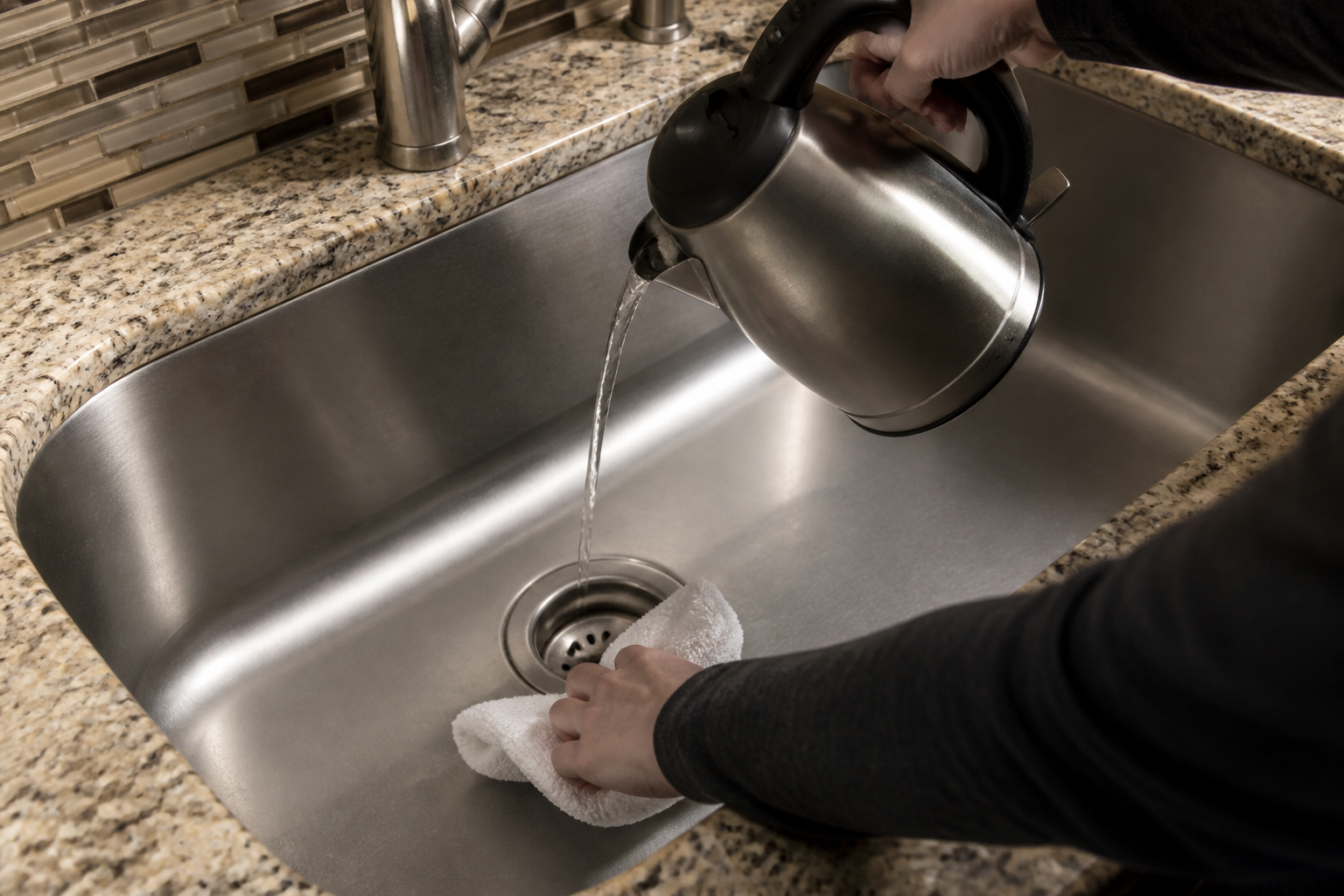
This is the safest starting point: completely safe for all pipe types (metal, PVC, cast iron), free, requires no tools, and proves effective for grease and soap scum buildup. The step-by-step process involves boiling 2-4 quarts of water in a kettle or large pot, adding 1/4 cup of dish soap to the hot water, and pouring slowly down the drain in stages with 30-second intervals between pours to allow heat to work effectively.
How it works: heat liquefies grease and soap scum, dish soap emulsifies oils for easier flushing, and hot water carries debris through pipes. Phoenix context makes this especially effective for kitchen drains with grease buildup—the grease is already softened by Arizona temperatures, making hot water treatment more effective than in cooler climates.
Limitations include inability to remove mineral scale, ineffectiveness for hair clogs, and only working on partial clogs where some drainage is still present. Safety note: consider using hot tap water (not boiling) for PVC pipes to avoid potential damage, though boiling water is safe for metal pipes common in older Phoenix homes.
When it works: single fixture slow drain, recent onset, kitchen or bathroom sinks, no complete blockage. When to try Method 2: if drainage doesn’t improve after 2-3 attempts over 24 hours.
Method 2 – Baking Soda Plus Vinegar
This popular method requires realistic expectations: effective for light clogs and odor control, less effective for heavy blockages than many believe, and excellent as preventive maintenance. The chemistry explanation is straightforward—baking soda (base) combined with vinegar (acid) creates carbon dioxide fizzing action that loosens debris, followed by hot water flush that carries particles away.
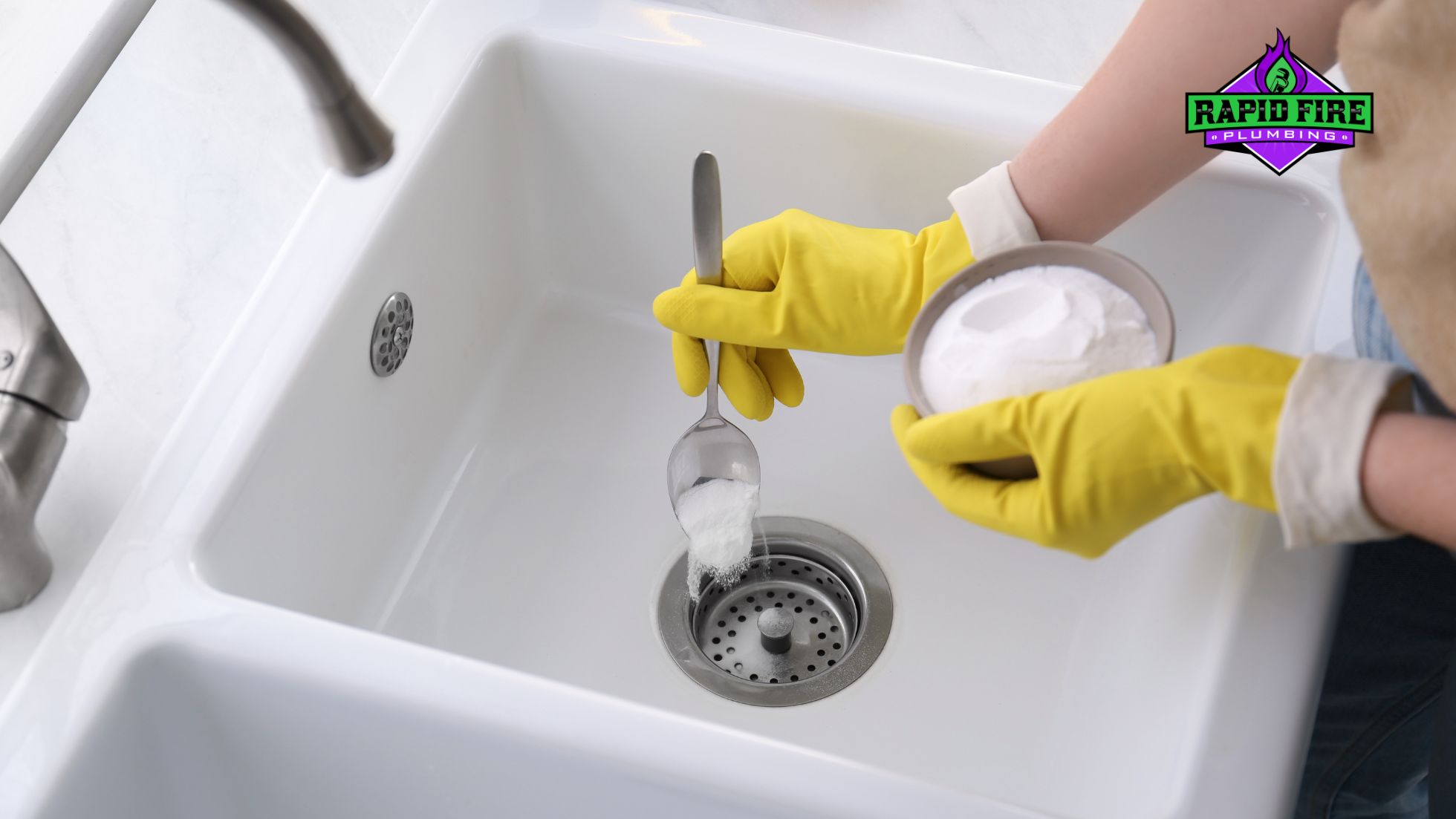
Step-by-step instructions: pour 1/2 cup baking soda down drain, follow with 1 cup white vinegar, cover drain to direct fizzing action downward (use plate or wet cloth), wait 30-60 minutes for reaction to work, then flush with hot water. Phoenix hard water consideration is important—minerals in Phoenix water reduce reaction effectiveness as calcium and magnesium neutralize some of the acid, potentially requiring repeated applications for results.
Best uses include deodorizing drains, preventive monthly maintenance, light soap scum removal, and minimal hair clogs. Cost remains under $5 for supplies (baking soda $3, vinegar $2) available at any grocery store. Safety profile is excellent—completely safe for all pipe types including old cast iron and galvanized, non-toxic, and environmentally friendly.
Limitations are significant: won’t remove mineral scale or heavy grease, ineffective for complete blockages, and works better as prevention than cure for established clogs. When it works: slow but draining fixtures, odor control needs, monthly maintenance routine. When to try Method 3: if no improvement appears after 2 treatments, or if drain is completely stopped.
Method 3 – Plunger
Tool selection matters: cup plungers work for sinks and tubs (flat bottom design), flange plungers are designed for toilets (extended rubber flap), and a quality plunger represents a $10-$20 investment that lasts for years.
Proper technique requires sealing the drain opening completely, adding water to cover the plunger cup (creates hydraulic pressure), pushing down slowly then pulling up sharply (suction action dislodges clogs), and repeating 10-15 times with consistent force. Phoenix hard water caveat: mineral buildup in p-traps reduces plunger effectiveness by limiting room for pressure to build, potentially requiring more repetitions than in soft water areas.
Multi-fixture considerations include double sinks requiring the opposite drain sealed with wet cloth or duct tape to direct pressure toward the clog, and bathroom sinks requiring overflow openings covered for effective pressure buildup. Safety profile is excellent—safe for all pipe types, no chemicals involved, and no pipe damage risk when used properly.
When it works: moderate clogs with some drainage remaining, single fixture issues, soap scum and hair combinations, and debris lodged in accessible p-traps. Limitations include inability to remove mineral scale, ineffectiveness for main line clogs, and inability to reach blockages deep in pipe runs. Cost remains reasonable at $10-$20 for a quality plunger representing a one-time purchase. When to try Method 4: if 15-20 plunge attempts produce no improvement, or if multiple fixtures are affected indicating main line issues.
Method 4 – Wet/Dry Vacuum
This more advanced method suits clogs that resist plunger attempts and requires a shop vacuum (not regular household vacuum). The technique proves particularly effective for solid object clogs that other methods can’t address.
Equipment needs include a wet/dry vacuum capable of liquid suction (most shop vacuums qualify) and old towels for creating an effective seal around the drain opening. Technique involves setting the vacuum to wet/liquid mode, creating a tight seal around drain opening by wrapping towels around the hose end, using maximum suction power, and holding firmly for 2-3 minutes of continuous suction.
How it works: powerful suction pulls clogs up toward drain opening (opposite approach from plunger’s pushing action), proves effective for hair clumps, soap scum masses, and small objects that have fallen into drains. Phoenix application includes ability to remove mineral scale chunks that break loose from pipe walls, and pulling debris upward rather than pushing it deeper into the system.
Safety profile remains excellent—safe for all pipe types, no chemicals involved, and no damage risk with proper seal technique. Limitations include requirement for wet/dry vacuum ownership (not universal among homeowners), messy process requiring cleanup, inability to work on clogs deep in pipes, and inability to remove scale still firmly attached to walls.
Cost consideration: $0 if you already own a wet/dry vacuum; $50-$150 to purchase if needed. When it works: clogs resistant to plunger attempts, hair clogs in bathroom drains, suspected object blockages near drain openings. When to try Method 5: if no improvement occurs after 3-5 minute suction attempts.
Method 5 – Zip-It Tool
This specialized tool features a plastic strip with barbed edges designed to catch hair, flexible design that navigates p-trap curves, and disposable construction costing $3-$5 at hardware stores. Primary use targets bathroom sink and tub drains where hair represents the primary clog cause—proving extremely effective for hair removal specifically.
Technique is straightforward: remove drain cover or stopper mechanism, insert Zip-It tool straight down the drain opening, push to maximum depth (typically 18-24 inches), slowly pull upward while barbs catch accumulated hair, remove collected hair from tool, and repeat 2-3 times for thorough clearing.
Phoenix context reveals that hard water mineral deposits create stickier surfaces that trap hair more effectively than smooth pipes in soft water areas—the Zip-It tool pulls hair along with attached mineral particles for more complete removal. Effectiveness often surprises users by removing shocking amounts of accumulated hair (prepare for gross but satisfying results), with immediate drainage improvement when hair represents the primary clog cause.
Safety profile is perfect—completely safe for all pipes, no risk of damage, no chemicals required, and very low cost for remarkable effectiveness. Limitations include only being effective for hair and light debris, inability to reach deep clogs beyond tool length, and inability to remove mineral scale or grease blockages.
Cost remains minimal at $3-$5 for disposable versions; reusable versions cost $8-$12. When it works: bathroom sink or tub slow drains, visible hair accumulation signs, recent onset within last few weeks or months. When to try Method 6: if the Zip-It pulls minimal hair but the clog persists, indicating deeper blockage or mineral scale issues.
Method 6 – Manual Drain Snake
Tool types include hand-crank drum augers (15-25 feet, $15-$30), power drill attachment snakes (25-50 feet, $30-$50), with professional motorized augers reserved for licensed contractors. When DIY snaking is appropriate: single fixture clog after Methods 1-5 have failed, no sewage backup present, homeowner comfortable with tools, and pipe age under 40 years.
Technique involves inserting the snake slowly into the drain opening, cranking the handle when resistance is felt to break through blockages, breaking up or hooking debris for removal, slowly retrieving while continuing to crank, and running hot water to flush loosened material. Phoenix considerations are significant—mineral scale creates false “clog” sensations as the snake scrapes scale without breaking through to clear the pipe, potentially providing temporary relief while scale remains.
Safety concerns include potential to damage old pipes (1950s-1970s cast iron and galvanized vulnerable to scratching that accelerates corrosion), ability to punch through weakened pipe walls in severely corroded systems, and sharp edges requiring protective gloves during use. Effectiveness includes breaking through debris clogs, reaching 15-25 feet into pipes, and providing temporary clearing of blockages.
Limitations are significant: doesn’t remove mineral scale from pipe walls (Phoenix’s primary recurring issue), provides only temporary fixes for scale-related clogs, can damage aging pipes if forced aggressively, and proves difficult to use effectively without experience. Cost ranges $15-$50 for purchase, representing a one-time investment if successful.
When to call professional service: if snake encounters solid resistance that could indicate scale, tree roots, or collapsed pipe (forcing it risks damage), if clogs return within days or weeks (indicates mineral scale or main line issues), if home was built pre-1970 (pipe damage risk too high), or if multiple fixtures are affected (main line issue beyond snake reach).
Professional alternatives provide better long-term value: hydro-jetting at $400-$800 removes mineral scale AND debris for lasting solutions versus snake’s temporary clearing, camera inspection at $200-$300 before snaking identifies pipe condition and clog cause without damage risk, and main line snaking by professionals at $300-$600 uses proper equipment for deep clogs DIY tools can’t reach.
All timelines and service cost ranges are provided for general information only. Actual service duration and costs will depend on the specific plumbing issues, project complexity, scheduling availability, and agreed-upon scope of work as set forth in the written service agreement.
What NOT to Do: Chemical Drain Cleaners and Phoenix Pipes
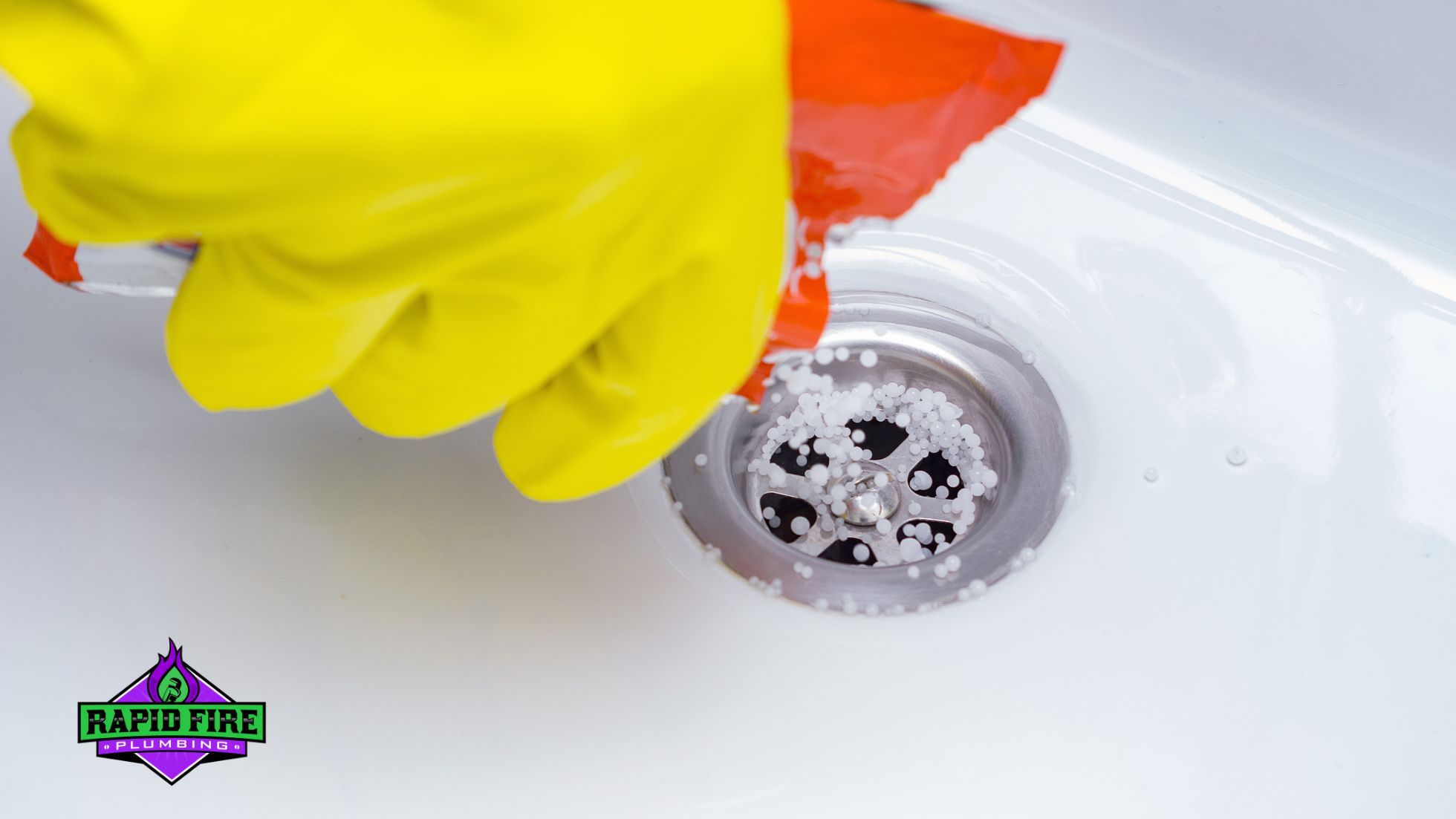
Chemical drain cleaners pose particular risks in Phoenix homes due to aging infrastructure and hard water conditions. Understanding these dangers helps homeowners make informed decisions about drain clearing approaches.
Chemical Types and Phoenix Hard Water Interaction
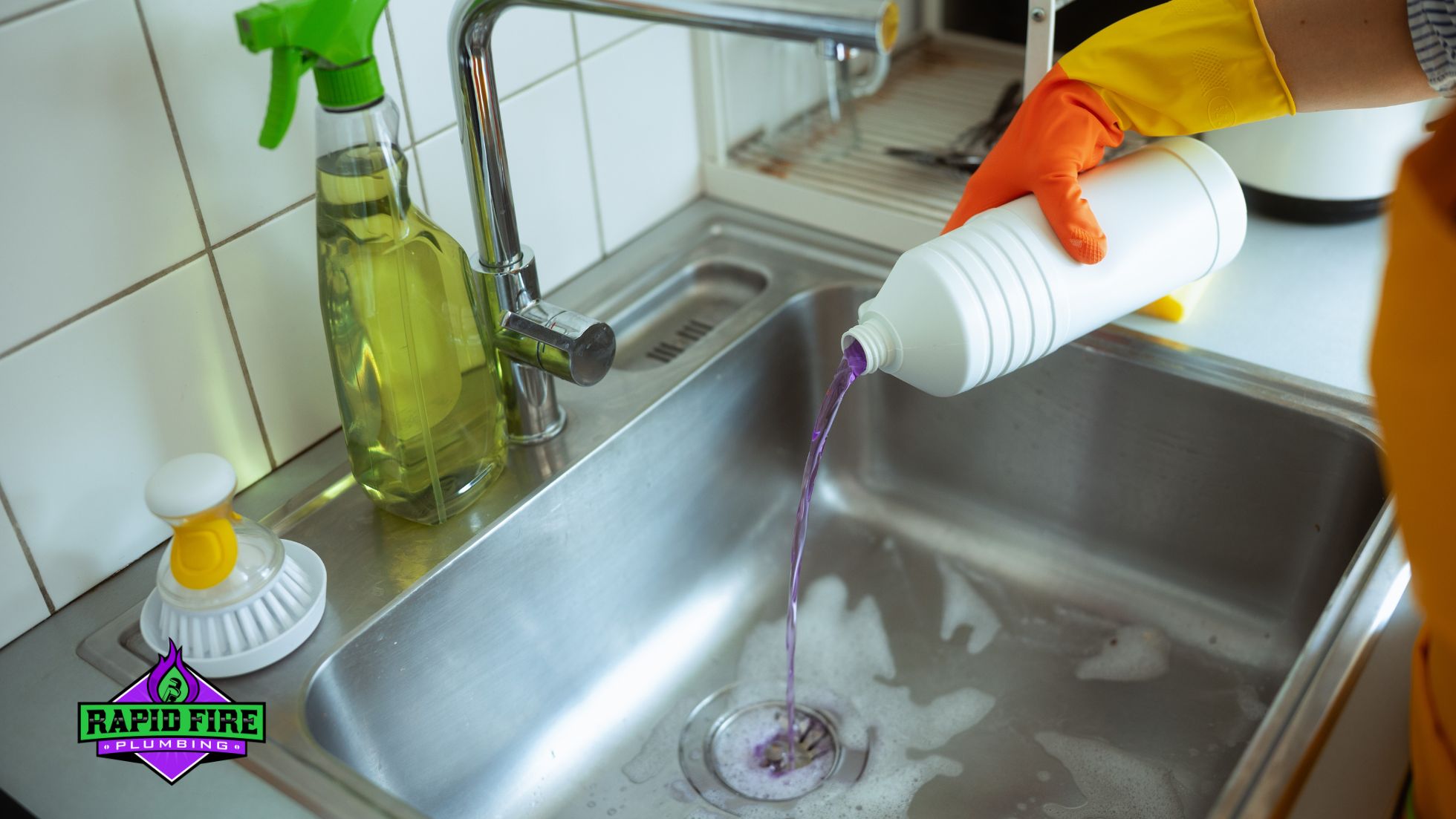
Sulfuric acid drain cleaners represent the most powerful but most dangerous option, generating heat between 160-200°F that can crack porcelain fixtures or warp PVC pipes, proving ineffective against mineral scale while accelerating cast iron and galvanized pipe corrosion. Sodium hydroxide (lye) cleaners offer less aggressive but still corrosive action, generating significant heat and reacting with aluminum components in some p-traps, with limited effectiveness on Phoenix mineral clogs.
Enzymatic cleaners provide the safest chemical option, using bacteria and enzymes to digest organic matter including hair, grease, and soap scum. These products remain safe for all pipe types but require overnight dwell time (8-12 hours) for effectiveness, prove ineffective against mineral scale, and experience reduced enzyme effectiveness in Phoenix hard water conditions.
Hard water chemical neutralization occurs when calcium and magnesium minerals react with drain cleaner chemicals, reducing potency before reaching the actual clog. This requires using more product to achieve the same effect as in soft water areas, increasing both cost and chemical exposure risks. Why chemicals fail on Phoenix recurring clogs becomes clear: they may clear debris temporarily but cannot dissolve mineral scale, resulting in temporary improvement followed by rapid re-clogging as scale remains to trap new debris.
According to Arizona Registrar of Contractors guidelines and EPA household chemical safety data, proper chemical use requires understanding these limitations and interactions with local water conditions.
Old Phoenix Home Pipe Damage Risks
Vulnerable neighborhoods include Encanto (primarily 1950s construction), Maryvale (1960s development), Central Phoenix (1950s-1960s mixed), and older Glendale and Peoria areas with similar infrastructure ages. Cast iron pipe vulnerability stems from pipes already corroding from interior mineral deposits and exterior soil contact, with sulfuric acid accelerating interior corrosion and potentially creating leaks in weakened sections within 6-12 months of repeated chemical use.
Galvanized steel concerns are equally serious: zinc coating has typically deteriorated in pipes over 50 years old, leaving bare steel exposed to corrosion. Chemicals attack this exposed metal directly, leading to eventual pipe failure requiring replacement costing $3,000-$8,000 for extensive damage throughout a home.
Chemical heat damage from exothermic reactions generating 160-200°F temperatures can crack older porcelain fixtures, warp PVC pipes installed in later decades, and compromise already-weakened cast iron that has been thinning for decades. Professional assessment value becomes clear: camera inspection costing $200-$300 identifies pipe condition before homeowners use chemicals that could trigger catastrophic failure.
Safer alternatives for old homes include hot water methods, enzymatic cleaners designed for hard water, and mechanical removal techniques (plunger, Zip-It tool, professional snaking with appropriate care). When chemical damage occurs, costs escalate quickly: emergency pipe replacement at $500-$2,000+ depending on location and access difficulty, water damage from leaks potentially costing $2,000-$10,000 in repairs, with homeowner insurance policies often excluding damage from chemical misuse.
Arizona Code and Environmental Concerns
Phoenix 2024 International Plumbing Code adoption emphasizes drain system protection, discourages chemical cleaners, and restricts sulfuric acid-based products in commercial applications. Licensed professional requirements mandate proper training, personal protective equipment, disposal procedures, and CR-37, C-37, or R-37 licensing for commercial chemical drain cleaning services.
Environmental impact considerations include chemicals entering Phoenix wastewater treatment systems (impacting treatment efficiency), desert ecosystem vulnerability with less water dilution than humid climates, and proper disposal requirements prohibiting large quantities from being poured down drains. Commercial restrictions prevent restaurants, hospitals, and hotels from using sulfuric acid cleaners without licensed contractor oversight, with grease trap maintenance requiring enzymatic or mechanical methods instead.
Consumer protection through Arizona ROC regulations requires licensed contractors to use the least-damaging effective methods available, prioritizing pipe protection over quick fixes that may cause long-term damage. Alternative professional methods include hydro-jetting using only water pressure (no chemicals), mechanical snaking with appropriate equipment for pipe age, and enzymatic professional-grade treatments designed for Phoenix water conditions.
When DIY Fails: Honest Criteria for Calling Professional Drain Service
Clear decision criteria help Phoenix homeowners recognize when continued DIY attempts waste time and money. Understanding these indicators prevents situations where delayed professional service leads to more extensive damage and higher repair costs.
Try DIY When These Conditions Apply
Single fixture affected: only one sink, tub, or shower draining slowly, not multiple fixtures backing up simultaneously. Slow but draining: water still goes down eventually, just slower than normal rather than being completely stopped. Recent onset: problem started within last few days or weeks, not a chronic ongoing issue persisting for months.
No sewage odors: absence of foul smells that indicate sewer gas or sewage backup problems. First occurrence: haven’t tried DIY methods multiple times for this same drain location. No standing water: fixture empties eventually rather than holding water indefinitely. Residential property: single-family home without commercial grease production or high-volume usage patterns.
Recommended DIY sequence provides clear progression: start with hot water plus dish soap (try 2-3 times over 24 hours), move to baking soda plus vinegar (try 2 applications), attempt plunger use (15-20 attempts), use Zip-It tool for bathroom drains, then consider professional service if no improvement occurs after this progression.
Time investment guideline suggests that spending more than 2-3 hours total on DIY attempts without success means professional service costing $150-$250 becomes better value than continued DIY frustration and additional product purchases.
Call Professional Service for These Situations
Emergency situations requiring 24/7 immediate response at 623-810-6166 include sewage backup into home (health hazard that cannot be addressed DIY), multiple fixtures backing up simultaneously (main line blockage), complete stoppage with rapidly rising water (overflow risk), foul sewage odors throughout home (sewer gas danger), and gurgling sounds from multiple drains (venting or main line issue).
Schedule professional service with same-day availability often possible for recurring clogs (clears then returns within days or weeks, indicating mineral scale or roots), DIY methods providing only temporary fixes (clog returns quickly), multiple DIY attempts failing (tried all 6 methods without lasting success), homes built pre-1980 (vulnerable pipes warrant camera inspection first), visible slow drainage throughout house (main line partial blockage), and standing water that won’t drain at all (complete blockage).
Phoenix-specific professional indicators include weekly recurring kitchen clogs in hard water areas (mineral scale issue requiring hydro-jetting), post-monsoon multiple drain issues (debris in main line requiring professional clearing), grease trap issues in homes with heavy cooking (professional degreasing needed), and older Phoenix neighborhoods like Encanto, Maryvale, or Central Phoenix where pipes prove vulnerable to aggressive DIY attempts.
Mineral Scale Versus Debris Clogs
Debris clogs that DIY can address include hair, soap scum, food particles, grease, and foreign objects—materials that can be broken up, dissolved, or mechanically removed with DIY methods. Mineral scale clogs that DIY cannot address include calcium and magnesium deposits coating pipe interiors from Phoenix 200+ ppm hard water, deposits that roughen surfaces to trap debris, accumulation that narrows diameter by 15-25%, and scale that cannot be removed by any DIY method.
How to identify mineral scale issues: clogs recur rapidly within days or weeks despite successful clearing, fixtures throughout home drain slowly rather than just one location, home has hard water (Phoenix, Glendale, and Mesa especially affected), and visible mineral buildup on faucet aerators or shower heads indicates scale in drain pipes too.
Why DIY fails on scale: snaking pokes holes through debris but leaves scale on walls (temporary fix only), chemicals don’t dissolve calcium and magnesium compounds effectively, and hot water or plungers can’t remove adhered mineral deposits. Professional solution through hydro-jetting at $400-$800 uses high-pressure water (3,000-4,000 PSI) to scour mineral scale from pipe interiors, removing both scale AND debris for long-term solutions with typical results lasting 2-3 years in Phoenix hard water versus days or weeks from DIY snaking.
Cost comparison reveals value: hydro-jetting at $400-$800 one-time versus $50+ per month in failed DIY products and wasted time—return on investment realized when clogs stop recurring and homeowners regain reliable drainage.
All timelines and service cost ranges are provided for general information only. Actual service duration and costs will depend on the specific plumbing issues, project complexity, scheduling availability, and agreed-upon scope of work as set forth in the written service agreement.
Main Line Issues Requiring Professional Service
Main line definition: large drain pipe (3-4 inch diameter) collecting all household drains, running underground from house to municipal sewer connection or septic system. Main line problem symptoms include multiple fixtures clogging simultaneously, lowest drains backing up first (toilets, first-floor showers), gurgling from fixtures when others are used, sewage odors permeating living spaces, and wet spots appearing in yard above pipe runs.
Common Phoenix main line issues include tree roots from Palo Verde and Mesquite seeking water sources, mineral scale accumulation from decades of hard water exposure, cast iron pipe deterioration in homes 50+ years old, and monsoon debris accumulation overwhelming capacity. Why DIY can’t address these: main lines extend beyond reach of household tools (30-100 feet from house to street), require professional equipment (motorized augers, hydro-jetting machines, camera inspection systems), and may need excavation for severe damage or replacement.
Professional main line services include camera inspection at $200-$300 to identify problem location and cause precisely, main line snaking at $300-$600 to clear roots and debris, hydro-jetting at $400-$800 to remove scale and roots comprehensively, and pipe repair or replacement at $2,000-$8,000+ depending on damage extent and access difficulty.
Tree root prevention strategies for Phoenix include annual main line inspection in areas with mature Palo Verde or Mesquite trees, root barriers installed during landscaping projects, and copper sulfate treatments applied professionally to discourage root intrusion without harming trees.
Professional Drain Cleaning Services in Phoenix
Transparent service information helps Phoenix homeowners understand professional options and make informed decisions about drain problems beyond DIY capability.
Basic Drain Cleaning
Basic service for single fixture issues typically costs $150-$250 and includes diagnostic assessment of individual sink, tub, or shower drains, mechanical snaking to clear debris clogs, testing after clearing to ensure proper drainage, and basic warranty on workmanship. Typical duration ranges 45-90 minutes from arrival to completion.
When appropriate: single fixture slow drain, first-time issue without history of recurring problems, no mineral scale indicators present, debris, hair, or soap scum clogs, and residential property without commercial usage patterns. Method used involves hand or motorized snake depending on clog depth and resistance, reaching 15-50 feet into drain pipes.
Phoenix context reveals this may provide only temporary relief if hard water mineral scale is present, as scale remains after debris is cleared. The service proves most appropriate for homes with water softeners or newer homes without significant scale buildup. Expected results include immediate drainage improvement that should last months to a year if debris was the primary issue, though clogs may recur quickly if mineral scale exists.
Cost factors include access difficulty (bathroom sinks easier than tub drains requiring overflow removal), time of day (regular business hours versus emergency), and clog depth requiring more extensive work. Same-day service is often available when scheduled during business hours.
All timelines and service cost ranges are provided for general information only. Actual service duration and costs will depend on the specific plumbing issues, project complexity, scheduling availability, and agreed-upon scope of work as set forth in the written service agreement.
Kitchen Grease Removal
Kitchen drains cost more at $200-$300 because grease proves more difficult than hair or soap scum, requires specialized degreasing techniques, and Phoenix extreme heat makes grease travel deeper into pipes before solidifying. What’s included: assessment of grease accumulation extent, mechanical snaking with grease-cutting techniques, hot water and degreaser flush, testing for proper drainage, and prevention recommendations.
Typical duration ranges 60-120 minutes depending on grease extent and pipe length affected. When needed: kitchen sinks draining slowly, gurgling sounds indicating trapped air, foul odors from grease decomposition, and homes with heavy cooking or improper grease disposal down drains.
Phoenix-specific challenge comes from 110°F+ heat that liquefies grease, allowing it to travel 15-30 feet into pipes (versus 3-5 feet in moderate climates) before solidifying in cooler underground sections as stubborn blockages. Prevention education emphasizes NEVER pouring grease down Phoenix drains (even small amounts prove problematic), wiping cookware with paper towels before washing, using sink strainers consistently, and performing monthly hot water flushes.
When hydro-jetting proves better: severe grease buildup throughout drain line warrants considering upgrading to hydro-jetting at $400-$800 for comprehensive removal versus recurring $200-$300 snaking services. Restaurant and commercial kitchens require grease trap maintenance as separate service, health code compliance verification, and may need monthly preventive service contracts.
All timelines and service cost ranges are provided for general information only. Actual service duration and costs will depend on the specific plumbing issues, project complexity, scheduling availability, and agreed-upon scope of work as set forth in the written service agreement.
Main Line Service
Whole-house drain issues typically cost $300-$600 and include assessment of main line blockage location, motorized auger service reaching 50-100+ feet, clearing of roots, debris, and scale, testing all fixtures after service, and warranty on workmanship. Typical duration ranges 2-4 hours including assessment, access (may require locating cleanout), clearing, and comprehensive testing.
When needed: multiple fixtures backing up simultaneously, recurring whole-house issues, sewage odors indicating main line problems, gurgling from multiple drains throughout house, and post-monsoon debris accumulation. Common Phoenix main line problems include tree roots (Palo Verde and Mesquite common in yards), mineral scale from hard water accumulation over decades, cast iron pipe deterioration in 1950s-1970s homes, and monsoon debris overwhelming capacity.
Access methods include existing cleanout (easiest approach), toilet removal if no cleanout is present, and main line access through vent stack as last resort. Camera inspection add-on at $200-$300 is highly recommended for main line issues to identify problem cause (roots versus scale versus pipe damage), preventing wasted effort on insufficient methods.
When repair is needed: camera reveals pipe damage including cracks, collapse, or severe corrosion, roots require cutting and possible pipe replacement, and excavation may become necessary costing $2,000-$8,000+ depending on extent and location. Preventive value comes from annual main line service in Phoenix areas with mature trees preventing emergency backups, with monsoon season pre-inspection in June highly recommended.
All timelines and service cost ranges are provided for general information only. Actual service duration and costs will depend on the specific plumbing issues, project complexity, scheduling availability, and agreed-upon scope of work as set forth in the written service agreement.
Hydro-Jetting for Mineral Scale
This comprehensive solution costs $400-$800 and involves high-pressure water (3,000-4,000 PSI) delivered through specialized nozzles that scour pipe interior walls, removing mineral scale AND debris for long-term solutions. What’s included: camera inspection to verify pipe condition (ensures pipes can handle pressure safely), hydro-jetting service throughout affected drain lines, post-service camera inspection showing clean pipe interiors, and warranty typically lasting 1-2 years.
When recommended: recurring clogs despite previous snaking attempts, known hard water mineral scale accumulation, whole-house slow drainage affecting multiple fixtures, homes without water softeners in Phoenix, Glendale, or Mesa high-hardness areas, and pre-sale home preparation for real estate transactions.
Phoenix hard water context makes hydro-jetting the ONLY method that removes calcium and magnesium scale from pipe walls—snaking only pokes holes through debris leaving scale intact (temporary fix), while hydro-jetting addresses the root cause of Phoenix recurring clogs. Effectiveness includes removing 95%+ of mineral scale, debris, grease, and roots (depending on size), restoring pipe diameter to near-original specifications, with typical results lasting 2-3 years in Phoenix hard water conditions.
Cost-benefit analysis shows $400-$800 one-time investment versus $200-$300 snaking every 3-6 months ($800-$1,200 annually), yielding savings of $400-$800 yearly after initial investment while eliminating recurring clog frustration. Not appropriate for pipes in poor condition (camera inspection reveals before hydro-jetting is attempted), very old cast iron with significant deterioration, or pipes with existing cracks or damage.
Commercial applications include restaurants needing grease removal, hotels managing high-volume drain systems, hospitals maintaining code compliance, and apartment complexes implementing preventive maintenance programs.
All timelines and service cost ranges are provided for general information only. Actual service duration and costs will depend on the specific plumbing issues, project complexity, scheduling availability, and agreed-upon scope of work as set forth in the written service agreement.
Camera Inspection Diagnostics
Comprehensive pipe assessment costs $200-$300 and includes video camera on flexible cable inserted through drain, real-time viewing of pipe interior conditions, recording for documentation and future reference, location identification of problems, and detailed report with findings and recommendations.
When valuable: before hydro-jetting to ensure pipes can handle pressure safely, recurring clogs with unknown causes, suspected root intrusion from mature trees, older homes requiring pipe condition assessment, and pre-purchase home inspections for real estate transactions.
What camera reveals: mineral scale extent and precise locations, root intrusion entry points, pipe material identification and condition, cracks or damage requiring repair, collapsed sections needing replacement, improper installation issues from original construction, and grease accumulation severity.
Phoenix-specific benefits include identifying mineral scale versus debris (determines if hydro-jetting is necessary investment), locating tree root entry points for targeted treatment, and assessing cast iron condition in older Phoenix homes before risking aggressive cleaning. Prevents costly mistakes like attempting hydro-jetting on damaged pipes (could cause failure), snaking when pipe replacement is actually needed, and chemical use on compromised pipes vulnerable to perforation.
Documentation value provides before-and-after comparison showing hydro-jetting effectiveness, evidence for insurance claims if pipe damage exists, and useful information for home sale negotiations. Add-on pricing often includes discounts when combined with hydro-jetting or main line service at $100-$150 versus $200-$300 standalone pricing.
Rapid Fire’s advantage comes from 20+ years experience interpreting camera footage, identifying Phoenix-specific issues including hard water scale patterns, common tree root entry points in local soil conditions, and older home pipe deterioration patterns typical in Arizona climate.
All timelines and service cost ranges are provided for general information only. Actual service duration and costs will depend on the specific plumbing issues, project complexity, scheduling availability, and agreed-upon scope of work as set forth in the written service agreement.
Emergency Service Availability
Emergency situations warrant immediate professional response. Sewage backup into home creates health hazards that cannot be addressed DIY, multiple fixtures backing up rapidly indicate main line blockage, complete stoppage threatening overflow risks water damage, and foul sewer gas smells indicate dangerous backup conditions.
Emergency response provides 24/7/365 availability including holidays and weekends, 60-90 minute response times in Phoenix metro including Glendale, Peoria, Surprise, Avondale, and Mesa, with 90-120 minutes for extended areas like Cave Creek and Black Canyon City. Emergency premium adds $50-$100 to base service cost for after-hours response (nights, weekends, holidays)—far less than water damage repair costs ranging $2,000-$10,000 from delayed response.
What to expect: call 623-810-6166 for live person (not voicemail), describe emergency for professional assessment, on-call licensed plumber dispatched immediately with estimated time of arrival, arrival in fully-stocked vehicle with common repair parts, immediate assessment and transparent pricing before work begins, emergency resolution prioritizing health and safety, and testing with cleanup.
Health hazards addressed include sewage containing bacteria, viruses, and parasites requiring professional cleanup, sewer gas containing methane (flammable) and hydrogen sulfide (toxic), and standing sewage creating mold risks within 24-48 hours. Common Phoenix emergencies include monsoon-related main line backups during July-September storms, holiday weekend disposal overload (Thanksgiving, Christmas), extreme heat grease blockages during summer months, and tree root sudden failures in mature landscapes.
Preventive value comes from annual inspections preventing most emergencies, pre-monsoon service in June reducing storm-related backups, and main line maintenance in areas with mature trees avoiding sudden catastrophic failures.
All timelines and service cost ranges are provided for general information only. Actual service duration and costs will depend on the specific plumbing issues, project complexity, scheduling availability, and agreed-upon scope of work as set forth in the written service agreement.
Frequently Asked Questions About DIY Drain Cleaning in Phoenix
What is the safest way to unclog a drain?
Safety depends on pipe age, clog severity, and drain location. Phoenix homes built 1950s-1970s with cast iron or galvanized pipes require gentler approaches. Hot water plus dish soap represents the safest first attempt—completely safe for all pipe types, free, and effective for grease and soap scum buildup. This method won’t damage pipes regardless of age or material.
For bathroom drains with hair clogs, the Zip-It tool at $3-$5 provides the safest mechanical removal without chemicals or pipe stress. Plungers work safely when used properly on all pipe types. Avoid chemical drain cleaners in homes over 40 years old due to corrosion risks. Consider professional camera inspection costing $200-$300 before attempting drain snakes on aging pipes to prevent damage from aggressive clearing attempts.
Does baking soda and vinegar actually unclog drains?
Baking soda and vinegar work for minor clogs and deodorizing, but with realistic limitations. The fizzing chemical reaction (baking soda base plus vinegar acid creating carbon dioxide) loosens light debris and soap scum effectively. This method excels as preventive monthly maintenance rather than cure for established clogs.
Phoenix’s 200+ ppm hard water reduces effectiveness—calcium and magnesium minerals neutralize some acid, requiring repeated applications. This combination won’t remove mineral scale coating Phoenix drain pipes, won’t clear heavy grease blockages common in extreme heat, and proves ineffective for complete stoppages. Best results occur when used consistently as prevention rather than waiting for serious clogs to develop. Cost under $5 makes this worth trying before escalating to more aggressive methods or professional service.
Are chemical drain cleaners bad for pipes?
Chemical drain cleaners prove particularly damaging to Phoenix older homes built 1950s-1970s with cast iron or galvanized pipes vulnerable to accelerated corrosion. Sulfuric acid-based cleaners generate 160-200°F heat that can crack porcelain fixtures, warp PVC pipes, and accelerate interior corrosion in metal pipes already weakened by 50-70 years of mineral deposit accumulation.
Arizona plumbing codes discourage sulfuric acid cleaners, with commercial use restricted. Chemicals often fail in Phoenix because they cannot dissolve calcium and magnesium mineral scale—the primary cause of recurring clogs. Hard water minerals also neutralize chemical effectiveness, requiring more product for same results as soft water areas. Safer alternatives include hot water methods, enzymatic cleaners, and mechanical removal. For homes in Encanto, Maryvale, or Central Phoenix with aging infrastructure, avoid harsh chemicals entirely and consider professional assessment.
When should I call a plumber for a clogged drain?
Call professional service immediately for sewage backup into home (health hazard requiring emergency response at 623-810-6166), multiple fixtures clogging simultaneously (indicates main line blockage beyond DIY reach), complete stoppage with standing water that won’t drain, foul sewage odors indicating sewer gas danger, and recurring clogs returning within days or weeks despite successful DIY clearing (indicates mineral scale or tree roots).
Schedule same-day professional service when DIY attempts fail after trying all 6 methods, homes built pre-1980 warrant camera inspection before aggressive clearing, visible slow drainage affects entire house, or clogs occur weekly in Phoenix hard water homes (mineral scale requiring hydro-jetting). Professional service at $150-$600 becomes better investment than continuing failed DIY attempts, purchasing multiple products, and risking pipe damage from aggressive efforts.
How much does professional drain cleaning cost in Phoenix?
Professional drain cleaning in Phoenix ranges from $150-$600 depending on severity and location. Basic sink or tub drain clearing costs $150-$250 typically completing in 45-90 minutes. Kitchen drain grease removal costs $200-$300 requiring 60-120 minutes due to specialized degreasing techniques. Main line service costs $300-$600 for whole-house issues taking 2-4 hours.
Hydro-jetting for mineral scale removal costs $400-$800, providing long-term solutions by removing scale DIY methods can’t reach, with results typically lasting 2-3 years in Phoenix hard water. Camera inspection adds $200-$300 standalone or $100-$150 when combined with other services. Emergency service adds $50-$100 premium for after-hours response—minimal compared to $2,000-$10,000 water damage from delayed response. Rapid Fire Plumbing’s “Beat Any Quote” guarantee means providing written quote from licensed Arizona contractor (verify at azroc.gov) results in beaten pricing for equivalent service.
All timelines and service cost ranges are provided for general information only. Actual service duration and costs will depend on the specific plumbing issues, project complexity, scheduling availability, and agreed-upon scope of work as set forth in the written service agreement.
Can I prevent drain clogs in Phoenix’s hard water?
Prevention proves more effective than treatment in Phoenix’s 200+ ppm hard water conditions. Monthly maintenance includes weekly hot water flushes (boil kettle, pour slowly), monthly enzymatic cleaner overnight treatments, consistent sink strainer use preventing food particles, NEVER pouring grease (even small amounts problematic in Phoenix heat), and wiping cookware before washing.
For bathroom drains: weekly hot water flush, monthly baking soda/vinegar treatment, quarterly Zip-It tool hair removal, and shower drain covers catching hair before entering pipes. Hard water specific strategies include monthly vinegar rinses to slow mineral accumulation (not removal but slows buildup) and annual professional inspection for homes without water softeners.
Water heater maintenance and water softener installation reduce mineral scale formation throughout plumbing systems by 70-80%. Time investment of 10-15 minutes monthly prevents hours of DIY unclogging or $150-$600 professional service costs. Cost under $10 monthly for preventive supplies versus $200-$300 per clog if prevention fails.
Why do my drains clog more often in summer?
Phoenix kitchen drains clog 40-50% more frequently during summer due to extreme heat effects on grease. Arizona temperatures averaging 110°F+ on 31 days annually liquefy cooking oils and fats, allowing them to travel 15-30 feet into pipes while liquid. When grease encounters cooler underground pipe sections (60-70°F) or overnight temperature drops, it solidifies far from drain openings as stubborn blockages.
This differs dramatically from moderate climates where grease solidifies near drain openings (3-5 feet) making clearing easier. Summer also increases outdoor water use affecting municipal pressure, monsoon debris (July-September) overwhelming drain systems, and increased cooking/entertaining putting more grease and food particles down drains. Prevention strategies become even more critical during Phoenix summers: never pour grease regardless of amount, wipe all cookware thoroughly before washing, run hot water flushes after each cooking session, and consider pre-summer professional inspection.
What’s the difference between drain snaking and hydro-jetting?
Drain snaking uses mechanical cable with cutting head that pokes hole through clogs, leaves debris and mineral scale on pipe walls, provides temporary relief for Phoenix homes (days to weeks), and costs $150-$300 for basic service. Snake reaches 15-50 feet typically, works on debris and some root intrusion, but cannot remove mineral scale from Phoenix’s 200+ ppm hard water.
Hydro-jetting uses high-pressure water (3,000-4,000 PSI) through specialized nozzles that scour entire pipe interior, removes mineral scale AND debris comprehensively, provides long-term solutions lasting 2-3 years in Phoenix conditions, and costs $400-$800 including camera inspection. Hydro-jetting addresses root cause of Phoenix recurring clogs—the mineral scale coating pipe walls that traps debris.
Cost-benefit analysis: $400-$800 one-time hydro-jetting versus $200-$300 snaking every 3-6 months ($800-$1,200 annually) yields savings of $400-$800 yearly plus eliminates recurring frustration. Hydro-jetting requires camera inspection first to verify pipes can handle pressure—not appropriate for severely deteriorated cast iron or pipes with existing damage.
How often should I professionally clean my drains in Phoenix?
Phoenix hard water requires more frequent professional maintenance than soft water regions. Homes without water softeners benefit from annual professional inspection and cleaning—more frequent than national recommendations due to 200+ ppm mineral accumulation. High-hardness areas (Goodyear at 24 gpg) may need service every 6-9 months.
Seasonal timing matters: pre-monsoon inspection in June prevents July-September storm-related backups, post-monsoon assessment in October addresses accumulated debris. Homes with mature trees (Palo Verde, Mesquite) need annual main line inspection preventing root intrusion emergencies. Commercial properties with grease production (restaurants) require monthly or quarterly service depending on volume and health code compliance needs.
Cost of prevention ($150-$250 annual inspection) versus emergency service ($300-$600 plus emergency premium $50-$100) plus potential water damage ($2,000-$10,000) makes preventive maintenance valuable investment. Homes with water softeners can extend intervals to every 2-3 years as mineral scale formation reduces by 70-80%.
Take Action on Drain Problems Today
Safe DIY drain cleaning methods provide Phoenix homeowners with effective solutions for many common clogs, but understanding limitations prevents wasted time and potential pipe damage. Six methods ranked from hot water plus dish soap through manual drain snakes offer progressive approaches, with honest assessment that Phoenix’s 200+ ppm hard water creates mineral scale challenges DIY methods cannot fully address.
Professional service becomes necessary when clogs recur despite successful clearing, multiple fixtures back up simultaneously, sewage odors indicate dangerous conditions, or aging pipes warrant camera inspection before aggressive clearing attempts. Transparent pricing from $150-$600 depending on service type helps homeowners make informed decisions about when DIY attempts should transition to professional expertise.
Why Choose Rapid Fire Plumbing for Drain Problems
Arizona ROC CR-37 licensed dual commercial and residential contractors bring 20+ years Phoenix experience understanding local drain challenges from hard water mineral scale, extreme heat grease behavior, and monsoon debris accumulation. Verify licensing at azroc.gov for consumer protection and code-compliant work.
Phoenix hard water specialists know how 200+ ppm mineral content affects drain systems differently than national averages, with equipment recommendations, replacement schedules, and maintenance plans specifically designed for Arizona’s very hard water conditions and extreme desert climate. Transparent pricing with “Beat Any Quote” guarantee provides upfront costs before work begins, with no hidden fees or surprise charges—provide competitor quote from licensed contractor and Rapid Fire beats it.
24/7 emergency availability means drain problems don’t wait for business hours. Call 623-810-6166 anytime for live answering, priority dispatch, and 60-90 minute response times in Phoenix metro. Emergency premiums of only $50-$100 are minimal compared to water damage repair costs or health hazards from sewage backup.
Commercial-grade expertise from serving Phoenix restaurants, hotels, hospitals, and government buildings for 20+ years translates to superior residential service. Complex multi-drain systems, grease trap maintenance, and code compliance requirements are routine for licensed technicians. Family-owned business means owners and technicians are Phoenix community members invested in long-term customer relationships, with success depending on honest recommendations, quality work, and fair pricing rather than maximizing service calls.
Get Drain Assessment or Emergency Service Today
For sewage backups, multiple fixture clogs, or emergencies with health hazards, call 24/7 emergency line immediately: 623-810-6166. For drain assessment, hydro-jetting estimates, or camera inspection scheduling, contact during business hours for same-day or next-day appointments: 623-810-6166. For questions about recurring clogs, mineral scale, or preventive maintenance plans, reach out for free consultation discussing your specific drain challenges and receiving transparent pricing information.
Service area includes Phoenix, Glendale, Peoria, Surprise, Avondale, Mesa, Cave Creek, Black Canyon City, and all Maricopa County communities. Visit rapidfireplumbing.com or call 623-810-6166. Address: 2941 W Dailey St, Phoenix, AZ 85053. Arizona ROC License: Verify at azroc.gov.
Don’t let drain problems diminish your quality of life or risk water damage and health hazards from sewage backup. Phoenix’s challenging water conditions and aging infrastructure require specialized local expertise—trust Arizona’s licensed plumbing contractors with 20+ years experience delivering proven drain solutions throughout the Valley.
Sources
Arizona Plumbing Resources
-
Salt River Project – Phoenix water hardness data, water quality reports, mineral content analysis, and geographic variations across service area
-
City of Phoenix Water Services – Municipal water quality standards, pressure requirements, water conservation programs, and infrastructure information
-
Arizona Registrar of Contractors – Licensing requirements (CR-37, C-37, R-37), contractor verification, consumer protection guidelines, and chemical use regulations
Professional and Industry Association Sources
-
International Code Council – 2024 International Plumbing Code standards, drain system protection requirements, and chemical restrictions
-
Environmental Protection Agency – Household chemical safety guidelines, drain cleaner environmental impacts, and proper disposal procedures
-
American Society of Plumbing Engineers – Professional drain cleaning standards, best practices, and commercial drain system requirements
Government and Regulatory Authorities
-
City of Phoenix Development Services – Phoenix 2024 International Plumbing Code adoption, permit requirements, and drain system standards
-
Arizona State Climatology Office – Phoenix extreme heat data, temperature statistics, and climate impacts on plumbing systems
-
National Weather Service Phoenix – Monsoon forecasting, seasonal weather patterns, and flash flood warnings
Service Consultation Disclaimer
This article provides general information about Arizona plumbing services and should not be considered as specific service advice for your project. Plumbing issues, costs, and procedures vary significantly based on individual circumstances, jurisdiction within Arizona, and specific project details. Service schedules, project timelines, and plumbing processes can be affected by many factors specific to each situation.
All timelines and service cost ranges are provided for general information only. Actual service duration and costs will depend on the specific plumbing issues, project complexity, scheduling availability, and agreed-upon scope of work as set forth in the written service agreement.
For free consultation and qualified service for your specific Arizona plumbing needs, contact Rapid Fire Plumbing or call 623-810-6166. Our licensed Arizona plumbing contractors will provide personalized service analysis based on your specific needs and circumstances. No service agreement is created by reading this article.
