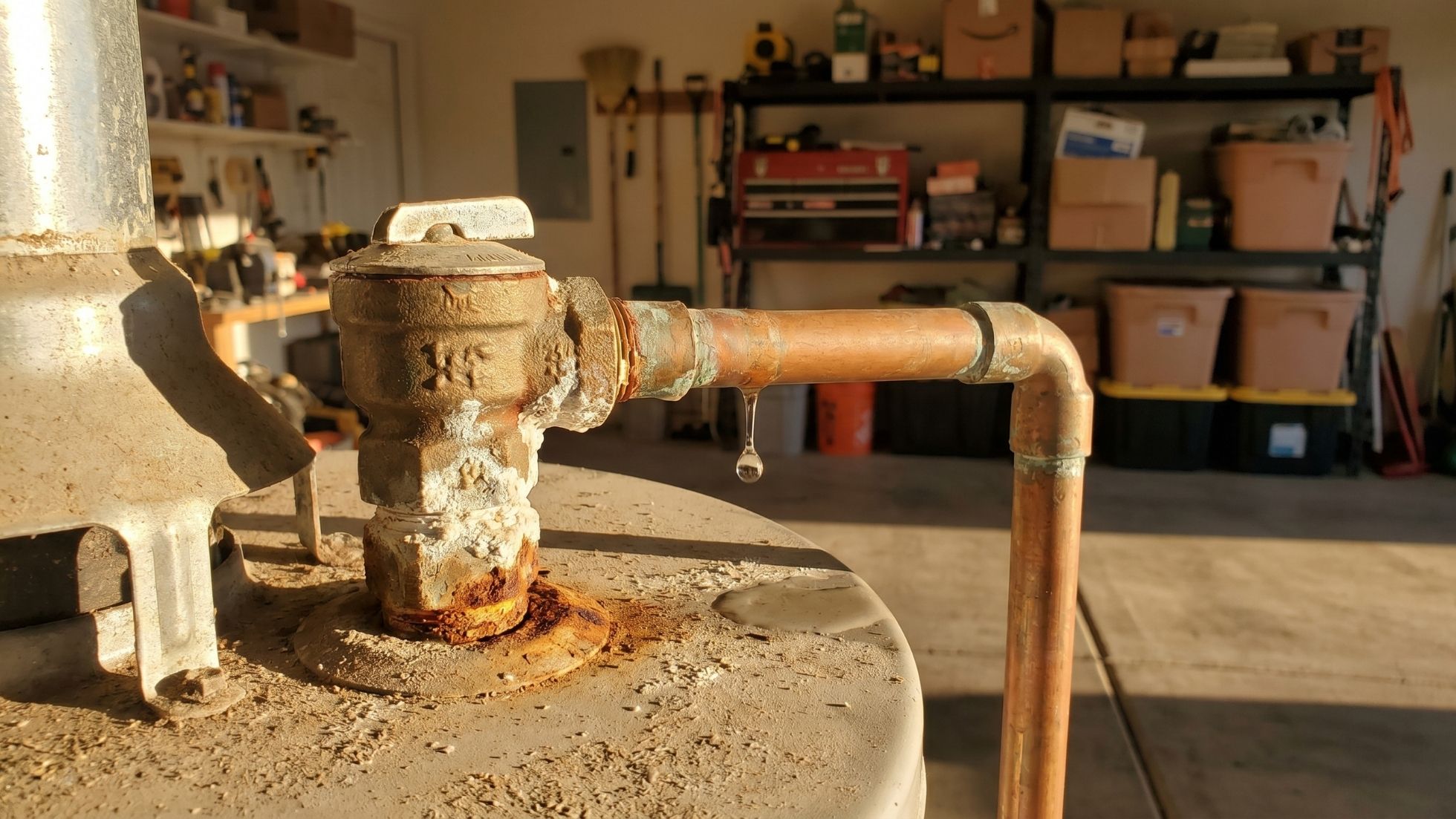
A failing water heater valve is not a subtle problem — it announces itself through specific, observable symptoms long before a catastrophic flood occurs. The temperature and pressure relief valve, commonly called the T&P valve, is the single most critical safety component on your tank. When it begins to malfunction, you will notice water pooling around the base, persistent dripping from the discharge pipe, or a sudden inability to maintain consistent hot water temperature. Ignoring these indicators in a desert climate like Phoenix, where hard water mineral buildup accelerates component degradation, leads to tank ruptures and thousands of dollars in water damage.
Key Takeaways
- A leaking discharge pipe is the most common and visible sign of T&P valve failure.
- Unusual noises like hissing, gurgling, or hammering indicate internal valve damage.
- Fluctuating water temperature often points to a failing thermostatic mixing valve.
- Corrosion and mineral crust around the valve body signal imminent failure.
- Annual testing of the T&P valve is the most effective prevention method.
- Phoenix hard water accelerates valve deterioration by up to 40% compared to national averages.
- Professional replacement costs significantly less than water damage restoration.
Understanding the Critical Role of Water Heater Valves
Every residential water heater contains multiple valves, but two demand immediate attention: the temperature and pressure relief (T&P) valve and the drain valve. The T&P valve is a spring-loaded safety mechanism designed to open automatically if tank pressure exceeds 150 PSI or water temperature surpasses 210 degrees Fahrenheit. Without a functioning T&P valve, the tank becomes a pressurized bomb.
According to the U.S. Consumer Product Safety Commission, water heater explosions, though rare, cause significant property damage and severe injuries when they occur. The drain valve, located near the tank bottom, allows sediment flushing—a maintenance task that Phoenix homeowners must perform more frequently due to the region’s mineral-rich water supply.
The ball valve or gate valve on the cold water inlet also plays a crucial role. This shut-off valve isolates the heater from the home’s plumbing system during repairs. A seized inlet valve complicates emergency shutdowns, extending the time water flows during a leak. Research from the Plumbing-Heating-Cooling Contractors Association indicates that 23% of emergency service calls involve a secondary failure of the shut-off valve, which often requires professional Water Heater Repair Phoenix to resolve before the initial problem compounds.
Sign 1: Persistent Leaking from the Discharge Pipe
The most unmistakable sign of a failing water heater valve is water continuously dripping or flowing from the T&P valve’s discharge pipe. This pipe, typically copper or CPVC, extends downward from the valve toward the floor or an exterior wall. An intermittent drip after a heating cycle is normal thermal expansion. A constant trickle or stream indicates the valve is stuck partially open, the tank pressure is dangerously high, or the valve seat is fouled with mineral deposits. In Phoenix, calcium carbonate and magnesium sulfate precipitate out of hard water at accelerated rates when heated, forming a crystalline crust on the valve seat. This crust prevents the valve from sealing completely.
As Mark Thompson, Master Plumber and owner of Thompson Plumbing Services in Mesa, explains: “We see T&P valves in Phoenix fail at nearly double the rate of valves in soft-water regions. The mineral content in our water supply acts like sandpaper on the valve seat. Once that seal is compromised, the valve will never close properly again.” Homeowners should never cap or plug a leaking discharge pipe. This action disables the safety mechanism and creates a severe explosion risk. The only correct response is immediate valve replacement.
 Sign 2: Unusual Noises During Heating Cycles
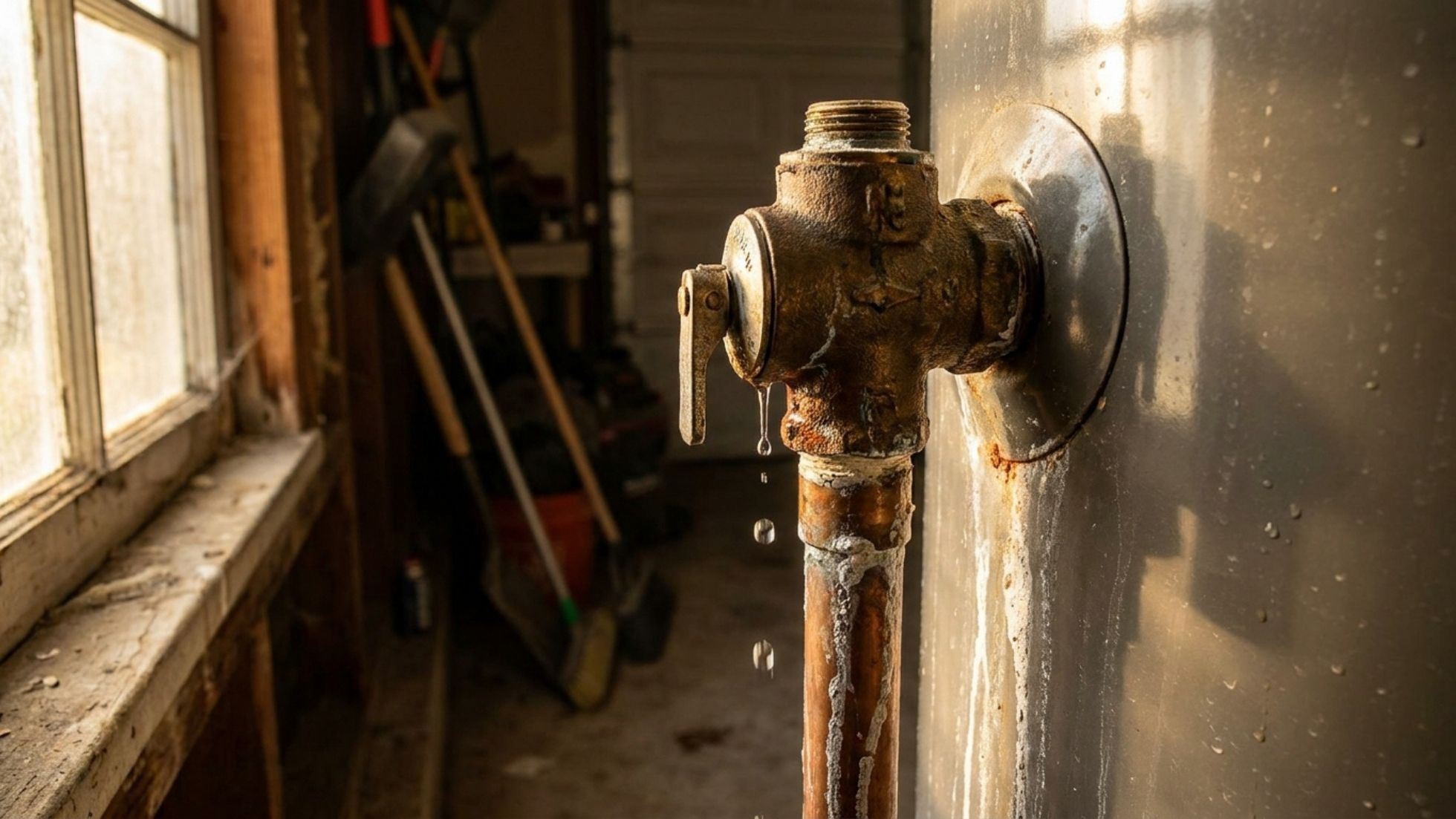
Water heaters produce predictable sounds during normal operation — a low rumble as the burner ignites or a gentle hum from the heating element. A failing valve introduces distinct, abnormal noises. A high-pitched hissing or whistling sound indicates steam or water escaping through a narrow gap in the T&P valve seat. This occurs when internal pressure builds and the valve partially opens but cannot reseat properly. A rhythmic hammering or banging, known as water hammer, often originates from a loose valve flapper or a failing check valve on the recirculation line.
Gurgling sounds from the tank itself frequently accompany valve problems. Sediment accumulation at the tank bottom traps water beneath layers of mineral scale. As this trapped water superheats and turns to steam, it bubbles violently through the sediment, creating a gurgling or percolating noise. This condition, called “kettling,” increases internal pressure and forces the T&P valve to cycle open and closed repeatedly. Data from the Water Quality Association shows that Phoenix water hardness averages 13 to 17 grains per gallon, classified as “very hard.” This hardness level produces sediment buildup three times faster than in areas with soft water.
Sign 3: Fluctuating Water Temperature and Pressure
A failing thermostatic mixing valve or a malfunctioning T&P valve directly impacts water temperature stability. The mixing valve blends hot water from the tank with cold water to deliver a safe, consistent temperature at the tap. When this valve fails, users experience sudden bursts of scalding water followed by cold water. This condition, called “temperature stacking,” is dangerous, particularly for households with children or elderly residents. The American Burn Association reports that scald burns from tap water account for approximately 3,800 emergency room visits annually in the United States.
Pressure fluctuations throughout the home often accompany valve issues. A failing pressure reducing valve on the main water line allows municipal pressure spikes to reach the water heater. Phoenix municipal water pressure can fluctuate between 40 PSI and 120 PSI depending on demand cycles and pumping station activity. Without a functioning pressure regulator, these spikes force the T&P valve to activate repeatedly, accelerating wear. Homeowners should install a pressure gauge on an exterior hose bib to monitor incoming pressure. Consistent readings above 80 PSI require a pressure reducing valve adjustment or replacement.
Sign 4: Visible Corrosion and Mineral Crust
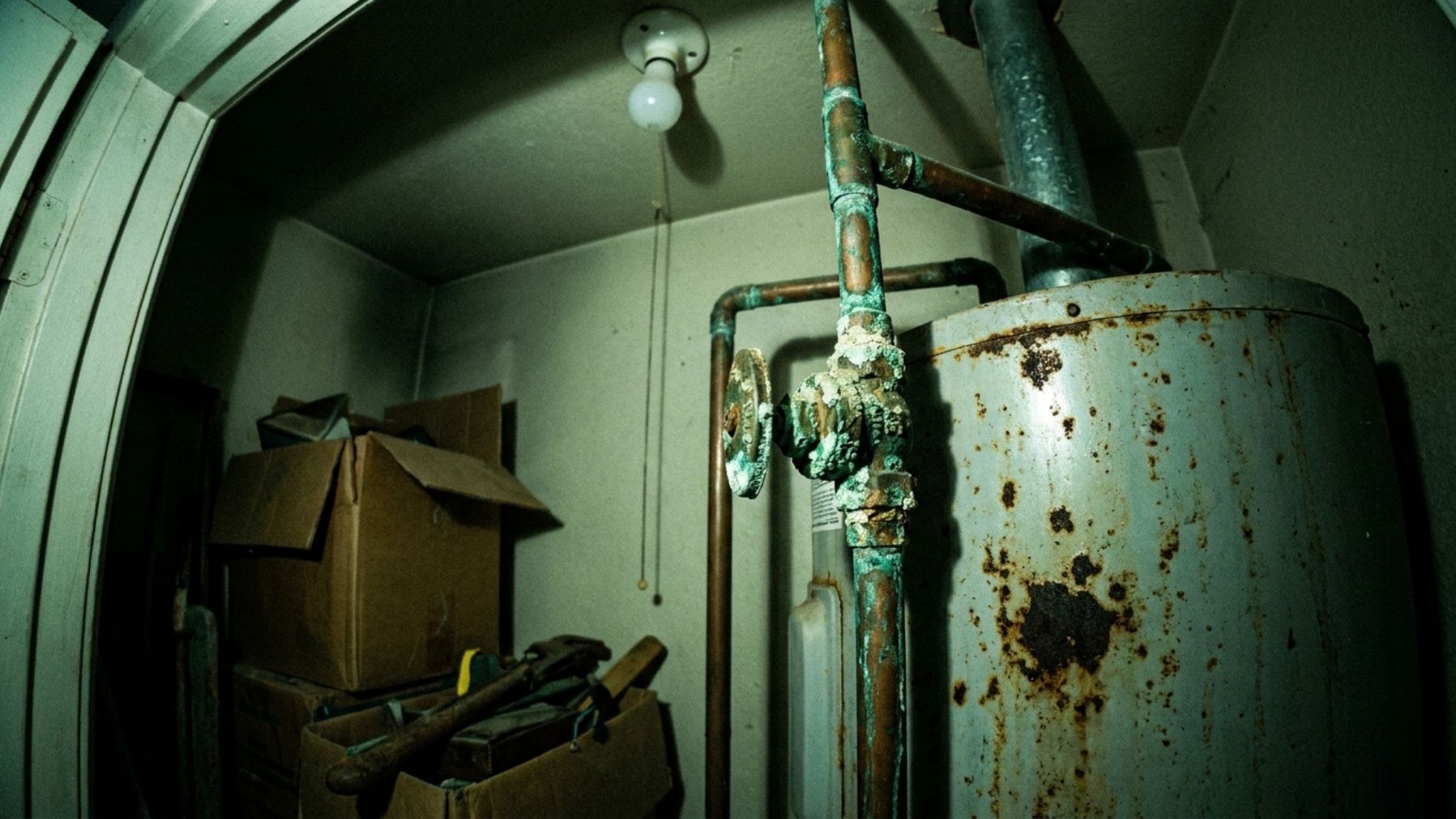
Visual inspection of the valve body reveals critical information about its condition. White, chalky deposits around the valve stem, discharge pipe connection, or valve body indicate chronic seepage and mineral accumulation. Green or blue-green staining on copper components signals copper corrosion from acidic water conditions. Rust-colored staining on steel valve components indicates advanced oxidation that compromises structural integrity. In Phoenix garages and utility closets, where water heaters are commonly installed, ambient temperatures regularly exceed 110 degrees Fahrenheit during summer months. This heat accelerates chemical corrosion reactions.
According to a study by the National Association of Corrosion Engineers, corrosion-related failures in residential plumbing systems cost U.S. homeowners over $9 billion annually. The study further notes that arid regions with hard water, including Maricopa County, experience corrosion rates 30% higher than the national average due to the combined effects of mineral deposition and high ambient temperatures. A valve exhibiting any visible corrosion or mineral crust should be replaced immediately, regardless of its functional status. Surface deterioration indicates internal damage that cannot be assessed visually.
 Sign 5: Valve Fails the Manual Test
Manufacturers and plumbing codes universally recommend testing the T&P valve at least once annually. The test procedure is straightforward: lift the valve’s test lever briefly and observe whether water flows freely from the discharge pipe and stops completely when the lever is released. A valve that does not open when the lever is lifted has seized due to mineral cementation or internal corrosion. A valve that opens but continues to drip after release has a fouled seat. Both conditions constitute failure and require replacement.
Sarah Chen, P.E., a forensic plumbing engineer with Building Systems Analysis in Tempe, emphasizes the importance of this test: “In my 15 years investigating water heater failures, I have never seen a tank rupture where the T&P valve was tested annually and replaced when it failed the test. This simple five-minute procedure is the most effective insurance policy a homeowner can have against catastrophic water damage.” Homeowners who are uncomfortable performing this test should schedule an annual plumbing inspection. The cost of a professional inspection is negligible compared to the average water damage claim of $11,000, as reported by the Insurance Information Institute.
Phoenix-Specific Factors That Accelerate Valve Failure
The Phoenix metropolitan area presents unique challenges for water heater longevity. The combination of extremely hard water, high ambient temperatures, and specific plumbing configurations creates a perfect storm for accelerated valve deterioration. Understanding these local factors helps homeowners contextualize their maintenance responsibilities and anticipate component lifespans more accurately.
Hard Water Mineral Composition
Phoenix water originates primarily from the Salt River, Verde River, and Colorado River watersheds, along with groundwater from the city’s wells. This water travels through sedimentary rock formations rich in calcium carbonate and magnesium sulfate. The City of Phoenix Water Services Department reports an average water hardness of 14 grains per gallon, with some areas exceeding 20 grains. Water hardness above 10.5 grains is classified as “very hard” by the U.S. Geological Survey. This mineral load precipitates out of solution when water is heated above 140 degrees Fahrenheit, forming scale on every internal surface of the water heater, including valve seats, stems, and springs.
Garage Installations and Temperature Extremes
Most Phoenix homes have water heaters installed in unconditioned garages. Summer garage temperatures routinely reach 120 degrees Fahrenheit, and surface temperatures on the water heater tank can exceed 140 degrees. This ambient heat reduces the cooling cycle time between heating cycles, causing the burner or elements to cycle more frequently. More cycles mean more thermal expansion and contraction of valve components, accelerating metal fatigue. The elastomeric seals inside valves degrade faster at sustained high temperatures. A seal rated for a 10-year service life in a conditioned basement may fail in 5 to 7 years in a Phoenix garage.
Recirculation Pump Stress
Many Phoenix homes feature hot water recirculation systems designed to deliver instant hot water to distant fixtures. These systems use a pump and a dedicated return line or a crossover valve at the furthest fixture. Recirculation pumps increase the duty cycle of check valves and mixing valves, subjecting them to continuous flow rather than intermittent use. A study published in the Journal of Plumbing Engineering found that check valves in recirculation systems fail at a rate 2.5 times higher than those in standard configurations. Phoenix homeowners with recirculation systems should inspect all associated valves biannually rather than annually.
Comparison of Water Heater Valve Types and Failure Modes
| Valve Type | Primary Function | Common Failure Mode | Typical Lifespan in Phoenix | Replacement Cost Range |
|---|---|---|---|---|
| T&P Relief Valve | Emergency pressure/temperature release | Mineral fouling, spring fatigue | 3-5 years | $30-$80 |
| Drain Valve | Tank flushing and sediment removal | Plastic stem breakage, seal failure | 4-6 years | $15-$40 |
| Cold Water Inlet Valve | Shut-off for maintenance | Gate seizing, ball corrosion | 8-12 years | $25-$75 |
| Thermostatic Mixing Valve | Temperature regulation at tap | Thermostatic element failure | 5-8 years | $100-$250 |
| Check Valve | Prevent backflow | Spring failure, debris blockage | 4-7 years | $20-$60 |
Step-by-Step: How to Test Your Water Heater T&P Valve
Testing the T&P valve is a straightforward procedure that requires no specialized tools. However, homeowners must follow safety precautions precisely. The water discharged during testing will be near boiling temperature. Burns from this water are severe and require immediate medical attention. Always wear closed-toe shoes, long pants, and heat-resistant gloves during this procedure.
- Locate the T&P valve. It is on the top or side of the tank with a metal test lever and a downward-pointing discharge pipe.
- Position a bucket under the discharge pipe. Ensure the bucket is stable and large enough to hold several gallons of water.
- Clear the area. Ensure no people or pets are near the discharge point. The water will exit with force and at high temperature.
- Lift the test lever briskly. You should hear a rush of water and see it flow from the discharge pipe. Hold the lever open for 3 to 5 seconds.
- Release the lever sharply. The valve should snap closed, and water flow should stop immediately. A continued drip indicates a failed valve.
- Repeat if necessary. If the valve does not seal after the first test, lift and release the lever two or three times rapidly. This action sometimes dislodges minor debris. If dripping persists, replace the valve.
- Document the test. Note the date and result. Consistent annual testing establishes a maintenance record that can be valuable for warranty claims or home sales.
When to Call a Professional Plumber
While testing the T&P valve is a homeowner-level task, replacement involves working with threaded pipe connections, pipe thread sealant, and potentially soldering. Incorrect installation can create leaks that go unnoticed until significant damage occurs. A professional plumber brings specific expertise: proper torque application on brass fittings, correct sealant selection for potable water systems, and the ability to diagnose upstream problems that caused the valve failure. According to the Arizona Registrar of Contractors, all plumbing work involving the replacement of safety devices on water heaters must be performed by a licensed plumbing contractor.
Homeowners should contact a licensed plumber immediately if they observe any of these conditions: water leaking from the tank itself rather than the valve, a T&P valve that has been capped or plugged, a discharge pipe that terminates inside the home rather than outside, or any signs of tank deformation such as bulging or doming on the top or bottom. These conditions indicate imminent tank failure and require emergency intervention.
Preventative Maintenance Schedule for Phoenix Homeowners
Adapting maintenance schedules to local conditions maximizes equipment lifespan and prevents emergency failures. Phoenix homeowners should adopt a more aggressive maintenance regimen than the national standard recommendations. The following schedule accounts for the accelerated wear caused by hard water and high ambient temperatures.
- Monthly: Visual inspection of all valves for corrosion, mineral deposits, or moisture. Check the area around the water heater for any signs of water pooling.
- Quarterly: Operate the drain valve briefly to verify it opens and closes. Flush one gallon of water from the tank to monitor sediment levels.
- Biannually: Test the T&P valve following the step-by-step procedure. Inspect the discharge pipe termination point for obstructions.
- Annually: Full tank flush to remove sediment. Professional inspection of all valves, anode rod, and burner assembly. Pressure regulator testing.
- Every 3-5 Years: Proactive T&P valve replacement regardless of apparent condition. This interval accounts for Phoenix-specific accelerated wear.
Frequently Asked Questions
Why does my water heater valve leak only at night?
Nighttime leaking typically indicates thermal expansion pressure buildup. As the water heater runs its final heating cycle before the household’s low-usage period, water expands and increases tank pressure. If the thermal expansion tank is waterlogged or absent, this pressure forces the T&P valve open. The lower ambient temperature at night causes the tank to cool and the pressure to drop, stopping the leak. This cycle repeats daily and requires a thermal expansion tank installation or replacement.
Can I replace a water heater valve myself?
Homeowners with plumbing experience can replace a T&P valve, drain valve, or shut-off valve. The process requires draining the tank partially or fully, removing the old valve with a pipe wrench, applying PTFE tape or pipe dope to the new valve threads, and torquing to manufacturer specifications. However, improper installation voids manufacturer warranties and may violate local building codes. In Phoenix, the Arizona Registrar of Contractors requires a licensed plumber for any water heater safety device replacement. The risk of scalding, flooding, or creating an unsafe condition makes professional installation the recommended approach.
How much does water heater valve replacement cost in Phoenix?
T&P valve replacement by a licensed Phoenix plumber typically costs between $150 and $350, including the service call fee, labor, and the valve itself. Drain valve replacement ranges from $120 to $250. Thermostatic mixing valve replacement is more expensive, typically $300 to $600, due to the valve cost and the additional labor for temperature calibration. Emergency or after-hours service adds a premium of 50% to 100%. These costs are minimal compared to the average water damage restoration cost of $3,500 to $7,000 for a water heater leak, as reported by local Phoenix restoration companies.
What is the lifespan of a water heater valve in Phoenix?
In Phoenix’s hard water and high-temperature environment, T&P valves have a functional lifespan of 3 to 5 years. This is significantly shorter than the 7 to 10-year lifespan in regions with soft water and conditioned mechanical rooms. Drain valves, particularly the plastic OEM valves installed by manufacturers, often fail within 4 to 6 years. Brass replacement drain valves extend this to 8 to 10 years. Proactive replacement at the 5-year mark prevents the majority of valve-related failures.
Does homeowners insurance cover water damage from a failed valve?
Most homeowners insurance policies cover sudden and accidental water damage from a failed valve. However, damage resulting from gradual leaks, lack of maintenance, or neglect is typically excluded. Insurance adjusters look for evidence of long-term leakage, such as mineral deposits, mold growth, or wood rot, to deny claims. The Insurance Information Institute advises homeowners to document all maintenance activities and address any signs of leakage immediately. A claim denied due to neglect can cost a homeowner tens of thousands of dollars in out-of-pocket restoration expenses.
Why does my water heater make a popping sound?
Popping or knocking sounds from a water heater indicate sediment buildup at the tank bottom. Water trapped beneath the sediment layer superheats and flashes to steam, creating explosive bubbles that produce the popping noise. This condition, called kettling, increases internal tank pressure and stresses the T&P valve. In Phoenix, sediment accumulation occurs rapidly due to high water hardness. Flushing the tank quarterly reduces sediment and eliminates the noise. If popping persists after flushing, the sediment has solidified into a cement-like layer that requires professional descaling or tank replacement.
How do I know if my thermal expansion tank is bad?
A failed thermal expansion tank is a common root cause of T&P valve leakage. Test the expansion tank by tapping it with a metal object. The top half should sound hollow (air), and the bottom half should sound solid (water). If the entire tank sounds solid, the bladder has failed, and the tank is waterlogged. A waterlogged expansion tank cannot absorb thermal expansion pressure, forcing the T&P valve to relieve the excess pressure. Check the air valve on the expansion tank with a tire pressure gauge. The pressure should match the home’s incoming water pressure, typically 50 to 60 PSI. A reading of zero or water coming from the air valve indicates bladder failure.
Conclusion
Water heater valve failure follows a predictable pattern of warning signs that attentive homeowners can recognize and address before catastrophic damage occurs. Persistent dripping from the discharge pipe, unusual noises during heating cycles, fluctuating water temperatures, visible corrosion, and a failed manual test are the five definitive indicators that a valve requires immediate replacement. In Phoenix, where hard water and extreme heat accelerate component degradation, proactive maintenance and early intervention are not optional — they are essential practices for protecting your home and family. The cost of replacing a $50 valve is trivial compared to the financial and emotional toll of a flooded home.
If you have observed any of the warning signs described in this article, do not delay. A licensed Phoenix plumber can diagnose the issue, replace the faulty valve, and inspect your entire water heating system for additional vulnerabilities. Contact us today to schedule a comprehensive water heater inspection and ensure your home’s safety.
References
- U.S. Consumer Product Safety Commission – Water Heater Safety Information
- Plumbing-Heating-Cooling Contractors Association – Industry Service Call Data
- Water Quality Association – Water Hardness Classification and Data
- American Burn Association – Scald Burn Statistics
- National Association of Corrosion Engineers – Corrosion Cost Study
- Insurance Information Institute – Water Damage Claim Statistics
- City of Phoenix Water Services Department – Water Quality Reports
- U.S. Geological Survey – Water Hardness Classification Standards
- Arizona Registrar of Contractors – Plumbing Licensing Requirements
