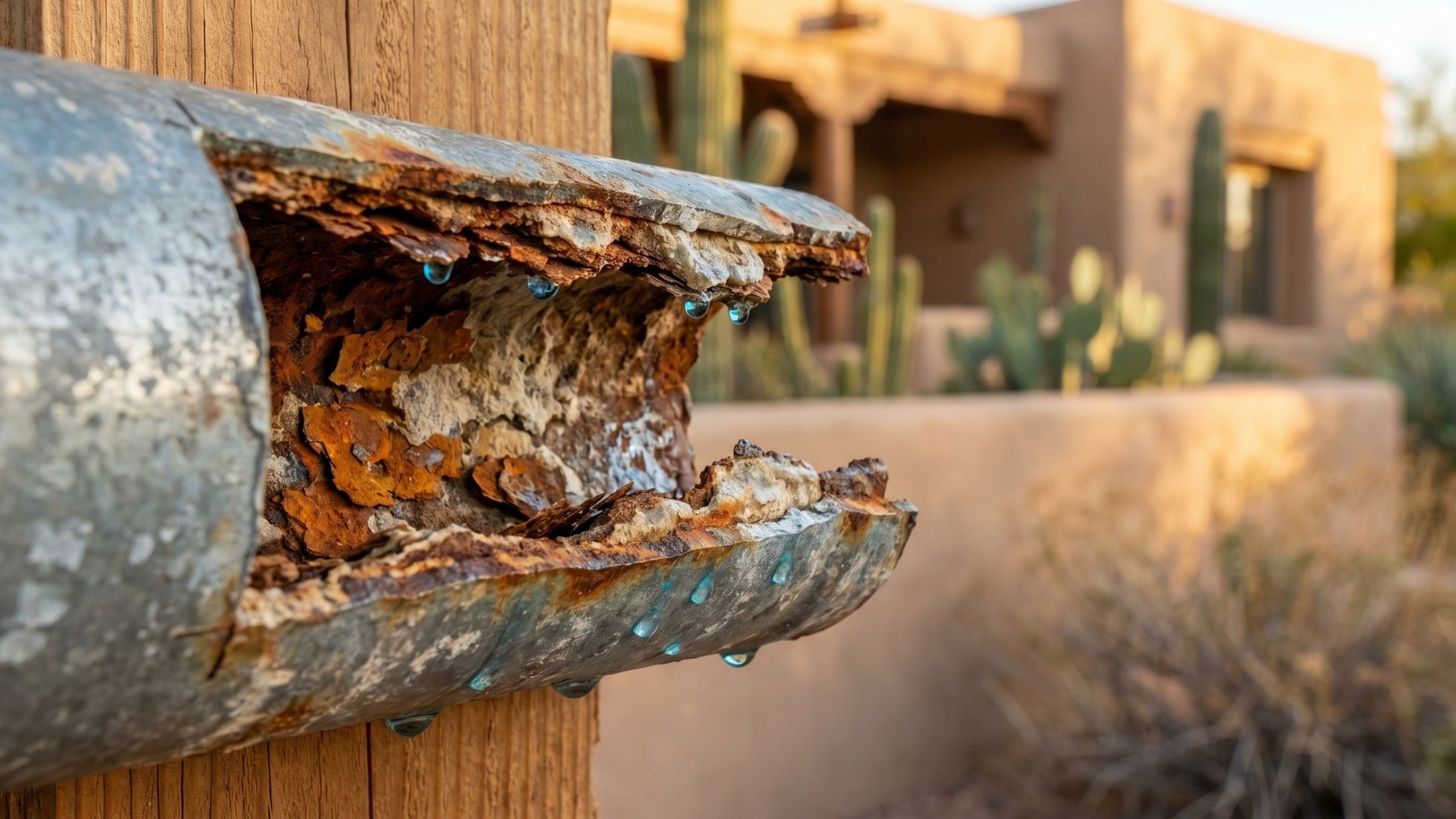
Water pressure drops, rusty discoloration, and persistent leaks are not random nuisances—they are direct symptoms of deteriorating plumbing infrastructure. In Phoenix, where homes built before the 1990s often rely on galvanized steel or polybutylene piping, the combination of hard water mineral buildup and material corrosion systematically chokes water flow. A 2026 assessment by the American Water Works Association confirms that pipe diameter can shrink by up to 70% due to internal scaling over 40 years, turning a once-robust supply line into a trickle.
Key Takeaways
- Galvanized steel pipes in Phoenix homes typically fail after 40-50 years, reducing internal diameter by 50-70%.
- Hard water accelerates scale buildup, with Phoenix water measuring 12-17 grains per gallon of hardness.
- Polybutylene pipes installed between 1978 and 1995 are prone to sudden catastrophic failure due to chlorine degradation.
- Repiping a typical 1,500 sq ft Phoenix home costs between $4,500 and $15,000, depending on material choice.
- PEX and copper are the two primary repiping materials, each with distinct advantages for the desert climate.
- Slab leak detection requires specialized acoustic or electromagnetic equipment, not visual inspection.
- Proactive pipe replacement prevents mold growth, foundation damage, and water damage claims averaging $11,000.
The Silent Decline: How Pipe Material Determines Water Flow
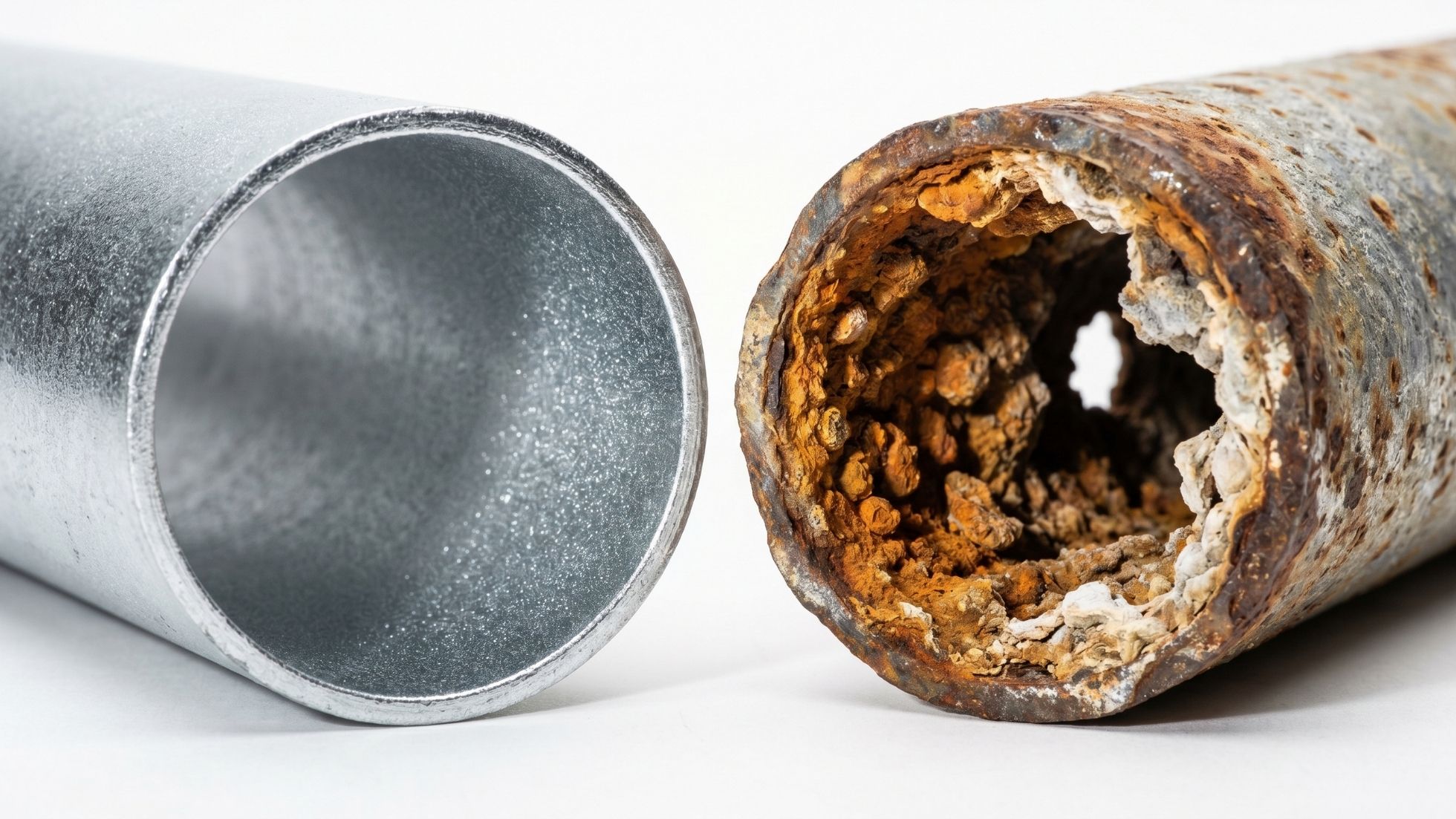
Water flow reduction is rarely sudden. It progresses over decades as the internal walls of supply pipes transform. Galvanized steel, the standard in Phoenix construction from the 1950s through the 1970s, corrodes from the inside out. The zinc coating initially protects the steel, but once it erodes, iron oxidation begins. This rust does not simply flake away—it accumulates as tuberculation, a nodular growth that narrows the effective channel. According to the National Association of Corrosion Engineers, tuberculation can reduce flow capacity by 60% within 30 years of installation.
Copper pipes, widely adopted in the 1980s and still used today, resist corrosion better but face a different enemy in Phoenix: pitting corrosion. The combination of high chlorine residuals in municipal water and elevated temperatures creates micro-environments where copper dissolves, forming pinhole leaks. Research from the University of Arizona’s Water Resources Research Center indicates that pitting corrosion accounts for 80% of copper pipe failures in the Southwest, with leak frequency increasing sharply after year 25.
Polybutylene, a gray plastic pipe installed in an estimated 10 million U.S. homes between 1978 and 1995, presents the most urgent risk. Oxidants in public water supplies, particularly chlorine, cause the material to become brittle and flake from the inside. Failure is often catastrophic rather than gradual. The Consumer Product Safety Commission has documented that polybutylene piping systems can deteriorate to the point of spontaneous rupture, with repair costs frequently exceeding $5,000 per incident.
 Phoenix Water Chemistry: The Accelerant of Pipe Aging
Phoenix draws its water from the Salt River, Verde River, and groundwater aquifers, all of which carry high mineral loads. The city’s annual water quality report consistently shows hardness levels between 12 and 17 grains per gallon, classifying it as “very hard” on the U.S. Geological Survey scale. This mineral content—primarily calcium and magnesium carbonates—precipitates onto pipe walls when water is heated or pressure changes occur.
Scale buildup is not cosmetic. A study published by the Water Quality Research Foundation found that hard water scale reduces water heater efficiency by 24% and decreases flow rates in half-inch pipes by 0.5 gallons per minute for every 1/8 inch of scale accumulation. In a typical Phoenix bathroom, where a showerhead expects 2.5 gallons per minute, scale-narrowed pipes may deliver only 1.2 gallons per minute—a 52% reduction that transforms a shower into a frustrating drizzle.
The thermal factor compounds the problem. Phoenix’s ground temperatures, which can exceed 100°F at pipe depth during summer months, accelerate chemical reaction rates. The Arrhenius equation, a fundamental principle of chemical kinetics, dictates that reaction rates double for every 18°F increase in temperature. Pipes in Phoenix attics and exterior walls therefore corrode significantly faster than those in cooler climates, a reality that the International Association of Plumbing and Mechanical Officials now addresses in its desert-specific installation guidelines.
Diagnostic Signs: Reading the Symptoms of Failing Pipes
Homeowners must recognize the warning signs before a minor flow issue becomes a major structural emergency. The indicators fall into three categories: visible, audible, and experiential.
Visible Indicators
- Discolored water: Brown or reddish water signals iron oxide from corroding steel pipes. Blue-green staining on fixtures indicates copper corrosion.
- Efflorescence on slab foundations: White, chalky mineral deposits on concrete floors suggest a slow slab leak evaporating through the foundation.
- Warped baseboards or drywall: Moisture wicking from concealed leaks causes swelling and paint bubbling.
- Unexplained lush patches in landscaping: A leaking underground supply line acts as unintended irrigation.
Audible Indicators
- Water hammer: The sudden stop of water flow creates a pressure shockwave. Aging pipes with weakened joints are especially vulnerable to hammer damage.
- Hissing or whistling: Restricted flow through narrowed pipe sections generates turbulence and audible vibration.
- Dripping sounds within walls: Active leaks produce rhythmic sounds detectable with acoustic amplification equipment.
Experiential Indicators
- Pressure fluctuations: If turning on a second fixture causes a noticeable drop at the first, pipe restriction is the likely cause.
- Metallic taste: Dissolved iron or copper imparts a distinct metallic flavor to drinking water.
- Slow fixture filling: Toilet tanks that take more than 60 seconds to refill indicate supply line constriction.
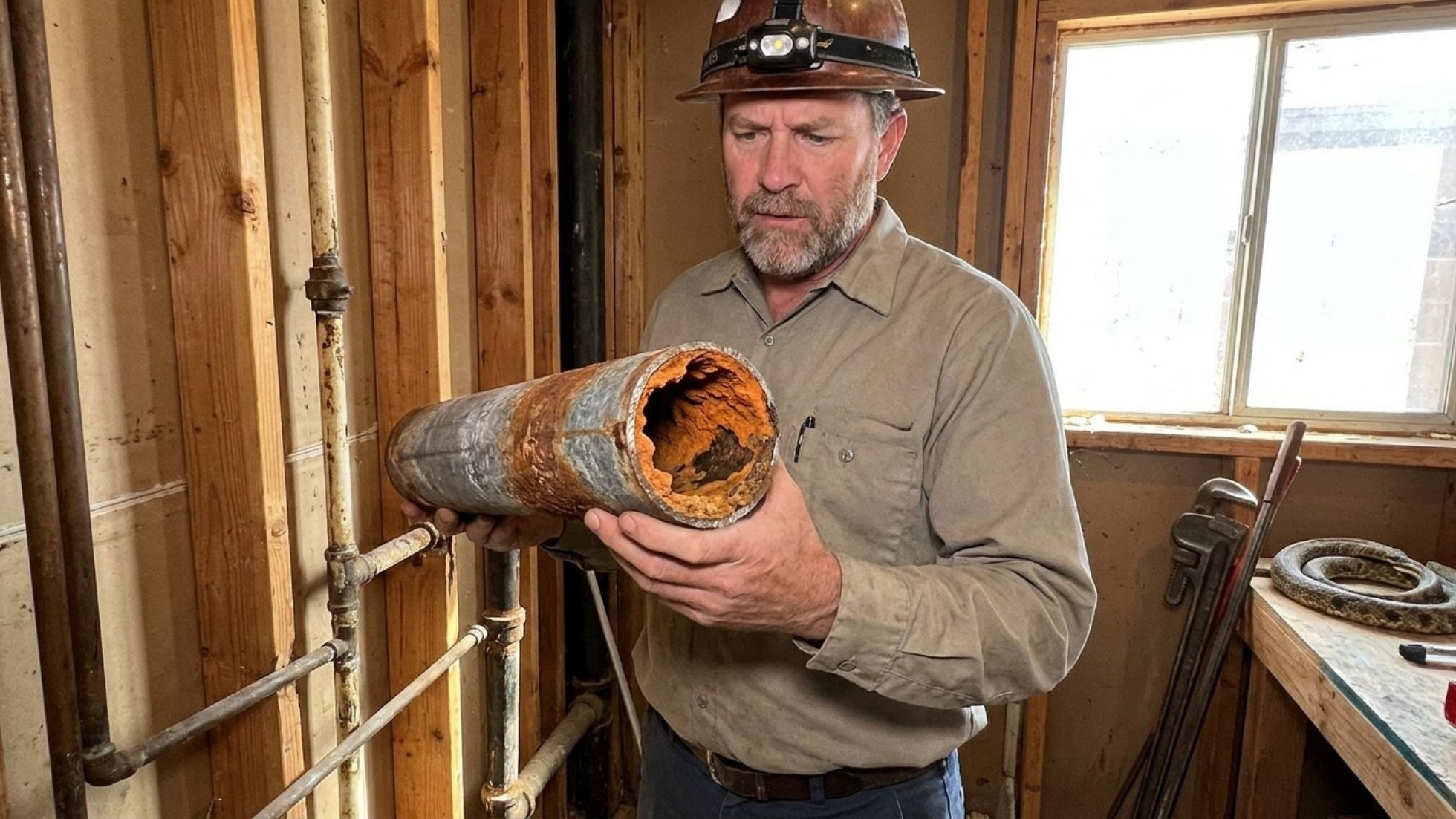
As Maria Gonzalez, Master Plumber and owner of Desert Valley Plumbing Solutions, explains: “Homeowners often mistake low pressure for a municipal supply issue. But when the neighbor’s pressure is fine and yours isn’t, the problem is inside your walls. I’ve pulled out sections of galvanized pipe where the opening was smaller than a pencil eraser.”
 Material Science: Comparing Pipe Options for Phoenix Replacement
When replacement becomes necessary, material selection determines system longevity, water quality, and total cost. The following table compares the three primary repiping materials used in Phoenix residential applications as of 2026.
| Material | Expected Lifespan | Cost per Linear Foot | Corrosion Resistance | Chlorine Tolerance | Installation Complexity |
|---|---|---|---|---|---|
| PEX (Cross-linked Polyethylene) | 40-50 years | $1.50 – $3.50 | Excellent | Good | Low (flexible, fewer fittings) |
| Copper (Type L) | 50-75 years | $3.00 – $8.00 | Good (pitting risk) | Moderate | High (rigid, requires soldering) |
| CPVC (Chlorinated PVC) | 50-75 years | $1.00 – $2.50 | Excellent | Excellent | Medium (solvent welding) |
PEX has become the dominant choice in Phoenix repiping projects, representing approximately 65% of residential installations according to industry data from the Plastic Pipe and Fittings Association. Its flexibility allows it to be pulled through existing wall cavities with minimal demolition, and its resistance to scale buildup addresses the hard water challenge directly. However, PEX is not UV-resistant and cannot be used for exterior above-ground applications.
Copper remains the premium option, valued for its antimicrobial properties and 75-year track record. The key vulnerability—pitting corrosion—can be mitigated by maintaining water pH between 7.2 and 7.8 and ensuring chlorine residuals do not exceed 1.0 parts per million. Phoenix water typically meets these parameters, but homeowners on private wells must test independently.
Dr. James Liu, materials engineer and consultant to the American Society of Plumbing Engineers, notes: “The Southwest’s water chemistry creates a unique corrosion environment. Copper performs beautifully when water chemistry is stable, but any fluctuation in pH or chlorine can initiate pitting that propagates through the pipe wall within five years. PEX eliminates that variable entirely.”
The Repiping Process: A Step-by-Step Roadmap
A whole-house repipe is a major construction project that requires careful planning and execution. The following steps outline the standard process used by licensed Phoenix plumbing contractors.
- Initial Assessment and Diagnostic Testing: A licensed plumber conducts a pressure test, flow rate measurement, and camera inspection of accessible pipe sections. For slab foundations, electromagnetic pipe location or acoustic leak detection identifies the exact position of under-slab lines.
- Permit Acquisition: The City of Phoenix requires a plumbing permit for whole-house repiping services. The contractor files plans showing the proposed pipe routing, material specifications, and fixture unit calculations. Permit fees typically range from $200 to $500.
- Water Shutoff and System Drain: On installation day, the main water supply is shut off at the meter. The existing system is drained completely to prevent water damage during removal.
- Access Point Creation: Drywall access panels are cut at strategic locations—typically behind showers, under sinks, and at wall corners. For slab homes, the new PEX lines are often routed through the attic and dropped down inside interior walls to minimize slab penetration.
- Old Pipe Removal or Abandonment: Exposed sections of old pipe are removed. Inaccessible sections, such as those embedded in concrete slabs, are abandoned in place and disconnected at both ends.
- New Pipe Installation: PEX tubing is pulled through the prepared pathways. A manifold system is installed to create a home-run configuration, where each fixture has a dedicated supply line from a central distribution point.
- Connection and Pressure Testing: All connections are made at fixtures and the water heater. The system is pressurized to 80 psi and monitored for 24 hours to verify zero leakage.
- Inspection and Approval: A City of Phoenix plumbing inspector verifies the installation meets code requirements, including proper support spacing, penetration sealing, and backflow prevention.
- Drywall Repair and Finishing: Access panels are patched, textured to match existing surfaces, and painted.
- System Commissioning and Flushing: The new pipes are flushed thoroughly to remove any installation debris. Water samples may be taken to confirm quality before the system is returned to service.
Thomas Redhawk, a licensed plumbing contractor with 28 years of experience in the Phoenix metro area, advises: “The biggest mistake I see is homeowners trying to repipe in phases. A partial repipe leaves old pipe sections that contaminate the new system and create pressure imbalances. Do it once, do it completely, and you’ll have 50 years of reliable service.”
Slab Leaks: The Hidden Crisis Beneath Phoenix Foundations
Phoenix’s predominant construction method—post-tensioned concrete slab-on-grade—creates a specific vulnerability. Copper and galvanized steel supply lines were routinely embedded directly in the concrete during original construction. When these pipes corrode and leak, the water has no visible escape path. It saturates the soil beneath the slab, causing heaving, or migrates upward through the concrete, damaging flooring and creating mold conditions.
Detection requires specialized methodology. Acoustic listening devices amplify the sound of water escaping under pressure, allowing technicians to pinpoint the leak location within a 12-inch radius. Electromagnetic pipe locators trace the metallic pipe path, and line-tracing gas injection can confirm the exact breach point. The cost of slab leak detection ranges from $300 to $800, but the alternative—unnecessary jackhammer trenching—costs thousands more.
Repair options depend on the leak’s severity and the pipe’s overall condition. Epoxy pipe lining, where a resin-saturated liner is inserted and cured in place, can rehabilitate pipes with isolated pinhole leaks without excavation. This trenchless technology, refined significantly by 2026, costs approximately $150 per linear foot. For pipes with multiple leaks or advanced corrosion, rerouting the line through the attic and abandoning the slab section is the definitive solution, typically costing $2,000 to $5,000 per line.
According to data from the Insurance Information Institute, water damage claims in Arizona average $11,000 per incident, with slab leaks representing 22% of all residential water damage claims in the Phoenix metropolitan area. Homeowners insurance typically covers sudden and accidental leaks but excludes damage from gradual deterioration—a distinction that makes proactive replacement financially prudent.
Water Quality Consequences: Beyond Flow Rate
Diminished flow is the most noticeable symptom of aging pipes, but water quality degradation carries equal or greater health implications. Corroding galvanized pipes release iron, zinc, and trace amounts of lead—particularly in homes built before the 1986 ban on lead solder. The Environmental Protection Agency’s Lead and Copper Rule requires public water systems to monitor for these contaminants, but testing occurs at the treatment plant, not at individual homes. The water that leaves the plant may meet all standards, yet pick up contaminants during its journey through a homeowner’s deteriorating pipes.
Biofilm formation represents another quality concern. The rough, corroded interior surface of aging pipes provides an ideal substrate for bacterial colonization. Research from the Centers for Disease Control and Prevention indicates that opportunistic pathogens, including Legionella and nontuberculous mycobacteria, thrive in the low-flow, warm-water conditions created by restricted pipes. A 2025 study published in the Journal of Water and Health found that homes with pipes older than 40 years had biofilm concentrations 3.7 times higher than homes with pipes less than 10 years old.
Hard water scale, while not a direct health hazard, creates secondary quality issues. Scale accumulations trap organic matter and provide shelter for microorganisms. They also reduce the effectiveness of water treatment devices. Water softeners and filtration systems must work harder—and require more frequent maintenance—when upstream pipes are heavily scaled.
Economic Analysis: The Cost of Waiting Versus Acting
Deferring pipe replacement carries compounding financial consequences. The direct costs of emergency leak repair—including drywall replacement, flooring restoration, mold remediation, and personal property damage—consistently exceed the cost of planned repiping. A comprehensive analysis by the National Association of Home Builders estimates that water damage restoration costs 2.3 times more than preventive pipe replacement when calculated over a 10-year ownership period.
Water waste represents an ongoing operational cost. A pinhole leak of just 1/16 inch diameter wastes approximately 970 gallons per day, according to U.S. Geological Survey calculations. At Phoenix’s average water rate of $4.50 per 1,000 gallons, that single leak costs $130 per month—$1,560 annually—in wasted water alone. Multiple small leaks compound this expense.
Property value impact is equally significant. Home inspectors in the Phoenix market consistently flag galvanized and polybutylene plumbing as material defects. The Arizona Association of Realtors reports that homes with original 1960s-1970s plumbing sell for 3-5% less than comparable homes with updated systems, and spend an average of 22 additional days on market. For a $450,000 Phoenix home, that represents a $13,500 to $22,500 value reduction.
Patricia Mendez, a certified home inspector and member of the American Society of Home Inspectors, states: “When I see galvanized pipes during an inspection, I tell my clients to budget for replacement immediately. It’s not a question of if they’ll fail—it’s when. And the ‘when’ is usually during the most inconvenient time, like when you have a house full of holiday guests.”
Preventive Maintenance: Extending the Life of Existing Pipes
While replacement is the definitive solution for severely degraded pipes, strategic maintenance can extend the service life of moderately aged systems. These measures are particularly relevant for copper systems installed in the 1990s that have not yet reached their failure threshold.
- Annual Water Quality Testing: Test pH, chlorine residual, total dissolved solids, and copper concentration. Results outside the optimal range (pH 7.2-7.8, chlorine below 1.0 ppm) warrant corrective action.
- Whole-House Water Softening: Ion-exchange softeners remove calcium and magnesium ions, preventing scale accumulation. The initial investment of $1,500 to $3,000 pays for itself through extended appliance life and improved flow rates.
- Pressure Regulation: Phoenix municipal water pressure can exceed 100 psi. A pressure-reducing valve set to 60 psi reduces stress on pipe joints and extends system life by an estimated 15-20%.
- Annual Camera Inspection: For accessible main lines, an annual sewer camera inspection costs approximately $200 and identifies developing problems before they become emergencies.
- Dielectric Union Installation: Where copper and galvanized steel pipes connect, a dielectric union prevents galvanic corrosion—an electrochemical reaction that accelerates deterioration at the junction point.
These maintenance practices do not reverse existing damage, but they slow the progression of deterioration. Homeowners who implement all five measures can reasonably expect to extend their plumbing system’s functional life by 5-10 years, providing time to plan and budget for eventual replacement.
Frequently Asked Questions
How do I know if my Phoenix home has polybutylene pipes?
Polybutylene pipes are typically gray or blue in color and may be stamped with the code “PB2110.” Check visible pipe sections under sinks, near the water heater, and where the main line enters the home. Homes built between 1978 and 1995 are most likely to contain polybutylene. If you identify this material, contact a licensed plumber for an immediate assessment, as these pipes are prone to sudden failure.
What is the average cost to repipe a Phoenix home in 2026?
A whole-house repipe using PEX for a typical 1,500 square foot Phoenix home costs between $4,500 and $8,000. Copper repiping for the same home ranges from $8,000 to $15,000. Factors affecting cost include the number of fixtures, accessibility of pipe runs, whether the home is on a slab or raised foundation, and the extent of drywall repair required after installation.
Does homeowners insurance cover pipe replacement due to aging?
Standard homeowners insurance policies do not cover pipe replacement due to gradual deterioration or normal wear and tear. Insurance typically covers sudden and accidental damage, such as a pipe that bursts unexpectedly. However, if aging pipes cause a leak that damages your home, the resulting water damage may be covered even though the pipe replacement itself is not. Review your policy or consult your agent for specific coverage details.
How long does a whole-house repipe take?
A typical whole-house repipe for a two-bathroom Phoenix home takes 3 to 5 working days. Day one involves setup, water shutoff, and access point creation. Days two and three focus on pipe installation and manifold setup. Day four is for pressure testing and inspection. Day five covers drywall patching and cleanup. Larger homes or those with complex layouts may require additional time.
Can I stay in my home during repiping?
You can remain in your home during most of the repiping process, but you will be without water service for 1 to 2 days. The contractor will restore temporary water service at the end of each workday when possible. Plan to shower elsewhere and stock bottled water for drinking and cooking during the active construction days. The noise and dust from drywall cutting can be disruptive, so some homeowners choose to stay elsewhere during the most intensive work.
What are the signs of a slab leak in a Phoenix home?
Key indicators of a slab leak include the sound of running water when all fixtures are off, warm spots on the floor (indicating a hot water line leak), cracks in the foundation or flooring, unexplained increases in water bills, and the presence of mold or mildew odors. If you notice any combination of these signs, contact a plumber who specializes in slab leak detection immediately.
Is PEX piping safe for drinking water in Phoenix’s hot climate?
Yes, PEX piping is certified to NSF/ANSI Standard 61 for drinking water safety and is approved by all major plumbing codes. In Phoenix’s climate, PEX is rated for continuous use at temperatures up to 200°F and pressures up to 160 psi, well above typical residential conditions. The material does not corrode, resists scale buildup, and does not leach harmful chemicals when properly manufactured and installed.
How does hard water specifically affect pipe lifespan in Phoenix?
Phoenix water hardness of 12-17 grains per gallon causes calcium and magnesium carbonate scale to accumulate on pipe walls at a rate of approximately 1/16 inch per decade. This scale reduces internal pipe diameter, increases water velocity through the remaining opening, and creates turbulence that accelerates erosion corrosion. The combined effect can reduce pipe lifespan by 30-40% compared to identical pipes in soft-water regions.
Conclusion
Aging plumbing pipes in Phoenix homes represent a convergence of material science, water chemistry, and climate factors that demand proactive attention. The evidence is clear: galvanized steel pipes installed before 1980 have exceeded their design life, polybutylene systems from the 1980s and 1990s carry catastrophic failure risk, and even copper systems face accelerated degradation from the desert’s unique environmental conditions. The financial case for planned replacement—rather than emergency repair—is overwhelming, with preventive repiping costing less than half of what water damage restoration typically requires.
Homeowners who invest in modern PEX or copper repiping secure reliable water flow, protect their property from hidden leaks, and eliminate the health concerns associated with corroded pipes. The process, while disruptive in the short term, delivers peace of mind for decades. If you have noticed reduced water pressure, discolored water, or unexplained increases in your water bill, these are not problems to monitor—they are signals to act. Contact our team of licensed Phoenix plumbing specialists today for a comprehensive pipe assessment and a detailed repiping plan tailored to your home’s specific needs.
References
- American Water Works Association. (2026). Pipe Material Performance in High-Hardness Water Systems. https://www.awwa.org
- National Association of Corrosion Engineers. (2025). Internal Corrosion of Water Distribution Systems. https://www.nace.org
- University of Arizona Water Resources Research Center. (2024). Copper Pitting Corrosion in Southwestern Water Systems. https://wrrc.arizona.edu
- U.S. Consumer Product Safety Commission. (2023). Polybutylene Plumbing Systems: Failure Analysis. https://www.cpsc.gov
- Water Quality Research Foundation. (2025). Economic Impacts of Hard Water Scale on Residential Plumbing. https://www.wqrf.org
- Insurance Information Institute. (2026). Water Damage Claims Data by State. https://www.iii.org
- Centers for Disease Control and Prevention. (2025). Opportunistic Pathogens in Premise Plumbing. https://www.cdc.gov
- National Association of Home Builders. (2026). Cost vs. Value: Preventive Plumbing Replacement. https://www.nahb.org
