
If you detect a suspicious odor near your drains, water heater, or bathroom fixtures, you must immediately determine its source to ensure your safety. A smell resembling rotten eggs could indicate either a highly dangerous natural gas leak or a relatively harmless—though unpleasant—sewer gas emission caused by a dried plumbing trap. If you suspect natural gas, you must evacuate the premises immediately without touching any electrical switches and call 911 or your local utility provider. Conversely, if the odor is confirmed to be sewer gas stemming from the arid 2026 Phoenix climate evaporating the water in your pipes, simply pouring a few cups of water down unused drains will re-seal the system and eliminate the hazard. However, if the smell persists or you are uncertain of its origin, contacting an Emergency Plumbing Phoenix specialist is paramount to quickly diagnosing and neutralizing any potential household danger.
Key Takeaways
-
Identify the Odor: Natural gas is infused with mercaptan to smell like sulfur, while sewer gas contains hydrogen sulfide, which has a distinct decaying organic odor.
-
Immediate Evacuation for Natural Gas: If natural gas is suspected, leave the home instantly. Do not use phones, light switches, or appliances, as a single spark can cause ignition.
-
The P-Trap Vulnerability: The extreme heat and low humidity in Phoenix rapidly evaporate water in unused P-traps, allowing sewer gases to enter the home.
-
Simple DIY Fix: Running water down guest bathroom sinks, showers, and floor drains weekly prevents sewer gas infiltration.
-
Vent Pipe Issues: Odors that persist after running water may indicate a blocked roof vent, requiring professional inspection.
-
Health Risks: Prolonged exposure to concentrated sewer gases can cause respiratory irritation and olfactory fatigue.
Natural Gas vs. Sewer Gas: Understanding the Critical Differences
When investigating an unusual odor in your home, distinguishing between natural gas and sewer gas is the most critical first step. Both gases are naturally odorless, but they acquire their distinctive smells through different mechanisms—one artificial and one biological.
Natural gas primarily consists of methane. Because methane is completely odorless and highly combustible, utility companies are legally required to add an odorant called mercaptan (specifically methanethiol). The human nose is incredibly sensitive to this compound, capable of detecting it at concentrations as low as 1 part per billion. This artificial additive creates the unmistakable “rotten egg” or “skunk-like” smell that warns occupants of a leak before the gas reaches its explosive limit, which is between 5% and 15% concentration in the air.
Sewer gas, on the other hand, is a complex mixture of toxic and non-toxic gases produced by the decay of household waste. This mixture typically includes hydrogen sulfide (H2S), ammonia, methane, carbon dioxide, and sulfur dioxide. The hydrogen sulfide is responsible for the characteristic sewage or decaying matter odor. While natural gas poses an immediate explosive threat, sewer gas is primarily a health and indoor air quality concern unless methane levels build up in confined, unventilated spaces.
| Characteristic | Natural Gas | Sewer Gas |
|---|---|---|
| Primary Source | Gas lines, water heaters, stoves, furnaces | Drains, toilets, plumbing vent pipes, septic tanks |
| Key Odor Compound | Mercaptan (Artificial Additive) | Hydrogen Sulfide (Biological Byproduct) |
| Primary Danger | Highly explosive; asphyxiation in tight spaces | Toxic at high levels; respiratory irritation |
| Immediate Action | Evacuate immediately and call 911/Utility | Run water in drains; ventilate the area |
Why Phoenix Plumbing is Uniquely Vulnerable to Gas Odors
Homeowners in the Southwest frequently encounter unusual plumbing odors, largely due to the regional environmental conditions. As we navigate the intense climate of 2026, Phoenix continues to average over 300 days of sunshine annually, with summer humidity levels frequently dropping below 15%. This arid environment directly impacts the functionality of residential plumbing systems, specifically the P-traps.
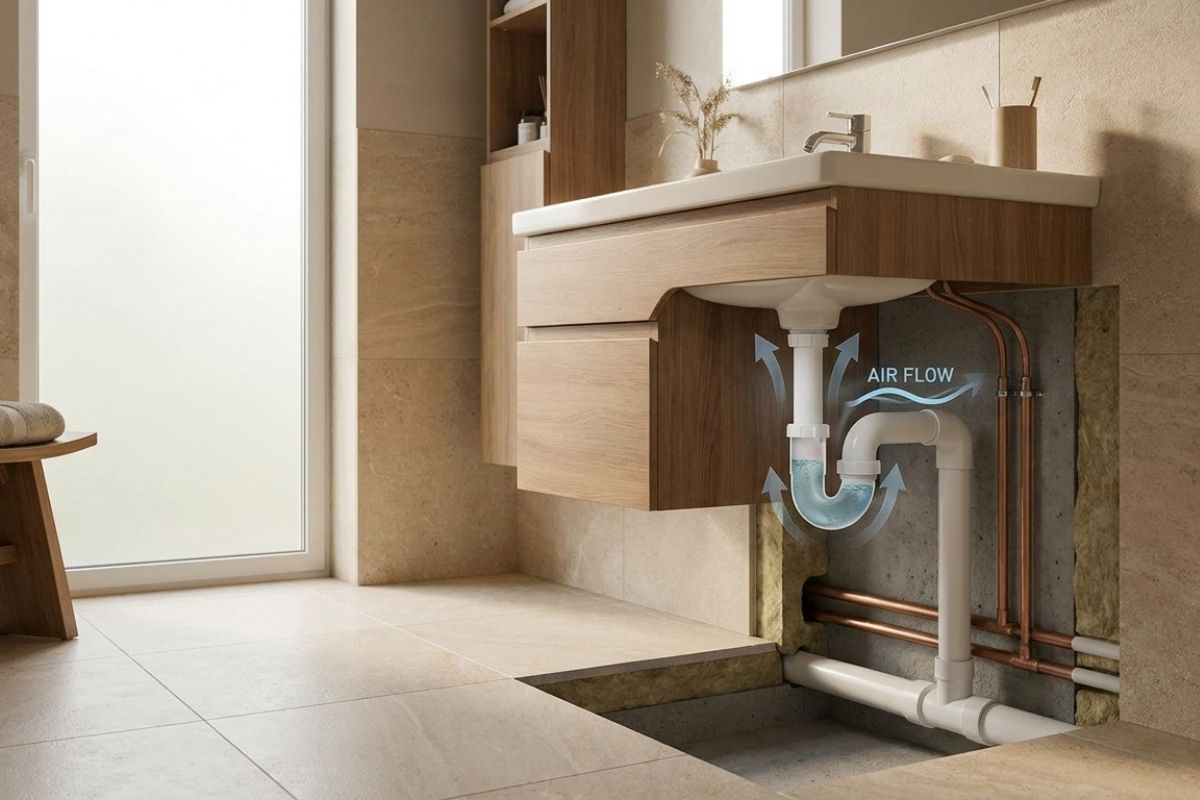
A P-trap is the U-shaped section of piping located beneath sinks, showers, and floor drains. Its primary function is to hold a small amount of water, creating an airtight seal that prevents sewer gases from backing up into the living space. Under normal conditions, regular use keeps this water barrier intact. However, in the severe Phoenix heat, the water inside unused P-traps—such as those in guest bathrooms, utility sinks, or secondary showers—evaporates at an accelerated rate.
Once the water barrier evaporates completely, the seal is broken. The negative pressure within the municipal sewer system can then push hydrogen sulfide and methane directly into your home. Understanding how the Arizona heat affects your plumbing system is essential for preventing these recurring odor issues. Routine maintenance and environmental awareness are the most effective defenses against the infiltration of unwanted gases.
Immediate Safety Protocols for a Suspected Natural Gas Leak
If your olfactory senses detect a sharp, pungent sulfur smell specifically around gas-powered appliances like water heaters, stoves, or utility closets, you must operate under the assumption that it is a natural gas leak. Natural gas incidents require strict adherence to safety protocols to prevent catastrophic ignition.
According to the Pipeline and Hazardous Materials Safety Administration (PHMSA), “If you suspect a natural gas leak, leave the area immediately, and from a safe distance, call 911 or your local gas utility.” Because natural gas is lighter than air, it will rise and accumulate near ceilings, but a concentrated leak will rapidly fill a room, pushing oxygen out and creating a highly volatile environment.
Step-by-Step Evacuation Plan
- Do Not Use Electronics: Never flip a light switch, unplug an appliance, use a garage door opener, or even use your cell phone while inside the house. The microscopic arc of electricity created by completing a circuit is enough to ignite the gas.
- Extinguish Open Flames: If you are near a lit candle, extinguish it immediately. Do not smoke or use lighters anywhere on the property.
- Leave Doors Open: As you evacuate, leave the exterior doors open behind you. This provides ventilation and helps dissipate the gas concentration.
- Evacuate Safely: Move all family members and pets a safe distance away from the property—at least across the street.
- Make the Call: Once you are safely away from the home, call 911 or your local provider, such as Southwest Gas, to report the emergency.
Attempting to locate the source of a natural gas leak yourself is extremely dangerous. Always leave diagnostic work to utility professionals or licensed technicians who understand the risks of DIY plumbing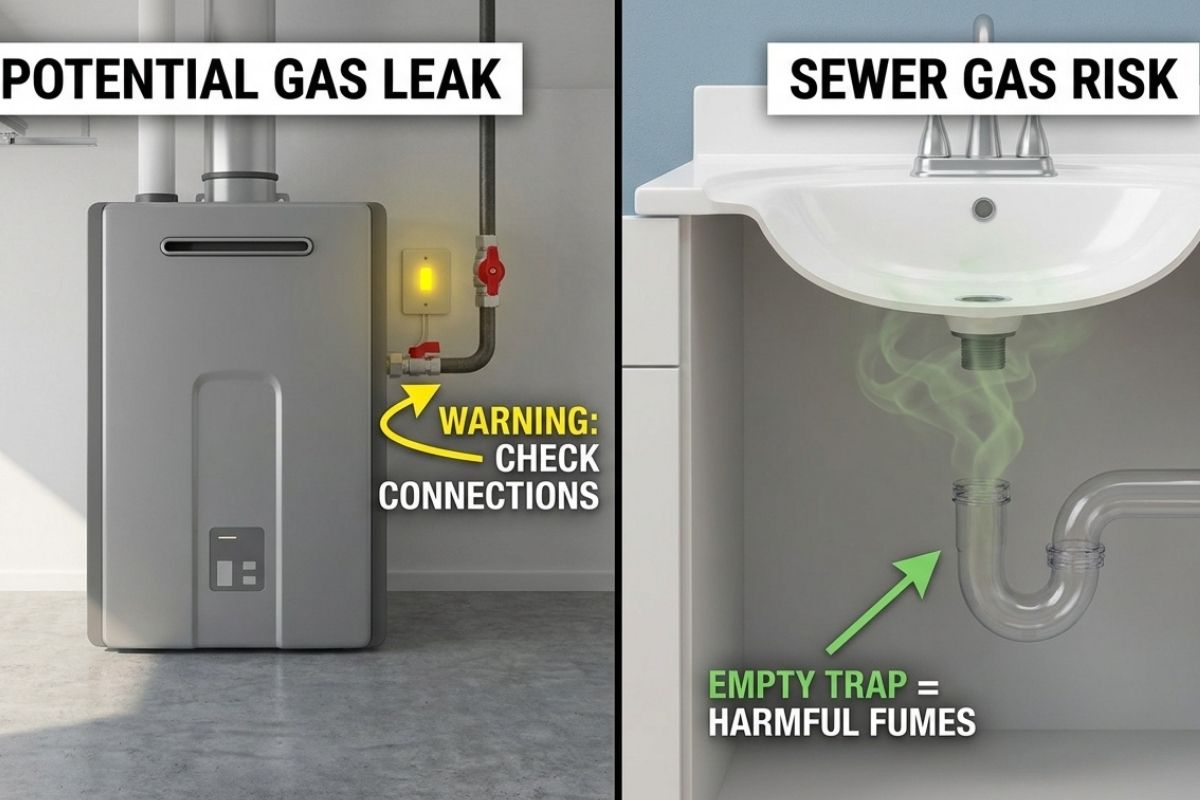 work when combustible materials are involved.
How to Troubleshoot and Resolve Sewer Gas Smells
If you have confidently ruled out natural gas and determine the odor is emanating directly from a drain, shower basin, or toilet, you are likely dealing with sewer gas. Fortunately, resolving sewer gas infiltration is often a straightforward process that homeowners can handle independently.
1. Replenish Dry P-Traps
The most common culprit in arid climates is a dry P-trap. To fix this, simply pour about one quart of water down every drain in the house, particularly those that are rarely used. For floor drains or guest showers, adding a tablespoon of mineral oil after the water can slow down future evaporation, acting as a protective barrier over the water seal.
2. Clean Out Drain Debris
Sometimes, the smell is not coming from the municipal sewer but from decaying organic matter trapped inside the pipe itself. Hair, soap scum, and food particles can accumulate above the P-trap, creating a localized bacterial breeding ground that produces hydrogen sulfide. You can neutralize this by pouring a cup of baking soda followed by a cup of white vinegar down the drain. Let it sit for 15 minutes, then flush it with boiling water. To prevent recurring clogs, learn effective prevention strategies for common plumbing issues.
3. Inspect the Toilet Wax Ring
Toilets rely on a wax ring positioned between the base of the fixture and the floor flange to create an airtight and watertight seal. Over time, these wax rings can degrade, compress, or become misaligned, allowing sewer gases to seep out from under the toilet bowl. If the bathroom smells of sewage and the drain traps are full, a compromised wax ring is the likely suspect. You may also notice a slight wobble when sitting on the toilet, which is a clear indicator that the seal has failed.
4. Check Roof Vent Pipes
Your plumbing system utilizes a network of vent pipes that run up through the walls and exit through the roof. These vents regulate air pressure, allowing wastewater to flow freely while directing sewer gases outside. If a vent pipe becomes clogged by debris, bird nests, or leaves, the trapped gases will be forced back down and out through the interior drains. Addressing blocked vent pipes generally requires roof access and professional equipment.
The Hidden Health Hazards of Ignoring Gas Odors
Ignoring persistent plumbing odors is detrimental to both your property infrastructure and your physical health. The components of sewer gas, particularly hydrogen sulfide and ammonia, carry significant health risks upon prolonged exposure. Knowing how plumbing impacts indoor air quality is vital for maintaining a healthy living environment.
The Centers for Disease Control and Prevention (CDC) warns that “hydrogen sulfide is a highly toxic and flammable gas… it rapidly deadens the sense of smell.” This phenomenon, known as olfactory fatigue, means that after a few minutes of exposure, your nose will stop detecting the rotten egg odor, tricking you into believing the gas has dissipated when it is still actively accumulating. At concentrations of 100 parts per million (ppm), hydrogen sulfide is considered immediately dangerous to life and health (IDLH).
Furthermore, the Environmental Protection Agency (EPA) notes that “exposure to elevated levels of indoor pollutants, including sewer gases, can lead to immediate effects such as irritation of the eyes, nose, and throat, as well as headaches, dizziness, and fatigue.” Chronic exposure to low-level sewer gas can exacerbate asthma and other preexisting respiratory conditions, making prompt remediation non-negotiable.
When to Call a Professional Phoenix Plumber
While running water down a dry drain is an easy home remedy, other gas and plumbing odor issues require the expertise of a licensed professional. You should contact an expert if:
- The odor persists after you have flushed all drains with water.
- The smell is localized near a gas-powered water heater, signifying a potential combustion or ventilation failure.
- You hear gurgling sounds coming from the drains when flushing the toilet, which indicates a severe venting or mainline issue.
- You suspect a hidden leak inside the walls or beneath the slab. If you are unsure of the source, reading about how to detect a hidden leak can provide initial guidance, but professional diagnostic tools are often required.
Licensed plumbers utilize specialized equipment, such as combustible gas indicators, thermal imaging cameras, and endoscopic pipe cameras, to pinpoint the exact origin of odors and leaks without invasive demolition. Scheduling regular maintenance is highly recommended to catch these issues early. Discover why regular plumbing inspections are crucial for preserving your home’s infrastructure.
Conclusion
Detecting a gas smell near your plumbing fixtures is a stressful experience, but understanding the differences between mercaptan-infused natural gas and hydrogen sulfide-laden sewer gas empowers you to take the correct, life-saving actions. Always prioritize safety: evacuate and contact authorities if you suspect a natural gas leak. If the issue is determined to be sewer gas resulting from the dry Phoenix climate evaporating your P-traps, simple home maintenance can often resolve the problem. However, if odors persist or point to systemic plumbing failures, do not hesitate to seek expert assistance. Protect your home and family by addressing these hazards proactively. If you need professional leak detection or drain services, contact our team today to schedule a comprehensive inspection.
Frequently Asked Questions
Can a running toilet cause a sewer gas smell?
A running toilet itself does not directly cause sewer gas smells; however, if the wax ring sealing the toilet to the floor flange is broken, the continuous flow of water can displace sewer gases, forcing them out from under the base of the toilet and into the bathroom.
How quickly does water evaporate from a P-trap in Phoenix?
Due to the exceptionally low humidity and high temperatures in Phoenix, water in an unused P-trap can evaporate entirely in as little as three to four weeks, allowing sewer gases to bypass the seal and enter the living space.
Is it safe to sleep in a house that smells like sewer gas?
It is not recommended. While low levels of sewer gas are generally not immediately lethal, prolonged exposure during sleep can cause respiratory irritation, severe headaches, and nausea. The underlying issue should be resolved or the area properly ventilated before sleeping.
What does a natural gas leak smell like?
Natural gas is intrinsically odorless. Utility companies add a chemical called mercaptan, which gives the gas a highly distinct, pungent smell closely resembling rotten eggs, sulfur, or a skunk spray, designed to alert occupants immediately.
Can I use a lighter to check for drafts near a smelling pipe?
Absolutely never use an open flame, lighter, or match near a suspected gas leak or smelling pipe. If the odor is caused by natural gas or highly concentrated methane from sewer gas, introducing an open flame can cause a catastrophic explosion.
Why does my water heater smell like gas?
If you smell gas near your water heater, it could indicate a failing gas control valve, a loose supply line connection, or an extinguished pilot light that fails to shut off the gas flow. This is a severe emergency requiring immediate evacuation and professional repair.
