
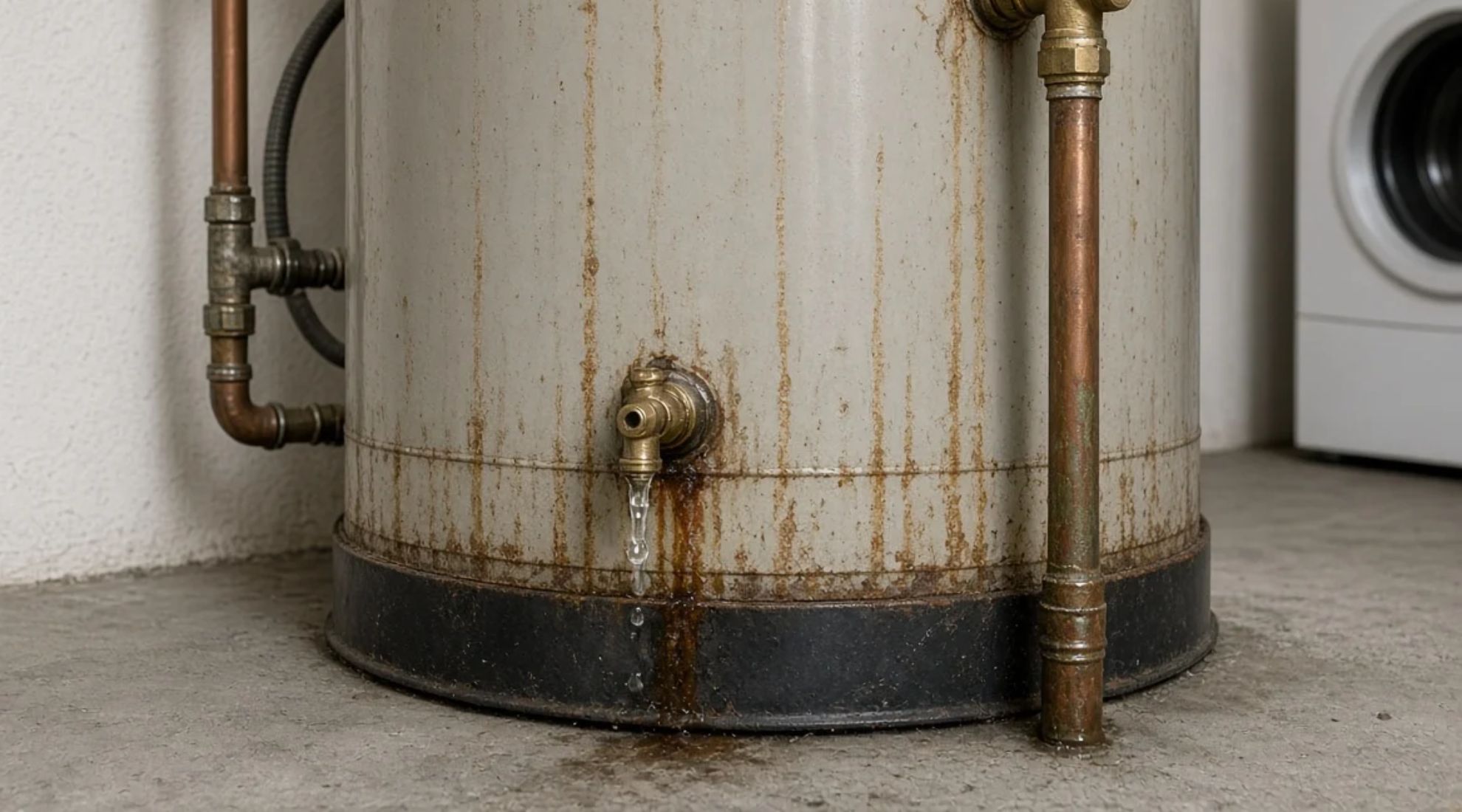
A water heater leaking from the bottom is usually one of two things: a loose or failing fitting that can be repaired, or a tank that has rusted through and needs to be replaced. The quickest way to tell them apart is to find where the water is actually coming from, shut off the heater and its water supply, and look at the connections before you assume the whole unit is finished.
This guide walks Phoenix-area homeowners through the most common causes of a water heater leaking from the bottom, the safe first steps, and the signs that point to repair versus replacement. If water is already spreading across the floor, skip to the safety steps first.
Key Takeaways
- Not every puddle under a tank means the tank has failed. Drain valves, temperature-and-pressure relief valves, supply connections and condensation can all leave water at the base.
- Water seeping from the tank body itself, especially with rust streaks, usually means the inner tank has corroded and the unit needs to be replaced.
- Turn off the power or gas and close the cold-water supply before you investigate. Hot water and electricity do not mix.
- Hard water and sediment, both common in the Valley, can speed up tank wear and make bottom leaks more likely as a heater ages.
- A leak that is getting worse, or any leak near a gas heater’s burner area, deserves a professional visit the same day.
What to Do First When Your Water Heater Is Leaking
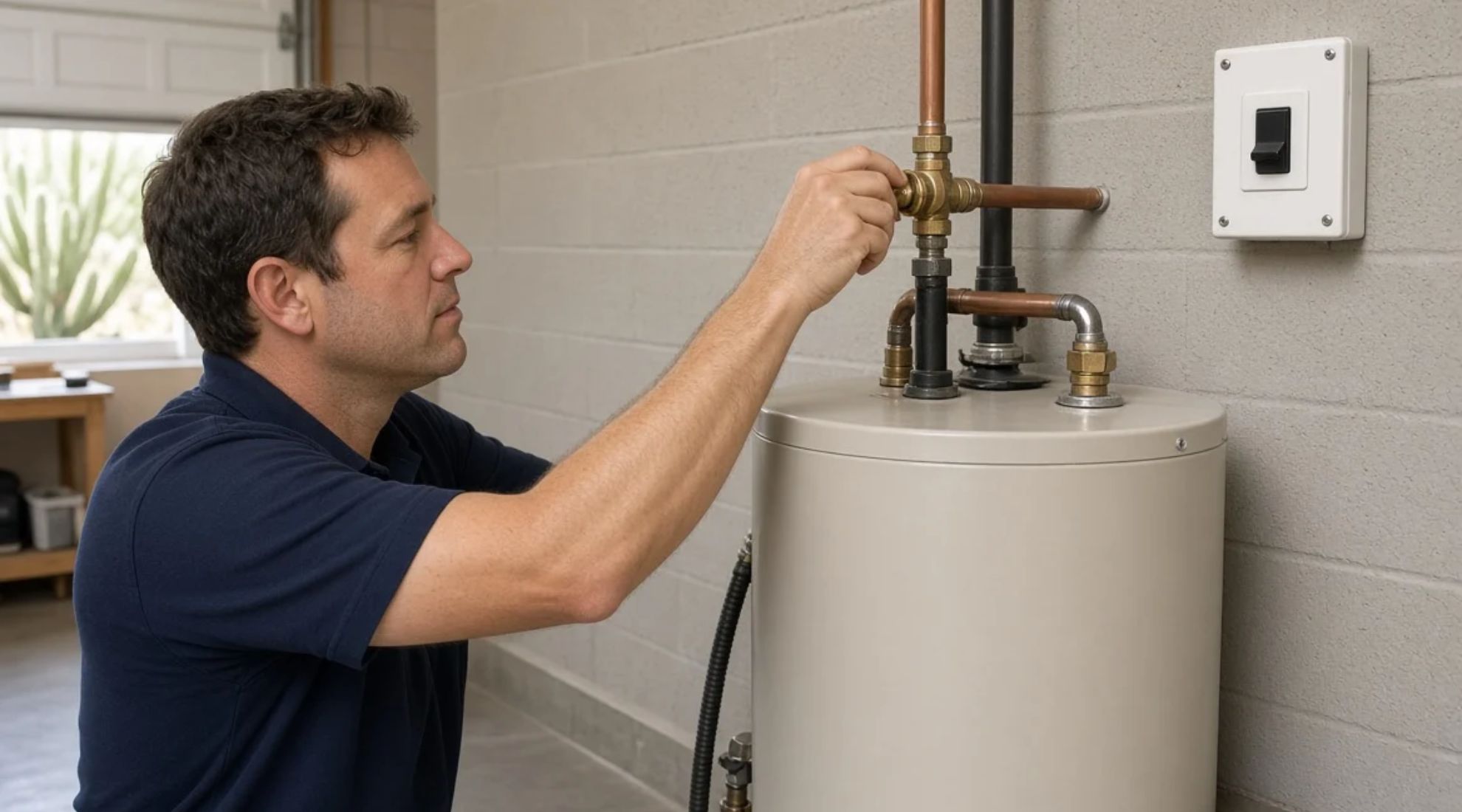 Safety comes before diagnosis. Take these steps in order before you try to find the source.
- Turn off the energy source. For an electric heater, switch off its breaker. For a gas heater, turn the gas control to the pilot or off position.
- Close the cold-water shutoff on the pipe above the heater. This stops new water from flowing into the tank and feeding the leak.
- Keep people and pets away from the area if the water is hot or the floor is wet near electrical outlets.
- Contain the water. Use towels or a wet vacuum, and if the heater sits in a garage or closet, move stored items off the floor.
- Call a licensed plumber if you cannot tell where the water is coming from, or if it keeps coming after the supply is closed.
If the leak is large or you cannot reach the shutoff, close the main water valve for the house. Phoenix homes often have the main near the front hose bib or along the exterior wall closest to the street.
Common Causes of a Water Heater Leaking From the Bottom
1. A corroded or rusted-through tank
Inside a tank-style water heater, a steel tank is protected by a glass lining and an anode rod. Over the years the rod is consumed, the lining develops tiny cracks, and the steel starts to corrode. Once corrosion breaks through, water seeps from the bottom or sides of the tank, often as rust-colored drips or a slow, steady dampness. A tank leak cannot be patched. When this is the source, water heater replacement is the safe path forward.
2. A leaking drain valve
Most tanks have a drain valve near the bottom, used to flush sediment. Valves can loosen or wear, particularly after a flush, and drip slowly onto the floor. A drain valve leak is one of the cheaper problems to fix when the rest of the tank is sound. It is worth checking early, because it is easy to mistake for a failing tank.
3. A temperature-and-pressure relief valve that is discharging
The relief valve is a safety device with a discharge pipe that runs down toward the floor. If water is coming from that pipe, the valve is opening because of excess pressure or temperature, or the valve itself is worn. Do not cap or plug it. A discharging relief valve is a reason to call a plumber, because the cause may be high water pressure, thermal expansion or a faulty valve.
4. Loose or corroded supply connections
The hot and cold lines, flex connectors and unions on top of the heater can drip, and the water runs down the outside of the tank and collects at the base. That makes it look like a bottom leak. Wipe the top fittings dry, then watch where the first new drop appears. Connection leaks are often repairable.
5. Condensation
Not every wet floor is a leak. On humid days, or with a high-efficiency or tankless unit, condensation can form on cold pipes and metal surfaces and drip. If the water is clean, appears only briefly and stops when the humidity drops, it may be condensation. Dry the area and check again after a day.
6. Sediment and hard water wear
Phoenix-area water is hard. Over the years minerals settle at the bottom of the tank, form a layer of sediment, and can create hot spots that stress the steel. Sediment does not cause every leak, but a tank that has gone years without flushing is more likely to fail at the bottom. Our guide on how to flush your water heater explains the routine maintenance side of this.
Repair or Replace? How to Decide
The location of the leak and the age of the unit tell most of the story.
- Repair is often reasonable when the water comes from a drain valve, a supply connection or a relief valve, and the tank itself is dry and not heavily rusted. Our water heater repair service covers these fixes.
- Replacement is usually the answer when water is seeping through the tank wall, the base is rusted, or the leak returns after a repair.
- Age matters. A tank that is around ten years old or more, with a bottom leak, is rarely worth repairing. Our article on how to tell if your water heater is about to fail lists other warning signs to look for.
- Consider the whole picture. If you have also noticed rusty hot water, rumbling noises or a lack of hot water, replacement is more likely.
If you do need a new unit, a plumber can help you decide between a standard tank and a tankless model, and size it correctly for your household. You can read more on our water heater repair and installation page.
Why a Garage or Closet Install Changes the Stakes
In many Valley homes, water heaters sit in garages, hall closets or utility rooms. A slow leak in a closet can soak drywall and flooring before anyone notices, and in a garage it can run under stored boxes. If your heater is in an enclosed space, check the floor around it every few months, and consider a drain pan with a line to a safe discharge point. Catching a small drip early is the difference between a repair and a water-damage cleanup.
What Not to Do
- Do not use sealant or tape on a leaking tank body. It does not stop internal corrosion and can hide a problem that is getting worse.
- Do not plug or cap the relief valve discharge pipe.
- Do not leave the power or gas on while you investigate a leak.
- Do not wait for a “small” leak to get bigger. Tank failures can turn from a drip to a flood without much warning.
Frequently Asked Questions
Is a water heater leaking from the bottom an emergency?
It can be. Turn off the power or gas and close the cold-water supply right away. A small drip from a valve can wait for a scheduled visit, but water coming from the tank body, or any leak that is spreading, should be handled the same day.
Can a leaking water heater be repaired?
It depends on the source. Drain valves, supply connections and relief valves can often be repaired or replaced. A leak through the tank wall cannot be fixed, because the corrosion is inside the steel.
How long does a water heater usually last?
Many tank-style heaters last roughly ten years, though water quality, maintenance and installation conditions all affect the real number. Tanks that have never been flushed in hard-water areas tend to wear sooner.
Why is there water around my heater but no visible drip?
Slow leaks, condensation and relief valve discharge can all leave water without a visible drip. Dry the area completely, place a piece of dry cardboard under the heater, and see where the first drops appear over several hours.
Should I replace my water heater before it fails?
If the unit is old and showing signs of corrosion, planned replacement is usually easier and less costly than an emergency one, because you can choose the right size and schedule the install instead of dealing with flood damage.
Conclusion
A water heater leaking from the bottom is not always a dead tank, but it is always worth acting on quickly. Shut off the power or gas, close the water supply, find the source, and match the fix to the cause. If your heater is old or the tank itself is leaking, it is time to talk about replacement. Rapid Fire Plumbing’s licensed plumbers are available 24/7 for urgent leaks. Call or text (623) 810-6166 for a free consultation.
References
- Arizona Registrar of Contractors (ROC) — licensing information for plumbing contractors in Arizona.
