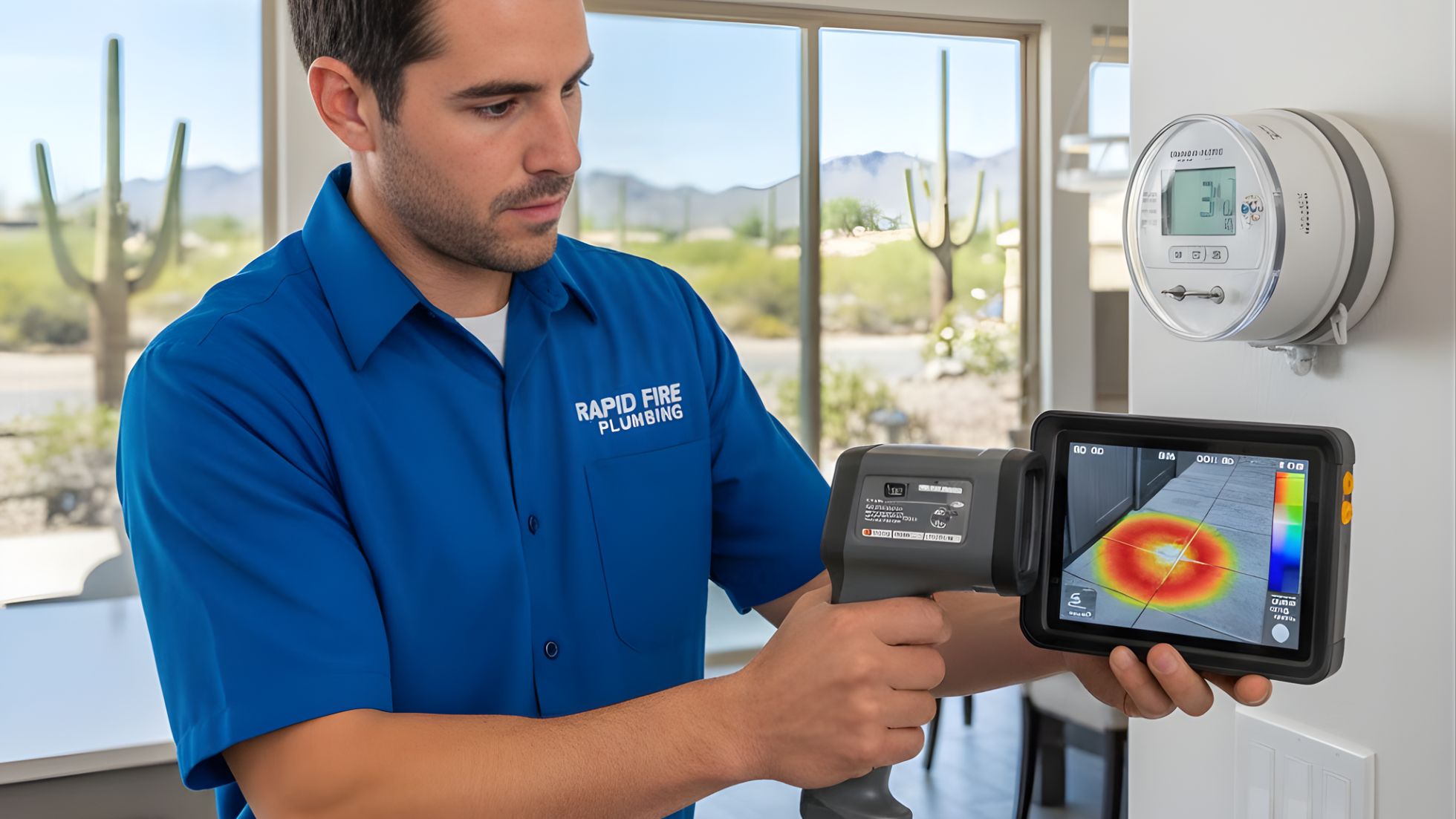
A slab leak is one of the most serious plumbing problems a homeowner can face. When water or sewer pipes embedded in
your home’s concrete foundation develop leaks, the damage can be extensive, costly, and difficult to detect until
it’s too late. Understanding the slab leak signs and catching these problems early can save you
thousands of dollars in repairs and prevent major structural damage to your Phoenix home.
At Rapid Fire Plumbing, we specialize in water leak detection and slab leak repair
throughout Phoenix and surrounding areas. Our experienced plumbers have helped countless homeowners identify and
resolve slab leaks before they cause catastrophic damage. In this guide, we’ll walk you through the five most common
signs of a slab leak and explain what to do if you suspect this hidden threat beneath your home.
What Is a Slab Leak?
Before diving into the warning signs, it’s important to understand what a slab leak is and why it’s such a serious
concern.
Understanding Slab Construction
Many Phoenix homes are built on concrete slab foundations rather than basements or crawl spaces. During construction,
water supply lines and sometimes drain lines are run through or beneath this concrete slab before it’s poured. When
these pipes develop leaks, water escapes directly into or under your foundation—creating what’s known as a slab
leak.
Why Slab Leaks Are Dangerous
Slab leaks are particularly problematic because:
- They’re hidden – The leak occurs beneath concrete, making it invisible until damage appears
- They waste massive amounts of water – Running 24/7, even small leaks waste thousands of gallons
- They damage your foundation – Water erodes soil beneath the slab, causing settling, cracks, and
structural issues - They promote mold growth – Moisture beneath flooring creates perfect conditions for mold
- They’re expensive to repair – Accessing pipes beneath concrete requires specialized equipment
and expertise
Common Causes of Slab Leaks in Phoenix
Phoenix homes face specific risks for slab leaks:
- Soil shifting – Phoenix’s expansive clay soil shifts dramatically with moisture changes,
stressing pipes - Hard water corrosion – Phoenix’s extremely hard water accelerates pipe corrosion from the
inside - High water pressure – Excessive pressure stresses pipes and joints over time
- Age and wear – Older copper pipes naturally corrode and develop pinhole leaks
- Poor installation – Improperly installed or inadequately protected pipes are more prone to
damage - Abrasion – Pipes can rub against concrete or gravel as the foundation settles, wearing through
over time
Sign #1: Unexplained Spike in Your Water Bill
One of the earliest and most reliable slab leak signs is a sudden, unexplained increase in your
water bill.
What to Look For
Compare your current water bill to the same month from previous years. A slab leak typically causes:
- 20-50% increase or more in water consumption without explanation
- Consistent elevation – The bill stays high month after month
- No corresponding increase in usage – Your habits haven’t changed, but the bill has
Why This Happens
Slab leaks run continuously, 24 hours a day, 7 days a week. Even a relatively small leak can waste 30-50 gallons per
day (900-1,500 gallons per month), while larger leaks can waste hundreds of gallons daily. This constant water loss
shows up dramatically on your utility bill.
What to Do
If you notice an unexplained bill increase:
- Check for obvious sources (running toilets, dripping faucets, irrigation issues)
- Perform a water meter test when all water is off (if meter still moves, you have a leak)
- Contact Rapid Fire Plumbing for professional water leak detection
Phoenix-specific note: Don’t assume summer bill increases are just from irrigation—verify your
outdoor water use matches the increase before dismissing it.
Sign #2: Sound of Running Water When Everything Is Off
Hearing water running, flowing, or hissing when all faucets and appliances are turned off is a clear warning sign of
a leak somewhere in your plumbing system—often a slab leak.
What to Listen For
- Rushing water sound beneath floors, especially in bathrooms or kitchens
- Hissing or whooshing that persists even when everything is shut off
- Gurgling sounds from drains or fixtures when not in use
- Water flowing sounds in walls or under floors
How to Check
For the most accurate assessment:
- Turn off all water-using appliances and fixtures
- Ensure no one is using water anywhere in the home
- Walk through your home, especially near plumbing fixtures
- Listen carefully for any water sounds
- Check at night when ambient noise is minimal
Why This Matters
The sound of running water when nothing is on means water is escaping somewhere. If you’ve ruled out obvious sources
like running toilets or dripping faucets, the leak is likely hidden—potentially in your slab.
Sign #3: Warm or Hot Spots on Your Floor
Unexplained warm or hot areas on your floor are one of the most distinctive slab leak signs,
particularly when hot water lines are leaking.
What to Feel For
- Warm tile or concrete in kitchens, bathrooms, or hallways
- Hot spots that are noticeably warmer than surrounding areas
- Warmth that persists even when you haven’t used hot water recently
- Areas that feel warm to bare feet but wouldn’t normally be heated
Why This Happens
When a hot water line beneath your slab develops a leak, the escaping hot water heats the concrete and flooring above
it. This heat transfers to the surface, creating noticeably warm spots—especially on tile, concrete, or hardwood
floors.
Testing for Hot Spots
Walk barefoot through your home, paying special attention to:
- Bathroom floors near bathtubs and showers
- Kitchen floors near sinks and dishwashers
- Hallways where plumbing lines run
- Areas near water heaters
Phoenix consideration: In summer, distinguish between warm floors from air conditioning patterns
versus actual hot spots from leaks. Hot spots from slab leaks are localized and persist even with AC running.
Sign #4: Wet Spots, Pooling Water, or Moisture on Floors
Visible water damage on your floors is an obvious but often late-stage slab leak sign that requires
immediate attention.
What to Look For
- Damp or wet areas on carpet, tile, or hardwood floors with no obvious source
- Puddles or pooling that appear and reappear even after cleaning
- Moisture seeping through flooring joints or edges
- Discoloration on carpets or rugs from constant moisture
- Warping or buckling hardwood or laminate floors from water exposure
- Musty odor from moisture trapped beneath flooring
Common Locations
Slab leak moisture most commonly appears:
- In bathrooms near tubs, showers, or toilets
- In kitchens near sinks or appliances
- Along walls where plumbing lines run
- In laundry rooms or utility areas
Why Immediate Action Is Critical
By the time water is visibly seeping through your floor, the leak has likely been active for some time and has
already caused significant damage beneath the slab. The moisture you see is just a fraction of the total water
accumulation underground.
Immediate professional plumbing repair in Phoenix from Rapid Fire Plumbing prevents:
- Foundation erosion and settling
- Mold growth beneath flooring
- Complete flooring replacement costs
- Structural damage to your home
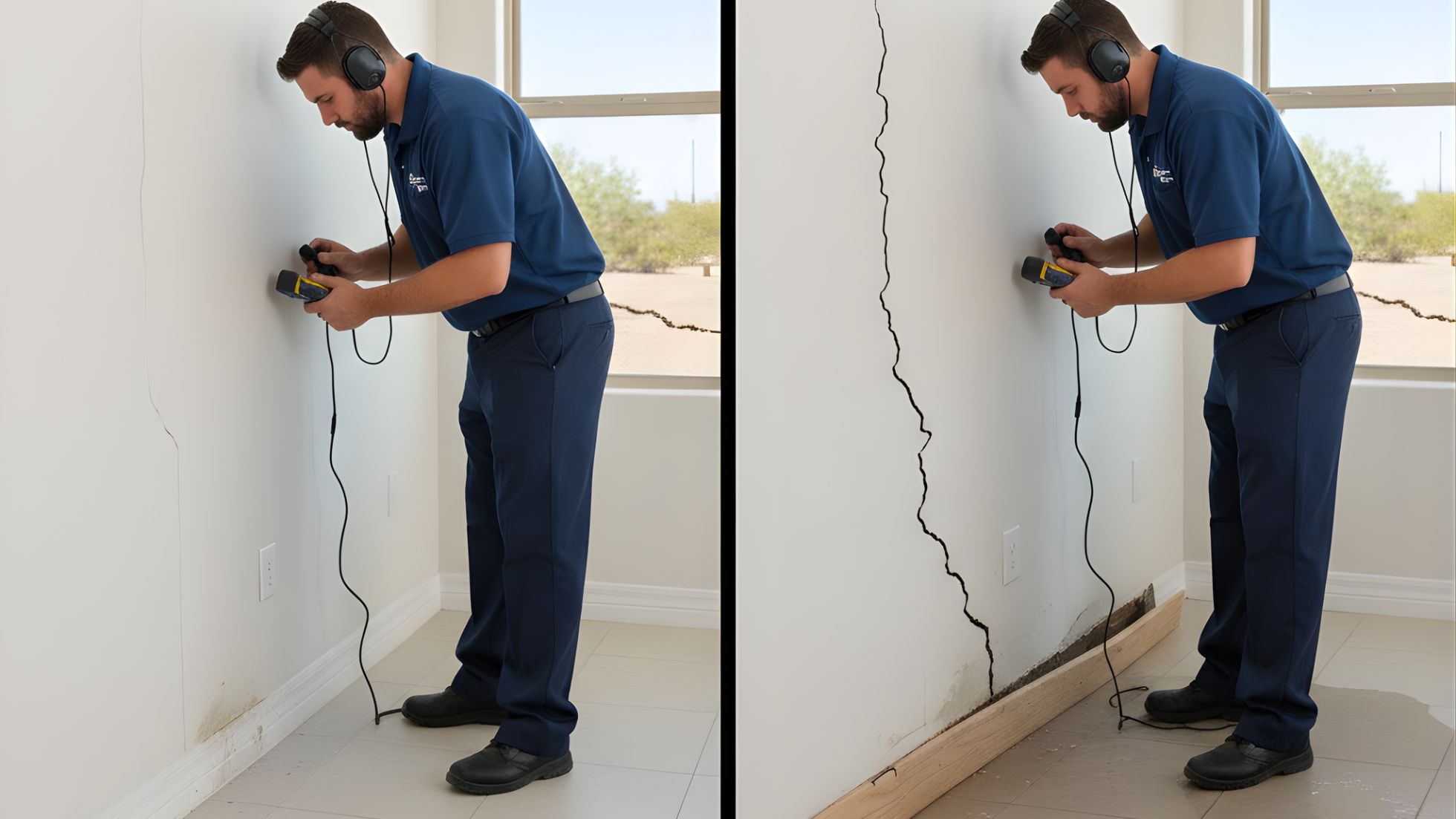
Sign #5: Cracks in Walls, Ceilings, or Foundation
New or expanding cracks in your home’s structure can indicate foundation movement caused by a slab leak eroding soil
beneath your home.
What to Watch For
- New cracks in interior or exterior walls that weren’t there before
- Expanding cracks that grow wider or longer over time
- Ceiling cracks that appear suddenly, especially perpendicular to foundation walls
- Foundation cracks visible from outside your home
- Doors or windows that suddenly stick, don’t close properly, or show gaps
- Uneven floors or visible sloping in areas that were previously level
- Gaps between walls and floors or walls and ceilings
How Slab Leaks Cause Structural Damage
When water leaks beneath your slab, it:
- Erodes soil – Water washes away supporting soil beneath the foundation
- Creates voids – Eroded areas leave empty spaces under the concrete
- Causes settling – Unsupported sections of foundation sink or shift
- Produces stress – Uneven support creates stress throughout the structure
- Results in cracks – Stressed walls, floors, and ceilings crack under the pressure
Don’t Ignore Structural Changes
While not all cracks indicate slab leaks, the combination of cracks with other signs on this list (high water bills,
hot spots, moisture) strongly suggests a serious foundation leak. Early intervention prevents minor structural
issues from becoming major, extremely expensive foundation repairs.
Additional Warning Signs of Slab Leaks
Beyond the five primary signs, watch for these additional indicators:
Decreased Water Pressure
If water pressure throughout your home suddenly drops without explanation, a significant leak (possibly in your slab)
may be diverting water before it reaches your fixtures.
Mold or Mildew Growth
Unexplained mold on floors, baseboards, or lower walls—especially with a musty odor—often indicates hidden moisture
from a slab leak.
Your Water Heater Runs Constantly
If your water heater seems to run more frequently than normal, a hot water line slab leak may be causing continuous
water heating to replace what’s escaping.
High Humidity Indoors
Slab leaks can increase indoor humidity levels as moisture evaporates from beneath your floors. This is particularly
noticeable in Phoenix’s normally dry climate.
Unusually Green or Lush Grass Outside
If your lawn suddenly develops a particularly green, thriving patch near your foundation while the rest remains
typical for Phoenix’s arid climate, underground water from a slab leak may be the cause.
What to Do If You Suspect a Slab Leak
If you’ve noticed one or more slab leak signs, take these immediate steps:
1. Document the Evidence
Take photos and notes of:
- Water bills showing the increase
- Wet spots or damage on floors
- Cracks in walls or foundation
- Dates when you first noticed issues
This documentation helps your plumber and may be needed for insurance claims.
2. Don’t Wait—Call a Professional Immediately
Slab leaks only get worse over time. Contact Rapid Fire Plumbing at 623-810-6166
for immediate professional water leak detection in Phoenix.
3. Minimize Water Usage
While waiting for your plumber, reduce water use to minimize additional leakage and damage. Avoid running
dishwashers, washing machines, and take shorter showers.
4. Turn Off Water if Necessary
If you see active flooding or rapid water accumulation, locate your main water shutoff valve and turn off water to
your home completely.
5. Contact Your Homeowner’s Insurance
Many homeowner’s insurance policies cover slab leak damage. Contact your insurance company to start a claim and ask
about coverage for:
- Leak detection services
- Slab repair or re-routing
- Foundation repairs
- Flooring replacement
- Mold remediation
How Rapid Fire Plumbing Detects and Repairs Slab Leaks
When you call Rapid Fire Plumbing for slab leak signs investigation, here’s what to expect:
Step 1: Professional Assessment
Our experienced plumbers begin with a comprehensive consultation to understand your concerns, symptoms you’ve
noticed, and your home’s plumbing history.
Step 2: Advanced Leak Detection
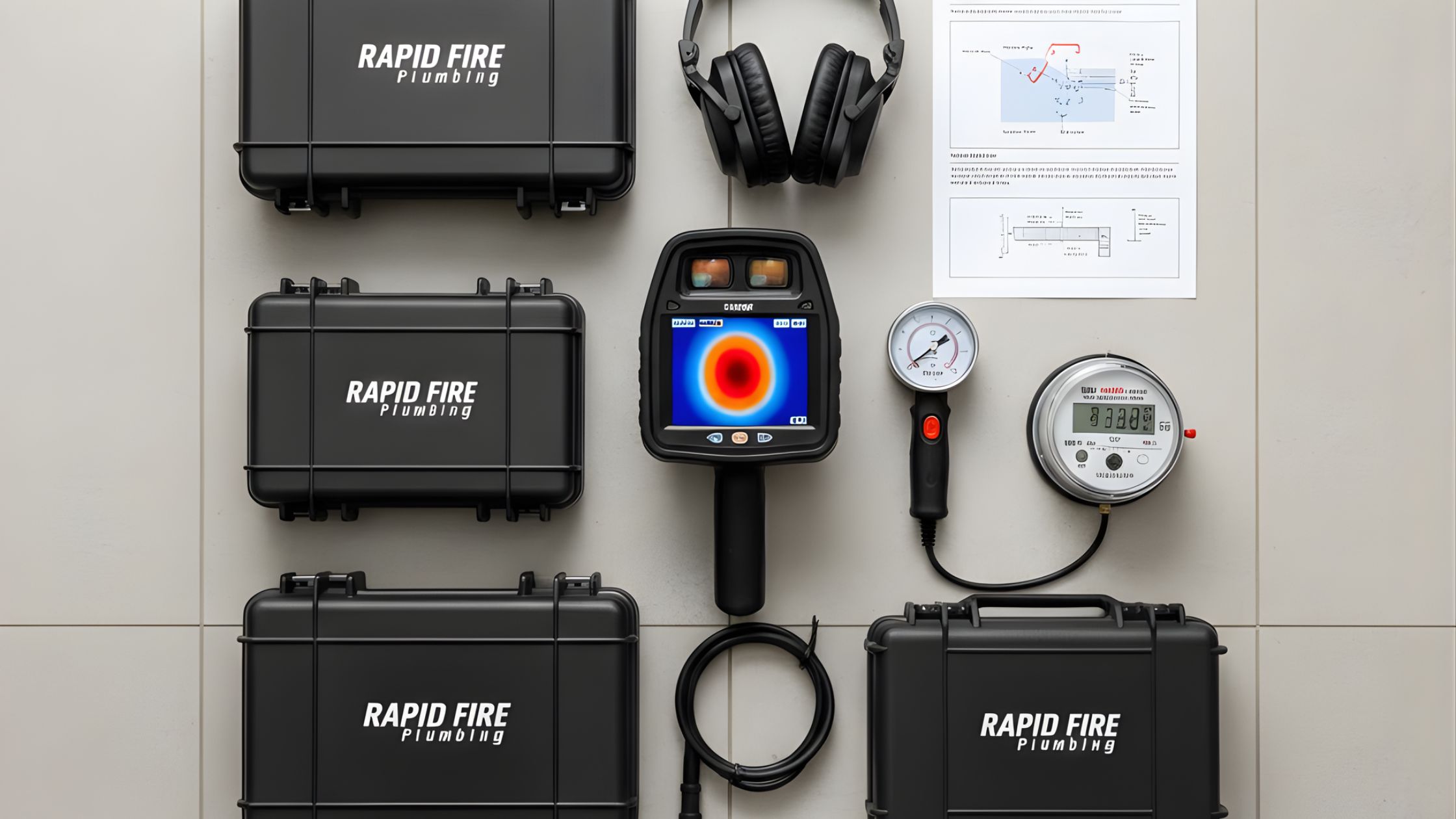
We use state-of-the-art technology to locate slab leaks without unnecessary demolition:
- Electronic leak detection – Specialized listening devices detect the sound of water escaping
under pressure - Pressure testing – We pressurize your plumbing system to identify leak locations
- Thermal imaging – Infrared cameras detect temperature differences from hot water leaks
- Video pipe inspection – Camera equipment inspects pipes from inside to identify damage
This precision technology pinpoints exact leak locations, minimizing the need for exploratory demolition.
Step 3: Transparent Pricing and Options
Once we’ve located the leak, we provide upfront, honest pricing and explain your repair options:
Option 1: Direct Access Repair
For isolated leaks, we may cut through the slab to access and repair the damaged pipe section, then patch the
concrete and flooring.
Option 2: Pipe Re-Routing (Epoxy)
Rather than cutting through the slab, we can sometimes re-route the affected line through walls, ceilings, or attics,
abandoning the leaking section beneath the slab.
Option 3: Whole House Re-Pipe
For older homes with corroded pipes or multiple leak sites, whole house re-piping may be the most
cost-effective long-term solution. We replace all plumbing with modern, durable materials installed above the slab
where they’re accessible for future maintenance.
Step 4: Expert Repair
We work efficiently to repair your slab leak with minimal disruption to your home and daily life. Our quality
workmanship ensures durable repairs that prevent future issues.
Step 5: Restoration Assistance
We guide you through the process of flooring and foundation restoration, working with your insurance company and
other contractors as needed to return your home to perfect condition.
Preventing Slab Leaks in Phoenix Homes
While slab leaks aren’t always preventable, these measures reduce your risk:
Maintain Proper Water Pressure
Keep water pressure between 40-80 PSI. Install a pressure reducer if your pressure consistently exceeds 80 PSI to
reduce stress on pipes.
Install a Water Softener
Phoenix’s extremely hard water accelerates pipe corrosion. A whole-house water softener protects your plumbing system
and extends pipe lifespan.
Address Foundation Issues Promptly
Repair foundation cracks and drainage issues quickly to prevent water infiltration and soil shifting that stresses
pipes.
Monitor Your Water Bill
Review your bill monthly for unexpected increases. Early detection of small leaks prevents them from becoming major
slab leak emergencies.
Schedule Professional Inspections
If your home is over 30 years old or has copper pipes, periodic professional inspections can identify corrosion or
damage before leaks develop.
Consider Whole House Re-Piping for Older Homes
For homes with aging plumbing systems showing signs of corrosion or frequent leaks, investing in re-piping eliminates
slab leak risks permanently by routing all new plumbing above the slab.
Why Choose Rapid Fire Plumbing for Slab Leak Detection
When you need reliable plumbing repair in Phoenix for suspected slab leaks, Rapid Fire Plumbing
delivers:
Experienced, Licensed Plumbers
Our team brings extensive expertise in slab leak detection and repair specific to Phoenix homes and soil conditions.
We stay updated with the latest detection technology and repair methods.
Advanced Detection Technology
We invest in cutting-edge leak detection equipment that locates problems accurately without unnecessary damage to
your home.
Transparent, Upfront Pricing
We provide clear estimates before work begins, with no hidden costs or surprises. We’ll even beat any competing
quote.
Multiple Repair Options
We explain all available solutions and help you choose the approach that best fits your situation and budget.
Quality Workmanship Guaranteed
We take pride in meticulous work and durable repairs that protect your home for years to come.
Fast, Reliable Response
We understand slab leaks are urgent. We respond quickly and work efficiently to stop damage and restore your plumbing
system.
Insurance Assistance
We provide detailed documentation and work with insurance companies to help you maximize coverage for your slab leak
repair.
Don’t Ignore Slab Leak Warning Signs
Slab leaks represent one of the most serious plumbing problems a homeowner can face. The combination of hidden
damage, foundation risks, and expensive repairs makes early detection absolutely critical. If you’ve noticed any of
the slab leak signs discussed in this article, don’t delay professional help.
The longer a slab leak goes unrepaired, the more damage it causes and the more expensive repairs become. What might
be a $1,500-2,500 leak repair today could become a $10,000-30,000 foundation repair tomorrow if water continues
eroding soil beneath your home.
Take Action Now
Contact Rapid Fire Plumbing at 623-810-6166 for expert water leak detection and
slab leak repair in Phoenix and surrounding areas. Our experienced plumbers use advanced detection technology to
locate your leak quickly and accurately, then provide multiple repair options with transparent pricing.
Whether you need targeted slab leak repair, pipe re-routing, or comprehensive whole house re-piping, we deliver
quality solutions that protect your home and give you peace of mind.
Call 623-810-6166 today for your free estimate. Don’t let a slab leak destroy your foundation—let Rapid Fire
Plumbing stop the damage before it’s too late!
