
Few things are more unpleasant than opening your refrigerator or dishwasher only to be hit with a foul odor coming
from your kitchen sink. A smelly garbage disposal is a common household problem that can make your entire kitchen
feel dirty, no matter how clean it actually is. The good news? Most garbage disposal odor issues
can be resolved with simple, safe cleaning methods using items you probably already have in your pantry.
At Rapid Fire Plumbing, we help Phoenix homeowners maintain healthy, fresh-smelling plumbing
systems. While we’re always available for professional help when needed, we believe in empowering homeowners with
DIY drain cleaning knowledge for routine maintenance. In this comprehensive guide, we’ll show you
exactly how to eliminate garbage disposal odors, prevent them from returning, and recognize when it’s time to call a
professional Phoenix plumber.
Why Does Your Garbage Disposal Smell?
Understanding the cause of garbage disposal odor helps you choose the most effective solution and
prevent future problems.
Food Particle Buildup
The most common cause of disposal odors is food particles stuck to the grinding chamber walls, splash guard, or
discharge pipe. These particles decompose over time, creating the foul smell emanating from your sink.
Common culprits include:
- Meat and poultry residue
- Fish and seafood particles
- Dairy products
- Vegetable matter (especially fibrous vegetables)
- Grease and oils that coat surfaces
Bacterial Growth
Dark, damp garbage disposals provide the perfect environment for bacteria to thrive. These microorganisms feed on
trapped food particles and produce odor-causing gases as they multiply.
Biofilm Accumulation
Over time, a slimy biofilm develops on disposal surfaces—a layer of bacteria, food particles, and grease that clings
to every surface. This biofilm is a major source of persistent odors.
Grease and Oil Buildup
When grease and oils go down your disposal, they solidify as they cool, coating the grinding chamber and pipes. This
sticky layer traps food particles and provides a breeding ground for odor-causing bacteria.
Inadequate Water Flow
Running insufficient water while using your disposal prevents proper flushing of food particles through the drain
system. Particles that would normally wash away become trapped in the disposal or drain line.
P-Trap Issues
The P-trap beneath your sink holds water to prevent sewer gases from entering your home. If this trap dries out
(common in rarely-used sinks) or has buildup inside it, odors can escape into your kitchen.
Safe Methods to Eliminate Garbage Disposal Odor
Try these plumber-approved DIY drain cleaning methods to freshen your disposal and eliminate odors:
Method 1: Ice and Salt Scrub
This mechanical cleaning method scours disposal surfaces without chemicals.
What you need:
- 2 cups ice cubes
- 1 cup rock salt or coarse sea salt
- Cold water
Steps:
- Turn on cold water at a moderate flow
- Turn on the disposal
- Drop ice cubes into the disposal a few at a time
- Add salt gradually while the disposal runs
- Run for 30-60 seconds until all ice is gone
- Continue running cold water for 10-15 seconds after turning off disposal
How it works: Ice and salt create an abrasive scrubbing action that dislodges stuck-on food
particles and grease from the grinding chamber and blades, while cold water solidifies any grease for easier
removal.
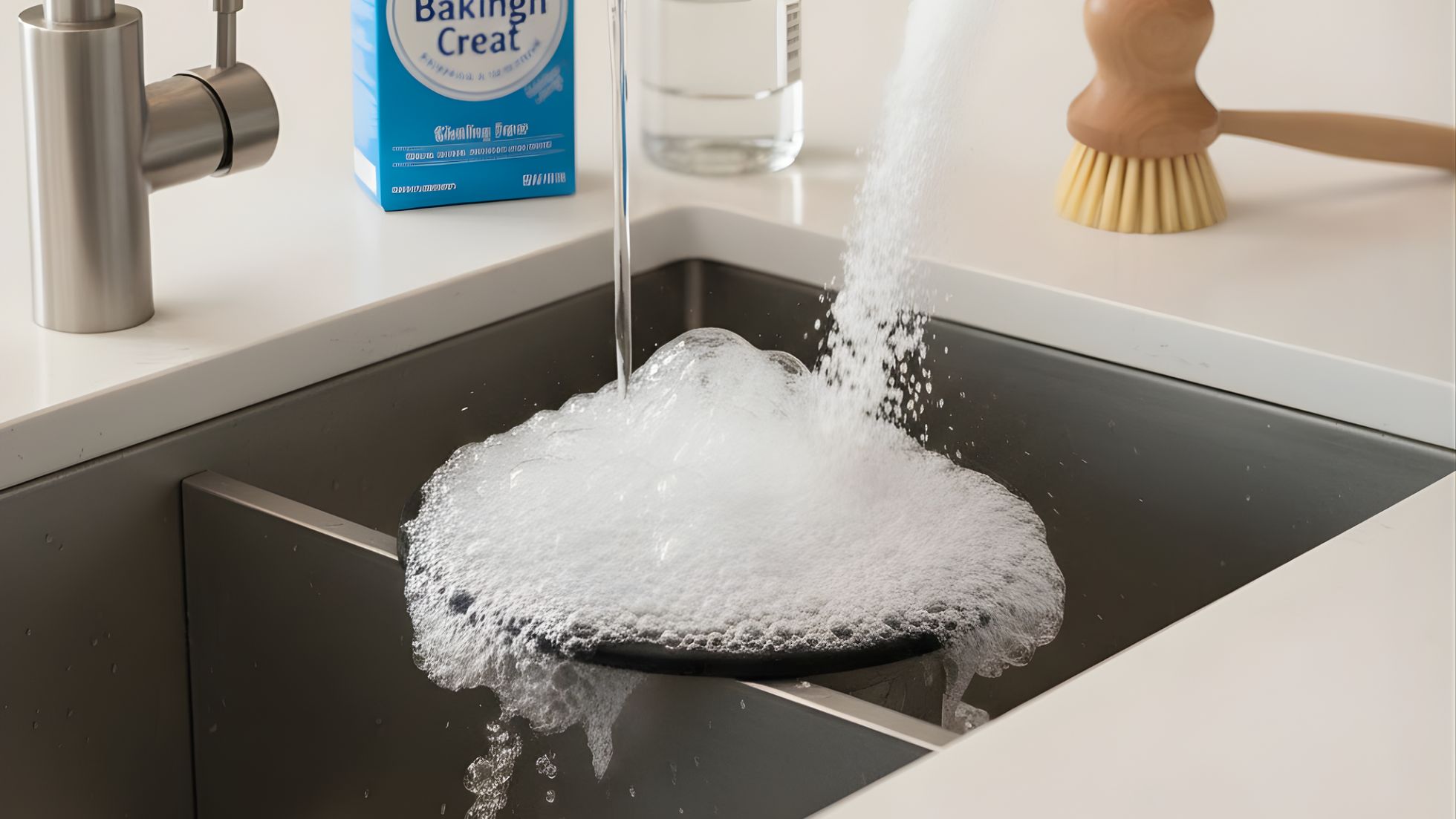
Method 2: Baking Soda and Vinegar Treatment
This natural combination creates a fizzing action that helps break down odor-causing residue.
What you need:
- 1/2 cup baking soda
- 1 cup white vinegar
- Boiling water (optional, see caution below)
Steps:
- Pour baking soda directly into the disposal
- Pour vinegar over the baking soda
- Cover the drain opening with the stopper or a plate
- Let the mixture fizz and work for 10-15 minutes
- Run hot tap water for 30-60 seconds to flush
- For stubborn odors, follow with a disposal run using cold water
Caution: While some guides recommend boiling water, very hot water can soften PVC pipes or melt
gaskets. Hot tap water is sufficient and safer for your plumbing.
Method 3: Citrus Peel Freshener
Citrus fruits provide natural cleaning power and pleasant fragrance.
What you need:
- Peels from 1-2 lemons, oranges, or grapefruits
- Ice cubes (optional, for enhanced cleaning)
- Cold water
Steps:
- Cut citrus peels into small pieces (about 1-inch squares)
- Turn on cold water
- Turn on disposal
- Feed peel pieces a few at a time into the disposal
- Optional: Add ice cubes for mechanical scrubbing action
- Run disposal until peels are completely ground (30-60 seconds)
- Continue running cold water for 10-15 seconds after shutting off disposal
How it works: Citrus oils have natural antibacterial properties and deodorizing effects, while the
peels provide gentle abrasive action to dislodge particles.
Method 4: Dish Soap Deep Clean
This thorough cleaning method addresses the splash guard and upper disposal areas that other methods miss.
What you need:
- Dish soap (preferably degreasing formula)
- Hot tap water
- Drain stopper or sink plug
- Old toothbrush
Steps:
- Place stopper in drain opening
- Fill sink with 3-4 inches of hot tap water
- Add 2-3 tablespoons of dish soap to the water
- Remove stopper and immediately turn on disposal
- The soapy water will rush through, cleaning the entire chamber
- While disposal runs, use toothbrush to scrub underside of splash guard
- Run disposal for 30-60 seconds
- Continue running cold water for final rinse
Splash guard cleaning: The rubber splash guard is a major odor source. Lift each flap and scrub the
underside with your toothbrush and soapy water to remove trapped slime and particles.
Method 5: Borax or Baking Soda Treatment
For persistent odors, this method provides deep deodorizing power.
What you need:
- 1/4 cup borax OR 1/2 cup baking soda
- Hot tap water (not boiling)
Steps:
- Pour borax or baking soda directly into disposal
- Let sit for 30 minutes (or overnight for severe odors)
- Turn on disposal with cold water running
- Run for 30-60 seconds
- Flush with hot tap water for 30 seconds
What NOT to Use in Your Garbage Disposal
When tackling garbage disposal odor, avoid these common mistakes that can damage your disposal or
plumbing:
Avoid Harsh Chemical Cleaners
Commercial drain cleaners, bleach, and other harsh chemicals:
- Corrode metal components – Shorten disposal lifespan
- Damage rubber seals and gaskets – Lead to leaks
- Create toxic fumes – When mixed with other substances
- Harm pipes – Especially older or galvanized pipes
- Don’t address the root cause – Mask odors temporarily without removing buildup
Phoenix plumber tip: Chemical drain cleaners are rarely necessary and often cause more problems than
they solve. Stick with natural cleaning methods for routine maintenance.
Don’t Use Boiling Water
While hot water is beneficial, boiling water can:
- Melt PVC drain pipes
- Soften rubber gaskets and seals
- Warp plastic disposal components
Hot tap water (about 120-140°F) is effective and much safer.
Avoid Expandable Drain Cleaning Products
Products that “expand to clean” can become lodged in your disposal or drain lines, creating clogs rather than
preventing them.
Preventing Garbage Disposal Odors
Prevention is always easier than correction. Follow these best practices to keep your disposal fresh:
1. Run Plenty of Water
The #1 rule for odor prevention: Always run cold water before, during, and after using your disposal.
Proper water use:
- Start water before turning on disposal
- Use moderate to strong flow
- Continue running water for 10-15 seconds after turning off disposal
- Use cold water (not hot) to help solidify grease for easier grinding
2. Use Cold Water, Not Hot
Cold water prevents grease from liquefying and coating your pipes. Hot water may feel more “cleaning,” but it
actually allows grease to flow down your drain where it will solidify and cause buildup.
3. Feed Food Gradually
Don’t overload your disposal. Feed scraps gradually, allowing the disposal to fully process one batch before adding
more. This prevents jamming and ensures complete grinding.
4. Regular Cleaning Schedule
Incorporate disposal cleaning into your routine:
- Weekly: Ice and salt scrub OR citrus peel treatment
- Bi-weekly: Baking soda and vinegar treatment
- Monthly: Deep clean with dish soap method, including splash guard scrubbing
5. Know What Never Goes in the Disposal
Prevent odors and clogs by keeping these items out of your disposal:
- Grease, fats, and oils – Solidify and coat surfaces
- Fibrous vegetables – Celery, asparagus, corn husks wrap around blades
- Starchy foods – Pasta, rice, potato peels expand and create paste
- Coffee grounds – Accumulate and create sludge
- Eggshells – Membranes wrap around components
- Bones – Too hard for disposal blades
- Non-food items – Paper, plastic, metal, etc.
6. Run Disposal Regularly
Even if you don’t have food to grind, run your disposal with cold water once every few days. This prevents rust,
keeps components moving freely, and flushes away any accumulated particles.
7. Keep P-Trap Filled
If you have a rarely-used kitchen sink, run water periodically to keep the P-trap filled. This water barrier prevents
sewer gases from escaping into your home.

Deep Cleaning the Splash Guard
The rubber splash guard (also called the baffle) is often the primary source of disposal odors but is frequently
overlooked during cleaning.
Manual Splash Guard Cleaning
What you need:
- Old toothbrush or small scrub brush
- Dish soap
- Hot water
- Gloves
Steps:
- Make sure disposal is OFF
- Lift one flap of the splash guard
- Apply dish soap to toothbrush
- Scrub underside of flap thoroughly, removing all slime and particles
- Repeat for each flap
- Rinse thoroughly with hot water while running disposal
Removing the Splash Guard for Deep Cleaning
For severe buildup, you can remove most splash guards for thorough cleaning:
- Turn off disposal (and ideally the breaker for safety)
- Remove splash guard by gently pulling down and twisting (or following manufacturer’s instructions)
- Soak in hot soapy water for 15-30 minutes
- Scrub thoroughly with brush
- Rinse clean
- Reinstall securely
Note: If you’re uncomfortable removing the splash guard yourself, a Phoenix plumber
from Rapid Fire Plumbing can handle this during a service call.
When to Call a Professional Phoenix Plumber
While most garbage disposal odor issues respond to DIY drain cleaning, some
situations require professional attention:
Persistent Odors After Multiple Cleanings
If you’ve tried multiple cleaning methods and odors persist or quickly return, the problem may be:
- Deep buildup in drain lines beyond the disposal
- P-trap issues
- Venting problems
- Failed disposal seals allowing food to accumulate where you can’t reach
Disposal Won’t Run or Makes Strange Noises
Unusual sounds (grinding metal, loud humming with no grinding, clicking) indicate mechanical problems that require
professional diagnosis and repair.
Leaks Under the Sink
Water leaking from your disposal, connections, or pipes needs immediate professional attention to prevent water
damage.
Frequent Jamming
If your disposal jams frequently even when used properly, internal wear or damage may be the cause.
Age and Inefficiency
Garbage disposals typically last 8-15 years. If yours is old, inefficient, or requires frequent repairs, replacement
is often more cost-effective than continued repairs.
Sewer Line Issues
If the odor seems to come from deep within your drain or you notice slow draining in multiple fixtures, the problem
may be in your main sewer line rather than the disposal itself.
How Rapid Fire Plumbing Can Help
When DIY drain cleaning isn’t enough, Rapid Fire Plumbing provides professional
solutions:
Professional Disposal Cleaning
We have specialized tools and techniques to remove stubborn buildup that home methods can’t address, including:
- Professional-grade biodegradable cleaners
- Mechanical cleaning tools
- High-pressure water jetting for drain lines
Garbage Disposal Repair
Our experienced plumbers diagnose and repair:
- Jammed impellers
- Failed seals and gaskets
- Electrical issues
- Mounting problems
- Connection leaks
Garbage Disposal Replacement
When repair isn’t practical, we offer garbage disposal installation services with:
- Quality disposal selection guidance
- Professional installation
- Proper sizing for your household needs
- Transparent, upfront pricing
- Removal and disposal of old unit
Drain Line Cleaning
If odors originate from deeper in your drain system, we provide professional drain cleaning that addresses:
- Clogged P-traps
- Buildup in drain lines
- Venting issues
- Sewer line problems
Choosing the Right Garbage Disposal
If your disposal needs replacement, choosing the right model helps prevent future odor issues:
Continuous Feed vs. Batch Feed
Continuous feed disposals run while you add food (most common type), while batch feed
disposals require you to load food, insert a stopper, and then turn on. Batch feed models are safer but
less convenient.
Motor Size Matters
- 1/3 HP: Light use, small households
- 1/2 HP: Average household use (most pHoenix homes)
- 3/4 to 1 HP: Heavy use, large families, frequent cooking
Larger motors grind more completely, reducing particles that can cause odors.
Stainless Steel Components
Disposals with stainless steel grinding chambers and components resist corrosion better than galvanized steel,
especially important in Phoenix’s hard water conditions. This reduces odor-causing rust and corrosion.
Anti-Jam Features
Modern disposals with auto-reverse and jam-prevention features reduce the likelihood of trapped food that causes
odors.
Phoenix-Specific Disposal Considerations
Phoenix homeowners face unique challenges that affect garbage disposal performance and odor:
Hard Water Effects
Phoenix has some of the hardest water in the nation. Mineral buildup can accumulate in disposals and drain lines,
trapping food particles and creating odor issues. Regular cleaning is especially important here.
Heat and Decomposition
Phoenix’s extreme summer heat can accelerate decomposition of trapped food particles, making odors develop faster and
stronger than in cooler climates. Extra vigilance during summer months helps prevent problems.
Indoor Plumbing Temperatures
Hot garages and exterior walls mean drain lines stay warmer year-round, potentially accelerating bacterial growth and
odor development.
Emergency Disposal Tips for Phoenix Homeowners
If Your Disposal Stops Working
- Turn it off immediately – Don’t force it
- Check the reset button – Red button on the bottom of most units
- Check your breaker – May have tripped
- Try the jam-clearing procedure – Use the hex wrench (usually included) in the bottom of the
disposal to manually rotate the grinding plate - Never put your hand inside – Use tongs or pliers to remove visible blockages
If these steps don’t resolve the issue, call Rapid Fire Plumbing at 623-810-6166.
If Water Backs Up
Turn off disposal immediately and don’t force it to run. This indicates a clog that requires professional attention
to prevent damage.
Long-Term Disposal Health
Maximize your garbage disposal’s lifespan and minimize odor issues with these long-term strategies:
Annual Professional Inspection
Have your disposal inspected annually by a professional plumber who can:
- Check for wear on grinding components
- Inspect seals and gaskets
- Test motor function
- Clean areas you can’t access
- Identify potential problems before they cause failures
Document Age and Model
Know when your disposal was installed and what model you have. This helps you plan for eventual replacement and
guides maintenance decisions.
Educate Household Members
Make sure everyone in your home knows:
- What can and cannot go in the disposal
- The importance of running water
- How to properly use the disposal
- What to do if problems occur
Keep Your Kitchen Fresh with Proper Disposal Care
A smelly garbage disposal doesn’t have to be a permanent problem. With regular maintenance using safe, natural
DIY drain cleaning methods, you can keep your disposal fresh and functioning properly for years to
come. The key is consistency—weekly or bi-weekly cleaning prevents the buildup that causes stubborn odors.
However, if odors persist despite your best efforts, or if your disposal shows signs of mechanical problems, don’t
hesitate to call a professional Phoenix plumber. What seems like a simple odor issue might indicate
deeper problems that will only worsen over time.
Get Professional Help from Rapid Fire Plumbing
Contact Rapid Fire Plumbing at 623-810-6166 for expert garbage disposal service in Phoenix and
surrounding areas. Whether you need professional cleaning, repair, or replacement, our experienced plumbers deliver
quality solutions with transparent pricing and customer satisfaction guaranteed.
We specialize in all aspects of plumbing services including garbage disposal installation, repair, and maintenance,
as well as comprehensive drain cleaning when odors indicate deeper issues in your plumbing system.
Call 623-810-6166 today for your free estimate. Keep your kitchen fresh and your disposal running smoothly
with help from Rapid Fire Plumbing!
