Recurring drain clogs are more than a minor inconvenience — they signal a deeper, unresolved problem within your plumbing system. In Phoenix, where hard water, extreme heat, and aging infrastructure converge, these persistent blockages demand a strategic, professional diagnosis. A plunger or chemical cleaner offers only temporary relief; the real solution lies in identifying and eliminating the root cause. At Rapid Fire Plumbing, we see the same patterns repeat across Valley homes: biofilm accumulation, invasive tree roots, deteriorating pipes, improper venting, and the hidden damage caused by mineral scale. Understanding these five primary culprits is the first step toward a permanent fix.
Key Takeaways
- Recurring clogs indicate a systemic issue, not a one-time obstruction, requiring professional drain cleaning.
- Phoenix’s hard water accelerates mineral scale buildup inside pipes, narrowing diameters and trapping debris.
- Tree roots infiltrate sewer lines seeking moisture, especially in older neighborhoods with mature landscaping.
- Aging cast-iron or galvanized steel pipes corrode internally, creating rough surfaces that snag waste.
- Improperly vented drains disrupt air pressure, slowing drainage and causing frequent backups.
- Biofilm — a slimy layer of bacteria and soap scum — is a leading cause of recurring kitchen and bathroom clogs.
- Hydro jetting and camera inspections offer long-term resolution, not just symptom relief.
 Understanding the Anatomy of a Recurring Clog
A single clog might be a fluke — a child’s toy flushed down the toilet or an excessive amount of cooking grease poured into the kitchen sink. Recurring clogs, however, follow a different script. They happen in the same fixture, at predictable intervals, regardless of how careful the household is. This pattern points to a chronic condition within the drainage system. The pipe’s internal environment has changed, whether through constriction, damage, or biological growth. According to the Plumbing-Heating-Cooling Contractors Association (PHCC), over 60% of repeat service calls for drain blockages involve underlying structural or material defects, not just user error. In Phoenix, the unique combination of geology and climate intensifies these defects.
Cause #1: Hard Water Mineral Scale Accumulation
Phoenix has some of the hardest municipal water in the United States. The city’s water supply, sourced primarily from the Colorado River, Salt River, and Verde River, carries high concentrations of dissolved calcium and magnesium. As water flows through your pipes, these minerals precipitate out and adhere to pipe walls, forming a rock-like scale. Over time, this scale reduces the effective inner diameter of the pipe. A 2-inch drain line can shrink to 1.5 inches or less. The rough, crystalline surface then catches hair, soap residue, food particles, and grease, creating a near-permanent clog factory. Research from the Water Quality Association indicates that hard water scale can reduce plumbing flow efficiency by up to 30% within a decade.
Traditional snaking might punch a hole through a scale-clogged pipe, but it leaves the surrounding mineral deposits intact. The clog returns because the pipe itself remains narrowed. The definitive solution is hydro jetting, which uses high-pressure water streams to scour the pipe walls back to their original diameter. In extreme cases, pipe descaling attachments can be used. For Phoenix homeowners, installing a whole-house water softener is a proactive measure that prevents scale formation throughout the entire plumbing system, protecting not just drains but also water heaters, faucets, and appliance connections.
Cause #2: Tree Root Intrusion in Sewer Lines
Phoenix’s desert landscape is punctuated by lush, irrigated oases — residential yards with mature trees like mesquite, palo verde, citrus, and ficus. These trees have extensive, aggressive root systems that seek out the consistent moisture and nutrients found inside sewer lines. A tiny crack or loose joint in a clay or concrete sewer pipe releases vapor that attracts roots. Once a hair-like root penetrates the opening, it thrives inside the nutrient-rich environment, expanding into a dense, fibrous mass that traps toilet paper and solid waste. The City of Phoenix Water Services Department notes that root intrusion is one of the most common causes of sewer backups in older neighborhoods with established landscaping.
As James Martinez, Master Plumber at Rapid Fire Plumbing, explains: “We routinely extract root masses the size of a basketball from 4-inch sewer lines in historic districts like Willo and Encanto. The homeowner sees a slow-draining toilet or a gurgling shower, but the real problem is a root ball 30 feet downstream.” Mechanical augers with root-cutting blades can clear the immediate blockage, but the roots will regrow within months unless the pipe is repaired. Trenchless sewer repair methods, such as cured-in-place pipe (CIPP) lining, create a seamless, root-proof barrier inside the existing pipe without destructive excavation. A plumbing camera inspection is essential to map the extent of intrusion and identify all breach points.
Cause #3: Corroded and Deteriorating Pipes
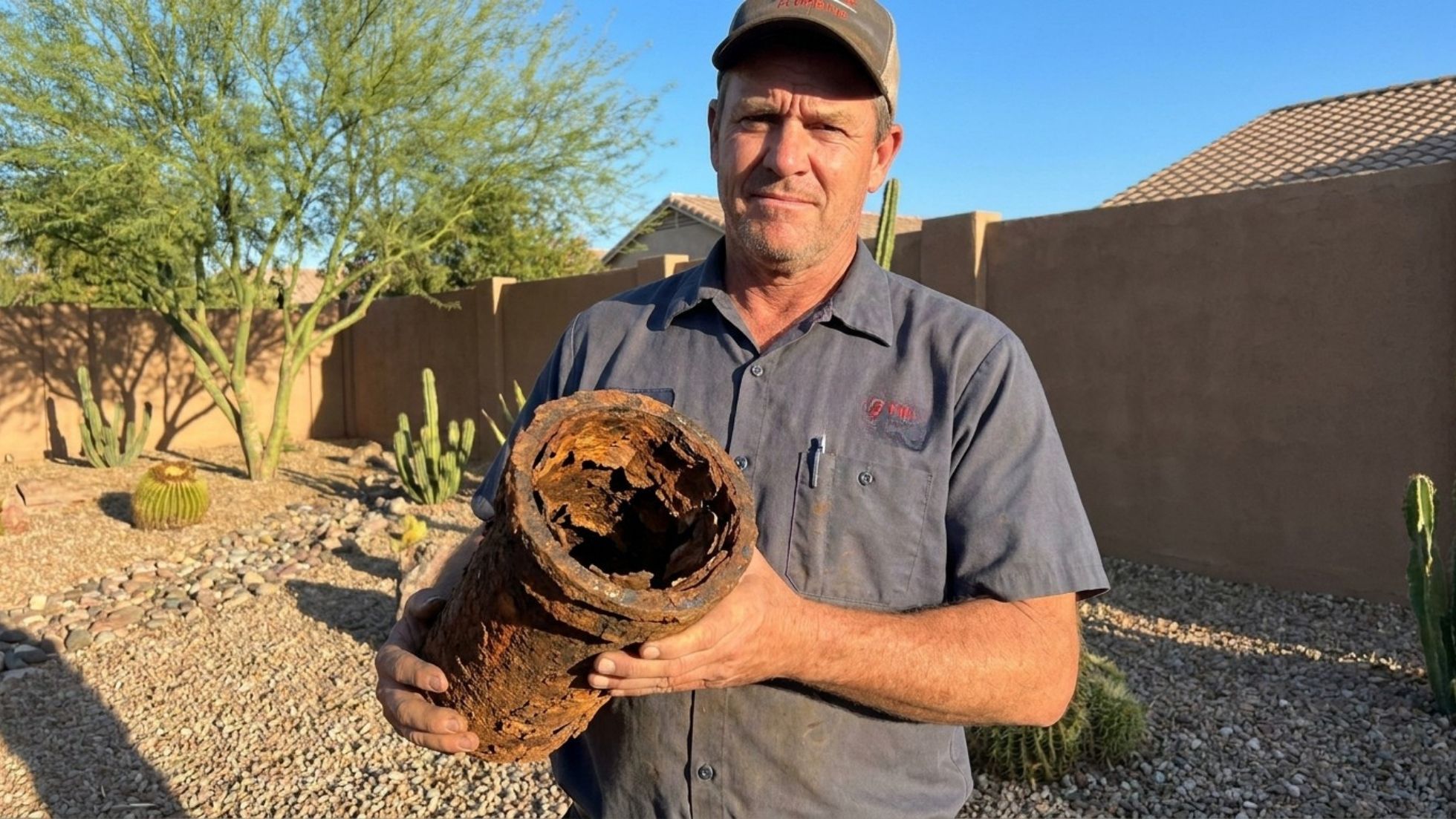
Many Phoenix homes built before the 1980s contain cast-iron or galvanized steel drain lines. These materials are susceptible to internal corrosion over decades of use. Cast iron develops tuberculation — a form of iron oxide buildup that creates jagged nodules on the pipe interior. Galvanized steel corrodes in layers, flaking off and accumulating at bends and joints. This corrosion not only restricts flow but also creates a perpetually rough surface that is impossible to keep clean. Every flush or drain cycle deposits new debris onto the corroded walls. The Centers for Disease Control and Prevention (CDC) has documented how corroded plumbing can harbor biofilm and pathogens, compounding the problem.
In a recent case in the Arcadia neighborhood, a homeowner experienced monthly kitchen sink backups despite religiously avoiding grease disposal. A camera inspection revealed 60-year-old galvanized pipes with internal corrosion so severe that the 2-inch line had an effective opening of less than half an inch. The only permanent solution was a whole-house repipe. For aging plumbing systems, recurring clogs are often the final warning sign before a catastrophic pipe failure. Repiping services replace these deteriorating lines with modern PVC or copper, eliminating the source of chronic blockages.
Cause #4: Improper Plumbing Venting
Every drain in your home requires a vent pipe that extends through the roof. This vent system equalizes air pressure within the drainage network, allowing wastewater to flow smoothly by gravity. When a vent is blocked — by a bird’s nest, a dead rodent, leaves, or even a tennis ball — the drain loses its air supply. Water siphons slowly, gurgles, and leaves behind debris that would normally be carried away. This creates a cycle of incomplete drainage and rapid re-clogging. The International Association of Plumbing and Mechanical Officials (IAPMO) emphasizes that proper venting is not optional; it is a fundamental requirement of the Uniform Plumbing Code.
In Phoenix, roof vents are particularly vulnerable to monsoon debris and nesting birds like house sparrows. A blocked vent mimics a main line clog, causing multiple fixtures to drain slowly or emit sewer gas odors. The diagnostic process involves a smoke test, where non-toxic smoke is pumped into the vent system to reveal blockages or disconnections. Clearing a roof vent often requires specialized equipment and safety protocols due to the height and pitch of residential roofs. This is not a DIY task. A licensed plumber can safely clear the vent and install a protective screen to prevent future obstructions.
Cause #5: Biofilm and Organic Buildup
Biofilm is a slimy, glue-like matrix produced by bacteria that colonize the inside of drain pipes. It forms when organic matter — soap scum, shampoo, food particles, skin cells — accumulates and provides a food source for microorganisms. Once established, biofilm grows continuously, trapping more debris and emitting foul odors. Kitchen sinks are prime locations due to grease and food waste; bathroom sinks and showers suffer from soap and hair entrapment. A study published by the National Institutes of Health (NIH) found that biofilm can reduce pipe diameter by up to 50% in high-use drains within just a few years.
Enzymatic drain cleaners can help manage biofilm, but they work slowly and cannot penetrate thick, mature layers. Mechanical cleaning with a brush or hydro jetting is required to fully remove the biological film. As Dr. Elena Torres, Environmental Microbiologist at Arizona State University, notes: “Biofilm is remarkably resilient. It adheres to pipe surfaces with a polymer matrix that resists simple flushing. Only physical disruption combined with high-temperature water reliably eliminates it.” For Phoenix homeowners, quarterly enzyme treatments after a professional cleaning can significantly extend the time between clogs.
Diagnostic Tools: The Role of Camera Inspections
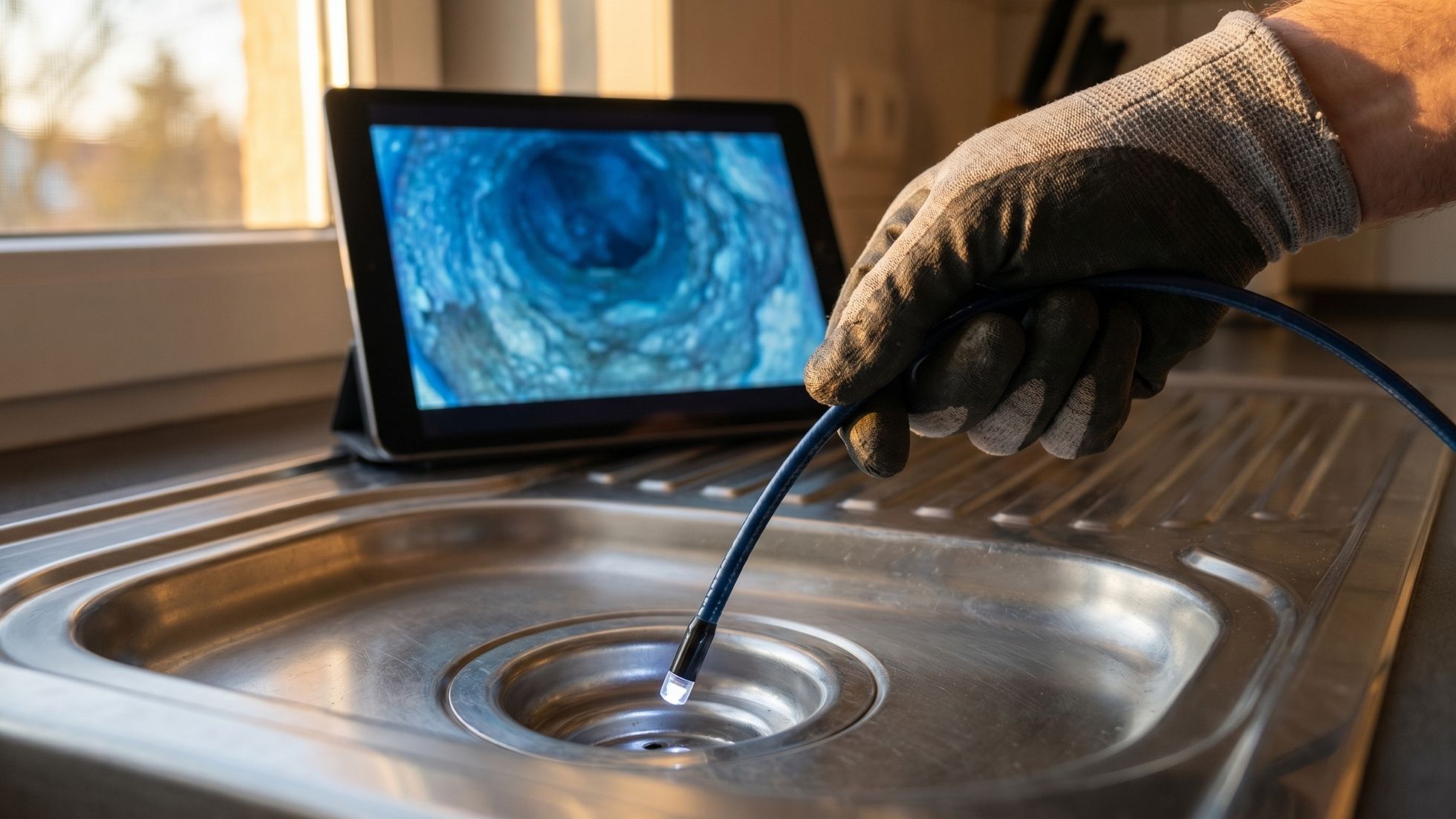
Guessing at the cause of recurring clogs leads to repeated service calls and unnecessary costs. A plumbing camera inspection provides a definitive, real-time view of the pipe’s interior. A high-resolution, waterproof camera is fed through the drain line, transmitting video to a monitor. The plumber can identify scale buildup, root masses, cracks, offsets, corrosion, and biofilm with precision. The inspection also locates the exact depth and position of the problem, which is critical for planning repairs. At Rapid Fire Plumbing, we record all camera inspections and provide the footage to homeowners, ensuring complete transparency and informed decision-making.
| Clog Cause | Primary Symptom | DIY Temporary Fix | Professional Permanent Solution |
|---|---|---|---|
| Mineral Scale | Slow drainage in all fixtures | Vinegar flush (ineffective long-term) | Hydro jetting + Water softener |
| Tree Roots | Gurgling toilet, yard wet spots | Copper sulfate (damages pipes) | Rooter service + Trenchless lining |
| Pipe Corrosion | Brown water, frequent clogs | None | Whole-house repipe |
| Vent Blockage | Gurgling, sewer smells | None (roof access required) | Vent clearing + Screen installation |
| Biofilm | Odor, slow drain | Enzyme cleaner | Hydro jetting + Enzyme maintenance |
Step-by-Step: What to Do When a Drain Clogs Repeatedly
- Stop Using Chemical Drain Cleaners: Acidic and caustic chemicals damage pipes, especially older metal lines, and pose health risks. They also create a hazardous environment for plumbers.
- Document the Pattern: Note which fixtures clog, how often, and what precedes the backup (e.g., laundry day, heavy rain). This information is invaluable for diagnosis.
- Check Other Fixtures: If multiple drains are slow, the problem is likely in the main sewer line. If only one fixture is affected, the issue is localized.
- Inspect Accessible Pipes: Look under sinks for visible corrosion, leaks, or sagging pipes that could indicate a belly where water pools.
- Call for a Professional Camera Inspection: This is the single most effective diagnostic step. It replaces guesswork with visual evidence.
- Evaluate Long-Term Solutions: Based on the camera findings, discuss options like hydro jetting, trenchless repair, repiping, or vent clearing with your plumber.
 The Phoenix Factor: Climate and Soil Impact
Phoenix’s unique environment amplifies drain clog issues. The region’s caliche soil — a hardened layer of calcium carbonate — shifts with temperature and moisture changes, putting stress on underground pipes. Summer ground temperatures can exceed 140°F, accelerating the corrosion of metal pipes and the curing of grease inside lines. Monsoon rains saturate the soil, causing ground movement that can crack brittle clay or concrete sewer lines. Additionally, the prevalence of evaporative coolers in older homes introduces constant moisture near foundations, attracting roots and promoting pipe exterior corrosion. These factors make Phoenix a high-risk zone for plumbing infrastructure failure, demanding a proactive maintenance approach.
Preventative Maintenance Strategies
Preventing recurring clogs requires a multi-layered strategy tailored to your home’s specific risk factors. Annual camera inspections for homes over 20 years old can catch scale buildup and root intrusion before they cause emergencies. Hydro jetting every 18-24 months keeps pipes clear of biofilm and mineral deposits. Installing drain screens on all showers and sinks captures hair and debris before they enter the system. Proper grease disposal — never pouring fats, oils, or grease down the drain — is non-negotiable. For homes with a history of root intrusion, a root barrier treatment applied by a professional can slow regrowth. As Sarah Chen, Lead Service Technician at Rapid Fire Plumbing, advises: “The most expensive drain repair is the one you could have prevented with a $200 maintenance visit. We see it every day — a small investment in prevention saves thousands in emergency restoration.”
When to Consider a Whole-House Repipe
If your home has recurring clogs across multiple fixtures, and a camera inspection reveals widespread corrosion or scale, a targeted repair may be insufficient. Whole-house repiping replaces all supply and drain lines with modern materials like PEX and PVC. This is a significant investment, but it permanently resolves chronic clogging, low water pressure, and leak risks. According to data from the National Association of Home Builders (NAHB), repiping can increase a home’s resale value by addressing a major buyer concern. In Phoenix’s competitive real estate market, updated plumbing is a strong selling point. The process typically takes 3-5 days and includes drywall repair and painting for any access points.
FAQ
Why does my Phoenix drain keep clogging even after I snake it?
Snaking only creates a small hole through the blockage but does not clean the pipe walls. If the underlying cause is scale, corrosion, or biofilm, the rough interior surface will quickly trap new debris, causing the clog to return. A camera inspection can reveal why the clog persists.
How does hard water specifically cause drain clogs?
Hard water contains dissolved calcium and magnesium that precipitate out and form a hard, crystalline scale on pipe interiors. This scale narrows the pipe diameter and creates a rough surface that catches hair, soap, and grease, leading to frequent blockages.
Can tree roots really grow through solid PVC pipes?
Tree roots cannot penetrate intact PVC, but they can enter through loose joints, cracks, or poorly sealed connections. Once inside, they expand rapidly, filling the pipe with a fibrous mass. Older clay or concrete pipes are much more vulnerable to root intrusion.
What is the difference between hydro jetting and snaking?
Snaking uses a rotating cable to punch a hole through a clog. Hydro jetting uses high-pressure water (up to 4,000 PSI) to scour the entire inner surface of the pipe, removing scale, grease, and biofilm. Hydro jetting provides a comprehensive clean that lasts much longer.
Are enzyme drain cleaners effective for recurring clogs?
Enzyme cleaners can help maintain clear pipes by slowly breaking down organic matter, but they are not effective against established, thick clogs or mineral scale. They work best as a preventative maintenance tool after a professional cleaning.
How do I know if my vent pipe is clogged?
Signs of a clogged vent include gurgling sounds from drains, slow drainage across multiple fixtures, and sewer gas odors inside the home. A professional plumber can perform a smoke test to confirm a vent blockage.
Is a recurring drain clog an emergency?
While a single slow drain may not be an immediate emergency, recurring clogs signal a progressive problem that can lead to a complete backup, water damage, or pipe failure. It should be addressed promptly to avoid an emergency plumbing situation.
Conclusion
Recurring drain clogs in Phoenix homes are a solvable problem when approached with the right diagnostic tools and expertise. The five primary causes — mineral scale, tree roots, pipe corrosion, vent blockages, and biofilm — each require a specific, targeted solution. Temporary fixes waste time and money while the underlying condition worsens. At Rapid Fire Plumbing, we combine advanced camera inspection technology with proven remediation methods like hydro jetting and trenchless repair to deliver permanent results. Don’t let a recurring clog disrupt your home any longer. Contact us today to schedule a comprehensive drain evaluation and finally put an end to the cycle of backups.
References
- Plumbing-Heating-Cooling Contractors Association (PHCC)
- Water Quality Association
- City of Phoenix Water Services Department
- Centers for Disease Control and Prevention (CDC)
- International Association of Plumbing and Mechanical Officials (IAPMO)
- National Institutes of Health (NIH)
- National Association of Home Builders (NAHB)
