
The fastest way to locate the main water shut-off valve in a Phoenix home is to check the street-side water meter box near the curb, inspect the exterior perimeter walls near the front garden hose bib, or look inside the garage near the water heater. Knowing exactly where this critical mechanism resides and how to operate it is the single most important piece of plumbing knowledge a homeowner can possess. In the event of a catastrophic pipe burst or a severe appliance failure, stopping the flow of municipal water within minutes can mean the difference between a simple mop-up job and tens of thousands of dollars in structural water damage.
Why Finding Your Primary Water Valve is Critical in 2026
As residential plumbing systems age and water pressure fluctuations become more common, the risk of unexpected indoor flooding increases. In 2026, the average cost of residential water damage restoration exceeds $4,200, largely due to the rising costs of building materials and specialized labor. A standard 1/2-inch residential water pipe under normal municipal hydrostatic pressure (typically between 40 and 80 PSI) can release up to 250 gallons of water in a single hour. If a pipe bursts while you are at work, your home could be inundated with thousands of gallons of water before you even walk through the front door.
According to Marcus Thorne, Senior Risk Analyst at the Insurance Information Institute: “Homeowners who can isolate their water supply within five minutes of a pipe burst reduce their total property damage by an average of 72%. It is a fundamental aspect of home risk management.”
Beyond emergency mitigation, you will also need to access this valve when performing routine maintenance, upgrading fixtures, or investigating a sudden spike in your water bill. The Environmental Protection Agency’s WaterSense program estimates that household leaks can waste nearly 1 trillion gallons of water annually nationwide. Shutting off the main supply is often the first diagnostic step when you need to check your main water line for leaks.
Common Locations for the Main Water Shut-Off Valve in Phoenix
Locating the primary water shut-off valve on a Phoenix property requires understanding local building practices. Unlike homes in the Midwest or Northeast, which typically feature basements where water lines enter through the foundation, Arizona homes are built on concrete slabs. This architectural difference dictates where plumbing engineers place the main isolation valves.
1. The Street-Side Water Meter Box
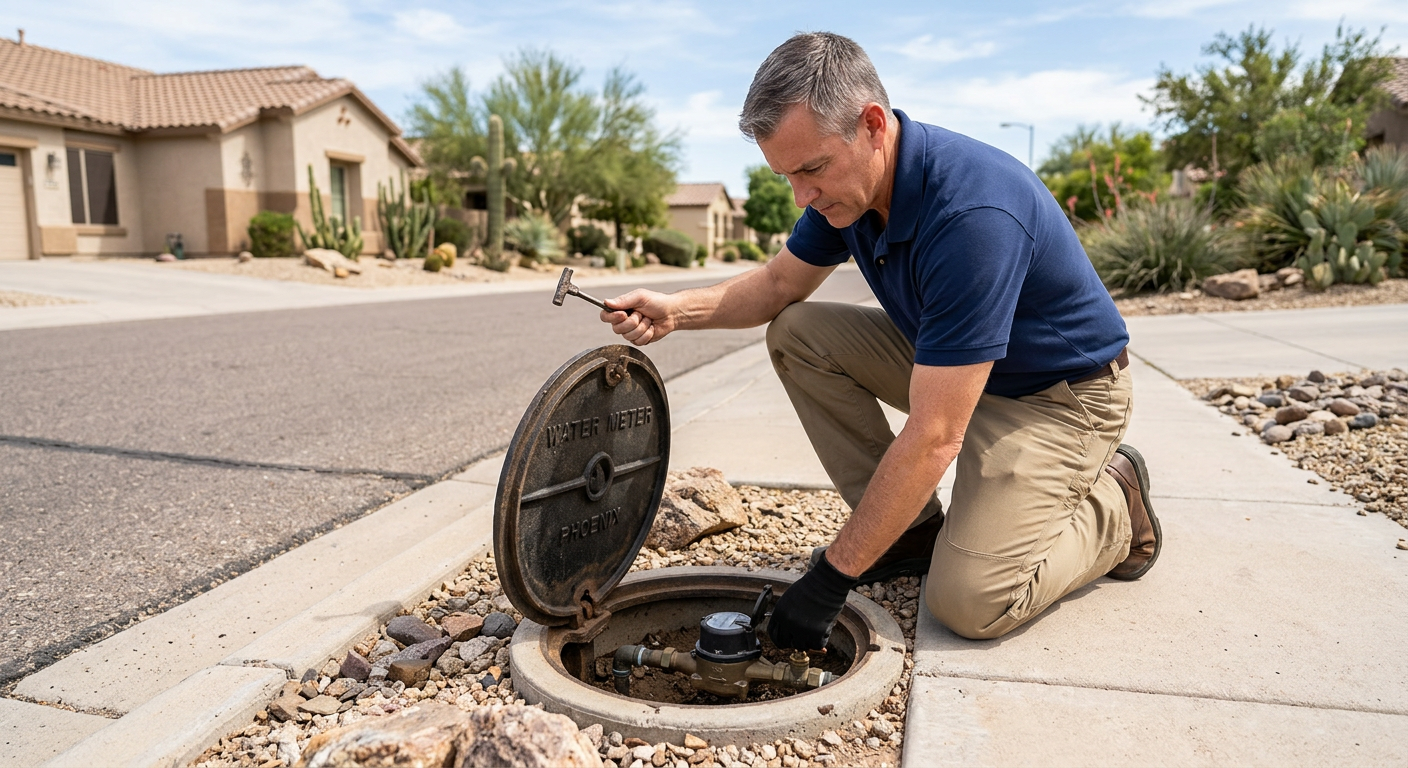
For the vast majority of properties in the Valley, the primary shut-off point is located near the street, housed inside a concrete or heavy-duty plastic utility box embedded in the ground. This box sits flush with the landscaping or sidewalk and usually features a heavy metal lid marked “WATER.” Inside this box, you will find the municipal water meter and two distinct valves. The valve on the street side of the meter belongs to the City of Phoenix Water Services Department (often called the curb stop), while the valve on the house side of the meter belongs to the homeowner. Turning off the house-side valve will completely sever the water supply to your property.
2. The Exterior Perimeter Wall
If your home was built after 1990, building codes likely required a secondary shut-off valve attached directly to the exterior of the house. Walk the perimeter of your home, starting at the front elevation facing the street. Look for a vertical pipe emerging from the soil and entering the stucco or siding. This pipe is usually located near a garden hose bib (spigot) or adjacent to the main structural cleanout. The valve attached to this riser is your whole-house shut-off. Because these valves are exposed to the harsh Arizona sun, they are often painted to match the house or covered with a protective insulating sleeve.
3. Inside the Garage or Utility Room
In some modern subdivisions or custom-built homes, the main water line enters the structure through the garage. Inspect the walls of your garage, particularly near the water heater or water softener loop. You may find a recessed plastic panel in the drywall; opening this panel will reveal the main shut-off valve. This indoor location is highly desirable because it protects the brass or PVC components from UV degradation and extreme temperature fluctuations.
Identifying Your Valve Type: Ball Valve vs. Gate Valve
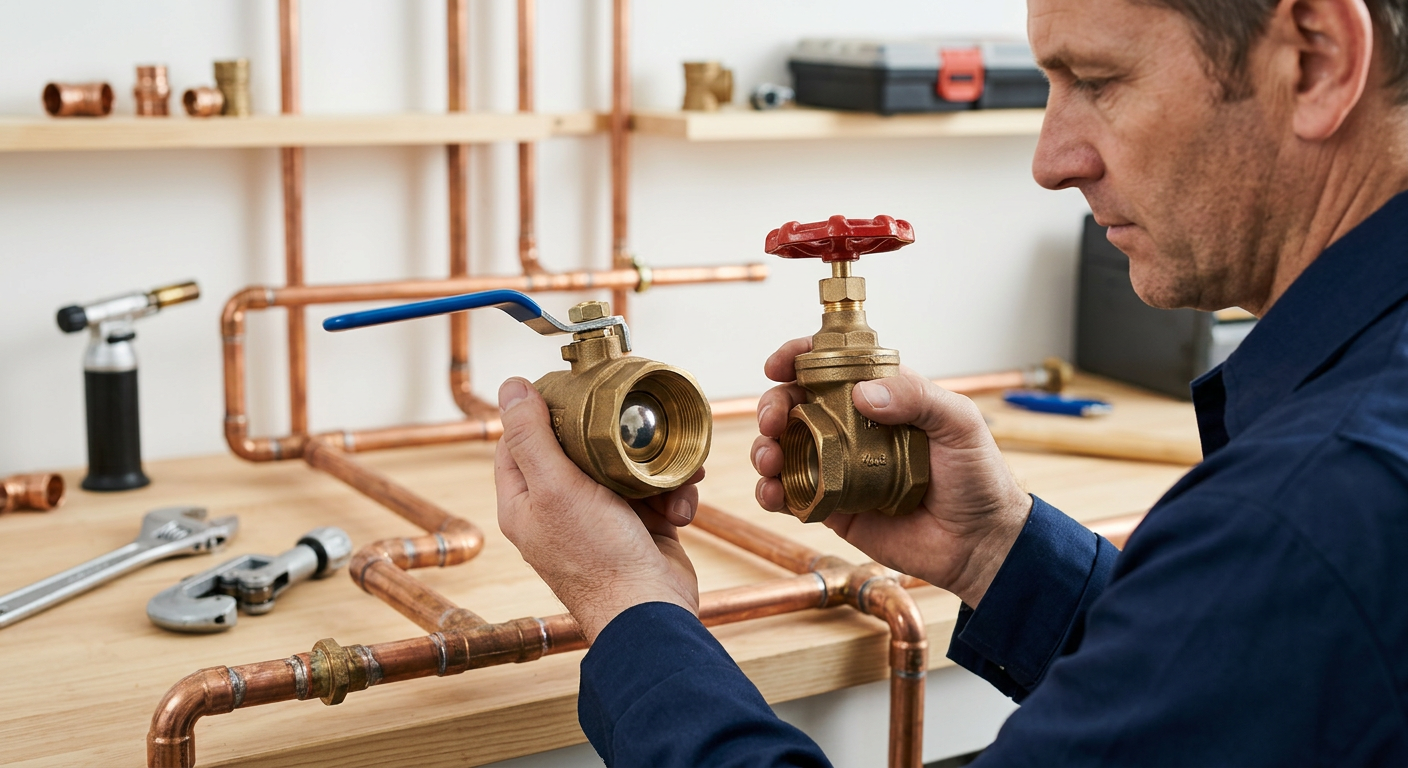
Once you locate the mechanism, you must identify its type to operate it correctly. Applying the wrong type of force to an aging plumbing fixture can cause the valve stem to snap, creating an immediate geyser. Residential plumbing systems generally utilize one of two designs: the ball valve or the gate valve.
| Feature | Ball Valve | Gate Valve |
|---|---|---|
| Appearance | Straight lever handle (often coated in vinyl). | Round, wheel-like handle (similar to a garden hose). |
| Internal Mechanism | A spherical core with a hole through the center. | A brass or steel wedge that lowers into the pipe. |
| Operation | Requires a simple 90-degree (quarter) turn. | Requires multiple full rotations to open or close. |
| Reliability | Highly reliable; rarely seizes or leaks over time. | Prone to corrosion; internal gate can snap or get stuck. |
| Visual Indicator | Handle parallel to pipe = ON. Perpendicular = OFF. | No visual indicator; must test by turning. |
Data from recent municipal plumbing surveys indicates that over 65% of homes built before 1990 still rely on traditional gate valves. If you discover an aging gate valve on your property, it is highly recommended to have a licensed plumber replace it with a modern, quarter-turn ball valve during your next annual plumbing inspection.
Step-by-Step Guide: How to Turn Off Your Water Supply
When a plumbing emergency strikes, adrenaline can make simple tasks difficult. Follow these precise steps to safely secure your home’s water supply.
- Locate the Valve: Use the guidelines above to find your exterior wall valve or street-side meter box.
- Clear Debris: If accessing an underground meter box, carefully remove the lid. Be cautious, as these dark, damp spaces are popular hiding spots for scorpions, black widows, and snakes in the desert Southwest. Use a stick or gloved hand to clear away dirt, cobwebs, or seasonal debris—a common necessity when doing seasonal monsoon plumbing preparations.
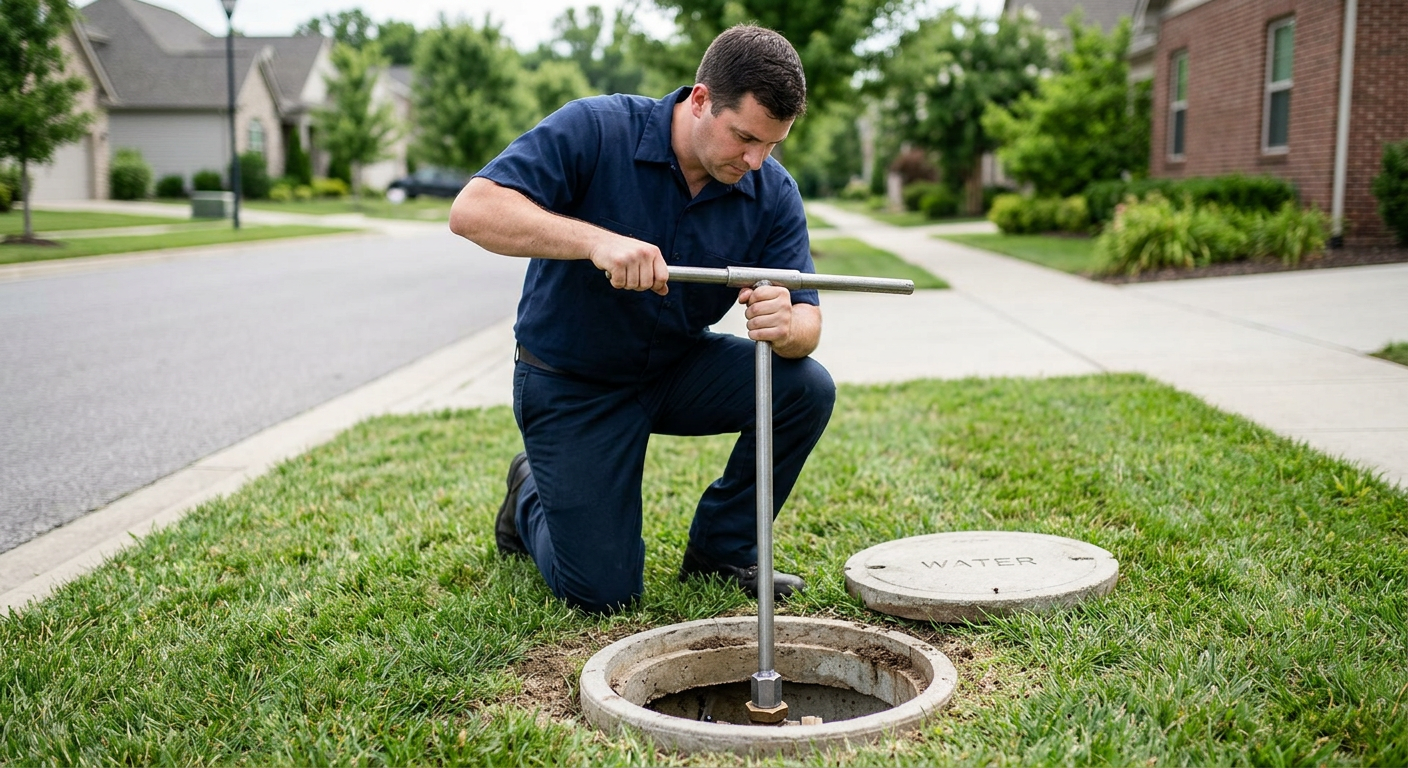
- Position Your Tool: If you are dealing with a ball valve, grasp the lever firmly. If you are operating a meter box valve (which often lacks a traditional handle), you will need to place a specialized water meter key or an adjustable crescent wrench over the rectangular brass flange.
- Turn the Valve: For a ball valve, turn the lever 90 degrees clockwise until it sits perpendicular to the pipe. For a gate valve, turn the wheel clockwise (righty-tighty) until it stops completely. Do not over-tighten, as this can damage the internal packing nut.
- Relieve System Pressure: Once the valve is closed, go to the lowest point in your home (usually a first-floor bathtub or exterior hose bib) and open the faucet. This allows the remaining water and trapped air to drain from the pipes, relieving hydrostatic pressure and preventing further leakage at the site of the burst.
Essential Tools for Accessing Your Water Meter
While exterior wall valves can usually be operated by hand, accessing the municipal meter box often requires specific equipment. Every homeowner should keep a dedicated emergency kit containing essential plumbing tools for homeowners. Your kit should include:
- Water Meter Key: A T-shaped metal tool, typically 24 to 36 inches long, with a slotted end designed specifically to grip the rectangular flange on a curb stop valve. This tool provides the necessary leverage to turn stiff, underground mechanisms without straining your back.
- Heavy-Duty Screwdriver or Pry Bar: Concrete meter box lids can weigh upwards of 20 pounds and often become wedged tightly into their frames by dirt and gravel. A sturdy pry bar is essential for lifting the lid safely.
- Adjustable Pliers (Channellocks): If you do not own a meter key, a large pair of adjustable pliers can grip the valve flange, though this requires reaching deep into the meter box.
- Work Gloves and Flashlight: Essential for protecting your hands from pests and illuminating deep meter boxes during nighttime emergencies.
What to Do If Your Valve is Stuck or Buried
One of the most common issues homeowners face is discovering that their primary shut-off valve is completely seized due to hard water calcification or galvanic corrosion. The mineral-heavy water in the Southwest accelerates scale buildup on brass and galvanized steel components.
As Sarah Jenkins, Chief Inspector at the American Society of Home Inspectors, notes: “A seized gate valve is a ticking time bomb. If you haven’t turned it in five years, it likely won’t budge when you actually need it. Forcing a stuck valve with a wrench is the leading cause of catastrophic valve stem failure.”
If your valve refuses to turn with moderate pressure, do not force it. Applying excessive torque can snap the internal stem, resulting in an uncontrollable high-pressure leak that only the city can stop. Instead, spray a penetrating lubricant (like WD-40 or PB Blaster) around the base of the handle and let it sit for 15 minutes. Tap the valve gently with a wrench to help the lubricant penetrate the threads, then try again. If it still will not move, you must contact a professional plumber to replace the fixture.
Another frequent edge case involves buried meter boxes. Over years of landscaping changes, soil erosion, and dust storms, the concrete lid of your meter box may become completely covered by dirt or decorative gravel. If you cannot find your meter box, look for a painted blue line or a small “W” stamped into the concrete curb; municipal workers use these markers to indicate the exact location of the water line entering your property.
Annual Maintenance for Your Plumbing Shut-Off System
Preventative maintenance is the cornerstone of homeownership. To ensure your emergency shut-off system functions flawlessly when you need it, you must “exercise” the valve at least once a year. This simple process prevents mineral deposits from fusing the internal components together.
To exercise the valve, simply turn it completely off, wait ten seconds, and turn it completely back on. If you have a gate valve, open it fully, then turn the wheel back one-quarter turn; this prevents the internal wedge from getting stuck in the fully open position. While performing this maintenance, inspect the surrounding pipes for signs of moisture, green copper oxidation, or rust. Catching these early warning signs can help you avoid the financial impact of ignoring minor leaks.
Additionally, if you are planning to utilize DIY leak detection methods to monitor your home’s water efficiency, ensuring your main valve operates smoothly is a mandatory prerequisite.
Key Takeaways
- Locate it before you need it: Find your main water shut-off valve today. Check the street-side meter box, the exterior front wall, or inside the garage.
- Know your valve type: Identify whether you have a quarter-turn ball valve or a multi-turn gate valve, as this dictates how you operate it.
- Equip yourself: Purchase a water meter key and keep it in an easily accessible location.
- Never force a stuck valve: If the handle is seized, use penetrating oil or call a professional. Forcing it can cause a massive pipe rupture.
- Exercise the valve annually: Turn the valve off and on once a year to prevent hard water calcification from locking the mechanism.
Frequently Asked Questions
Can I turn off the city’s side of the water meter?
Technically, the valve on the street side of the meter belongs to the municipality, and tampering with it is discouraged. However, in a severe emergency where your personal house-side valve is broken or missing, homeowners can use a meter key to shut off the city valve to prevent catastrophic flooding. Always notify the city water department immediately afterward.
Why does my house have two main water shut-off valves?
Many modern homes feature a curb stop valve at the street meter and a secondary isolation valve on the exterior wall of the house. This redundancy is required by newer building codes, allowing homeowners to shut off water to the house without having to access the underground municipal box.
Will shutting off the main water damage my water heater?
Shutting off the main water supply will not immediately damage your water heater. However, if the water is going to be off for an extended period, or if you are draining the pipes, you should turn off the power (for electric heaters) or turn the gas valve to “pilot” (for gas heaters) to prevent the heating elements from burning out in a dry tank.
How much does it cost to replace a main water shut-off valve in 2026?
Depending on accessibility and the type of pipe, replacing a faulty main shut-off valve typically costs between $250 and $600. Upgrading from an old, unreliable gate valve to a modern, heavy-duty brass ball valve is a highly recommended investment for long-term property protection.
What should I do if my main water valve is leaking from the handle?
A leak around the handle is usually caused by a loose packing nut. You can often fix this by using an adjustable wrench to gently tighten the nut located directly beneath the handle. If tightening the nut does not stop the drip, the internal packing washer has likely degraded and the valve will need professional repair.
Conclusion
In the high-stakes moments of a plumbing crisis, speed is your greatest asset. Identifying your main shut-off valve—whether it’s nestled in a street-side meter box, mounted on an exterior wall, or tucked inside your garage—is the most effective way to transform a potential disaster into a manageable repair.
Because the mineral-rich Arizona water can easily seize aging gate valves, don’t wait for a burst pipe to test your system. If your valve feels stuck or you’re dealing with an active leak you can’t contain, calling for Emergency Plumbing Phoenix is the safest way to protect your property. Take ten minutes today to locate your shut-off and “exercise” the valve; it’s a small investment in time that can save you thousands in restoration costs later.
Get Professional Help from Rapid Fire Plumbing
Contact Rapid Fire Plumbing at 623-810-6166 for expert emergency plumbing and valve repair services in Phoenix and surrounding areas. Whether you need your main shut-off valve located, repaired, or upgraded to a reliable quarter-turn ball valve, our experienced plumbers deliver quality solutions with transparent pricing and customer satisfaction guaranteed.
