Water pressure regulator Phoenix homeowners install—or replace—when supply pressure is too high for safe fixture operation. Pressure that feels strong at the shower can still be within a normal range. Pressure that hammer pipes, shorten faucet life, or spike past code limits is a different problem. A pressure reducing valve (PRV) lowers incoming street pressure to a steady level your home can handle.
This guide explains how to recognize high pressure, what the plumbing code says about when a regulator is required, and how professional testing differs from a quick guess at the hose bib. For measurement and installation help, see Water Pressure Services from Rapid Fire Plumbing.
Key Takeaways
- High static supply pressure can damage fixtures, appliances, and flexible supply lines even when flow at one faucet seems normal.
- The International Plumbing Code requires a water-pressure reducing valve when static pressure exceeds 80 psi at the point of supply.
- Common warning signs include banging pipes, recurring faucet or toilet leaks, and a hose-bib gauge reading well above 80 psi static.
- PRVs wear out; an older valve may no longer hold a stable set pressure and may need adjustment or replacement.
- Low pressure after a PRV can indicate a failed regulator or a separate supply issue—both deserve diagnosis before parts are swapped.
What a Water Pressure Regulator Does
Municipal and private water systems deliver water at pressures that vary by location, elevation, and time of day. A PRV is installed on the house side of the water meter or main shutoff—often near where the service line enters the home. It reduces incoming pressure and holds a lower, steady downstream pressure for your piping and fixtures.
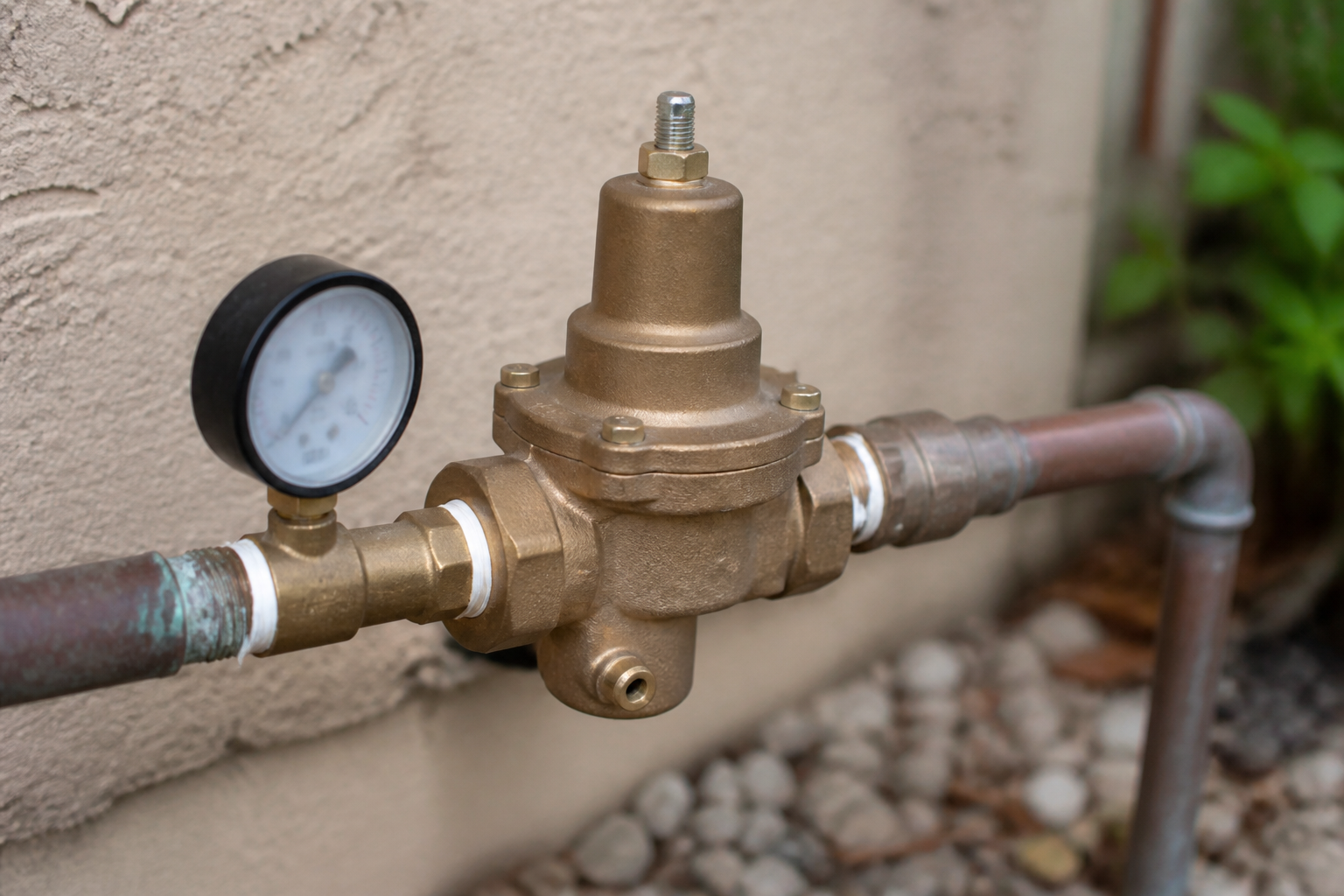
Regulators are not the same as whole-home filtration or water softeners. They address pressure only. If your home never had a PRV and street pressure is high, adding one is a code-aligned response. If a PRV is present but aged, internal diaphragms and springs can fatigue, allowing pressure to creep upward again.
Code Reference: When a Regulator Is Required
ICC International Plumbing Code Section 604.8 states that where the static pressure at the point of supply exceeds 80 psi (551 kPa), a water-pressure reducing valve shall be installed to reduce the pressure to 80 psi or less static. That threshold applies to new work and is the reference point professionals use when evaluating existing systems.
Phoenix-area homes on hilltops or near booster stations may see higher street pressure than valley-floor neighbors on the same block. Elevation and utility operations matter. The only reliable way to know whether your home exceeds 80 psi static is to measure—ideally at multiple times—rather than assume based on shower feel alone.
Sign 1: You Measure High Static Pressure at a Hose Bib
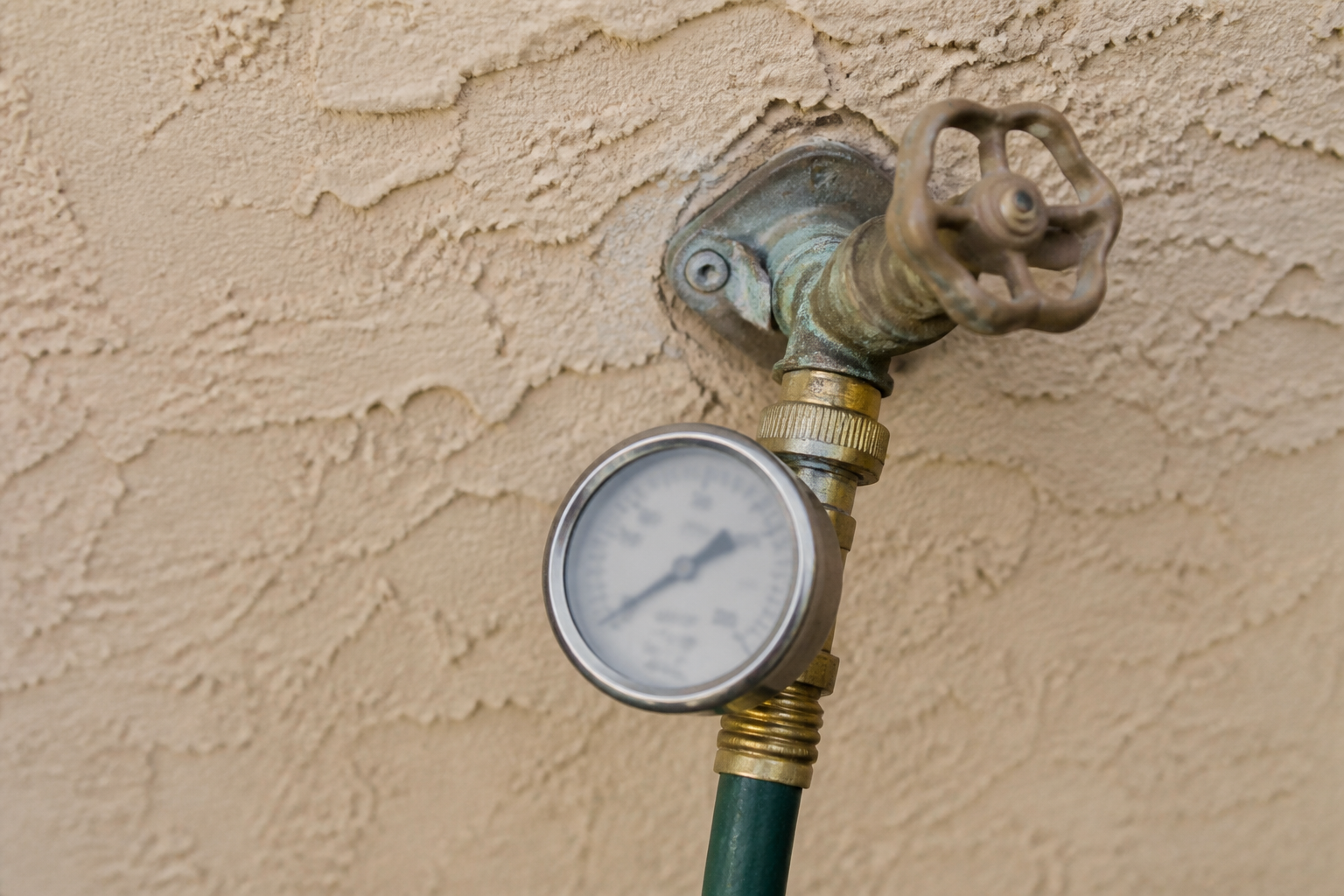
A screw-on pressure gauge on an outdoor hose bib gives a practical reading when no water is running inside the house. Static pressure is measured with all fixtures closed. If the gauge consistently reads above 80 psi static, a PRV is required under IPC Section 604.8 and is strongly advisable to protect your plumbing.
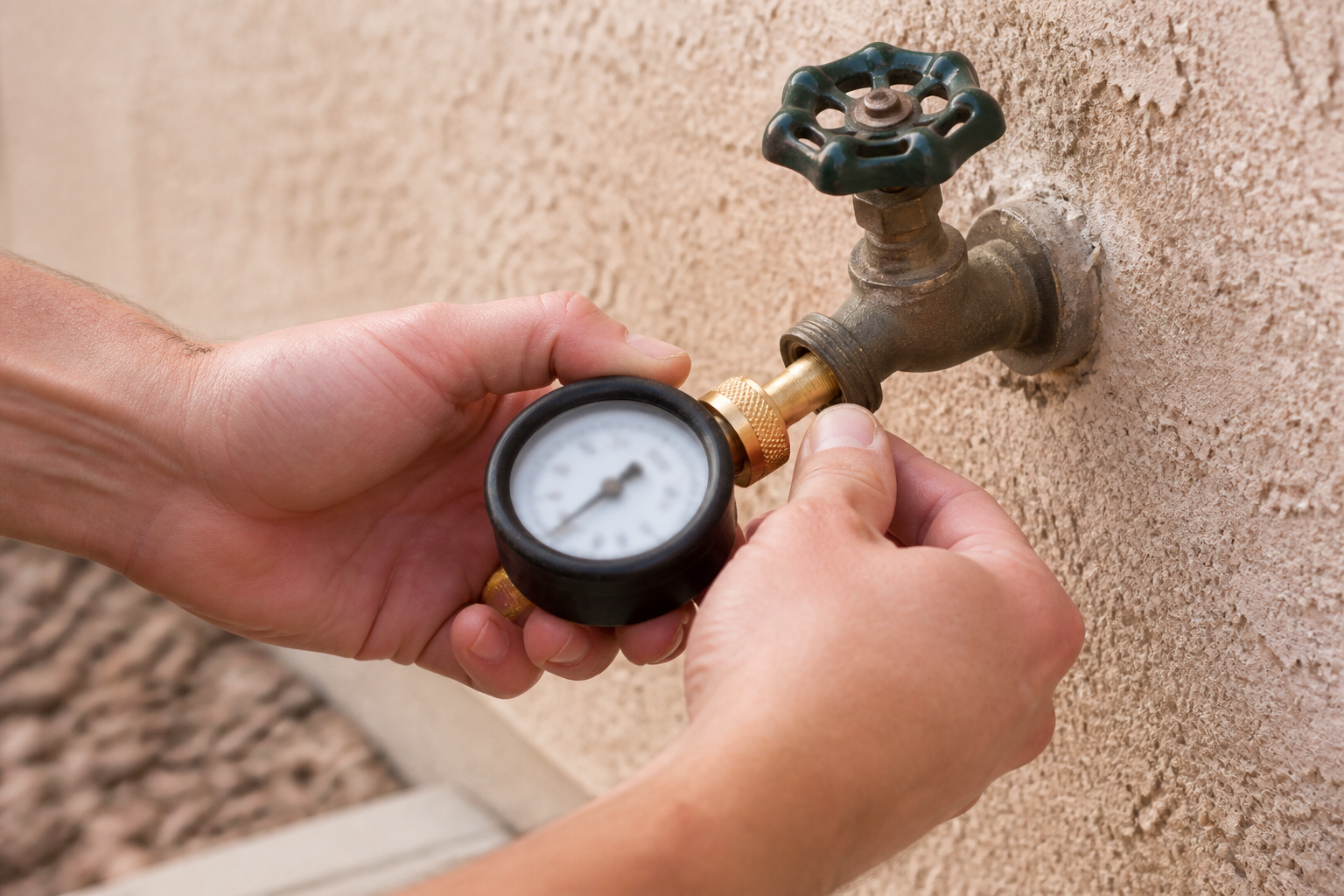
Testing has limits. A single snapshot may not capture nighttime booster activity. Professional Water Pressure Services can document static and flowing pressure and note whether an existing PRV is holding its set point.
Sign 2: Banging Pipes or Water Hammer
Water hammer—a loud bang when a valve closes quickly—is not always caused by high pressure, but excessive pressure makes hammer more likely and more severe. Fast-closing solenoid valves on dishwashers, washing machines, and irrigation systems are common triggers. If hammer started after street work or a meter change, supply pressure may have shifted.
Hammer arrestors and PRVs address different mechanisms. A plumber can determine whether pressure reduction, arrestor placement, or both fits your layout.
Sign 3: Frequent Faucet, Toilet, or Supply Line Leaks
Fixture cartridges, fill valves, and braided supply hoses are rated for typical residential pressure ranges. When pressure runs high for years, small leaks recur in multiple locations. You may replace one toilet flapper only to see another fixture drip weeks later. That pattern suggests a system pressure issue rather than isolated bad parts.
Check under sinks for bulging or frayed flexible connectors. High pressure and age combine to increase failure risk. Replacing connectors without addressing pressure leaves the underlying stress in place.
Sign 4: Appliance or Water Heater Problems Tied to Pressure
Dishwashers, ice makers, tankless water heaters, and washing machines expect stable inlet pressure within manufacturer limits. Erratic pressure or sustained high pressure can trigger fault codes, reduced flow through internal screens, or premature valve failures. If an appliance vendor asks about inlet pressure during a warranty visit, it is worth measuring before assuming the unit is defective.
Water heater temperature and pressure relief valves that drip regularly may be doing their job under excess pressure or temperature. Do not cap or remove a relief valve. Have the system evaluated.
Sign 5: Your Existing PRV May Have Failed
Homes built after widespread adoption of PRVs in high-pressure areas often have a regulator that is 10–20 years old or more. Internal wear can allow downstream pressure to rise. Signs of a failing PRV include sudden return of hammer, leaks that reappear after prior repair, or gauge readings that vary widely day to day without explanation.
Adjustment may help a healthy valve. Replacement is appropriate when the body leaks, the diaphragm is shot, or set pressure will not hold. Work on the main supply line belongs with a licensed plumber familiar with water main service and house laterals.
High Pressure Versus Low Pressure Symptoms
Homeowners sometimes confuse the two. High pressure often produces leaks, hammer, and loud rushing sounds. Low pressure shows as weak shower flow, slow filling toilets, or multiple fixtures that drop pressure when used together. A failed or partially closed PRV can cause low downstream pressure even when street pressure is high.
If your symptoms point to low flow, read how to troubleshoot low water pressure in your home for steps that isolate fixture-specific clogs from whole-house supply issues. Some low-pressure cases involve partially closed valves, sediment at a screen, or municipal work—not a missing PRV.
What Professional Installation or Replacement Involves
Installing or replacing a PRV requires shutting off the water supply, cutting or adapting the main line, and setting the downstream pressure to an appropriate target—often in the 50–70 psi range for residential fixtures, depending on the home and local practice. The valve must be accessible for future service and may need a bypass or union for easier replacement.
Permit and inspection rules vary by jurisdiction within the Phoenix metro. A licensed contractor can pull required permits when applicable. After installation, verify static pressure with a gauge and confirm that hot and cold fixtures behave normally at several locations.
Frequently Asked Questions
What is a safe water pressure for a Phoenix home?
IPC Section 604.8 requires reducing static pressure above 80 psi at the supply point. Many fixtures operate comfortably below that threshold. Your plumber can recommend a set point based on measurement and fixture type.
Can I install a pressure regulator myself?
Work on the main water supply affects the entire home and may require permits. Incorrect installation can leave the home without protection or create a leak at the most critical junction in the system. Licensed plumbers carry the tools and code knowledge for proper placement and testing.
Will a regulator fix low shower pressure?
Not usually. Low shower pressure more often comes from clogged showerheads, partially closed valves, supply line restrictions, or a failed PRV that is choked—not from absence of a PRV. Troubleshoot low symptoms separately before assuming you need a new regulator.
How often should a PRV be replaced?
There is no universal calendar interval. Inspect during annual plumbing checks. Replace when it leaks, cannot hold set pressure, or shows heavy corrosion. Age alone is a reason to test, not automatically to replace.
Does hard water ruin a pressure regulator?
Hard water is common in the Phoenix area and can contribute to mineral buildup on fixtures and appliances. PRVs can accumulate scale over time, which may affect performance. Regular testing matters more than guessing based on water feel.
Conclusion
Water pressure regulator Phoenix installations protect plumbing when static supply pressure exceeds code limits or when an old valve no longer holds. Measure before you buy parts, cite IPC Section 604.8 when pressure tops 80 psi static, and address recurring leaks at the system level. For testing, repair, or PRV replacement, contact Rapid Fire Plumbing at (623) 810-6166.
References
- International Plumbing Code Section 604.8, water-pressure reducing valves.
- Arizona Registrar of Contractors (AZ ROC), licensing requirements for plumbing contractors in Arizona.
