A gas line in distress is not a household nuisance—it is an urgent safety threat. In Phoenix, where shifting clay soils and aging infrastructure constantly stress underground piping, recognizing the earliest indicators of a compromised gas line prevents catastrophic outcomes. The unmistakable scent of rotten eggs, a sudden spike in utility bills, or hissing sounds near appliances all point to one conclusion: immediate professional evaluation is required. At Rapid Fire Plumbing, we respond to these emergencies with the speed and precision that Phoenix homeowners deserve.
Key Takeaways
- The rotten-egg odor of mercaptan is the most reliable early warning of a gas leak.
- Dying vegetation in an otherwise healthy yard often signals an underground gas line rupture.
- Unexplained increases in monthly gas bills frequently trace back to slow, hidden leaks.
- Physical symptoms like dizziness, nausea, or headaches inside the home demand immediate evacuation and a call for emergency plumbing Phoenix services.
- Aging steel or iron pipes in pre-1990 Phoenix homes are especially vulnerable to corrosion and cracking.
- Professional diagnosis using electronic gas detectors and pressure tests is the only safe way to confirm a leak.
- Never attempt DIY repairs on gas lines—it is illegal in most jurisdictions and extremely dangerous.
Understanding the Critical Role of Your Home’s Gas Line
Natural gas powers furnaces, water heaters, stoves, and dryers in millions of Phoenix homes. The network of pipes delivering this fuel operates under precise pressure, sealed from the moment it enters your property until combustion occurs at the appliance. Any breach in this closed system—whether a pinhole corrosion leak or a major joint separation—introduces flammable gas into living spaces or soil. According to the Pipeline and Hazardous Materials Safety Administration (PHMSA), natural gas distribution incidents cause an average of 17 fatalities and $50 million in property damage annually across the United States. In the arid Phoenix climate, soil conditions accelerate pipe degradation, making vigilance essential.
The gas line infrastructure in Maricopa County spans thousands of miles, much of it installed during the housing booms of the 1970s and 1980s. These older lines, typically black iron or galvanized steel, corrode from the outside in when in contact with alkaline desert soils. Modern installations use polyethylene or corrugated stainless steel tubing (CSST), which resist corrosion but still require proper bonding to prevent lightning damage. Understanding your home’s specific piping material informs the urgency of monitoring.
 The Unmistakable Scent of Danger: Mercaptan Odor
Natural gas in its raw state has no odor. Utility companies inject a chemical called mercaptan—a sulfur-based compound—specifically to create that distinctive rotten-egg smell. This is the single most recognizable warning sign of a gas leak. The American Gas Association confirms that mercaptan is detectable at concentrations as low as 1 part per billion, far below the explosive limit of 5-15% gas-to-air ratio. If you detect this odor inside your home, near appliances, or in the yard, treat it as a confirmed leak until proven otherwise.
As Maria Gonzalez, Senior Safety Inspector at the Arizona Corporation Commission’s Pipeline Safety Division, explains: “Mercaptan is our first line of defense. But homeowners must understand that prolonged exposure can cause olfactory fatigue—your nose stops registering the smell after a few minutes. Never assume the leak resolved itself because the odor faded. Evacuate immediately and call for professional gas line repair Phoenix plumber services from a safe distance.”
What to Do When You Smell Gas
- Do not operate any electrical switches, appliances, phones, or even garage door openers—a single spark can ignite accumulated gas.
- Evacuate all people and pets from the building immediately.
- Leave doors open as you exit to help ventilate the structure.
- Once safely outside and at least 100 feet away, call your gas utility’s emergency line and then contact a licensed plumber like Rapid Fire Plumbing.
- Do not re-enter the home until emergency responders or qualified technicians declare it safe.
Dead or Dying Vegetation: The Silent Underground Indicator
One of the most overlooked signs of an underground gas leak is localized plant death. Natural gas displaces oxygen in the soil, suffocating root systems. A patch of grass, shrubs, or trees that suddenly turns brown or dies while surrounding vegetation remains healthy is a classic indicator. This is particularly noticeable in Phoenix’s irrigated landscapes, where uniform watering makes isolated die-off stand out sharply.
Research from the University of Arizona Cooperative Extension demonstrates that methane in soil reduces oxygen availability by up to 60% within a 3-foot radius of a moderate leak. The affected area often appears in a line or arc following the buried pipe’s path. If you observe this pattern, mark the area and contact a professional immediately. Do not dig in the vicinity—a shovel strike on a compromised pipe can turn a leak into a catastrophic rupture.
| Warning Sign | What It Indicates | Urgency Level |
|---|---|---|
| Rotten egg odor (mercaptan) | Active gas leak inside or near home | Critical—evacuate immediately |
| Hissing or whistling sound | High-pressure gas escaping from pipe or fitting | Critical—evacuate immediately |
| Dead vegetation in a line | Underground leak suffocating roots | High—call professional same day |
| Bubbles in standing water | Gas percolating through saturated soil | High—call professional same day |
| Unexplained gas bill increase | Slow, chronic leak downstream of meter | Moderate—schedule inspection within 48 hours |
| Physical symptoms indoors | Carbon monoxide or gas accumulation | Critical—evacuate and seek medical attention |
Hissing Sounds and Physical Damage to Pipes
A hissing, whistling, or roaring sound near a gas appliance, meter, or exposed piping indicates pressurized gas escaping through a small opening. This sound may be constant or intermittent, varying with pressure fluctuations in the supply line. Even a faint hiss warrants immediate investigation. Larger leaks produce a roaring sound that is unmistakable and extremely dangerous.
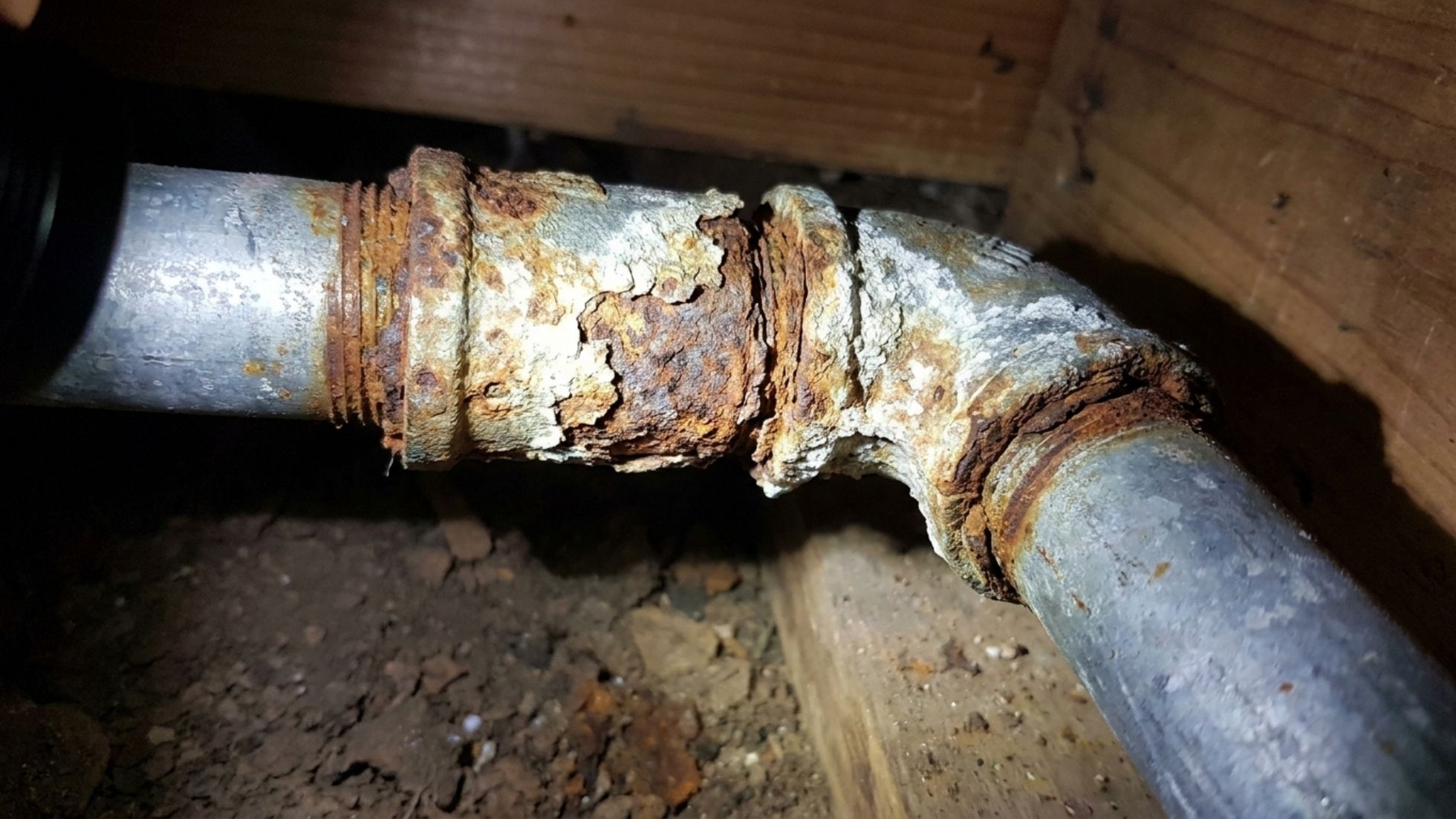
Physical damage to exposed gas lines—such as those running through attics, crawlspaces, or along exterior walls—is another clear indicator. Dents, kinks, rust spots, or white corrosion residue on copper or brass fittings signal structural compromise. In Phoenix homes built before 1990, threaded black iron pipe joints sealed with pipe dope can dry out and crack over decades of thermal cycling. The extreme summer heat, with attic temperatures exceeding 150°F, accelerates this deterioration.
Unexplained Spikes in Your Gas Bill
A slow, chronic gas leak may not produce enough odor or sound to be immediately noticeable, but it will register on your monthly utility statement. Compare your current gas usage to the same month in previous years, accounting for any changes in appliance use or occupancy. A consistent 10-20% increase without explanation often traces back to a small leak downstream of the meter.
Data from the U.S. Energy Information Administration shows that residential natural gas consumption in Arizona averages 24,000 cubic feet per year, with significant seasonal variation driven by winter heating. A leak as small as 0.5 cubic feet per hour—barely detectable by smell—wastes over 4,000 cubic feet annually, adding hundreds of dollars to bills and creating a persistent safety hazard. Smart gas meters, now deployed across most of Phoenix, can help identify unusual consumption patterns, but professional leak detection remains the definitive diagnostic tool.
 Physical Symptoms: When Your Body Detects the Leak First
Exposure to natural gas, even at levels below the odor threshold, can cause physiological symptoms. Headaches, dizziness, nausea, fatigue, and difficulty breathing are common. These symptoms often mimic other conditions—flu, food poisoning, or carbon monoxide exposure—making them easy to dismiss. The key differentiator is that symptoms improve when you leave the home and return upon re-entry.
Dr. James Liu, a toxicologist at the Arizona Poison and Drug Information Center, states: “Natural gas is primarily methane, which is an asphyxiant. It displaces oxygen in enclosed spaces. At concentrations above 10%, oxygen levels drop below 18%, causing measurable cognitive impairment and physical distress. We see cases every winter in Phoenix where families attribute headaches and fatigue to seasonal illness when the actual cause is a slow gas leak from a faulty furnace connection.”
Carbon monoxide (CO), a byproduct of incomplete combustion, often accompanies gas appliance malfunctions. While CO itself is odorless, its presence indicates a combustion issue that frequently correlates with gas line problems. Every Phoenix home should have functioning CO detectors on each level and near sleeping areas, tested monthly.
Bubbles in Standing Water or Exposed Soil
After irrigation or rain, standing water over a buried gas line may exhibit persistent bubbling. This occurs because escaping gas percolates up through saturated soil, creating visible bubbles on the surface. This sign is most apparent in Phoenix during monsoon season, when heavy rains saturate the ground and reveal leaks that were previously invisible in dry soil.
Similarly, dust or debris blowing from a small hole in the ground on a calm day can indicate pressurized gas escaping from a buried leak. The gas stream disturbs fine particles, creating a miniature “dust devil” effect. While subtle, this sign is highly specific to underground leaks and should never be ignored.
Aging Infrastructure: Why Older Phoenix Homes Are at Higher Risk
The age of your home’s gas piping system is a significant risk factor. Homes constructed before 1990 in Phoenix typically used black iron or galvanized steel pipes with threaded joints. Over 30-50 years, these materials corrode from both internal moisture and external soil contact. The American Society of Civil Engineers’ Infrastructure Report Card gives Arizona’s energy infrastructure a C+ grade, noting that much of the distribution network exceeds its intended service life.
Specific vulnerabilities in older Phoenix gas systems include:
- Threaded joint deterioration: Pipe dope and Teflon tape degrade, creating micro-leaks at every connection point.
- Galvanic corrosion: Where dissimilar metals meet—such as steel pipe connected to brass valves—electrochemical reactions accelerate material loss.
- Ground settling damage: Phoenix’s expansive clay soils shift dramatically with moisture changes, stressing buried pipes and causing cracks or joint separation.
- Seismic stress: While Arizona experiences fewer earthquakes than California, minor seismic events can fracture already-weakened pipes.
Thomas Redhawk, Master Plumber and founder of the Arizona Plumbing-Heating-Cooling Contractors Association’s technical committee, advises: “Any Phoenix home over 30 years old should have a comprehensive gas line pressure test every five years. We find leaks in roughly 15% of systems we test, even in homes where owners report no symptoms. The cost of a pressure test is negligible compared to the risk of an undetected leak.”
Professional Diagnostic Methods: How Plumbers Confirm a Leak
When you call Rapid Fire Plumbing for suspected gas line issues, our technicians deploy a systematic diagnostic protocol. Understanding these methods helps homeowners appreciate why professional intervention is non-negotiable.
Electronic Gas Detection
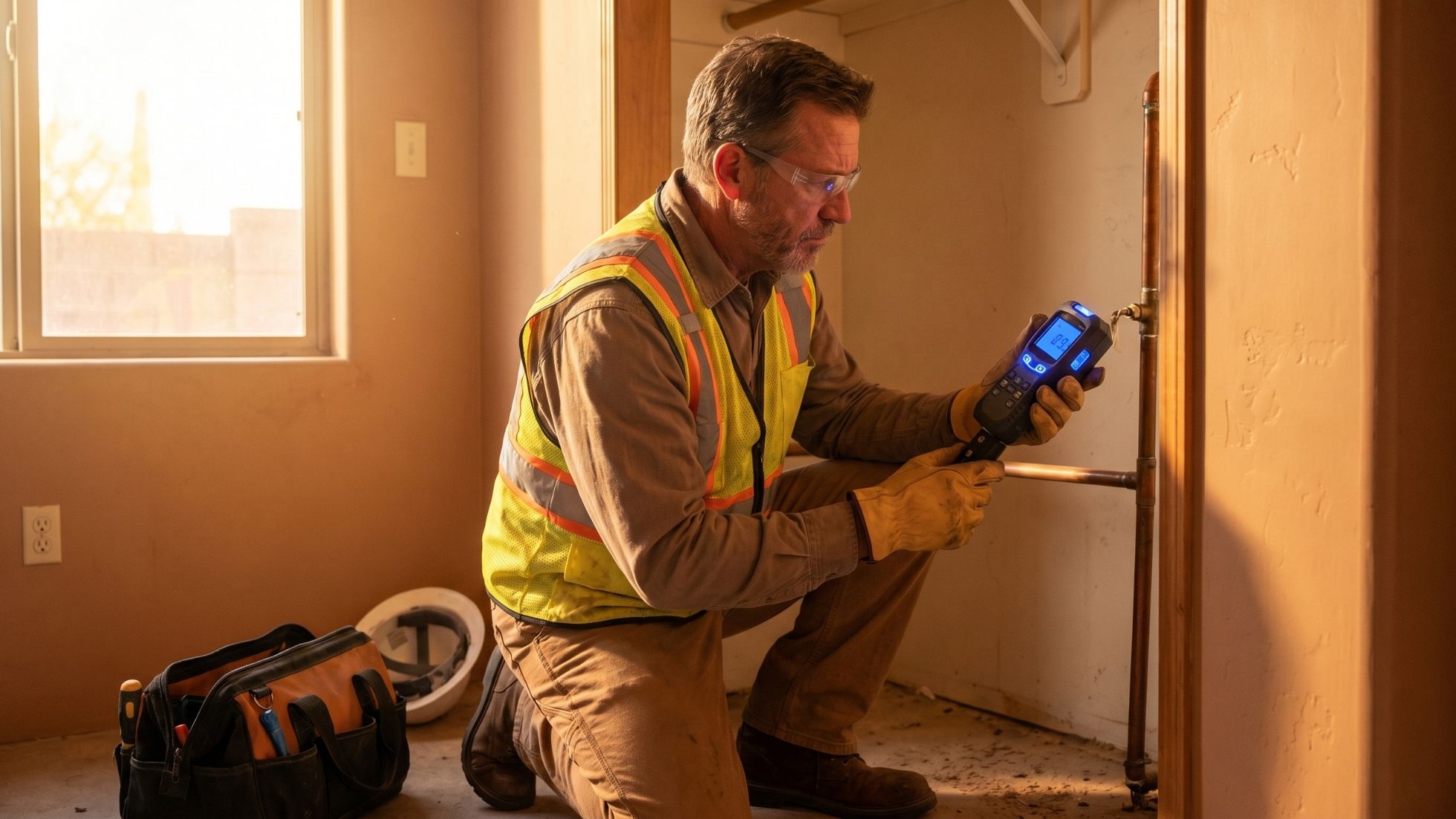
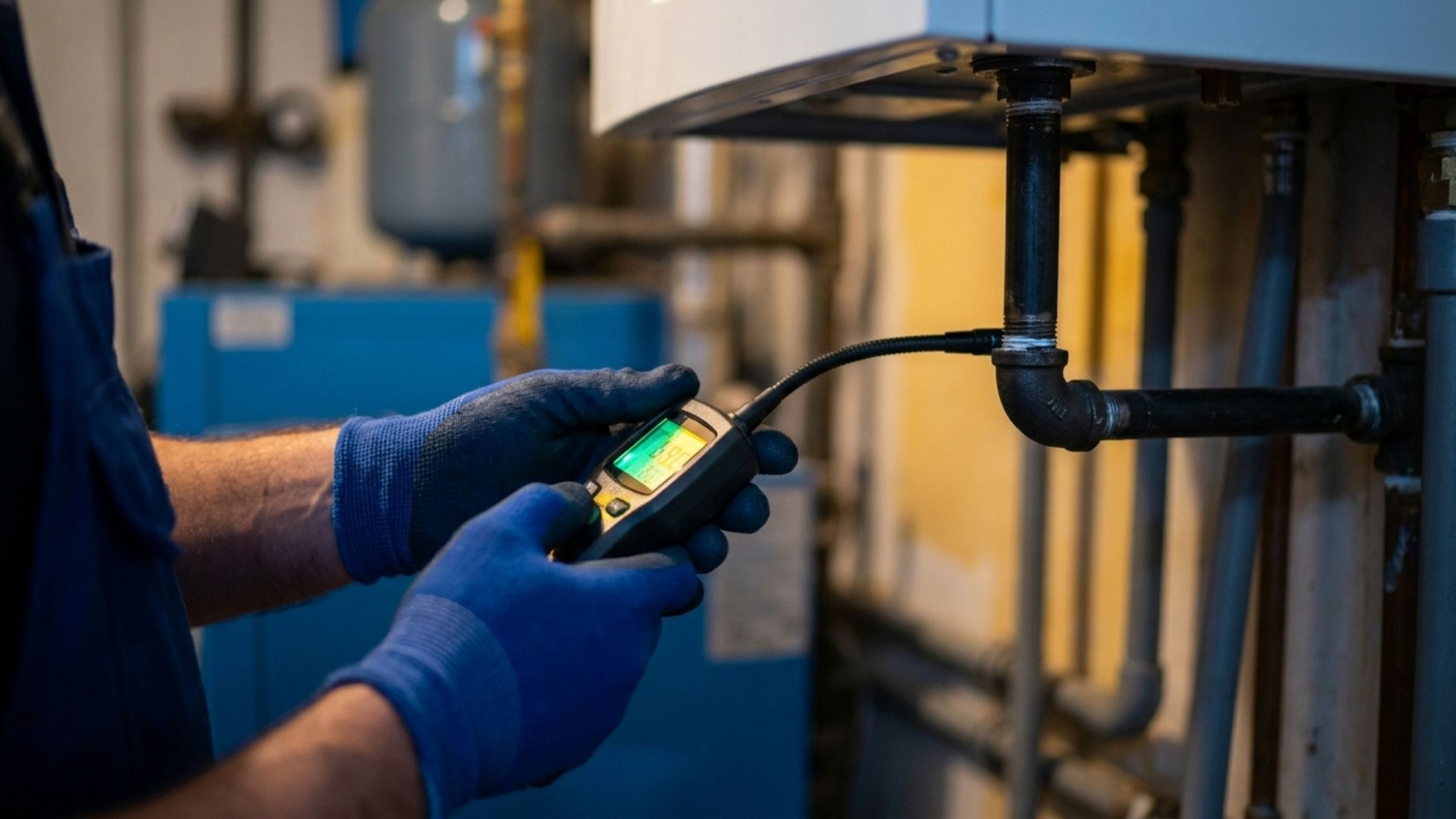
Handheld combustible gas detectors use catalytic bead or infrared sensors to measure gas concentration in parts per million (ppm). Technicians sweep all accessible piping, joints, and appliance connections. These instruments detect leaks far smaller than the human nose can perceive, pinpointing the exact location for targeted repair.
Pressure Testing
A pressure test—often called a “gas line integrity test”—isolates the home’s piping system from the meter and pressurizes it with air or inert gas to a specific PSI (typically 15-30 PSI for residential systems). The pressure is monitored over a set period, usually 15-30 minutes. Any pressure drop indicates a leak. This test is required by code whenever new gas piping is installed and is the gold standard for verifying system integrity.
Soap Solution Testing
For accessible joints and fittings, technicians apply a specialized leak-detection solution that forms bubbles at the site of any gas escape. While low-tech, this method is highly reliable for confirming leaks at specific connection points once a general area has been identified.
Emergency Response: When to Call for Immediate Help
Certain situations demand immediate evacuation and emergency response rather than a scheduled service call. If you experience any of the following, leave the home immediately and call 911 and your gas utility from outside:
- Strong gas odor throughout the home or concentrated in one area
- Audible hissing or roaring from a gas line or appliance
- Visible damage to a gas line, such as a cracked pipe or severed connection
- Multiple occupants experiencing dizziness, nausea, or headaches simultaneously
- Fire or explosion involving any gas appliance or piping
For less urgent but still concerning signs—such as a faint intermittent odor, dead vegetation, or unexplained bill increases—contact Rapid Fire Plumbing for prompt emergency plumbing Phoenix evaluation. Our technicians are available 24/7 and arrive equipped with full diagnostic capabilities.
The Repair Process: What to Expect
Once a leak is confirmed, repair options depend on the pipe material, location, and extent of damage. For accessible black iron pipe, technicians may replace a corroded section or re-thread and dope a leaking joint. For underground leaks in polyethylene pipe, heat fusion or mechanical coupling repairs restore integrity. In cases of widespread corrosion throughout an older system, partial or complete repiping may be the safest long-term solution.
All gas line repairs in Phoenix must comply with the International Fuel Gas Code as adopted by the City of Phoenix and be performed by a licensed, bonded, and insured contractor. Permits are required for any repair beyond minor appliance connector replacement. Rapid Fire Plumbing handles all permitting and inspection coordination, ensuring your repair meets or exceeds code requirements.
Prevention: Protecting Your Home from Future Gas Line Issues
Proactive maintenance significantly reduces gas line failure risk. Schedule a comprehensive inspection every two years for homes under 20 years old, and annually for older properties. During these inspections, technicians check all accessible piping, test appliance connections, verify proper venting, and assess corrosion levels.
Additional preventive measures include:
- Installing excess flow valves (EFVs) that automatically shut off gas if a line ruptures
- Upgrading older black iron pipe to corrosion-resistant CSST or polyethylene where feasible
- Ensuring proper seismic strapping on water heaters and other gas appliances
- Maintaining clear access to gas meters and shutoff valves
- Never using gas piping as a ground for electrical systems, which accelerates corrosion
Frequently Asked Questions
Can I repair a gas line myself?
No. Gas line repair requires specialized training, licensing, and equipment. DIY repairs are illegal in Phoenix and most jurisdictions, and they create extreme safety risks including fire, explosion, and carbon monoxide poisoning. Always hire a licensed, insured professional plumber for any gas line work.
How much does gas line repair cost in Phoenix?
Costs vary widely based on leak location, pipe accessibility, and repair complexity. Minor accessible joint repairs may range from $300-$800, while major underground line replacement can exceed $5,000. Rapid Fire Plumbing provides upfront, transparent pricing after diagnostic evaluation.
Will my homeowners insurance cover gas line repair?
Coverage depends on your policy and the cause of damage. Sudden accidental damage is typically covered, while gradual corrosion or lack of maintenance may be excluded. Contact your insurance provider to understand your specific coverage. Many policies also cover damage resulting from gas leaks, such as fire or explosion.
How long does a typical gas line repair take?
Simple accessible repairs often complete within 2-4 hours. Underground repairs requiring excavation may take 1-2 days. Extensive repiping projects can span 3-5 days. Rapid Fire Plumbing prioritizes gas line emergencies and works efficiently to restore service safely.
What is the difference between a gas leak and a carbon monoxide leak?
A gas leak involves natural gas (primarily methane) escaping from pipes before combustion. A carbon monoxide leak involves CO gas produced by incomplete combustion of any fuel. Both are dangerous but require different detection methods—mercaptan odor for gas, electronic CO detectors for carbon monoxide. Many gas appliance issues produce both simultaneously.
How often should gas lines be inspected?
Homes over 20 years old should have annual gas line inspections. Newer homes benefit from biennial checks. Additionally, inspect whenever you notice any warning signs, after seismic events, or before purchasing a home. The Pipeline and Hazardous Materials Safety Administration recommends professional inspection any time excavation occurs near gas lines.
Can a small gas leak fix itself?
Absolutely not. Gas leaks never self-resolve. They only worsen over time as corrosion progresses, joints loosen further, or ground movement stresses pipes. A small leak today becomes a major hazard tomorrow. Prompt professional repair is the only safe course of action.
Conclusion
Gas line problems do not announce themselves with fanfare—they whisper through faint odors, hiss through tiny cracks, and signal through dying grass and creeping utility bills. Phoenix homeowners who learn to recognize these warnings protect their families, their property, and their peace of mind. The combination of aging infrastructure, corrosive desert soils, and extreme temperature swings makes vigilance essential for every gas-connected home in the Valley.
When you suspect a gas line issue, hesitation is the enemy. Rapid Fire Plumbing brings decades of specialized gas line expertise to every service call, from emergency leak response to comprehensive system evaluation and repair. Our licensed technicians use advanced diagnostic equipment to locate problems with precision and resolve them with code-compliant, permanent solutions. Do not wait for a warning sign to become a crisis. Contact us today for immediate assistance or to schedule a preventive inspection.
References
- Pipeline and Hazardous Materials Safety Administration (PHMSA) – Natural Gas Distribution Incident Data. https://www.phmsa.dot.gov
- American Gas Association – Mercaptan Odorization Standards. https://www.aga.org
- Arizona Corporation Commission – Pipeline Safety Division. https://www.azcc.gov
- University of Arizona Cooperative Extension – Soil Gas Effects on Vegetation. https://extension.arizona.edu
- U.S. Energy Information Administration – Residential Natural Gas Consumption Data. https://www.eia.gov
- American Society of Civil Engineers – Infrastructure Report Card. https://www.asce.org
- Arizona Poison and Drug Information Center. https://www.azpoison.com
- International Fuel Gas Code – City of Phoenix Adopted Codes. https://www.phoenix.gov
