If you’re experiencing recurring drain clogs despite multiple cleanings, mineral buildup on fixtures that reappears within weeks, summer pipe leaks that seem to coincide with Phoenix’s hottest days, or monsoon-season sewer backups—you’re not imagining patterns that don’t exist elsewhere. Phoenix plumbing faces challenges unlike any other major U.S. metro: 200+ ppm hard water (250-350% harder than national average), 110°F+ temperatures on 31 days annually creating thermal stress unknown in moderate climates, expansive clay soil shifting underground pipes, July-September monsoon flooding overwhelming drainage systems, and aging 1950s-1970s infrastructure common in neighborhoods like Encanto, Maryvale, and Central Phoenix now reaching end-of-life simultaneously.
Homeowners new to Arizona wonder why their plumbing problems differ dramatically from experiences in other states—DIY solutions that worked elsewhere fail in Phoenix conditions, drain cleaners that cleared clogs in moderate climates prove ineffective against mineral scale, pipe repairs that lasted decades elsewhere fail within years in Arizona heat, and maintenance schedules recommended nationally (every 2-3 years) prove inadequate for Phoenix’s accelerated deterioration rates. These aren’t coincidences or poor installation—they’re predictable consequences of environmental factors creating a perfect storm for plumbing stress that generic plumbing advice from national sources doesn’t acknowledge. The frustration compounds when homeowners waste money on inappropriate solutions, delay necessary professional intervention, and ultimately face emergency situations requiring far more extensive repairs than proactive addressing would have cost.
Key Information
Phoenix plumbing faces five interconnected challenges creating unique problems generic national advice cannot address: (1) 200+ ppm hard water from Salt River Project sources (250-350% harder than U.S. average) depositing 1-2 inches of annual sediment in water heaters and reducing pipe diameter 15-25% over 10-15 years, (2) extreme heat with 110°F+ on 31 days annually causing pipe thermal expansion/contraction failures and accelerating component deterioration, (3) expansive clay soil creating 2-6 inches of vertical movement causing “pipe belly” sagging and joint separations, (4) July-September monsoon season bringing flash flooding that overwhelms drainage systems and introduces debris, and (5) aging 1950s-1970s infrastructure in 40-50% of Phoenix housing stock with galvanized pipes, polybutylene lines, and cast iron sewer systems now reaching failure points simultaneously. All factors compound exponentially rather than simply adding together.
Emergency situations requiring 24/7 professional response include monsoon sewer backups (sewage entering home = health hazard), summer pipe bursts during 110°F+ heat (no water during extreme temperatures = dangerous), slab leaks causing foundation damage (structural integrity risk), and water heater failures in hard water conditions (flooding + scalding risks). Rapid Fire Plumbing’s 623-810-6166 emergency line provides 60-90 minute Phoenix metro response with transparent pricing including after-hours premium ($50-$100) far less than combined emergency + damage remediation costs from delayed response. Preventive maintenance schedules differ significantly from national recommendations: Phoenix requires pre-summer inspections (April-May before 110°F+ stress period), pre-monsoon preparation (June drain cleaning and emergency protocols), post-monsoon assessment (October for storm damage), plus annual comprehensive inspections—frequency exceeding “every 2-3 years” national guidance because Phoenix’s combined challenges accelerate deterioration 2-3x faster.
All timelines and service cost ranges are provided for general information only. Actual service duration and costs will depend on the specific plumbing issues, project complexity, scheduling availability, and agreed-upon scope of work as set forth in the written service agreement.
Overview
This guide provides Phoenix-area homeowners, property managers, and commercial facility operators with comprehensive understanding of Arizona’s unique plumbing challenges, why they occur, how they interact and compound, and most importantly—proven solutions from Arizona ROC-licensed contractors with 20+ years Phoenix experience. Unlike generic national plumbing content or fragmented articles addressing single issues in isolation, this resource integrates ALL Phoenix factors explaining their interconnections while positioning qualified professional solutions.
Comprehensive integration of ALL Phoenix challenges explains how 200+ ppm hard water doesn’t just create mineral buildup in isolation—it combines with 110°F+ heat accelerating mineral precipitation chemistry, expansive soil movement stressing weakened mineral-encrusted pipes, monsoon flooding introducing debris that compounds with mineral scale creating stubborn clogs, and aging pipe materials deteriorating faster under combined Arizona stress factors. Solution-differentiated positioning establishes not just WHAT problems Phoenix faces but WHY Rapid Fire Plumbing’s specific qualifications solve them better: Arizona ROC CR-37 dual commercial/residential licensing (verify at azroc.gov) demonstrating state-verified competency, 20+ years Phoenix experience recognizing patterns newcomers miss, 24/7 emergency availability critical for time-sensitive situations, commercial portfolio translating high-complexity expertise to residential problem-solving, and transparent “Beat Any Quote” pricing building trust.
Transparent Phoenix-specific pricing provides actual local market costs competitors universally avoid, Arizona regulatory integration educates homeowners on consumer protections and contractor qualifications, neighborhood-specific aging infrastructure guidance targets areas where 1950s-1970s construction means pipes now failing, and seasonal maintenance calendar specific to Phoenix climate patterns provides proactive service timing. By following this guide, you’ll understand why your Phoenix plumbing problems differ from national norms, recognize which issues require immediate professional intervention versus scheduled service, evaluate contractor qualifications specifically relevant to Arizona challenges, make informed repair versus replacement decisions, implement preventive maintenance appropriate for Arizona conditions, and access 24/7 emergency response if situations escalate.
Challenge #1: Phoenix’s 200+ ppm Hard Water—The Foundation of Multiple Plumbing Problems
Phoenix homes experience water quality challenges that create cascading plumbing problems affecting every component of residential and commercial systems. Understanding hard water as the PRIMARY Phoenix challenge helps homeowners recognize why multiple symptoms occur simultaneously and why comprehensive solutions work better than addressing individual issues in isolation.
Understanding Phoenix Water Sources and Mineral Composition
Salt River Project and City of Phoenix Water Services water quality reports show Phoenix water averages 14.9 grains per gallon (200+ ppm) hardness, classified as “very hard” water by industry standards. Geographic variations across the service area create different severity levels: Goodyear experiences 24 gpg (extreme hardness presenting most severe challenges), Glendale averages 17.5 gpg, Mesa shows 17 gpg, while Peoria experiences relatively lower 10.5 gpg (though still considered hard water requiring attention).
This calcium carbonate, magnesium, and sodium composition originates from Salt and Verde River surface water sources plus Colorado River water delivered via Central Arizona Project. Municipal water treatment plants effectively remove contaminants and bacteria but cannot economically remove hardness minerals—the cost would be prohibitive for the volume Phoenix requires, and these minerals aren’t health hazards requiring removal under safe drinking water standards.
Homeowners recognize hard water through visible indicators: white or gray crusty deposits accumulating on faucets and showerheads, shower doors developing permanent clouding that cleaning cannot remove, discolored water showing rust-colored tints from mineral reactions with aging pipes, and appliances showing white residue inside dishwashers and on glassware. These visual symptoms signal larger problems occurring throughout hidden plumbing systems where mineral scale progressively damages pipes, water heaters, and fixtures in ways homeowners cannot directly observe until failures occur.
How Hard Water Damages Phoenix Plumbing Systems
Mineral scale formation begins when dissolved calcium and magnesium precipitate from solution as water heats and cools through daily usage cycles. These minerals coat pipe interior walls creating progressively rougher surfaces that trap additional deposits, forming a reinforcing cycle where scale accelerates more scale accumulation. Over 10-15 years, pipe diameter reduction of 15-25% occurs in Phoenix homes without water softeners—a 3/4-inch pipe effectively becomes 1/2-inch diameter, dramatically reducing flow rates and water pressure throughout the house.
Water heater impacts prove particularly severe in Phoenix conditions. Sediment accumulation of 1-2 inches annually (compared to 1/4-1/2 inch nationally in soft water areas) fills tank bottoms, reducing capacity by 30-40% and insulating heating elements or burners from water. This insulation forces equipment to work harder, increasing energy costs 20-30% while shortening water heater lifespan to 8-10 years in Phoenix versus 12-15 years nationally—a 30-40% reduction representing $300-$600 in accelerated replacement costs.
Fixture damage manifests through faucet aerators clogging with mineral particles requiring frequent cleaning or replacement, showerheads experiencing reduced flow as spray holes become blocked, and valve mechanisms becoming stiff or seizing completely as minerals interfere with moving parts. Appliances including dishwashers and washing machines show 30-40% shorter lifespans in Phoenix hard water, with ice makers producing cloudy ice carrying mineral taste, and all water-using equipment requiring more frequent maintenance than manufacturers anticipate based on national averages.
Drain system effects create additional complications as mineral scale coating drain pipe interiors provides sticky surfaces that trap hair, grease, soap residue, and debris far more effectively than smooth pipes in soft water areas. This makes Phoenix drains harder to keep clear and explains why routine maintenance proves insufficient—the underlying mineral coating requires professional removal rather than simple snaking or chemical treatments.
Interconnection with aging pipes accelerates problems exponentially: mineral acids from hard water deposits corrode galvanized steel and cast iron from inside, scale buildup weakens pipe walls making them more vulnerable to thermal stress from extreme heat and mechanical stress from soil movement, and the combination creates failure patterns where multiple issues emerge simultaneously rather than occurring independently over extended periods.
Professional Water Softener Solutions for Phoenix Homes
Phoenix-specific water softener sizing requirements differ significantly from national recommendations. Standard residential systems designed for 3-7 gpg hardness prove inadequate for Phoenix’s 14.9 gpg average and completely overwhelmed in areas like Goodyear experiencing 24 gpg. Properly sized systems require 30,000-60,000 grain capacity for average Phoenix homes—double the national standard—with regeneration cycles calibrated for higher mineral loads and water usage patterns accounting for irrigation and outdoor needs common in desert landscaping.
System types appropriate for Arizona conditions include salt-based ion exchange systems (most effective for Phoenix hardness levels and most widely recommended), dual-tank configurations providing continuous softened water during regeneration cycles (eliminating the brief hard water period single-tank systems experience), and whole-house versus point-of-use considerations depending on whether outdoor irrigation should receive softened water (typically not recommended as landscaping doesn’t benefit and salt waste is environmentally questionable).
Pre-installation requirements prove critical for achieving full benefits. Professional assessment of existing pipe damage identifies scale accumulation that softeners cannot remove—softeners prevent NEW scale formation but don’t eliminate existing deposits. Hydro-jetting or chemical descaling removes accumulated buildup before softener installation, ensuring clean pipe interiors can maintain optimal flow. Water pressure testing confirms adequate supply for softener operation, as some units require minimum pressure to function properly.
Integration with existing plumbing includes bypass valve installation allowing outdoor irrigation to receive unsoftened water (avoiding salt waste and cost), dedicated hard water lines to kitchen sinks if homeowners prefer mineral taste for drinking water, and coordination with water heater maintenance ensuring sediment removal before softener prevents future accumulation. Transparent pricing for salt-based whole-house systems ranges $1,500-$3,500 installed depending on capacity and features, with annual salt costs $50-$100 and optional maintenance contracts $100-$200 annually providing peace of mind through professional monitoring.
ROI calculation demonstrates compelling value: preventing $8,000-$15,000 premature pipe replacement, extending water heater life 2-3 years (saving $300-$600 annually amortized), reducing energy costs 15-20% ($150-$300 annually on average), and extending appliance lifespans (saving $500-$1,000 over 10 years) totals $10,000-$18,000 in value over 10-15 year period versus $1,500-$3,500 investment. However, it’s worth knowing that softeners don’t solve everything: they cannot remove existing scale (requiring professional cleaning first), don’t address aging pipe structural issues (replacement still needed for 50+ year old deteriorated pipes), and won’t prevent thermal stress damage from extreme heat or soil movement impacts on underground lines.
All timelines and service cost ranges are provided for general information only. Actual service duration and costs will depend on the specific plumbing issues, project complexity, scheduling availability, and agreed-upon scope of work as set forth in the written service agreement.
Challenge #2: Extreme Heat Creating Thermal Stress and Component Failures
Phoenix’s sustained extreme temperatures create plumbing stress patterns no other major U.S. city experiences at this intensity or duration. Understanding these thermal impacts helps homeowners recognize why summer sees spikes in plumbing emergencies and why pre-season preparation provides significant value.
Understanding Pipe Thermal Expansion in Phoenix Extreme Heat
Material physics dictates that all substances expand when heated and contract when cooled. This universal principle creates particular challenges in Phoenix where daily temperature swings and seasonal extremes subject plumbing materials to stress cycles that moderate climates never experience.
PVC pipes commonly used for drain lines and some supply applications begin softening at 140°F+, becoming pliable enough to warp or sag under their own weight. Phoenix uninsulated garages routinely reach 115-125°F during summer afternoons, approaching this softening threshold and causing gradual deformation that creates low spots where waste and water pool. Copper pipes used extensively for hot and cold supply lines expand approximately 1 inch per 100 feet when temperature increases 100°F—a common Phoenix daily swing from 75°F morning temperatures to 115°F+ afternoon garage conditions. This expansion stress concentrates at joints and connections where movement is restricted.
PEX advantages become apparent in Phoenix applications: this flexible cross-linked polyethylene material accommodates expansion and contraction through flex rather than stress, making it increasingly recommended for re-piping projects where aging copper or galvanized pipes require replacement. Outdoor exposed pipes face the most severe conditions, with direct sun exposure creating surface temperatures of 130-150°F+ on metal pipes, causing cracking risk especially in older materials that have lost flexibility through years of UV exposure and temperature cycling.
Joint failure patterns emerge predictably: compression fittings loosen from repeated expansion/contraction cycles as materials move slightly with each temperature change, threaded connections develop leaks as thermal stress works against thread engagement, and solder joints in copper piping can separate under sustained stress as the solder itself experiences fatigue from countless heating/cooling cycles. Why summer sees emergency spike patterns becomes clear—pipes stressed throughout the season suddenly fail during the hottest days when thermal stress peaks, often coinciding with peak water usage from irrigation systems, evaporative coolers, and increased household consumption.
Water Heater and Equipment Component Failures in Extreme Heat
Water heater thermostat issues represent common summer failures. Electronic thermostats carry ratings for specific ambient temperature ranges, with 115-125°F garage temperatures exceeding specifications for many residential units designed assuming moderate 70-90°F installation environments. This causes erratic operation where thermostats cycle improperly, fail to maintain set temperatures, or stop functioning entirely.
Heating element stress accelerates in extreme ambient conditions. Sustained high temperatures promote metal oxidation and corrosion beyond normal rates, while mineral scale from Phoenix hard water literally bakes onto elements in the heat, creating insulating coatings that force elements to work harder and fail sooner. Anode rod depletion occurs 30-40% faster in Phoenix extreme heat according to field data from water heater manufacturers adapted for desert conditions. These sacrificial magnesium or aluminum rods protect tank interiors from corrosion through electrochemical reactions that accelerate dramatically at elevated temperatures, consuming the protective anode much faster than the 5-6 year national replacement intervals suggest.
Pressure relief valve cycling increases as ambient heat raises tank pressure, causing valves to open and close more frequently than in moderate climates. This accelerated cycling wears out springs and seals, creating potential safety hazards if valves fail in closed position (preventing pressure release and creating explosion risk) or fail open (causing constant dripping and water waste). Gas water heater specific issues include thermocouple failures (these pilot light safety devices experience higher failure rates in extreme heat), gas control valves affected by sustained high temperatures developing internal seal problems, and venting dynamics altered by heat affecting proper draft through exhaust systems.
Pre-summer inspection value becomes apparent through this understanding. April-May assessments identify components showing stress before peak summer failure season arrives, allowing replacement during moderate temperatures rather than emergency service during 110°F+ heat when demand peaks and availability shrinks. Consider that proactive $200-$400 inspection plus $200-$600 component replacement compares favorably to summer emergency service at $400-$800 plus after-hours premium $50-$100 plus potential water damage from failures.
All timelines and service cost ranges are provided for general information only. Actual service duration and costs will depend on the specific plumbing issues, project complexity, scheduling availability, and agreed-upon scope of work as set forth in the written service agreement.
Challenge #3: Expansive Clay Soil Creating Underground Pipe Movement
Phoenix metro area sits atop expansive clay soil that swells when moisture increases and contracts during dry periods. This soil movement creates 2-6 inches of vertical shift—enough to stress rigid underground pipes beyond design tolerances, causing a category of problems uniquely common in Phoenix that other regions rarely experience.
Understanding Phoenix Expansive Soil and Foundation Interaction
Soil composition throughout much of the Phoenix valley includes high clay content (specific percentages vary by location but generally characterized as expansive throughout the metro area). Seasonal moisture cycles drive dramatic volume changes: extreme dryness during May-June (typically the driest months) causes maximum soil contraction, monsoon saturation July-September triggers rapid soil expansion, and gradual drying October-April creates secondary movement cycles.
Vertical movement measurements documented through foundation engineering studies show 2-6 inches as typical for Phoenix area, with higher clay content locations experiencing more dramatic shifts. Slab-on-grade foundation construction used extensively in 1950s-1970s Phoenix home building embedded water supply pipes and sewer lines directly in or under concrete foundation slabs. This construction method, combined with expansive soil, creates vulnerability not found in homes built with crawl spaces or basements providing access to plumbing.
How plumbing routes through these foundations determines vulnerability: hot and cold supply lines typically run within the slab in channels, drain lines may run in slab or under slab depending on specific home design, and the complete absence of crawl space or basement access means no way to inspect or repair without breaking through concrete. Pipe material vulnerabilities vary significantly—rigid copper pipes crack under stress as they cannot flex with soil movement, galvanized steel corrodes over decades then cracks when structural integrity is compromised, while PEX flexibility makes it superior material choice for re-piping in expansive soil conditions as it can accommodate movement without failure.
“Pipe belly” mechanism describes how soil settling creates unsupported pipe sections that sag, forming low spots where waste and water pool instead of flowing freely. These low spots progressively deteriorate from standing water, creating increasingly severe restriction until complete blockage occurs requiring professional intervention. Connection to other Phoenix challenges compounds the problem: hard water mineral deposits make pipes more brittle and vulnerable to cracking under stress, thermal expansion and contraction from extreme heat adds additional stress cycles beyond soil movement alone, and aging materials have reduced structural integrity making recent-vintage failures far more common than in newer installations.
Slab Leak Detection and Diagnosis in Phoenix Homes
Warning signs homeowners notice include unexplained water bill increases (200+ gallons daily suggesting significant leak), hot spots on floors indicating hot water line leaks heating surrounding concrete, sound of running water when all fixtures are off, foundation cracks appearing or existing cracks worsening, and moisture or mold developing in carpets or on walls without obvious source. These symptoms warrant immediate professional assessment as early detection prevents escalating damage.
Why early detection proves critical: active leaks saturate soil causing additional foundation movement, creating feedback loops where leaking worsens foundation settlement which stresses pipes causing more leaking. Addressing leaks early prevents $10,000-$50,000 foundation repair costs that develop when prolonged saturation undermines structural support. Professional detection methods include electronic and acoustic leak detection ($300-$600) pinpointing location within feet without exploratory foundation damage, pressure isolation testing identifying which line (hot/cold/drain) is affected, infrared thermography revealing hot water leak temperature patterns, and camera inspection once access is created confirming exact damage.
Rapid Fire’s detection process begins with initial consultation assessing symptoms and history, proceeds to non-invasive detection identifying probable location, confirms through pressure testing isolating affected sections, creates minimal access points (avoiding unnecessary foundation damage), uses camera inspection to verify exact issue, then provides repair recommendations with transparent pricing for both spot repair and re-pipe options. Detection investment of $300-$600 prevents $5,000+ in exploratory foundation damage from guessing location, confirms diagnosis before committing to repair costs, and may reveal multiple issues requiring strategic approach rather than repeated spot fixes addressing symptoms without solving underlying systemic problems.
Common slab leak locations follow predictable patterns: near water heaters where high pressure and temperature create maximum stress, under bathrooms with highest usage frequency, along long straight pipe runs where thermal expansion creates greatest movement, and in areas near trees or irrigation where moisture attracts root intrusion for drain lines (roots seek water sources and can penetrate even small cracks).
All timelines and service cost ranges are provided for general information only. Actual service duration and costs will depend on the specific plumbing issues, project complexity, scheduling availability, and agreed-upon scope of work as set forth in the written service agreement.
Slab Leak Repair Options and Strategic Decisions
Spot repair approaches work appropriately when dealing with single localized failure in otherwise sound pipes. This involves accessing the leak location through foundation slab (typically cutting small access opening), repairing or replacing the damaged pipe section, pressure testing to confirm repair integrity, then restoring concrete and flooring. Spot repair costs typically range $2,000-$5,000 depending on location accessibility and damage extent, with additional foundation restoration adding $500-$2,000, for total typically $2,500-$7,000 in straightforward cases where access is relatively easy and damage limited.
When spot repair makes sense: newer homes under 20 years old with isolated failure suggesting localized stress rather than systemic deterioration, confirmed single leak with sound pipes elsewhere verified through inspection, and budget constraints making whole-house re-pipe unaffordable in the short term. Consider this a bridge solution buying time for eventual comprehensive repair rather than permanent fix for aging systems.
Whole-house re-pipe approach bypasses the entire slab-embedded system, routing new pipes through attic and walls (above-ground installation), leaving old pipes in place but abandoned (no removal or additional foundation disturbance), and eliminating future slab leak risk completely. Re-pipe costs range $10,000-$15,000 for whole-house copper re-pipe or $8,000-$12,000 for PEX re-pipe (PEX typically preferred for Phoenix given expansive soil flexibility needs), including new pipe routing, fixture connections, pressure testing, wall patching, and permit coordination.
When re-piping represents the recommended approach: homes 30+ years old with original pipes showing age-related deterioration, second or third slab leak indicating systemic issues rather than isolated problems, galvanized or polybutylene pipe materials (both high failure risk), and long-term investment in home worth protecting from repeated failure cycles. Cost-benefit analysis comparing $8,000-$12,000 re-pipe to repeated spot repairs at $2,500-$7,000 each shows that if the home will likely experience 2-3 more slab leaks over next 5-10 years, re-piping proves more economical plus eliminates ongoing concern and protects foundation from repeated saturation damage.
Material selection for Phoenix re-pipes increasingly favors PEX due to flexibility accommodating soil movement, resistance to mineral scale buildup, thermal expansion accommodation superior to rigid materials, and cost-effectiveness compared to copper. Insurance considerations affect decisions as many policies cover slab leak access and repair but not preventive re-piping, foundation damage may constitute separate claims, and licensed contractor documentation proves essential for claim approval with coordination between contractor and insurance adjuster often necessary to establish covered versus excluded work.
All timelines and service cost ranges are provided for general information only. Actual service duration and costs will depend on the specific plumbing issues, project complexity, scheduling availability, and agreed-upon scope of work as set forth in the written service agreement.
Challenge #4: Monsoon Season Flooding and Drainage System Stress
July-September monsoon season brings sudden heavy rainfall that Phoenix drainage infrastructure struggles to handle. Understanding these seasonal challenges allows homeowners to prepare proactively rather than react during emergencies when response times lengthen and costs increase.
Phoenix Monsoon Patterns and Plumbing System Impacts
Monsoon meteorology draws moisture from Gulf of California and Mexico, creating afternoon and evening thunderstorms with localized intense rainfall dropping 1-2 inches within 1-2 hours—more precipitation than many months combined considering October-May Phoenix averages only 3-4 inches total. This dramatic shift from sustained dryness to sudden saturation creates plumbing stress that gradual moderate rainfall never produces.
Municipal infrastructure capacity designed for typical desert conditions faces overwhelming volumes during monsoons. Drainage systems handling normal flows adequately experience volumes 5-10x typical during storms, particularly problematic in older infrastructure serving central city neighborhoods where systems were designed decades ago for smaller populations. Sewer backup mechanism operates through capacity overflow: when municipal main lines reach maximum flow, additional volume backs up into residential lateral lines, and sewage enters homes through lowest elevation drains including toilets, basement or garage floor drains, and bathtubs.
Desert vegetation debris creates Phoenix-specific clog challenges distinct from other regions. Palo Verde trees drop seed pods that swell dramatically when wet and lodge in drain openings, Mesquite trees shed branches and beans that accumulate rapidly, and desert plants including ocotillo and cholla cactus contribute pieces all different in character from the hardwood or deciduous leaves common in other climates. Dust accumulation during months-long dry periods settles in gutters, drains, and catch basins, then first monsoon rains create slurry washing accumulated dust into drainage systems where it compounds with debris creating stubborn blockages.
French drain and perimeter drainage issues affect homes using desert landscaping with rock or gravel for surface drainage. Sudden soil saturation from monsoon volumes overwhelms these systems designed for normal conditions, causing foundation perimeter flooding where water cannot drain away fast enough. The repeat annual pattern means homeowners can PREDICT these challenges will occur every July-September, making proactive preparation a valuable investment compared to reactive emergency response after problems develop.
Pre-Monsoon Preparation and Emergency Response
Pre-monsoon preparation optimally scheduled for June (after minimal April-May spring precipitation but before typical early-July monsoon onset) includes comprehensive drain cleaning through main sewer line hydro-jetting or snaking removing accumulated mineral scale and debris, floor drains cleared and tested ensuring proper flow, and tub/shower drains verified flowing freely without restriction. Gutter and downspout assessment connects to drainage systems as clogged gutters overflow saturating foundations while downspouts must route away from houses preventing localized flooding.
Sump pump testing for homes with basements or below-grade spaces verifies pump operation, tests battery backup systems critical during monsoon power outages, and confirms discharge routing flows away from foundation rather than creating localized water accumulation. Emergency protocol review includes identifying main water shutoff location (critical if pipes break during storms), documenting sewer cleanout access points for emergency service, and baseline condition photography providing before-storm documentation valuable for insurance claims if damage occurs.
Package pricing for comprehensive pre-monsoon preparation typically ranges $150-$350 depending on home size and scope, with drain cleaning $150-$250, sump pump service $75-$150, and combined packages offering savings versus individual services. Commercial applications including restaurants, hotels, and retail spaces benefit significantly from pre-monsoon preparation preventing business interruption, reducing liability from flooding affecting customers or operations, and maintaining compliance with health and safety codes requiring proper drainage.
Emergency monsoon plumbing response addresses sewage backup into homes (immediate health hazard requiring 24/7 response regardless of timing), foundation flooding threatening structural damage, complete drainage system failure, and power outages affecting critical pumps. Emergency response protocol through 623-810-6166 provides immediate dispatch with 60-90 minute Phoenix metro response goal during storms (weather-dependent), situation assessment with temporary mitigation if full repair requires dry conditions, and health/safety prioritization over property protection when sewage contamination present.
Post-monsoon assessment scheduled for October after storm season ends provides comprehensive inspection checking for damage not immediately apparent during active weather, foundation perimeter drainage evaluation identifying areas requiring improvement, pipe camera inspection revealing signs of soil movement during saturation/drying cycles, and strategic improvement planning preventing next year’s repetition. This annual cycle approach—pre-monsoon preparation June, active season monitoring July-September, post-season assessment October, planning for following year—establishes ongoing relationships and prevents problems rather than only emergency-contact patterns.
All timelines and service cost ranges are provided for general information only. Actual service duration and costs will depend on the specific plumbing issues, project complexity, scheduling availability, and agreed-upon scope of work as set forth in the written service agreement.
Challenge #5: Aging 1950s-1970s Infrastructure in Older Phoenix Neighborhoods
Major Phoenix development during 1950-1980 means 40-50% of current housing stock contains plumbing installed 50-75 years ago. These systems now reach end-of-life simultaneously, creating concentrated failure patterns in specific neighborhoods where homeowners face similar challenges at similar times.
Galvanized and Polybutylene Pipe Failures
Galvanized steel pipes (standard residential plumbing material 1950s-1960s before copper became dominant) carry manufacturer-rated 40-50 year life expectancy in moderate conditions. Phoenix’s hard water and extreme heat accelerate deterioration to 30-40 years, meaning pipes installed 1955-1965 are now 60-70 years old—well past end of service life. Failure mechanism progresses as interior zinc coating erodes from acidic minerals in Phoenix hard water, exposing bare steel to corrosion where rust accumulates narrowing pipe diameter and contaminating water, eventually corroding completely through causing leaks.
Visible symptoms include brown or rust-colored water when first using faucets after periods of non-use, metallic taste in tap water, low pressure throughout house (not isolated to single fixtures suggesting pipe-wide restriction), visible rust stains on sinks and fixtures, and external corrosion on exposed pipe sections in basements, garages, or utility areas. Why pipes fail suddenly after years of service: once interior protective coating becomes compromised, bare steel corrodes rapidly creating domino effect as one section fails and others at similar age and condition follow quickly thereafter.
Neighborhoods with high galvanized pipe concentration include Encanto (1950s development), Maryvale (1955-1965 major growth period), Central Phoenix older areas, and original sections of Glendale, Peoria, and Tempe. Replacement urgency increases once multiple failures occur, as whole-house re-piping becomes more economical than repeated spot repairs at $500-$1,500 each, prevents water damage from unexpected failures, and eliminates brown water contamination concerns affecting health and quality of life.
Polybutylene pipes used 1978-1995 (marketed as “pipe of the future” cheaper than copper) failed industry-wide due to chlorine and chloramines in municipal water degrading plastic from inside. Material becomes brittle and fails at joints and fittings without warning, leading to class action settlement in 1995 acknowledging defect. Phoenix context shows installations from this era are now 30-47 years old with many in failure zone (25-35 years typical for problems to emerge).
Identification involves looking for gray plastic pipes (sometimes white or cream colored) often stamped “PB” near water heaters or main shutoff areas. Failure patterns show sudden catastrophic flooding without warning signs, with joints and fittings failing more frequently than pipe runs themselves. Insurance and disclosure requirements mean many insurers charge higher premiums or deny coverage entirely for homes with polybutylene, while Arizona sellers face legal requirements to disclose known polybutylene presence. Replacement urgency rates HIGH because unlike galvanized which degrades gradually providing warning symptoms, polybutylene fails suddenly creating catastrophic flooding potential and insurance complications making proactive replacement the only prudent approach.
All timelines and service cost ranges are provided for general information only. Actual service duration and costs will depend on the specific plumbing issues, project complexity, scheduling availability, and agreed-upon scope of work as set forth in the written service agreement.
How Rapid Fire Plumbing Solves Phoenix-Specific Challenges
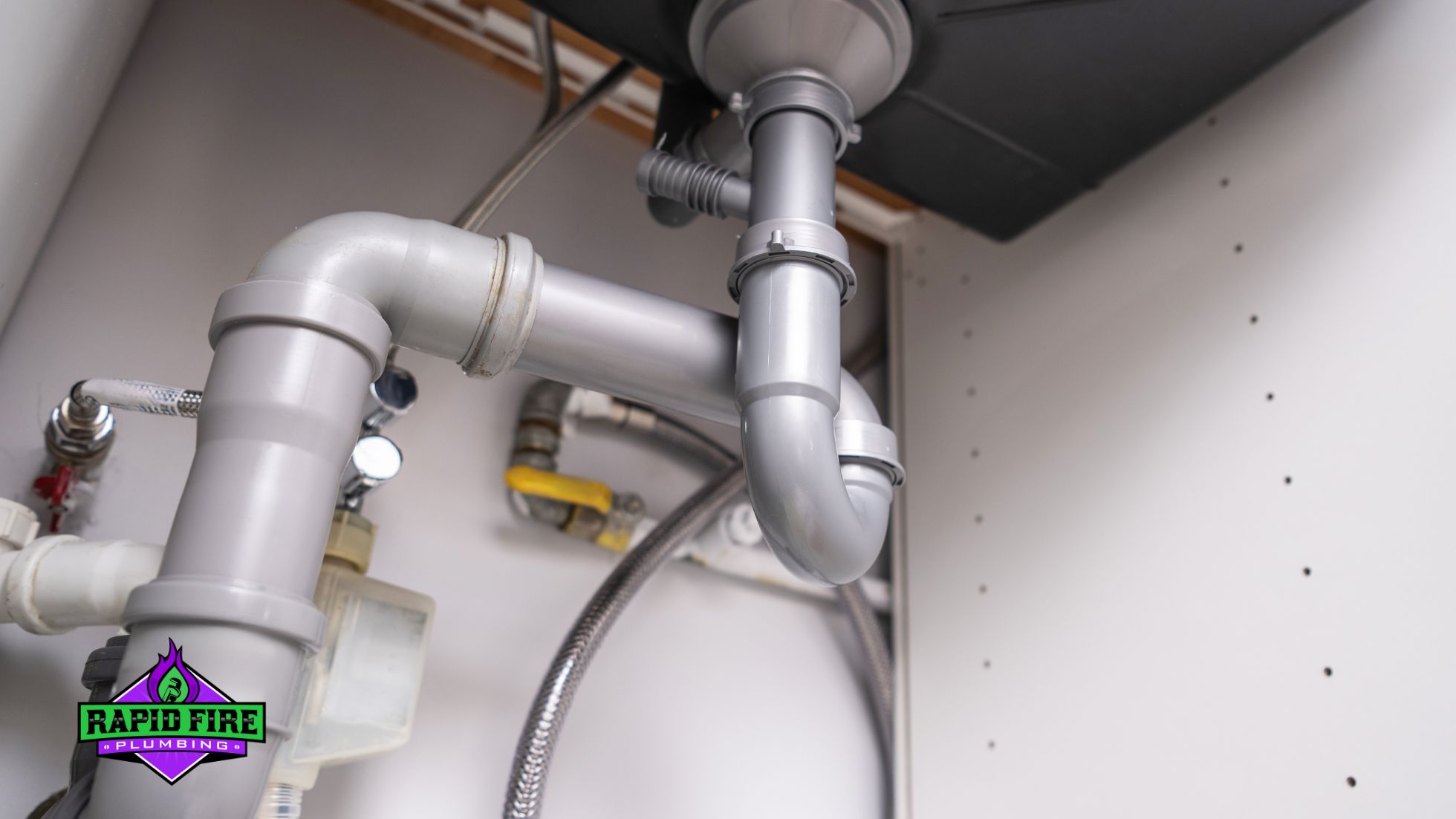
Professional solutions require more than generic plumbing knowledge—they demand specific understanding of how Phoenix’s unique challenges interact and compound. Rapid Fire Plumbing’s qualifications directly address these regional requirements through verified credentials and proven local experience.
Arizona ROC Licensing and Consumer Protection
Arizona Registrar of Contractors licensing types include CR-37 (commercial plumbing), C-37 (residential plumbing), and R-37 (residential remodel/repair work). Rapid Fire’s CR-37 dual commercial/residential licensing indicates broader scope beyond basic residential repair—this classification qualifies for both commercial and residential projects demonstrating higher expertise level verified through more comprehensive testing and experience requirements.
Why licensing matters extends beyond legal compliance: state-verified competency testing ensures contractors understand current codes and best practices, insurance requirements include minimum $2 million liability coverage typical for licensed contractors protecting homeowners from potential damages, bonding protects consumers providing recourse if work quality issues emerge, and continuing education requirements ensure licensed contractors stay current with code updates and new technologies. Verification process through azroc.gov allows homeowners to confirm active status, review any complaints or disciplinary actions, and verify license type matches work scope (re-piping and major repairs require appropriate licensing levels).
Permit coordination handled by licensed contractors includes applications for water heater replacement, re-piping projects, slab leak repairs, and sewer line work—unlicensed work voids permits creating insurance and resale complications. Phoenix 2024 International Plumbing Code compliance requires licensed contractors stay current with code updates, ensure work meets inspection standards, and provide documentation for insurance claims that unlicensed services cannot offer. Insurance claim eligibility often requires licensed contractor documentation for plumbing damage claims, as unlicensed work may void coverage or reduce claim amounts significantly.
Why 20+ Years Phoenix Experience Matters
Pattern recognition developed through decades of Phoenix service enables experienced contractors to understand how hard water, heat, soil conditions, monsoons, and aging infrastructure interact rather than viewing each as isolated issue. This includes predicting failure patterns based on home age, location, and construction materials that newcomers miss, and providing strategic rather than reactive guidance addressing root causes instead of temporarily treating symptoms.
Neighborhood knowledge proves invaluable—understanding that Encanto, Maryvale, and Central Phoenix homes built 1950s-1970s face specific challenges from construction era materials and methods, recognizing soil conditions vary by area affecting underground pipe vulnerability differently, and knowing which subdivisions extensively used polybutylene pipes during 1980s expansion creating concentrated current failure risk. Seasonal expertise includes knowing pre-summer April-May timing optimizes inspections before thermal stress peaks, pre-monsoon June preparation prevents July-September emergency flooding, and post-monsoon October assessments catch storm damage before it worsens.
Interconnection understanding means recognizing when recurring clogs actually signal hard water issues requiring water softener investment rather than just repeated drain cleaning treating symptoms, identifying when thermal stress damages result from heat-related component fatigue rather than installation defects, and connecting slab leaks to soil movement patterns requiring strategic solutions beyond spot repairs. Commercial expertise translates to residential applications as hospitals, hotels, and restaurants require understanding high-capacity systems, navigating code compliance for public facilities, and optimizing preventive maintenance—skills directly applicable to complex residential problem-solving.
Emergency service through 24/7 availability at 623-810-6166 addresses time-sensitive Phoenix situations including monsoon sewer backups (sewage in home = health hazard), summer pipe bursts during 110°F+ heat (no water during extreme temperatures = dangerous), foundation-threatening slab leaks (structural damage escalates with delay), and water heater failures causing flooding and scalding risks. Live answering provides immediate human response without voicemail delays, on-call licensed plumber dispatch occurs immediately with estimated arrival times communicated, and 60-90 minute Phoenix metro response goals (Glendale, Peoria, Surprise, Avondale, Mesa) ensure rapid service when situations cannot wait for next business day.
All timelines and service cost ranges are provided for general information only. Actual service duration and costs will depend on the specific plumbing issues, project complexity, scheduling availability, and agreed-upon scope of work as set forth in the written service agreement.
Frequently Asked Questions About Phoenix Plumbing Challenges
What plumbing problems are unique to Phoenix Arizona?
Phoenix faces five interconnected challenges creating problems unlike other regions: (1) 200+ ppm hard water from Salt River Project and Colorado River sources (250-350% harder than U.S. average) creating mineral scale that narrows pipes 15-25% over 10-15 years and deposits 1-2 inches annual water heater sediment, (2) 110°F+ temperatures on 31 days annually causing thermal expansion/contraction failures and accelerated component deterioration, (3) expansive clay soil creating 2-6 inches vertical movement causing slab leaks and pipe belly, (4) July-September monsoons bringing flash flooding and desert debris overwhelming drainage, and (5) aging 1950s-1970s infrastructure in 40-50% of Phoenix housing stock with galvanized, polybutylene, and cast iron systems now failing. These factors compound exponentially—hard water weakens pipes that thermal stress cracks, soil movement breaks weakened pipes, monsoon debris combines with mineral scale creating stubborn clogs, and aging materials deteriorate faster under combined Arizona stress. Generic national plumbing advice cannot address these interconnected Phoenix-specific patterns.
Why is Phoenix water so hard and how does it affect plumbing?
Salt River Project water quality reports show Phoenix averages 14.9 grains/gallon (200+ ppm) hardness, with geographic variations including Goodyear at 24 gpg (extreme), Glendale 17.5 gpg, Mesa 17 gpg, and Peoria 10.5 gpg. Compared to U.S. average 60-80 ppm, Phoenix water is 250-350% harder classified as “very hard.” Specific plumbing impacts include pipe interior scale reducing diameter 15-25% over 10-15 years and restricting flow, water heater sediment accumulation 1-2 inches annually versus 1/4-1/2 nationally shortening life to 8-10 years versus 12-15, fixture and appliance mineral buildup causing 30-40% shorter lifespans, and drain coating creating sticky surfaces trapping debris more effectively. Interconnection with other challenges means mineral-weakened pipes become more vulnerable to thermal stress from extreme heat and mechanical stress from soil movement, while scale provides rough surfaces where monsoon debris accumulates. Professional water softener solutions sized for Phoenix conditions ($1,500-$3,500) prevent $8,000-$15,000 premature pipe replacement while reducing energy costs 15-20% and extending equipment life.
All timelines and service cost ranges are provided for general information only. Actual service duration and costs will depend on the specific plumbing issues, project complexity, scheduling availability, and agreed-upon scope of work as set forth in the written service agreement.
What are slab leaks and why are they common in Phoenix?
Slab leaks occur when pipes embedded in or running under concrete foundation slabs develop leaks, uniquely common in Phoenix due to combination of expansive clay soil (creating 2-6 inches vertical movement), slab-on-grade construction prevalent in 1950s-1970s Phoenix homes (pipes cast into slabs without crawl space access), and aging copper/galvanized lines weakened by hard water and thermal stress now cracking under soil movement. Detection methods include electronic/acoustic leak detection ($300-$600) pinpointing location within feet without exploratory foundation damage, pressure testing isolating affected lines, and infrared thermography revealing hot water leak temperature patterns. Repair versus re-pipe decisions depend on factors including single isolated leak in otherwise sound pipes suggesting spot repair ($2,000-$5,000), while multiple leaks or aging systems indicate whole-house re-pipe ($8,000-$12,000 PEX preferred for soil flexibility) provides better long-term value. Foundation damage prevention requires early detection as active leaks saturate soil causing additional movement that worsens both plumbing and structural issues—addressing promptly prevents $10,000-$50,000 foundation repair costs.
How does extreme heat affect plumbing in Phoenix?
Phoenix experiences 110°F+ on 31 days annually creating garage/utility room temperatures of 115-125°F where water heaters and plumbing equipment are located. Thermal expansion/contraction causes pipes to expand approximately 1 inch per 100 feet during 100°F temperature swings, stressing joints and connections causing failures, while PVC pipes approach 140°F softening temperature potentially warping in extreme heat. Component stress includes water heater thermostat failures as 115-125°F ambient exceeds design specifications, heating element and anode rod deterioration accelerating 30-40% faster than moderate climates, pressure relief valve cycling increasing from sustained high temperatures wearing components, and gas water heater thermocouple failures more frequent in extreme heat. Summer emergency spike patterns show pipe burst calls increasing 40-50% during June-August peak heat as stressed pipes fail during hottest days often coinciding with peak water usage. Pre-summer inspection value ($200-$400 in April-May) identifies vulnerable components before failure season, allowing scheduled replacement versus emergency service during 110°F+ heat at $400-$800 plus after-hours premium.
All timelines and service cost ranges are provided for general information only. Actual service duration and costs will depend on the specific plumbing issues, project complexity, scheduling availability, and agreed-upon scope of work as set forth in the written service agreement.
How do I prepare my plumbing for Arizona monsoon season?
Pre-monsoon preparation optimally scheduled for June includes main sewer line hydro-jetting or snaking ($150-$250) removing accumulated mineral scale and debris preventing backups, floor drains cleared and tested ensuring proper flow, tub/shower drains verified flowing freely, gutter assessment (clogged gutters overflow saturating foundations), and sump pump testing for homes with below-grade spaces. Emergency protocol review includes identifying main water shutoff location, documenting sewer cleanout access points, and baseline photography for insurance documentation. Package pricing for comprehensive preparation typically ranges $150-$350 depending on scope. During-monsoon emergency protocols address sewage backup (immediate health hazard requiring 24/7 response at 623-810-6166), foundation flooding, and drainage system failure with 60-90 minute Phoenix metro response goals. Post-monsoon October assessment checks for storm damage not immediately apparent, evaluates foundation perimeter drainage, and uses camera inspection to reveal signs of underground pipe movement during soil saturation/drying cycles providing strategic planning for improvements preventing next year’s repetition.
Should I get a water softener in Phoenix?
ROI calculation demonstrates compelling value for Phoenix homeowners: $1,500-$3,500 water softener investment prevents $8,000-$15,000 premature pipe replacement from mineral scale damage, extends water heater life 2-3 years (saving $300-$600 annually amortized), reduces energy costs 15-20% ($150-$300 annually) by preventing mineral insulation on heating elements, and extends appliance lifespans (saving $500-$1,000 over 10 years)—totaling $10,000-$18,000 value over 10-15 years. Phoenix-specific sizing requires 30,000-60,000 grain capacity for 200+ ppm hardness (double national standard recommendations), with higher capacity needed in Goodyear (24 gpg extreme hardness). Pre-installation descaling removes existing mineral buildup that softeners cannot eliminate—softeners prevent NEW scale formation but don’t remove accumulated deposits requiring professional hydro-jetting first. Consider that softeners don’t solve everything: aging pipe structural issues still require replacement, thermal stress and soil movement damage continue regardless of water quality, and installation doesn’t retroactively repair years of accumulated damage to water heaters and fixtures.
All timelines and service cost ranges are provided for general information only. Actual service duration and costs will depend on the specific plumbing issues, project complexity, scheduling availability, and agreed-upon scope of work as set forth in the written service agreement.
What pipes need replacement in older Phoenix homes?
1950s-1970s construction in neighborhoods including Encanto, Maryvale, Central Phoenix, and older sections of Glendale/Peoria contains galvanized pipes (40-50 year lifespan now expired as 2025 means pipes installed 1955-1975 are 50-70 years old), polybutylene pipes from 1978-1995 era (high failure risk at 25-35 years making current age 30-47 years problematic), and original cast iron sewer lines (pre-1970 deteriorating from interior corrosion accelerated by Phoenix hard water). Whole-house re-pipe timing becomes advisable when experiencing second or third leak within short period indicating systemic issues, galvanized pipes showing brown water and low pressure symptoms, or any polybutylene presence due to sudden catastrophic failure risk. Transparent costs include copper whole-house re-pipe $10,000-$15,000 or PEX $8,000-$12,000 (PEX preferred for Phoenix due to flexibility accommodating soil movement, mineral scale resistance, and cost-effectiveness), typically completed in 2-5 days routing new pipes through attic/walls bypassing slab-embedded old system. Real estate buyer guidance suggests budgeting for re-pipe within 5-10 years if purchasing Encanto/Maryvale/Central Phoenix home with original plumbing, as proactive replacement proves more economical than repeated emergency spot repairs at $500-$1,500 each.
All timelines and service cost ranges are provided for general information only. Actual service duration and costs will depend on the specific plumbing issues, project complexity, scheduling availability, and agreed-upon scope of work as set forth in the written service agreement.
How much does plumbing repair cost in Phoenix?
Transparent Phoenix-specific pricing includes slab leak detection $300-$600 (electronic/acoustic pinpointing exact location), water softener installation $1,500-$3,500 (whole-house salt-based systems properly sized for 200+ ppm hardness), emergency service $200-$800 depending on issue severity plus after-hours premium $50-$100 for nights/weekends/holidays, whole-house re-pipe $8,000-$15,000 (PEX $8,000-$12,000 preferred, copper $10,000-$15,000 alternative), pre-summer inspection packages $200-$400, and pre-monsoon preparation $150-$350. “Beat Any Quote” guarantee means providing written quote from licensed Arizona contractor (verify at azroc.gov) results in Rapid Fire matching or beating competitor pricing for equivalent service scope. Factors affecting Phoenix costs include slab access difficulty for underground repairs, hard water damage extent requiring more extensive pipe replacement, aging pipe conditions needing careful handling, and emergency timing with premium for immediate response. Consider that professional service often provides better value than DIY when comprehensive inspection, warranty coverage, permit coordination, and insurance claim documentation are factored beyond simple labor cost comparisons.
All timelines and service cost ranges are provided for general information only. Actual service duration and costs will depend on the specific plumbing issues, project complexity, scheduling availability, and agreed-upon scope of work as set forth in the written service agreement.
Protect Your Phoenix Home with Professional Plumbing Solutions
Phoenix plumbing challenges—200+ ppm hard water, 110°F+ extreme heat, expansive clay soil, monsoon flooding, and aging infrastructure—aren’t isolated problems requiring separate solutions. These interconnected factors compound exponentially, creating plumbing stress patterns unlike any other major U.S. metro and requiring specialized Arizona expertise generic national contractors cannot provide.
Homeowners experiencing recurring problems despite repairs, new Phoenix residents frustrated by challenges never faced elsewhere, buyers of older homes discovering original plumbing vulnerabilities, and property managers with portfolio-wide infrastructure concerns all benefit from understanding that Phoenix plumbing IS fundamentally different. Professional solutions addressing root causes provide lasting value: water softener systems preventing premature pipe replacement, pre-summer inspections identifying thermal stress damage, pre-monsoon preparation preventing emergency flooding, slab leak detection preventing foundation damage, and strategic whole-house re-piping providing permanent solutions for aging infrastructure.
Arizona ROC CR-37 dual commercial/residential licensing demonstrates state-verified competency for complex Phoenix repairs, 20+ years serving Phoenix provides pattern recognition newcomers lack, 24/7 emergency availability at 623-810-6166 provides critical safety net for time-sensitive situations, commercial portfolio translates high-complexity expertise to residential problem-solving, and transparent “Beat Any Quote” pricing builds trust through cost honesty.
For plumbing problems you suspect are Phoenix-specific, call 623-810-6166 for assessment consultation and transparent pricing. For emergency situations including monsoon flooding, summer pipe bursts, sewer backups, or active slab leaks, call 24/7 emergency line immediately: 623-810-6166 for 60-90 minute Phoenix metro response. Service area includes Phoenix, Glendale, Peoria, Surprise, Avondale, Mesa, Encanto, Maryvale, Central Phoenix, Cave Creek, Black Canyon City, and all Maricopa County communities. Visit rapidfireplumbing.com or call 623-810-6166. Address: 2941 W Dailey St, Phoenix, AZ 85053. Arizona ROC License CR-37: Verify at azroc.gov.
Sources
Arizona Plumbing Resources
-
Salt River Project – Phoenix water hardness data (14.9 gpg average), water quality reports, mineral composition, geographic variations across service area
-
City of Phoenix Water Services – Municipal water quality standards, hardness data, treatment processes, water conservation programs
-
Arizona Registrar of Contractors – Licensing requirements (CR-37, C-37, R-37), contractor verification, permit requirements, consumer protection
Professional and Industry Association Sources
-
Water Quality Association – Hard water impacts on appliances and plumbing, sediment formation research, water treatment solutions
-
International Code Council – 2024 International Plumbing Code standards, technical specifications, compliance requirements
Government and Regulatory Authorities
-
National Weather Service Phoenix – Monsoon season data, temperature patterns, extreme heat statistics, flash flood information
-
Arizona State Climatology Office – Phoenix extreme heat data (110°F+ days annually), climate patterns, historical temperature records
Service Consultation Disclaimer
This article provides general information about Arizona plumbing services and should not be considered as specific service advice for your project. Plumbing issues, costs, and procedures vary significantly based on individual circumstances, jurisdiction within Arizona, and specific project details. Service schedules, project timelines, and plumbing processes can be affected by many factors specific to each situation.
All timelines and service cost ranges are provided for general information only. Actual service duration and costs will depend on the specific plumbing issues, project complexity, scheduling availability, and agreed-upon scope of work as set forth in the written service agreement.
For free consultation and qualified service for your specific Arizona plumbing needs, contact Rapid Fire Plumbing or call 623-810-6166. Our licensed Arizona plumbing contractors will provide personalized service analysis based on your specific needs and circumstances. No service agreement is created by reading this article.
