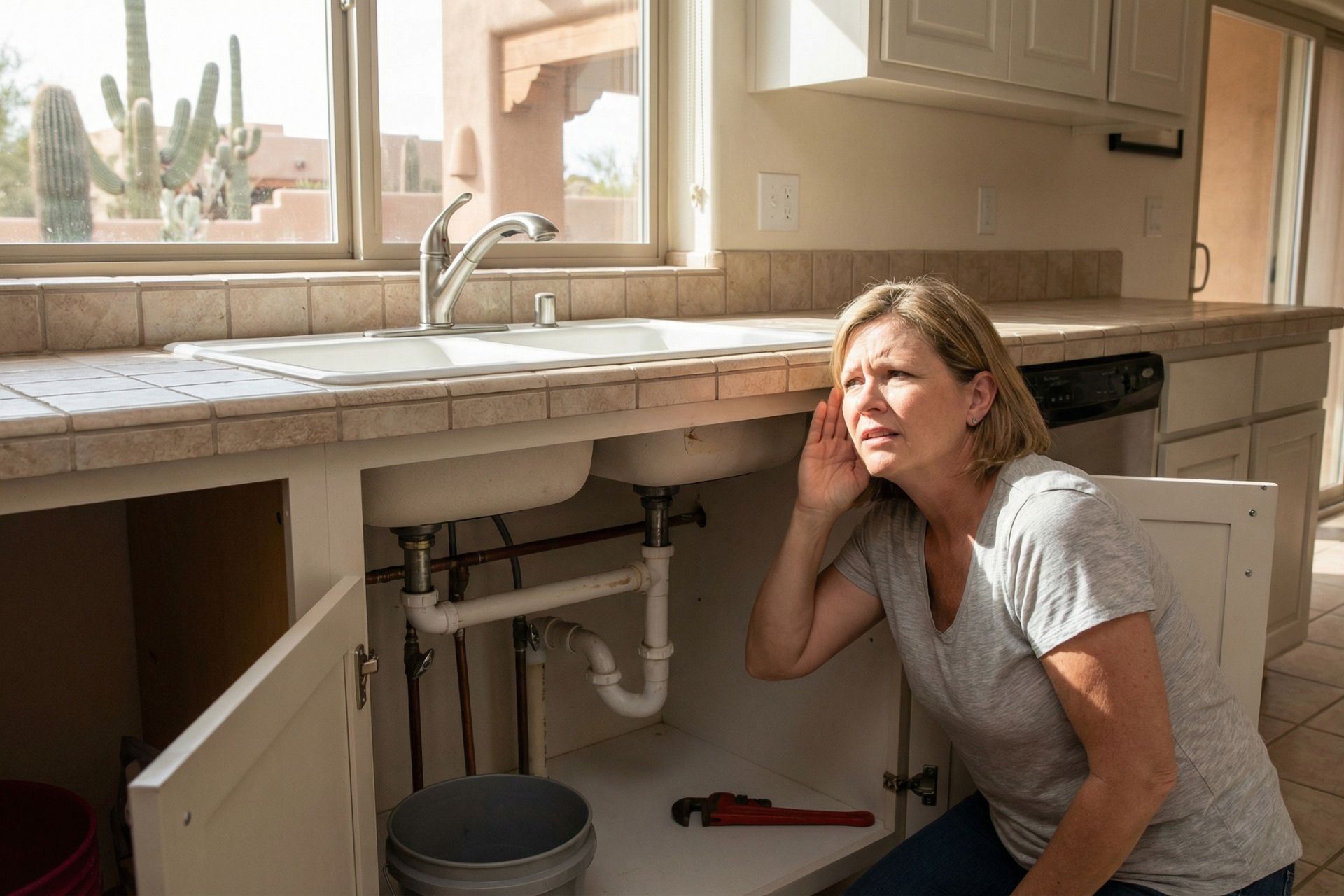
Plumbing systems communicate through sound—whistling, banging, gurgling, and hissing noises all signal specific problems developing within pipes, fixtures, or water distribution systems. Phoenix homeowners who dismiss these sounds as minor annoyances often face expensive repairs when ignored warnings escalate into failures requiring emergency intervention.
At Rapid Fire Plumbing, we’ve traced countless plumbing noises Phoenix home owners initially dismissed back to serious underlying issues that worsened over months of neglect. Understanding what different sounds indicate and responding promptly prevents the progression from simple fixes to complex, costly repairs.
 Banging pipes signal water hammer and pressure problems
What causes banging sounds
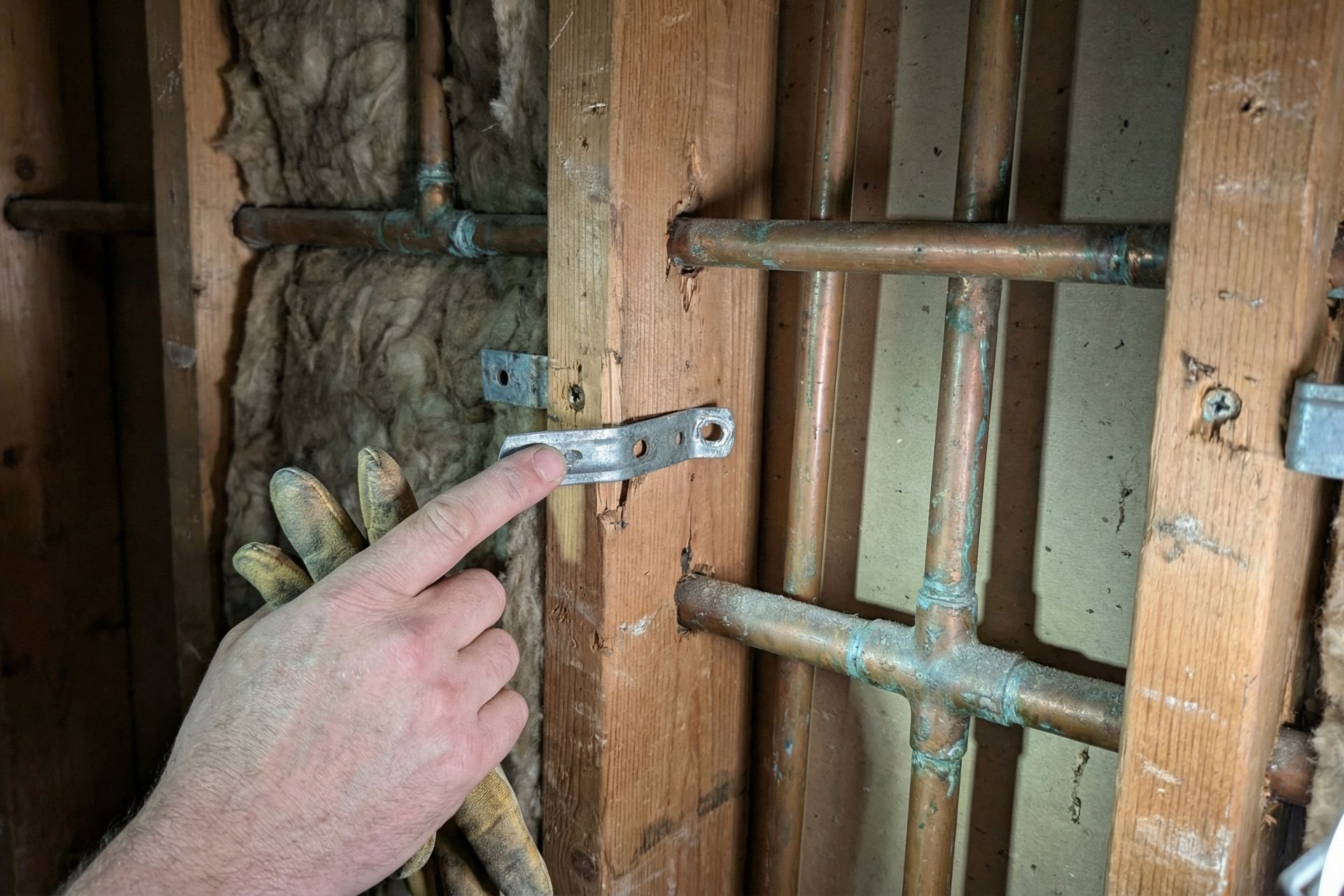
Loud banging or hammering noises when shutting off faucets quickly indicate water hammer—a pressure surge created when fast-moving water stops abruptly. This hydraulic shock waves through pipes, stressing joints and connections with each occurrence. Over time, repeated water hammer loosens pipe supports, cracks fittings, and eventually causes joint failures that leak inside walls or under floors.
Why water hammer worsens over time
Each bang represents physical stress damaging your plumbing infrastructure incrementally. Pipes secured to studs gradually work loose from mounting brackets; soldered joints develop microscopic cracks that expand with repeated shock; compression fittings loosen until they leak. What begins as annoying noise transforms into hidden water damage requiring wall demolition and extensive repairs.
Solutions for water hammer
Professional plumbers install water hammer arrestors—specialized chambers that absorb pressure surges—at problem locations, eliminating the banging while protecting your entire system from cumulative damage. Addressing water hammer during early stages costs a fraction of repairing the pipe failures and water damage that develop when the problem continues unchecked.
Whistling indicates restricted flow and valve problems
Common whistling sources
High-pitched whistling from faucets, toilets, or pipes signals restricted water flow through partially closed valves, mineral buildup narrowing passages, or deteriorating washers and valve seats. In Phoenix homes, hard water mineral deposits frequently accumulate inside fixtures and pipes, gradually reducing internal diameter until flow becomes turbulent and creates whistling sounds.
Progressive damage from ignored whistling
Restricted flow increases pressure upstream of the restriction, stressing pipes and fixtures throughout the system. The restriction itself worsens as mineral deposits continue accumulating, eventually causing complete blockage requiring fixture replacement rather than simple cleaning. Deteriorating valve components that whistle initially will fail completely, often at inconvenient times requiring emergency shut-offs and repairs.
Addressing whistling promptly
Early intervention—cleaning aerators, descaling valves, replacing worn washers—resolves most whistling inexpensively. Delayed response transforms simple maintenance into fixture replacement, pipe descaling, or valve replacement performed under emergency conditions when parts aren’t readily available.
Gurgling drains warn of venting and blockage issues
What gurgling indicates
Gurgling sounds from drains signal air pressure problems within your drainage system, typically caused by partial blockages or inadequate venting. When drains cannot pull air properly through vent pipes, they draw air through fixture traps, creating the characteristic gurgling noise while potentially compromising the water seals that prevent sewer gas entry.
Health and structural risks
Compromised trap seals allow sewer gases—including methane and hydrogen sulfide—into living spaces, creating health hazards and unpleasant odors. The underlying blockages causing gurgling also progress toward complete stoppages that create sewage backups into fixtures, causing property damage and requiring emergency plumbing Phoenix service.
Venting system importance
Properly functioning vent pipes maintain atmospheric pressure within drain systems, allowing smooth water flow and protecting trap seals. Blocked or damaged vents create the negative pressure that causes gurgling; addressing vent issues restores proper drainage while eliminating noise and protecting indoor air quality.
 Running water sounds indicate hidden leaks
Detecting concealed water flow
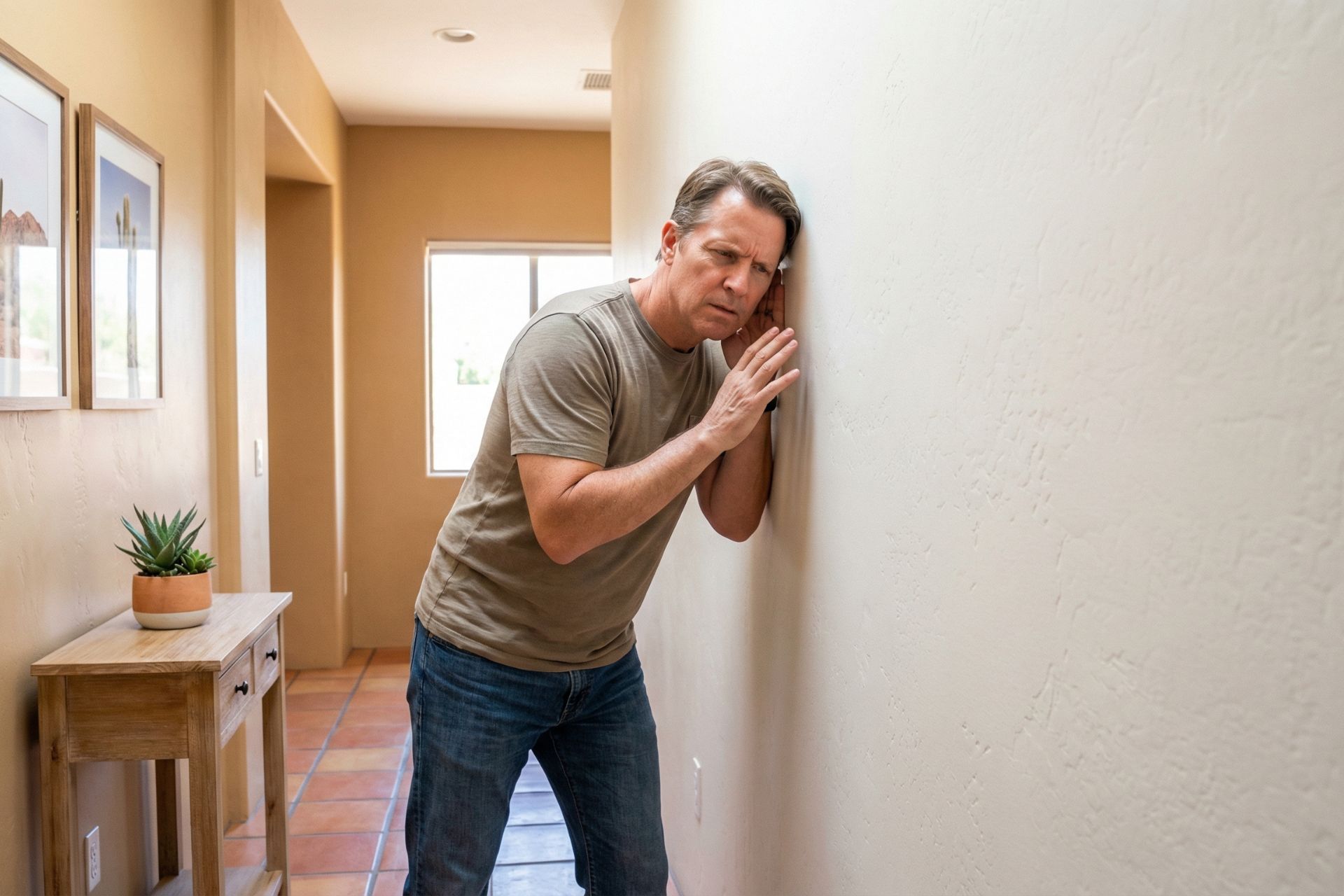
Hearing water running, flowing, or dripping when all fixtures are off signals water escaping somewhere in your system—potentially wasting thousands of gallons while damaging hidden structural components. Main water line leaks, slab leaks beneath floors, and pinhole leaks inside walls all produce audible water movement despite no visible signs at fixtures.
Financial and structural consequences
A leak wasting just 10 gallons hourly adds $40–50 monthly to water bills; larger leaks cost $200–500+ per month in wasted water. The property damage compounds these expenses—foundation erosion from main line leaks can require $10,000–30,000 in repairs; mold remediation from hidden interior leaks costs thousands more.
Professional leak detection
Acoustic leak detection equipment precisely locates hidden leaks without destructive investigation, allowing targeted repairs that minimize property disruption. The longer leaks continue, the more extensive the damage and the higher the repair costs when problems finally become obvious through visible water damage.
Hissing suggests pressure leaks and valve failures
Identifying hissing sources
Constant hissing from toilet tanks, pressure relief valves, or pipe connections indicates water escaping under pressure through small openings. Toilet fill valves that hiss continuously waste water while signaling impending failure; pressure relief valves hissing warn of excessive tank pressure or valve deterioration; pipe connections hissing reveal developing leaks at joints.
Escalation patterns
Hissing leaks rarely improve spontaneously—they worsen as openings expand from water erosion and pressure stress. A toilet fill valve hissing today will fail completely within weeks or months, potentially flooding bathrooms; a hissing pressure relief valve indicates dangerous conditions that could cause catastrophic water heater failure.
Timely intervention benefits
Replacing a hissing fill valve costs $20–50 in parts and minimal labor; addressing a failed water heater that flooded your home costs thousands in equipment replacement and water damage remediation. The sound provides early warning that allows planned repairs before emergency failures occur.
Rumbling or popping from water heaters
Sediment accumulation signals
Rumbling, popping, or crackling sounds from water heaters indicate sediment buildup on tank bottoms. Phoenix’s mineral-rich water accelerates sediment accumulation, creating layers that insulate water from heating elements, reducing efficiency while creating the characteristic noises as water boils underneath sediment deposits.
Efficiency loss and tank damage
Sediment reduces heating efficiency by 25–40%, increasing energy costs while forcing heating elements to work harder and fail sooner. The insulating layer causes localized overheating that weakens tank walls, eventually leading to catastrophic failures that flood homes with 40–80 gallons of water.
Flushing and maintenance
Annual water heater flushing removes sediment before it creates problems, eliminating noises while restoring efficiency and extending tank life. Tanks making rumbling sounds for extended periods without maintenance often develop damage beyond correction, requiring premature replacement when regular flushing would have provided years of additional service.
Vibrating or chattering indicates loose components
Causes of vibration noises
Chattering or vibrating sounds from pipes or fixtures signal loose mounting hardware, deteriorating washers, or components approaching failure. Pipe supports that have worked loose allow movement during water flow; worn valve seats cause stems to vibrate; loose water hammer arrestors create rattling.
Progressive loosening
Vibration accelerates component wear—loose pipes moving against supports abrade through mounting straps; vibrating valve stems wear seating surfaces unevenly; rattling arrestors eventually disconnect or develop leaks. Each occurrence of the noise represents continued deterioration toward eventual failure.
Securing and replacing components
Identifying and securing loose components early prevents the failures that occur when vibration continues unchecked. Replacing worn washers and valve components eliminates chattering while restoring proper fixture function and preventing the more extensive repairs required when completely failed components leak or break.
When to call professional help
Persistent or worsening noises
Any plumbing noises Phoenix home systems produce consistently or with increasing intensity warrant professional assessment. Sounds that begin quietly and grow louder indicate progressive problems where early intervention costs significantly less than waiting for obvious failures.
Multiple concurrent sounds
Different noises from various fixtures or locations suggest system-wide issues—pressure problems, extensive mineral buildup, or aging infrastructure approaching failure. Professional comprehensive assessment identifies root causes that isolated DIY repairs cannot address effectively.
Noises accompanied by performance issues
Sounds combined with low water pressure, slow drains, temperature fluctuations, or visible leaks indicate advanced problems requiring immediate professional attention. These combinations signal failures already underway rather than merely developing, making prompt response essential to limiting damage.
Prevention through regular maintenance
Annual professional plumbing inspections catch the developing issues that create noises before sounds begin. Technicians identify mineral buildup, loose components, deteriorating valves, and pressure irregularities during routine maintenance, addressing problems before they progress to the audible warning stage.
Homeowners who maintain systems proactively rarely experience the persistent noises that plague neglected plumbing, because problems receive attention during early stages when corrections remain simple and inexpensive.
Respond before noises become disasters
Plumbing noises serve as your home’s early warning system, alerting you to developing problems while correction remains straightforward. Ignoring these warnings allows progression from simple repairs to complex failures requiring emergency response, extensive property restoration, and costs magnitudes higher than early intervention.
Contact Rapid Fire Plumbing at 623-810-6166 when your Phoenix home’s plumbing produces unusual sounds. Our experienced technicians diagnose noise sources accurately, explain underlying problems clearly, and provide solutions that eliminate sounds while preventing the failures developing systems will eventually produce.
