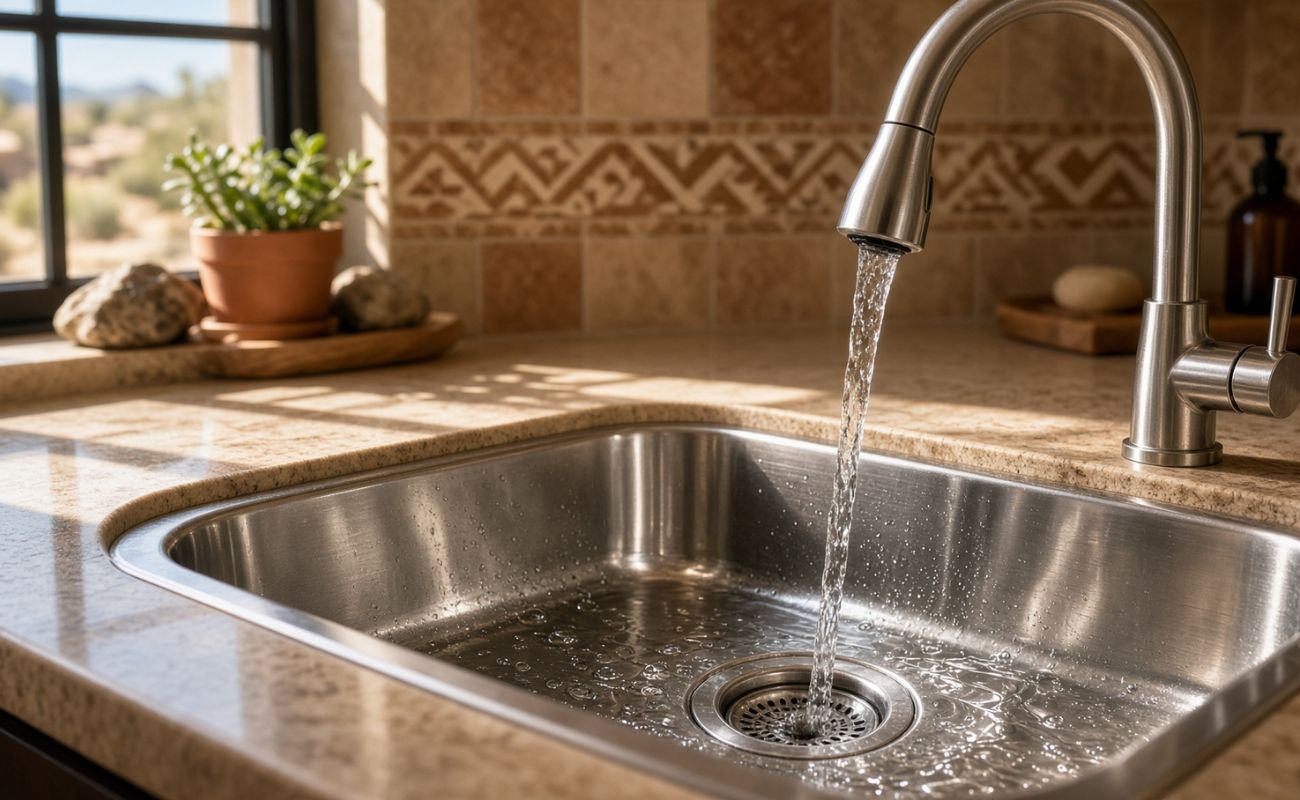
Preventing kitchen plumbing blockages in the Phoenix area requires a combination of proper waste disposal, regular maintenance using natural cleaners, and actively managing the region’s notoriously hard water. Homeowners can largely avoid costly plumbing emergencies by keeping fats, oils, and grease (FOG) out of the sink, running cold water during garbage disposal use, and routinely flushing pipes with natural enzymatic solutions. By taking a proactive approach to residential plumbing maintenance and drain cleaning in 2026, you can preserve the integrity of your pipes, optimize your water flow, and prevent disruptive backups in your home.
Key Takeaways
- Never pour fats, oils, or grease down the sink: Always dispose of these substances in a sealed container in the trash to prevent “fatbergs” from forming in your pipes.
- Install a high-quality sink strainer: Catching fibrous foods, coffee grounds, and eggshells before they enter the P-trap is your first line of defense.
- Combat hard water scale naturally: Phoenix’s mineral-heavy water accelerates calcification in pipes; routine vinegar and baking soda treatments help mitigate this buildup.
- Use garbage disposals correctly: Run cold water before, during, and after operation to solidify ambient greases so they can be chopped and flushed effectively.
- Avoid caustic chemical cleaners: Harsh commercial chemicals can degrade older plumbing infrastructure and harm the local municipal water ecosystem.
Understanding the Unique Plumbing Challenges in the Valley
Maintaining a healthy plumbing system in Maricopa County involves unique environmental challenges not found in other regions. Chief among these is the extreme hardness of the local municipal water supply. According to the United States Geological Survey (USGS), water hardness is determined by the concentration of dissolved calcium and magnesium. In the Phoenix metropolitan area, water hardness frequently exceeds 12 to 16 grains per gallon (gpg), placing it firmly in the “very hard” category.
When this mineral-dense water flows through your kitchen pipes, it leaves behind calcium carbonate deposits, commonly known as scale. Over time, this calcification effectively narrows the internal diameter of your plumbing. A pipe that originally had a two-inch diameter may be reduced to an inch and a half or less. This textured, scaly interior acts like sandpaper, snagging passing food particles, soap scum, and grease. As we navigate through 2026, an increasing number of homeowners are discovering that managing scale buildup is just as critical as managing food waste when it comes to maintaining clear sinks.
Furthermore, the extreme desert heat can affect external and poorly insulated venting pipes, sometimes leading to fluctuating pressure in residential drain lines. Maintaining optimal flow prevents stagnant water from sitting in the P-trap, which can otherwise evaporate or breed bacteria that emit foul odors into your kitchen.
 The Worst Offenders for Your Plumbing
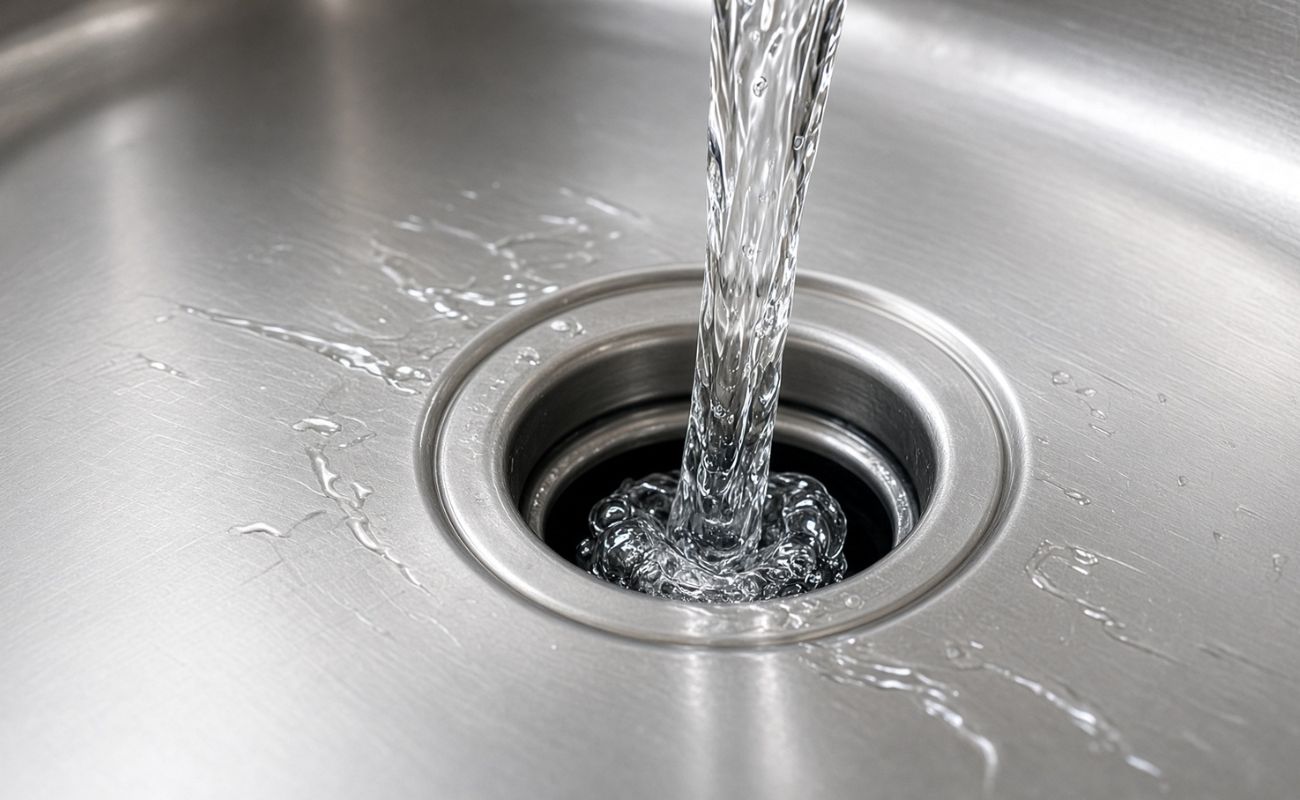
To successfully implement DIY prevention strategies, homeowners must first understand what causes blockages. The primary culprits usually fall into specific categories of organic and inorganic waste that are improperly introduced into the kitchen sink.
Fats, Oils, and Grease (FOG)
The Environmental Protection Agency (EPA) explicitly warns that fats, oils, and greases (FOG) are a primary cause of severe pipe blockages and sanitary sewer overflows. When warm bacon grease, cooking oil, or butter is poured down the sink, it remains in a liquid, lipid state only temporarily. As it travels down the pipe and cools, it congeals into a sticky, solid mass. This mass adheres to the pipe walls (especially those already coated in hard water scale) and traps other passing debris, eventually creating an impenetrable plug.
Starchy and Fibrous Foods
Garbage disposals are marvels of modern convenience, but they are not industrial trash compactors. Foods high in starch, such as pasta, rice, and potato peels, absorb water and swell, creating a paste-like substance that coats the impeller blades and clogs the drain line. Similarly, fibrous vegetables like celery, corn husks, and onion skins possess stringy textures that wrap around disposal mechanisms, halting the centrifugal force required to process waste.
Coffee Grounds and Eggshells
A common misconception is that coffee grounds and eggshells help sharpen garbage disposal blades or scour the pipes. In reality, coffee grounds behave like wet sand inside your plumbing. They are heavy, do not dissolve in water, and settle in the lowest point of the P-trap. Eggshells contain a membrane that can wrap around disposal impellers, and the granular shell itself contributes to sediment buildup.
Essential DIY Prevention and Maintenance Routines
Preventative maintenance is significantly more cost-effective than emergency plumbing interventions. By establishing daily, weekly, and monthly routines, you can ensure your kitchen sink operates flawlessly.
Daily Best Practices
- Utilize a Mesh Strainer: Place a fine-mesh stainless steel strainer over the drain opening. Empty it into the compost or trash bin after every meal prep session.
- The “Trash It, Don’t Drain It” Rule: Wipe down greasy pans with a paper towel before washing them. Scrape all food remnants directly into the garbage.
- Optimal Disposal Operation: If you must use the disposal, turn on cold water for 15 seconds prior to turning on the unit. Keep the water running during grinding, and leave it on for another 15 seconds after turning the unit off to ensure particles are flushed entirely through the lateral lines.
Weekly Natural Flushing
Once a week, bring a large kettle of water to a rolling boil. Carefully and slowly pour the boiling water directly down the drain in two or three stages, pausing for several seconds in between. This thermal action helps melt away minor grease accumulations and flushes out loose organic matter. Technical Note: Only use boiling water if your home is equipped with metal pipes. If you have older PVC piping, use hot tap water instead, as water exceeding 140°F (60°C) can warp or compromise PVC joints over time.
Monthly Deep Cleaning with Baking Soda and Vinegar
To combat the inevitable buildup of minor scale and soap scum, rely on the chemical reaction of natural household items rather than caustic commercial cleaners.
- Pour one-half cup of dry baking soda directly into the drain.
- Follow immediately with one-half cup of white vinegar.
- Cover the drain with a plug or heavy cloth. The acid-base reaction creates expanding carbon dioxide gas, which aggressively scrubs the interior pipe walls.
- Allow the mixture to work for 15 to 20 minutes.
- Flush the system thoroughly with a gallon of hot water.
Comparing Drain Cleaning Solutions
When minor sluggishness occurs, homeowners have several options. Understanding the efficacy and safety of each tool is paramount.
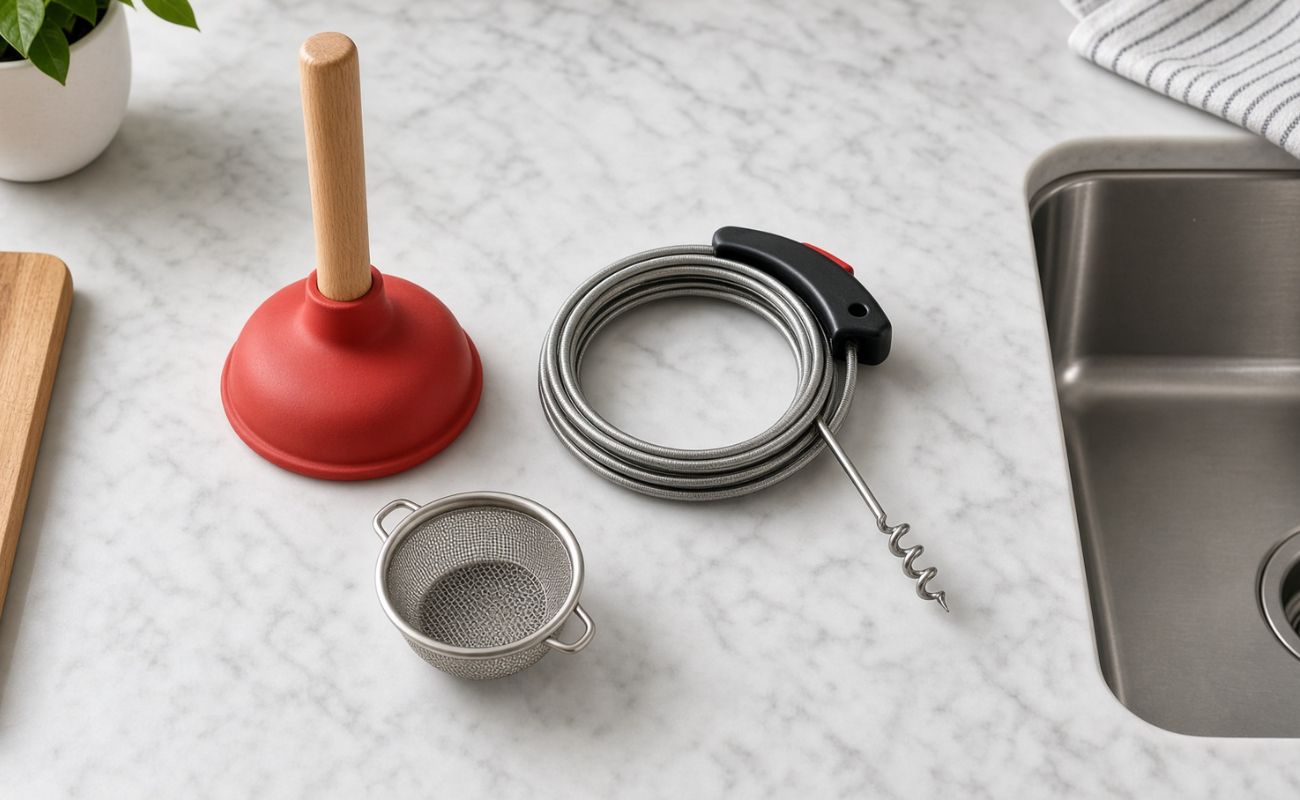
| Method/Tool | Mechanism of Action | Safety for Pipes | Best Used For |
|---|---|---|---|
| Sink Plunger | Creates hydrostatic pressure to dislodge blockages. | Very Safe | Clearing sudden, soft food blockages in the P-trap. |
| Hand Auger (Snake) | Physically breaks apart or retrieves deep-seated obstructions. | Safe (if used properly) | Removing stubborn, dense material further down the line. |
| Enzymatic Cleaners | Introduces beneficial bacteria that consume organic waste and FOG. | Very Safe | Routine monthly maintenance and odor elimination. |
| Caustic Chemicals | Uses lye or sulfuric acid to generate extreme heat and dissolve matter. | Unsafe (Can cause corrosion) | Not recommended by plumbing professionals. |
The Dangers of Commercial Chemical Drain Cleaners
It is strongly advised to avoid over-the-counter liquid drain cleaners. According to guidelines supported by the American Society of Plumbing Engineers (ASPE), maintaining the integrity of trap and branch drains is essential for sanitary conditions. Caustic chemical cleaners generate intense exothermic heat reactions. While this heat can sometimes melt away a grease plug, it can also warp PVC pipes, degrade the structural integrity of older cast iron plumbing, and destroy the rubber gaskets connecting your sink to the drainage system.
Furthermore, if a chemical cleaner fails to clear the blockage, you are left with a sink full of highly toxic, corrosive standing water, which creates a hazardous environment for any plumber subsequently called to fix the issue. Instead of chemicals, opt for biological or enzymatic cleaners. These utilize engineered bacteria to literally digest organic matter clinging to the pipe walls without causing any thermal or chemical damage.
 Maximizing Garbage Disposal Efficiency
Your garbage disposal is highly susceptible to misuse. Beyond the standard FOG restrictions, proper maintenance involves keeping the grinding components clean and sharp. Over time, organic sludge builds up under the rubber splash guard and around the impellers.
To safely clean your disposal, drop a dozen ice cubes into the chamber along with a half-cup of rock salt. Turn on the cold water and run the unit until the ice is pulverized. The ice and salt act as a natural abrasive, knocking loose accumulated sludge without damaging the metal components. Following this with a few citrus peels (lemon or orange) will deodorize the chamber, leaving your kitchen smelling fresh.
When to Stop DIY and Call a Professional
While proactive maintenance resolves the majority of kitchen sink issues, certain situations require professional intervention. Diagnostic signs that you are facing more than a simple localized P-trap blockage include:
- Water backing up in multiple fixtures: If running the kitchen sink causes water to gurgle or rise in the bathroom shower or toilet, the blockage is in the main sewer line.
- Foul sewage odors: Persistent smells of raw sewage indicate a dried-out P-trap or a compromised vent pipe.
- Recurrent slow drainage despite cleaning: If you have repeatedly used enzymatic cleaners, plunged, and snaked the drain but sluggishness persists, you may have severe hard water scale buildup requiring professional hydro-jetting.
Professional hydro-jetting utilizes high-pressure water streams to scour the interior walls of your plumbing, effectively returning them to their original diameter and stripping away years of calcified mineral deposits and grease.
Frequently Asked Questions
Why does my kitchen sink drain slowly even though I use the garbage disposal?
Your garbage disposal only grinds food; it does not clear the pipes beyond the sink. If your drain is slow, there is likely a buildup of grease, soap scum, or hard water scale in the P-trap or the branch drain line.
Is it safe to pour boiling water down a kitchen sink?
Boiling water is safe and effective for melting minor grease accumulations in metal pipes. However, if your home utilizes PVC piping, you should use hot tap water instead, as boiling water can warp or weaken PVC joints over time.
How often should I use baking soda and vinegar on my drains?
For optimal preventative maintenance, use the baking soda and vinegar method once a month. This non-toxic routine prevents minor scale and organic matter from accumulating into a major blockage.
Can hard water in Maricopa County actually cause plumbing blockages?
Yes. The heavy concentration of calcium and magnesium in local water creates a rough scale on the interior of pipes. This textured surface catches food particles and grease much more easily than a smooth, clean pipe.
Are chemical drain cleaners safe for my plumbing?
No. Plumbing professionals strongly advise against using caustic chemical cleaners. They generate extreme heat that can warp PVC, corrode older metal pipes, and damage the seals in your plumbing system.
What should I do with excess cooking grease instead of dumping it?
Always pour warm cooking grease into a disposable, heat-safe container, such as an empty glass jar or aluminum can. Once the grease cools and solidifies, dispose of the container in your regular household trash.
Conclusion
Maintaining clear, fully functional plumbing in your home requires vigilance, especially when dealing with the heavy mineral content found in local municipal water supplies. By adhering to strict disposal practices regarding fats, oils, and grease, utilizing sink strainers, and performing monthly maintenance with enzymatic cleaners or natural baking soda solutions, you can dramatically extend the lifespan of your plumbing infrastructure. Keep your pipes clear and flowing efficiently year-round. If you’ve tried these DIY methods and are still experiencing stubborn slow drainage or recurring backups, it may be time for a professional assessment. Contact our team today to schedule a comprehensive plumbing inspection and keep your home operating safely.
