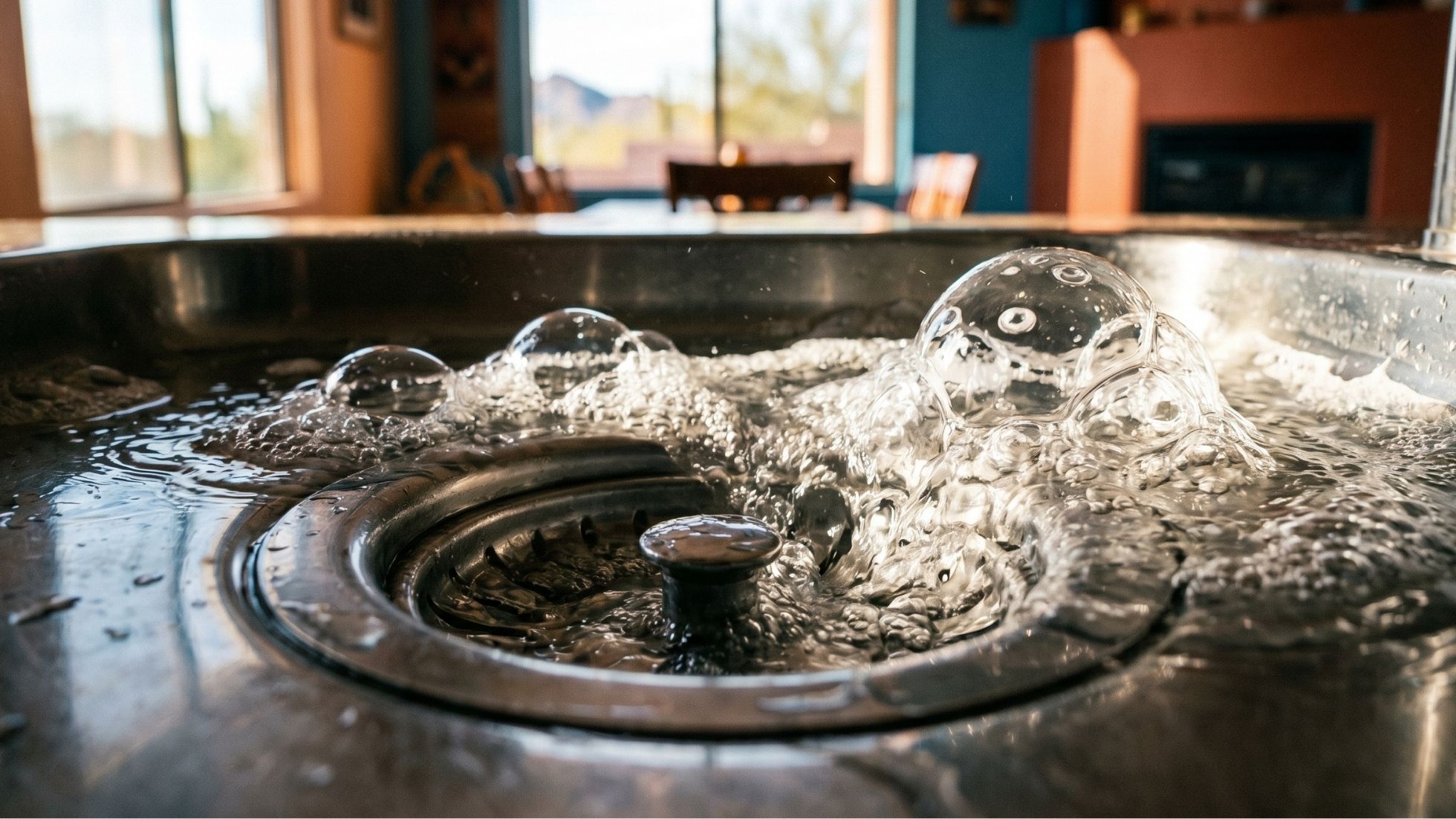
A gurgling sound from your drain is not a minor annoyance—it is a critical warning signal that your plumbing system is compromised. In Phoenix, where hard water and shifting desert soils create unique challenges, ignoring this sound can lead to sewer backups, structural damage, and health hazards. The noise indicates trapped air escaping through water in the P-trap, caused by a vacuum or blockage in the venting or drainage system. Addressing it immediately prevents a $3,000 to $15,000 repair bill.
Key Takeaways
- Gurgling drains are caused by air displacement due to blockages, vent issues, or sewer line damage.
- Phoenix’s hard water and caliche soil accelerate pipe deterioration and root intrusion.
- Ignoring the sound risks sewage backups, mold growth, and foundation damage.
- Professional camera inspections are essential for accurate diagnosis in slab-on-grade homes.
- Annual maintenance and water softeners can prevent recurring drain problems.
- DIY methods like plunging or chemical cleaners often worsen the underlying issue.
- Immediate action saves an average of $4,500 in emergency repair costs.
What Causes Gurgling Drains in Phoenix Homes?
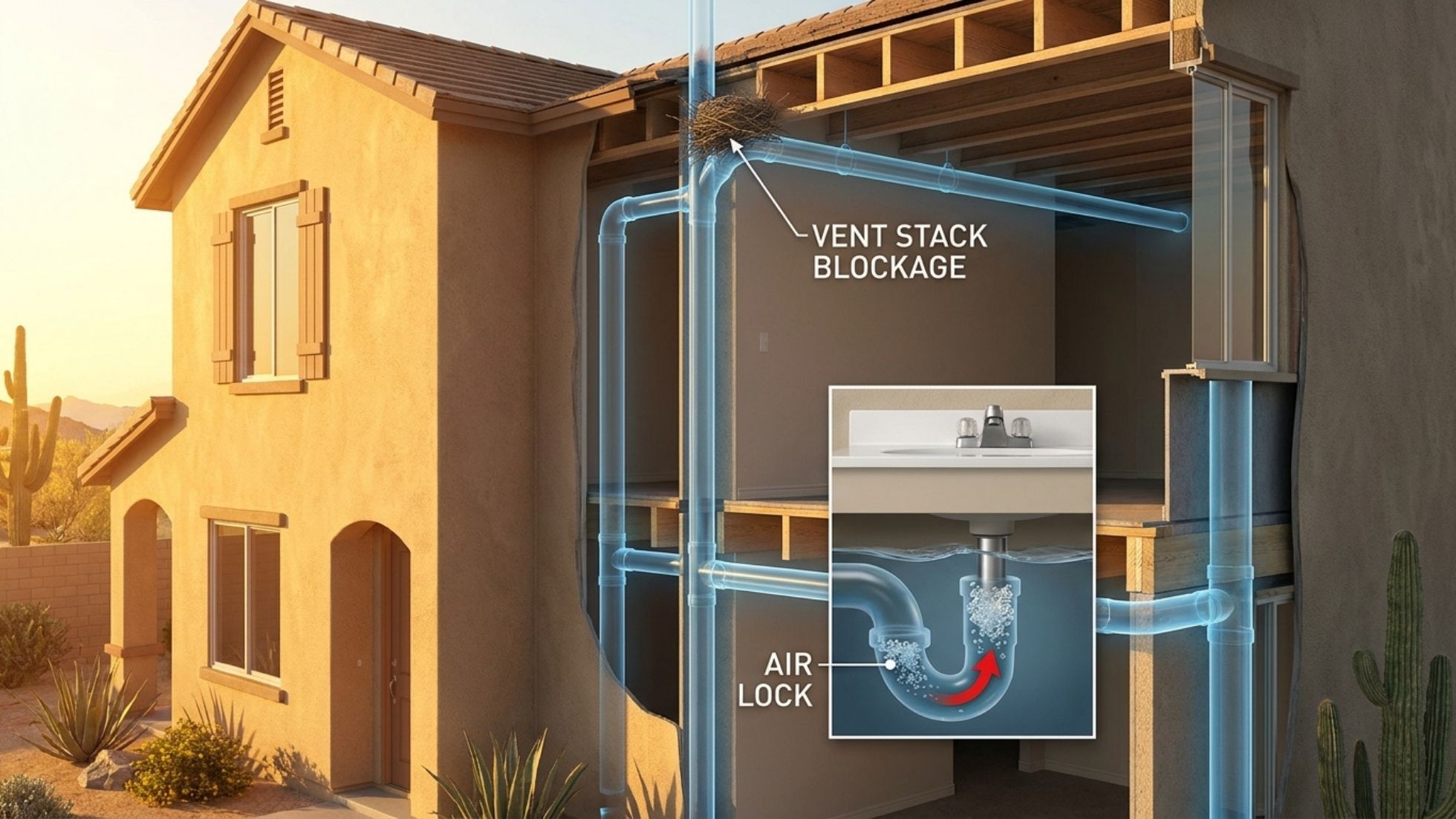
The physics behind a gurgling drain is straightforward: your plumbing system relies on a delicate balance of air pressure. Vent pipes extend through your roof, allowing air to enter the system so wastewater can flow smoothly. When a blockage prevents air from entering, the flowing water creates a vacuum. This vacuum pulls air through the nearest P-trap—the U-shaped pipe under your sink or shower—producing that distinctive gurgle.
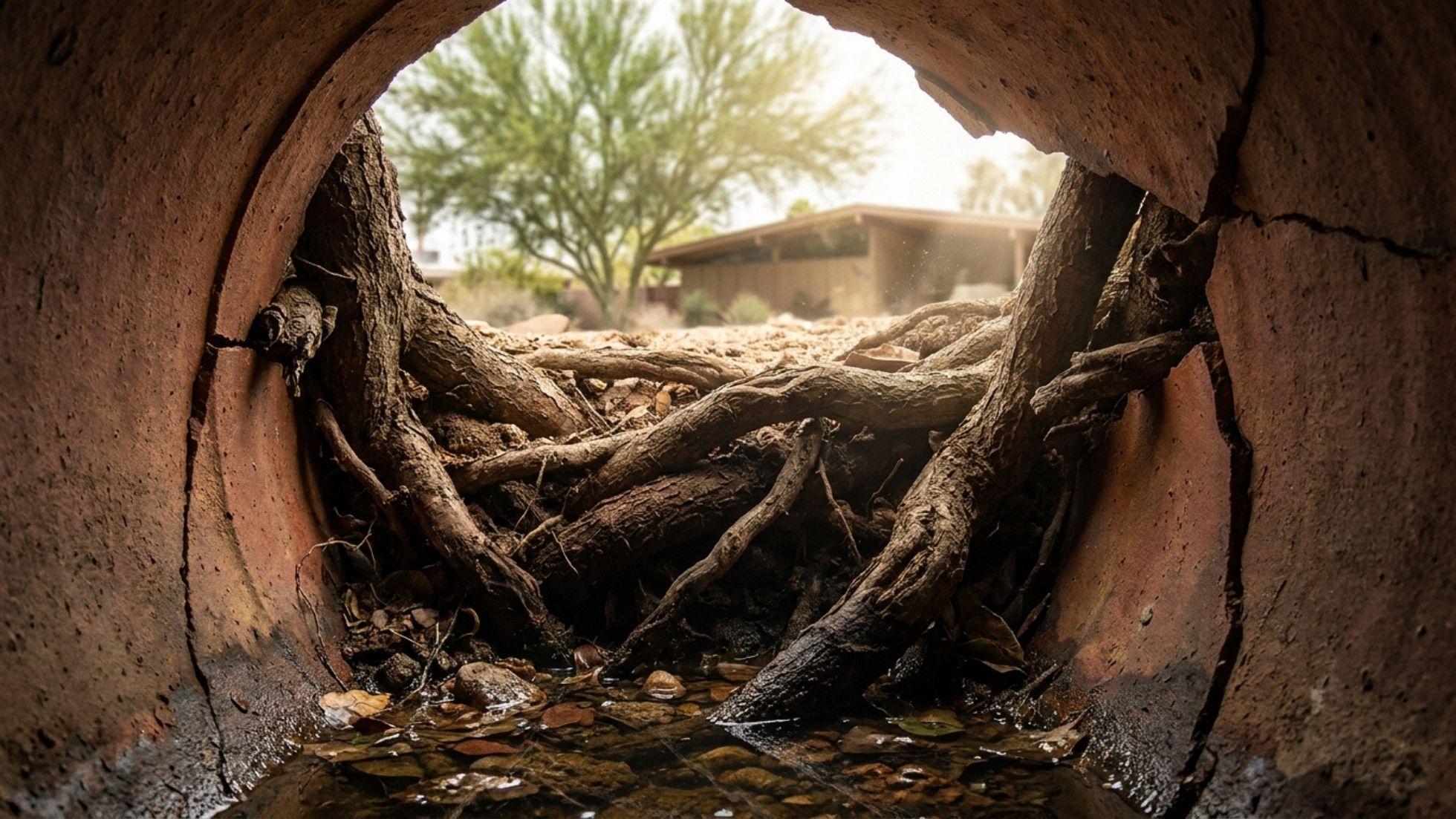
In Phoenix, three local factors amplify this problem. First, the region’s notoriously hard water leaves mineral deposits that narrow pipe diameters over time. Second, expansive clay soils and caliche shift with monsoon moisture, cracking underground lines. Third, mesquite and palo verde tree roots aggressively seek water sources, infiltrating sewer laterals.
According to the City of Phoenix Water Services Department, the average home’s sewer lateral is over 30 years old, making it susceptible to these failures. A 2026 study by the Arizona Registrar of Contractors found that 42% of emergency plumbing calls in Maricopa County originate from drain line blockages or vent failures, often requiring specialized Drain Cleaning Phoenix to clear stubborn obstructions before they cause a backup.
The most common culprits include a clogged vent stack (often from bird nests or debris), a partially blocked drain line (grease, soap scum, hair), or a failing sewer main. Less frequently, a malfunctioning air admittance valve under a sink can be the source. Each cause requires a distinct repair strategy, making professional diagnosis essential.
 The Hidden Dangers of Ignoring Drain Noises
Postponing an investigation into gurgling drains invites a cascade of escalating damage. The initial noise indicates a pressure imbalance, but the underlying blockage rarely resolves itself. As the obstruction grows, wastewater flow slows, leading to frequent clogs and slow drainage. Eventually, the line can become completely blocked. At this point, sewage has nowhere to go but back into your home through the lowest drains—typically a ground-floor shower or toilet. Raw sewage contains pathogens like E. coli and Salmonella, posing immediate health risks to your family.
Beyond the biohazard, water damage from backups warps flooring, saturates drywall, and feeds toxic black mold within 24 to 48 hours. In Phoenix’s slab-on-grade construction, a cracked sewer line beneath the foundation allows sewage to pool under the concrete. This causes heaving, cracks in walls and floors, and persistent odors that are impossible to eliminate without breaking through the slab. The Environmental Protection Agency (EPA) classifies sewage backups as a Category 3 water loss, requiring extensive professional remediation. A repair that might cost $500 for a simple vent clearing can balloon to $20,000 or more when foundation work and mold remediation are involved.
Why Phoenix’s Climate and Soil Make Drains Vulnerable
Phoenix presents a perfect storm for plumbing failures. The Sonoran Desert’s extreme temperature swings cause pipes to expand and contract, loosening joints over decades. The soil composition is even more critical. Much of the Valley sits on caliche—a rock-hard layer of calcium carbonate that forms naturally in arid regions. Caliche is corrosive to cast iron pipes and nearly impossible to dig through without specialized equipment. During the monsoon season, flash flooding saturates the upper soil layers, which then shift dramatically. This movement can shear or collapse older clay or Orangeburg sewer lines.
Research from Arizona State University’s School of Sustainable Engineering indicates that soil corrosivity in Maricopa County is among the highest in the nation, reducing the lifespan of buried cast iron pipes by up to 40%. Additionally, the prevalence of mature desert trees plays a role. A single mesquite tree can extend its root system over 50 feet in search of moisture. Even a hairline crack in a sewer lateral emits enough vapor to attract roots, which then grow into the pipe and create a net that catches debris. Homeowners often notice gurgling first in the kitchen sink, as grease solidifies rapidly in older, cooler pipes running beneath the slab.
 Diagnosing the Problem: A Step-by-Step Guide
Before calling a professional, you can perform a preliminary assessment to provide valuable information to your plumber. However, never use chemical drain cleaners—they can damage old pipes and create hazardous conditions for technicians.
- Isolate the Sound: Flush each toilet, run each sink, and start the washing machine one at a time. Note exactly which fixture causes the gurgle and where the sound originates. A toilet gurgling when the washing machine drains points to a main line issue, not a single fixture problem.
- Check All Drains for Speed: Fill sinks and tubs with a few inches of water, then pull the plug. Slow drainage across multiple fixtures confirms a main line blockage. A single slow drain suggests a localized clog.
- Inspect the Vent Stack: Safely access your roof and visually inspect the vent pipe opening. Use a flashlight to check for bird nests, tennis balls, or debris. In Phoenix, pack rats sometimes nest in vent stacks during cooler months.
- Test the Toilet: A toilet that bubbles when you run the bathroom sink has a blocked or improperly installed vent. Remove the toilet tank lid and listen for air escaping through the flush valve.
- Locate Cleanouts: Find your main sewer cleanout, usually a black or white capped pipe near the foundation or in the front yard. If the cap is loose or water is visible at the top, you have a main line backup.
As Maria Gonzalez, Master Plumber and owner of a Phoenix-based plumbing firm, explains: “Homeowners often mistake a gurgling toilet for a simple clog and reach for a plunger. But if the sound happens when no one has used that toilet, it’s almost always a venting issue or a main line blockage. Plunging in that scenario can force sewage out of other fixtures.”
Professional Solutions for Gurgling Drains
Once you have noted the symptoms, a licensed plumber will deploy diagnostic tools to pinpoint the exact cause. The gold standard is a sewer camera inspection. A high-resolution, waterproof camera is fed through the cleanout and navigated through your pipes. This reveals cracks, root masses, bellied sections (where the pipe has sunk), and grease buildup. The plumber also records the distance from the access point, allowing precise location of the defect in your yard or under the slab.
Treatment depends on the diagnosis:
| Problem | Symptom | Professional Solution | Average Cost in Phoenix (2026) |
|---|---|---|---|
| Clogged Vent Stack | Gurgling at multiple fixtures, sewer odors | Power auger through roof vent, water jetting | $250 – $450 |
| Localized Drain Clog | Single slow or gurgling drain | Motorized drain snake, enzyme treatment | $175 – $350 |
| Main Line Grease Buildup | Multiple drains gurgling, slow drainage | Hydro jetting (4,000 PSI water stream) | $600 – $1,200 |
| Root Intrusion | Recurring clogs, gurgling, lush patches in yard | Hydro jetting with root killer, pipe lining | $800 – $4,500 |
| Collapsed or Cracked Sewer Line | Sewage backup, persistent gurgling, sinkholes | Trenchless pipe bursting or traditional excavation | $5,000 – $25,000 |
For root intrusion, a common Phoenix problem, hydro jetting cuts through the roots and flushes them out. However, the roots will regrow within 12 to 18 months unless the pipe is structurally repaired. Trenchless cured-in-place pipe (CIPP) lining creates a new pipe within the old one, sealing cracks and preventing root re-entry without digging up your landscaping. According to the National Association of Sewer Service Companies, CIPP lining has a 50-year lifespan and is now used in 70% of Phoenix sewer repairs.
Preventative Maintenance for Phoenix Homeowners
Prevention is far less expensive than emergency repair. Implementing a routine maintenance schedule protects your plumbing and catches problems before they produce gurgling sounds. Start with an annual sewer camera inspection. For homes built before 1990, this is critical, as cast iron pipes in Phoenix soils have an expected lifespan of 40 to 50 years. A $300 annual inspection can prevent a $15,000 emergency excavation.
Second, manage what goes down your drains. Never pour cooking grease, coffee grounds, or “flushable” wipes into your system. In Phoenix’s hot climate, grease may flow as a liquid but solidifies rapidly in the cooler underground pipes. Install mesh strainers in all sinks and showers to catch hair and debris. Third, address your hard water. The Arizona Department of Environmental Quality reports that Phoenix water hardness averages 16 grains per gallon—classified as extremely hard. Installing a whole-house water softener reduces scale buildup in pipes, extending their functional diameter and lifespan.
Fourth, be proactive about landscaping. Know the location of your sewer lateral and avoid planting large trees within 15 feet of it. If you have mature trees, schedule a root treatment with a licensed plumber every two years. A foaming herbicide applied directly to the pipe interior kills roots without harming the tree. Finally, listen to your house. Any change in drain sounds, even intermittent gurgling, warrants a professional assessment.
The Cost of Delay: Real-World Phoenix Case Studies
Consider the experience of a homeowner in the Arcadia neighborhood. They noticed a faint gurgling in the guest bathroom sink whenever the washing machine drained. Assuming it was a minor vent issue, they delayed action for six months. The sound progressed to a bubbling toilet, and eventually, sewage backed up into the shower pan during a family gathering. The camera inspection revealed a 20-foot section of collapsed Orangeburg pipe under the foundation. The repair required tunneling under the slab, costing $22,000 and displacing the family for three weeks. The initial vent clearing would have cost $400.
In another case, a Sun City homeowner heard gurgling in the kitchen sink. A handyman poured a chemical drain cleaner, which temporarily stopped the noise but severely damaged the already-corroded cast iron pipe. The chemicals ate through the pipe wall, causing a complete collapse and a sinkhole in the front yard. The Maricopa County Environmental Services Department had to be notified due to the raw sewage exposure. The total remediation and pipe replacement cost exceeded $30,000. As James Liu, a forensic plumber with 25 years of experience, states: “Chemical drain cleaners are the enemy of old pipes. They generate heat and react with the metal, accelerating corrosion. In Phoenix, where we have so many aging cast iron systems, I’ve seen these products cause catastrophic failures within hours.”
Choosing a Qualified Plumber in Phoenix
When gurgling drains signal a potentially serious issue, selecting the right professional is crucial. Verify that any plumber you hire holds a valid license from the Arizona Registrar of Contractors, with a C-37R (Residential Plumbing) or C-37 (Commercial Plumbing) classification. Ask specifically about their experience with sewer camera inspections and trenchless repair methods. A contractor who only offers excavation may not be equipped with the latest technology.
Request a detailed, written estimate that includes the camera inspection footage. Reputable companies provide a USB drive or cloud link to the video, showing you exactly what the camera saw. This transparency confirms the diagnosis and allows for second opinions. Be wary of any plumber who recommends a full sewer line replacement based solely on a gurgling sound without performing a camera inspection. In many cases, hydro jetting or targeted pipe lining can resolve the issue for a fraction of the cost. The Better Business Bureau serving the Pacific Southwest recommends obtaining at least three quotes for any sewer line work exceeding $2,000.
Frequently Asked Questions
Why does my toilet gurgle when I take a shower?
This occurs because the shower drain and toilet share a common vent or drain line. As shower water flows, it pushes air ahead of it. If the vent is blocked, that air is forced through the toilet’s P-trap, causing a gurgle. It indicates a venting problem, not a toilet clog.
Can a gurgling drain fix itself?
No. A gurgling drain is a symptom of a pressure imbalance caused by a physical obstruction or vent failure. These conditions do not resolve spontaneously. The blockage will continue to accumulate debris, and the gurgling will become more frequent until a complete blockage or backup occurs.
Is a gurgling drain an emergency?
It is an urgent warning that requires prompt professional attention, typically within 24 to 48 hours. While not an immediate emergency like a full sewage backup, delaying diagnosis risks that exact scenario. If you also smell sewer gas or see water backing up, it becomes an immediate emergency.
How much does it cost to fix a gurgling drain in Phoenix?
Costs range from $250 for a simple vent stack clearing to over $25,000 for a full sewer line replacement under a slab. The average diagnostic camera inspection costs $300 to $500. Most common repairs, such as hydro jetting a main line, fall between $800 and $1,500 in the Phoenix metro area.
Does homeowners insurance cover sewer line repairs?
Standard homeowners insurance policies typically do not cover sewer line damage caused by gradual deterioration, root intrusion, or neglect. However, if the damage is caused by a sudden, covered peril like a landslide or fire, it may be covered. Many Phoenix homeowners purchase a separate sewer and water line service plan for $10 to $15 per month.
What is the difference between a clogged drain and a blocked vent?
A clogged drain affects a single fixture and causes slow drainage or standing water. A blocked vent affects multiple fixtures and causes gurgling, bubbling, and sewer odors without necessarily slow drainage. The vent issue is often heard when a different fixture is used.
How often should I have my sewer line inspected in Phoenix?
For homes over 20 years old, an annual camera inspection is recommended. For newer homes with PVC pipes, an inspection every 3 to 5 years is sufficient. After any major monsoon season or landscape renovation, an inspection is advisable to check for soil shifting damage.
Conclusion
Gurgling drains in Phoenix homes are a definitive call to action. The unique combination of hard water, corrosive soils, aggressive tree roots, and aging infrastructure in the Valley means that these sounds almost never indicate a trivial problem. They are the earliest detectable sign of a failing vent or drain system that, left unaddressed, will progress to a health-threatening, financially devastating sewage backup. The evidence from thousands of local repair cases is clear: a $400 diagnostic visit and vent clearing today prevents a $20,000 foundation excavation tomorrow. Do not ignore the warning. If you hear gurgling, bubbling, or notice slow drainage in your Phoenix home, contact our team of licensed plumbing experts today for a comprehensive camera inspection and lasting solution.
References
- City of Phoenix Water Services Department
- Arizona Registrar of Contractors
- Environmental Protection Agency (EPA)
- Arizona State University School of Sustainable Engineering
- National Association of Sewer Service Companies (NASSCO)
- Arizona Department of Environmental Quality
- Maricopa County Environmental Services Department
- Better Business Bureau Serving the Pacific Southwest
