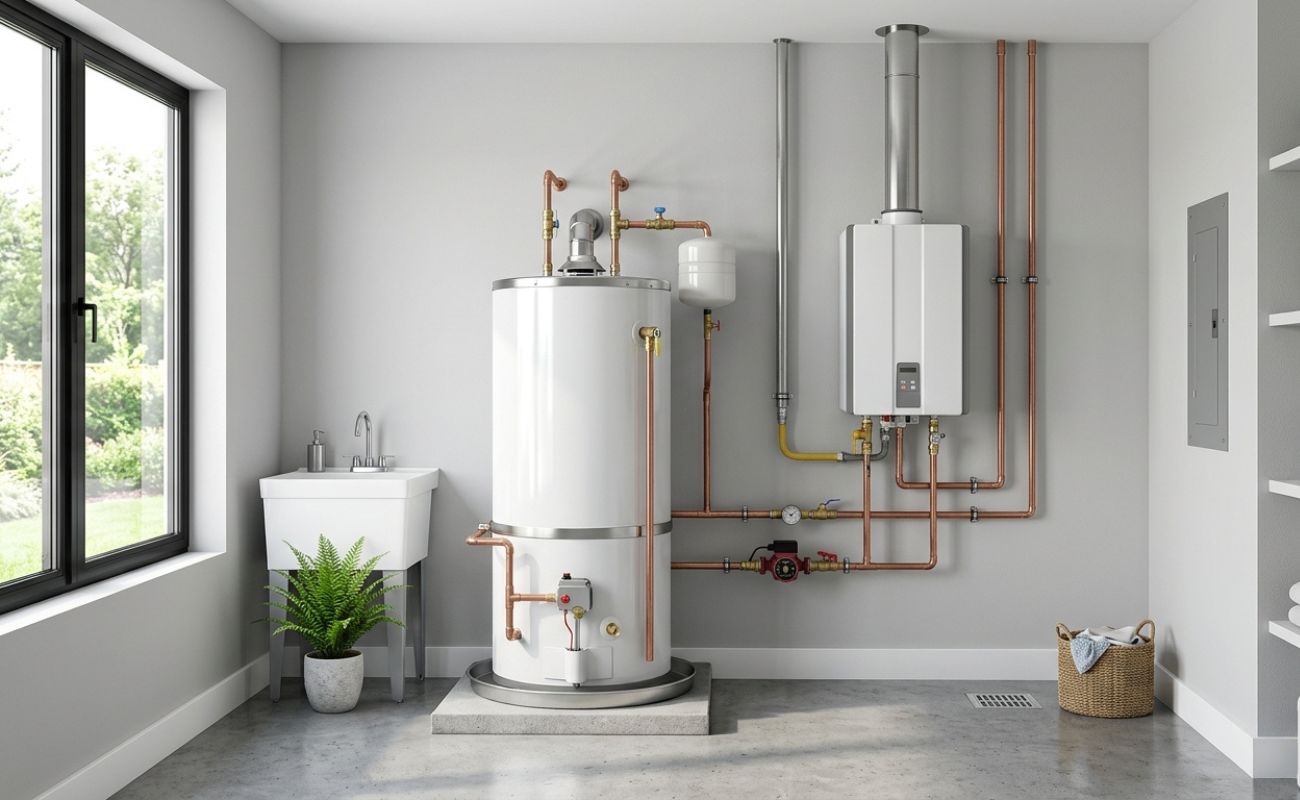
You can determine if your water heater is too small by observing three primary indicators: running out of hot water during standard routines, experiencing extended recovery times between uses, and being unable to operate multiple hot water fixtures simultaneously. A properly sized system should seamlessly supply your household’s peak hour demand without significant temperature drops. If you find yourself consistently scheduling showers around appliance usage or enduring lukewarm water, your system lacks the necessary capacity or flow rate for your household’s requirements.
Key Takeaways
- Consistent Depletion: Running out of hot water during a standard 10-minute shower is the most obvious sign of an undersized tank.
- Appliance Conflicts: If running the dishwasher forces you to take a cold shower, your system cannot handle concurrent demand.
- First-Hour Rating (FHR): A tank’s actual capacity is measured by its FHR, not just its gallon volume.
- Tankless Flow Rates: For tankless units, an undersized system will fail to provide enough Gallons Per Minute (GPM) during peak usage.
- Climate Impact: Regional factors, such as groundwater temperatures, directly affect how much energy and capacity is required to heat water.
- Professional Sizing: Proper capacity calculation requires analyzing peak hour demand, fixture flow rates, and household size.
The Impact of Desert Climates and Hard Water on System Capacity
When assessing household plumbing requirements, location matters significantly. For example, when evaluating a water heater installation in Phoenix or similar desert climates, two environmental factors heavily influence system performance: groundwater temperature fluctuations and extreme water hardness.
According to the Environmental Protection Agency (EPA), water heating accounts for approximately 20 percent of a home’s total energy usage. In arid regions, summer groundwater can enter the home at a warm 70 to 80 degrees Fahrenheit, requiring very little energy to reach the standard 120-degree output. However, during winter months, groundwater temperatures can drop below 55 degrees. If your water heater was sized based on summer performance, it will suddenly feel vastly undersized during the winter because the required “Temperature Rise” (Delta T) is much higher.
Furthermore, areas in the Southwest are notorious for hard water, which contains high levels of calcium and magnesium. Inside a standard storage tank, these minerals precipitate out of the water when heated, forming a solid layer of scale at the bottom of the tank. Over several years, this sedimentation actually displaces water volume. A 50-gallon tank with 5 gallons of solid scale buildup is now effectively a 45-gallon tank. This physical loss of volume is a primary reason homeowners suddenly feel their once-adequate system has become too small.
5 Undeniable Signs Your Water Heater Is Too Small
If you are frustrated by inconsistent water temperatures, your system is likely struggling to meet your household’s demands. Here are the most definitive signs that your unit is undersized.
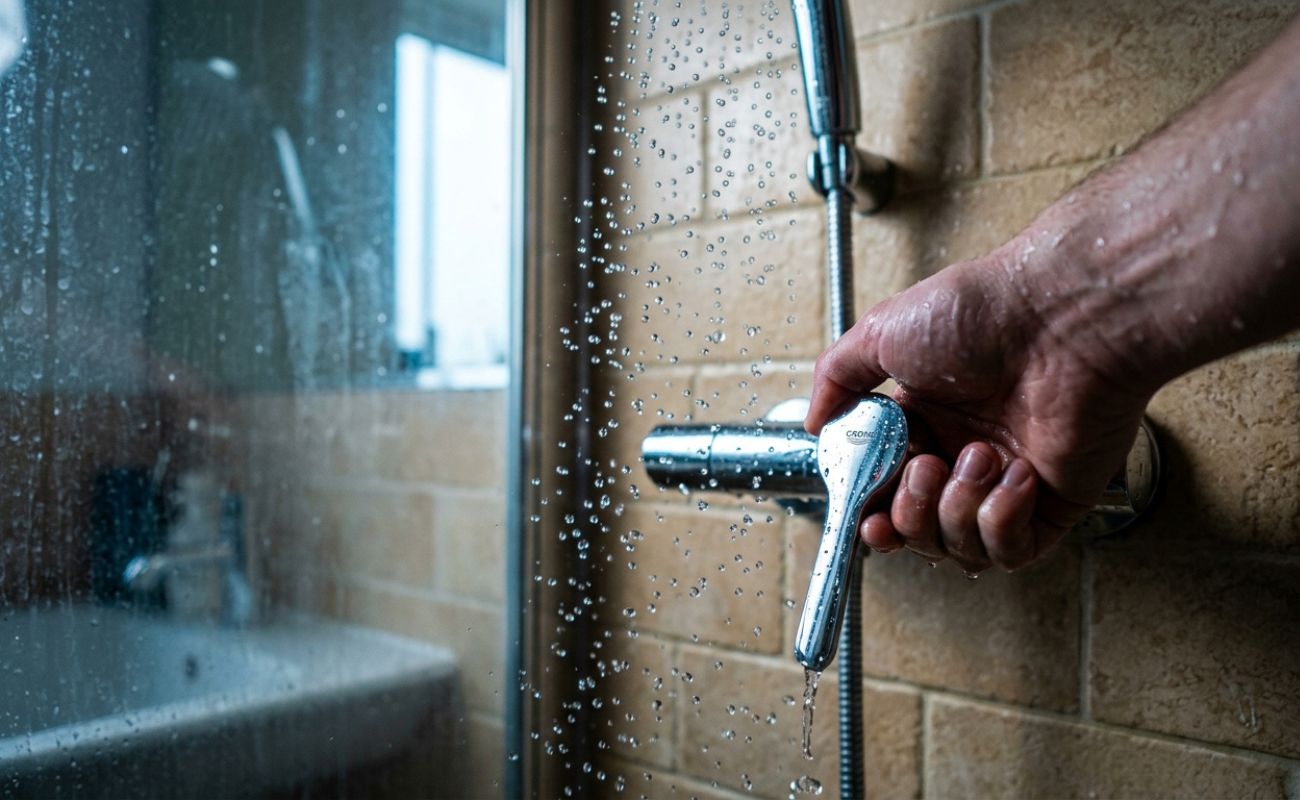
1. You Frequently Run Out of Hot Water Mid-Shower
The average American shower lasts roughly eight minutes. Under standard 2026 federal guidelines, modern showerheads flow at a maximum of 2.5 Gallons Per Minute (GPM), while WaterSense-certified fixtures flow at 2.0 GPM. Therefore, a single shower consumes between 16 and 20 gallons of hot water. If your home has a standard 40-gallon tank, two back-to-back showers can nearly deplete the entire reserve. If the water turns lukewarm or cold before the second person finishes, your tank capacity is insufficient for your family’s routine.
2. Extended Recovery Times Between Uses
Recovery time refers to how long it takes a water heater to reheat the entire volume of water in the tank after it has been depleted. A properly sized gas water heater typically takes 30 to 40 minutes to recover, while an electric unit may take 60 to 80 minutes. If you have to wait multiple hours between a morning shower and doing a load of laundry, the heating element (or burner) and the tank volume are severely mismatched to your usage habits.
 3. Inability to Run Multiple Appliances Simultaneously
Modern households rely on multitasking. You may need to run the washing machine, start the dishwasher, and take a shower all at the same time. This creates a high “Peak Hour Demand.” An undersized storage tank simply does not hold enough reserved hot water to supply three simultaneous draws. Similarly, an undersized tankless water heater will fail to meet the combined GPM flow rate, causing the system to automatically throttle the water pressure or deliver lukewarm water across all running fixtures.
4. The First-Hour Rating (FHR) Doesn’t Match Your Household Needs
A common misconception is that a 50-gallon tank provides exactly 50 gallons of usable hot water. In reality, as hot water exits the top of the tank, cold water enters the bottom to replace it. This cold water mixes with the remaining hot water, lowering the overall temperature. Because of this, only about 70 percent of a tank’s water is usable before it becomes too cool for comfort.
To address this, the industry uses the First-Hour Rating (FHR). As the technical specialists at the U.S. Department of Energy explain: “To properly size a storage water heater for your home—including a heat pump water heater with a tank—use the water heater’s first-hour rating.” The FHR is the number of gallons of hot water the heater can supply per hour (starting with a tank full of hot water). If your home requires an FHR of 85 gallons, but your unit is rated for 60 gallons, it is fundamentally too small.
5. Unexplained Increases in Energy Bills
When a water heater is too small, it is forced to operate continuously to keep up with demand. This constant cycling prevents the unit from ever reaching an efficient standby mode. Overworked burners or electric elements draw excessive power, leading to a noticeable spike in monthly utility bills. According to the Plumbing-Heating-Cooling Contractors Association (PHCC), improperly sized mechanical systems suffer from accelerated component wear and premature failure due to this continuous over-exertion.
Calculating Your Household Hot Water Demand
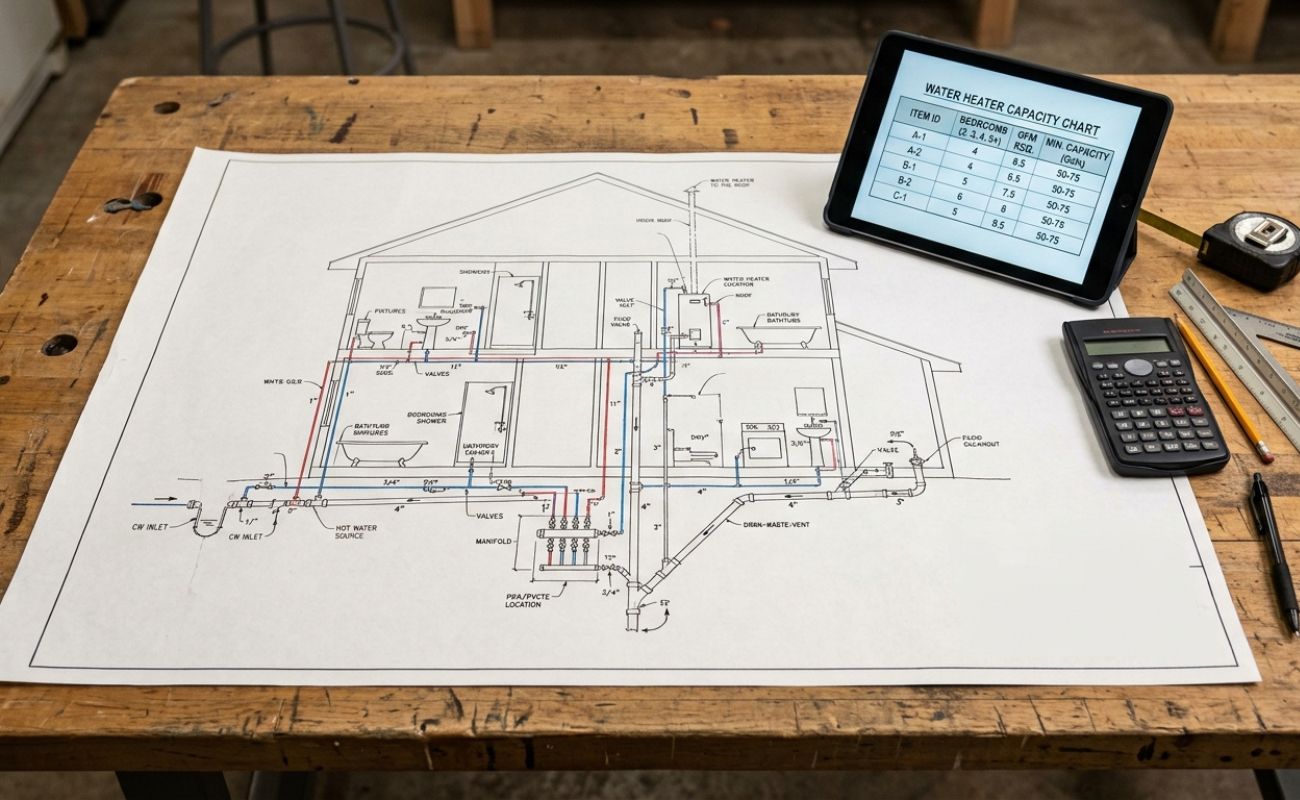
To definitively know if your system is too small, you must calculate your household’s peak hour demand. This requires understanding exactly how much water your appliances use.
| Fixture / Appliance | Average Flow Rate (GPM) | Total Gallons Per Usage |
|---|---|---|
| Standard Shower | 2.0 – 2.5 GPM | 16 – 20 Gallons |
| Bathtub Fill | 4.0 GPM | 30 – 40 Gallons |
| Washing Machine (Warm/Hot) | 2.0 GPM | 15 – 25 Gallons |
| Dishwasher | 1.5 GPM | 4 – 6 Gallons |
| Bathroom/Kitchen Sink | 1.0 – 1.5 GPM | 2 – 3 Gallons |
Steps to Calculate Peak Hour Demand
- Identify the Busiest Hour: Determine the time of day when your household uses the most hot water (e.g., 6:30 AM to 7:30 AM).
- List the Activities: Document everything that happens during that hour. For example: three showers, one load of laundry, and running the kitchen sink for shaving/teeth brushing.
- Calculate Total Gallons: Using the table above, add up the usage. Three showers (60 gallons) + one load of laundry (20 gallons) + sink usage (4 gallons) = 84 gallons.
- Compare to FHR: Your water heater’s First-Hour Rating must be at least 84 gallons to support this routine. If it is only 60 gallons, your unit is too small.
 Storage Tank vs. Tankless Systems: Sizing Differences
The criteria for determining if a water heater is too small varies drastically depending on whether you own a traditional storage tank or a modern tankless (on-demand) system.
Storage Tank Sizing Requirements
For storage tanks, volume and recovery rate are the ruling metrics. Standard capacities range from 30 to 80 gallons. If your family grows, or if you install a high-capacity soaking tub that requires 50 gallons to fill, a standard 40-gallon tank immediately becomes obsolete. Sizing up to a 60-gallon or 80-gallon tank becomes necessary to accommodate the massive single-draw requirement. Additionally, regulations established by the International Association of Plumbing and Mechanical Officials (IAPMO) dictate safety standards for thermal expansion, meaning larger tanks may also require larger expansion tanks to maintain safe system pressures.
Tankless System Sizing Requirements
Tankless units do not run out of hot water due to volume; they run out of hot water due to excessive flow rates. Tankless units are sized based on their maximum GPM output at a specific Temperature Rise. If a tankless unit is rated for 5.0 GPM, you can run a shower (2.0 GPM) and a washing machine (2.0 GPM) simultaneously without issue. However, if a third person turns on another shower (2.0 GPM), the total demand reaches 6.0 GPM. Because this exceeds the unit’s capacity, the system is now too small for that moment, resulting in a sudden drop in water temperature across the house.
How Professional Sizing and Installation Work
Upgrading an undersized system is not simply a matter of purchasing the largest unit available. Oversized units are highly inefficient, wasting energy by keeping excess water heated. Therefore, proper installation requires precise, professional assessment.
When professional plumbers evaluate your home, they perform a comprehensive mechanical audit. They will measure the existing physical footprint to ensure a larger tank will fit while adhering to local building codes regarding clearances and combustion air. They will assess the existing gas line diameter to ensure it can deliver adequate BTUs for a high-capacity system, and they will inspect the venting system. Upgrading from a standard atmospheric vent to a high-efficiency power-vented system often requires rerouting PVC exhaust pipes through the exterior wall.
By relying on professional load calculations, you ensure that your new system provides an endless, reliable supply of hot water while maintaining optimal energy efficiency.
Frequently Asked Questions (FAQ)
Can I make my current water heater produce more hot water without replacing it?
You can slightly increase usable hot water by installing a thermostatic mixing valve, which allows you to store water at a higher temperature (e.g., 140 degrees) and mix it with cold water upon exit. However, this is a temporary fix, and if the tank’s FHR is vastly below your needs, replacement is required.
Does hard water make a water heater act like it is too small?
Yes. Heavy mineral deposits from hard water settle at the bottom of the tank, displacing actual water volume. This means a 50-gallon tank heavily laden with scale may only hold 40 gallons of water, severely reducing capacity.
Why does my hot water run out so fast in the winter?
During winter, the incoming municipal or well water is much colder. The water heater has to expend more energy and time to heat this colder water up to 120 degrees, drastically lowering its effective First-Hour Rating.
How do I find the First-Hour Rating of my water heater?
The First-Hour Rating (FHR) is typically printed on the yellow EnergyGuide label located directly on the side of your water heater tank. It will be listed clearly in gallons.
Is it better to get a bigger tank or switch to a tankless system?
If you have high simultaneous demand (e.g., multiple showers running at exactly the same time), a large storage tank is often better. If you have sequential demand (e.g., people taking showers one after another all morning), a properly sized tankless system is highly efficient.
What size water heater do I need for a family of four?
Generally, a family of four requires a storage tank with an FHR of 65 to 85 gallons, which usually translates to a 50-gallon or 65-gallon physical tank, depending on the burner’s recovery rate.
Conclusion
Recognizing the signs of an undersized water heater is the first step toward restoring comfort and efficiency to your home. Whether you are dealing with frequent cold showers, frustrating wait times, or surging utility bills, an improperly sized unit is a daily nuisance. By understanding your household’s peak hour demand and calculating the correct First-Hour Rating or GPM requirements, you can select a system that precisely meets your needs. Do not settle for subpar plumbing performance. If you are ready to upgrade your system and want a professional sizing assessment, get in touch with our team today to schedule a consultation.
References
- U.S. Department of Energy. “Sizing a New Water Heater.” Energy.gov. https://www.energy.gov
- Environmental Protection Agency (EPA). “Water Heating Energy Statistics and WaterSense Guidelines.” EPA.gov. https://www.epa.gov
- International Association of Plumbing and Mechanical Officials (IAPMO). “Uniform Plumbing Code Standards.” IAPMO.org. https://www.iapmo.org
- Plumbing-Heating-Cooling Contractors Association (PHCC). “System Sizing and Mechanical Wear Guidelines.” PHCCweb.org. https://www.phccweb.org
