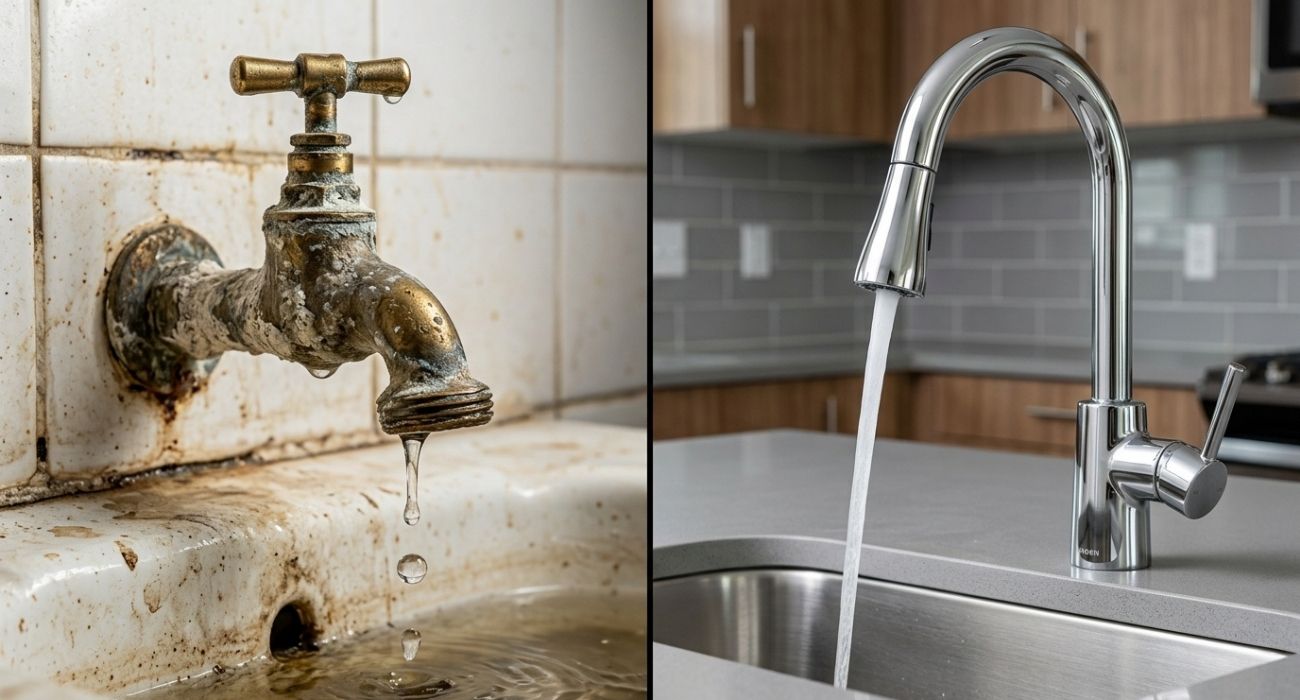
Determining whether a plumbing fixture requires a simple fix or a complete replacement comes down to its age, the extent of internal corrosion, and the cost of replacement parts. A well-maintained fixture generally lasts between 15 and 20 years. If the issue is isolated to a worn O-ring, a degraded ceramic disc, or a clogged aerator, a basic repair is the most cost-effective route. However, if the unit exhibits severe internal scaling, cracks in the valve manifold, or persistent leaks despite multiple repairs, a full replacement is required to prevent water damage and eliminate wasted utility costs.
Key Takeaways
- Age Factor: Fixtures older than 15 years are typically better candidates for replacement due to parts obsolescence and internal metal fatigue.
- Water Waste: A leaking tap dripping at one drop per second can waste over 3,000 gallons of water per year.
- Local Water Hardness: Homeowners in the Southwest, particularly those managing property in the Phoenix area, face accelerated fixture degradation due to high calcium and magnesium levels in the municipal water supply.
- Repair vs. Replace Threshold: If the cost of repair parts and labor exceeds 50% of the cost of a new, comparable unit, replacement is the industry-standard recommendation.
- Visible Corrosion: External rust or heavy white scaling around the base often indicates deeper, irreparable internal valve damage.
The Financial and Environmental Cost of Ignoring Leaks
A dripping sink is more than a minor annoyance; it is a steady drain on both local water resources and household finances. According to the United States Environmental Protection Agency (EPA), household leaks can waste nearly one trillion gallons of water annually nationwide. To put this into perspective, the average household leak wastes roughly 10,000 gallons of water every year, which is enough to wash 270 loads of laundry.
Promptly addressing leaks is especially critical in arid climates. When considering the necessity of faucet repair in regions like Phoenix, AZ, homeowners must account for long-term drought conditions and rising utility rates. The EPA notes that fixing easily corrected household water leaks can save homeowners about 10 percent on their monthly water bills. When you delay maintenance, you are not only risking structural water damage to your cabinetry and drywall, but you are also actively contributing to municipal water stress.
Furthermore, minor leaks rarely resolve themselves. A slow drip usually indicates that a pressurized internal component—such as a rubber washer or a cartridge—has failed. As water forces its way past this compromised barrier, it erodes the surrounding brass or plastic materials. What begins as a three-dollar washer replacement can quickly escalate into the need for an entirely new fixture if left unaddressed.
Understanding Faucet Anatomy: The Four Main Types
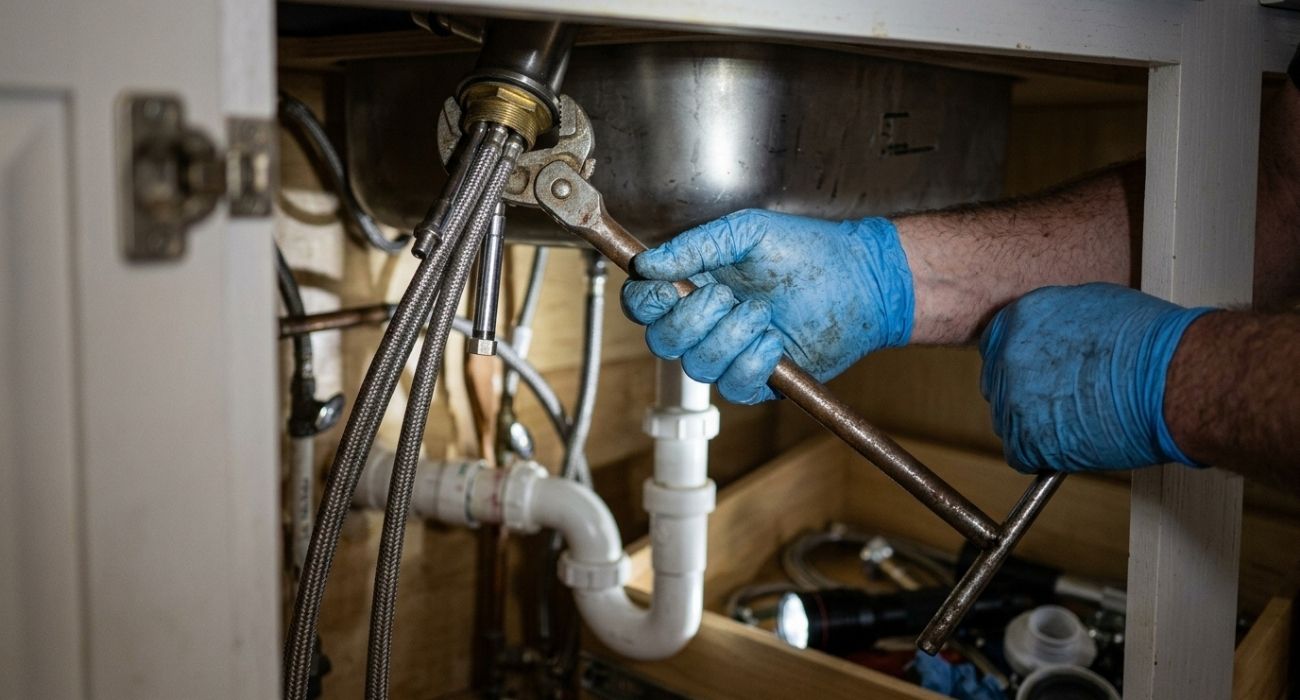
To accurately determine if your fixture needs to be serviced or scrapped, it helps to understand its mechanical design. Residential plumbing utilizes four primary types of internal mechanisms. Identifying which type you have will help you understand the complexity of the potential repair.
1. Compression Faucets
Compression fixtures are the oldest style, recognizable by their separate hot and cold handles. They operate by using a threaded stem to compress a rubber washer against a valve seat to stop water flow. These washers wear out frequently due to continuous friction and pressure. Fortunately, replacing a compression washer is highly inexpensive, making this style easy to maintain, even if it requires frequent attention.
2. Ball Faucets
Commonly found in older kitchens, ball faucets feature a single handle moving over a rounded base. Inside, a slotted metal or plastic ball controls the mixture and flow of hot and cold water. Because ball valves contain numerous small parts—including springs, rubber seals, and O-rings—they are highly susceptible to leaking. Rebuild kits are widely available, but the intricate assembly can make repairs tedious.
3. Cartridge Faucets
Cartridge designs are available in both single and double-handle configurations. They utilize a movable plastic or brass cartridge that moves up and down to regulate flow. When these fail, the repair is straightforward: you simply shut off the water, remove the handle, pull out the old cartridge, and drop in a new one. This modular design makes cartridge systems highly resilient and easy to service.
4. Ceramic Disc Faucets
Ceramic disc models are the modern standard for premium plumbing fixtures. They house two perfectly flat, fired-ceramic discs that slide over each other to control water flow. These discs are incredibly durable and nearly impervious to friction. When a ceramic disc model leaks, it is rarely the discs themselves that have failed; rather, the small neoprene seals beneath the cylinder have likely deteriorated.
Common Signs Your Faucet Merely Needs a Repair
In many scenarios, a complete replacement is unnecessary and wasteful. If the structural integrity of the metal body is sound, a targeted repair will restore full functionality. Look for these specific indicators that a simple fix is all that is required.
The Persistent Spout Drip
If water drips consistently from the spout after the handle has been closed firmly, the internal sealing mechanism has worn out. For a compression model, this means changing the seat washer. For a cartridge or ceramic disc model, replacing the modular cartridge will instantly solve the problem. As long as the internal threads of the fixture body are not stripped or heavily corroded, this repair takes less than thirty minutes and extends the fixture’s life by several years.
Sputtering Water and Irregular Pressure
If your water flow is weak, sprays in erratic directions, or sputters, the issue is almost certainly a clogged aerator. The aerator is the small mesh screen screwed onto the tip of the spout. Its job is to introduce air into the water stream, preventing splashing and reducing total water volume while maintaining high pressure. Mineral deposits often clog this mesh. Unscrewing the aerator and soaking it in white vinegar for an hour will dissolve the calcium, restoring normal water flow without requiring any major plumbing work.
Squeaky or Stiff Handles
Handles that require excessive force to turn or emit a squeaking sound indicate a lack of lubrication. The friction usually occurs within the O-rings or the cartridge stem. Disassembling the handle and applying a coating of non-toxic plumber’s silicone grease to the internal moving parts will restore smooth operation. Never use petroleum-based lubricants (like WD-40) on plumbing fixtures, as they will cause rubber seals to disintegrate.
When Faucet Replacement is the Better Investment
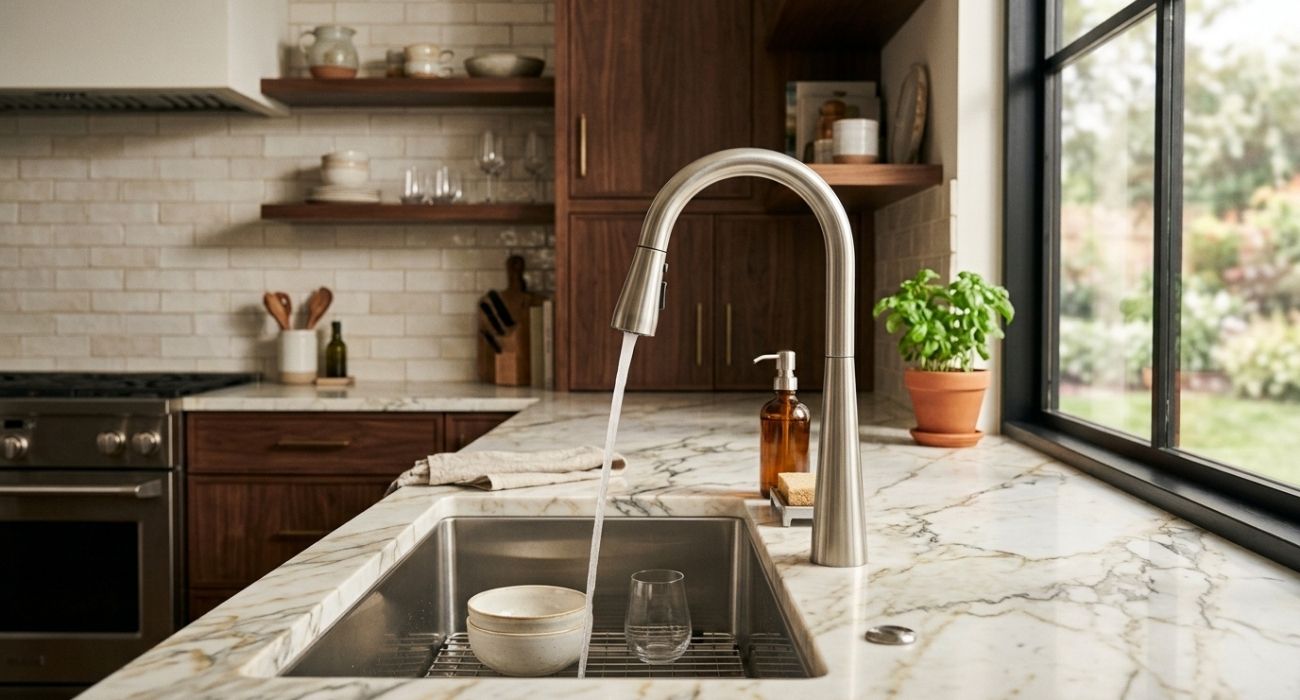
While many issues can be fixed with basic parts, there is a clear threshold where continuing to repair an old fixture becomes a poor financial decision. If you encounter the following scenarios, investing in a new unit is highly recommended.
Extensive Mineral Damage and Internal Scaling
Water hardness is a severe issue for plumbing longevity. If a fixture has been subjected to hard water for a decade, the internal brass components may be fused together by calcification. If a plumber cannot safely remove the retaining nut or cartridge without risking damage to the sink deck or the supply lines, the unit must be replaced.
Base Leaks and Corroded Manifolds
A leak coming from the base of the fixture (where it meets the sink) rather than the spout often indicates a compromised O-ring, but it can also signal a cracked valve manifold. If the internal metal body has a hairline crack, no amount of putty, tape, or replacement seals will stop the leak under municipal water pressure. A cracked manifold mandates immediate replacement.
Frequent Breakdowns and Obsolete Parts
If you find yourself opening up the sink every six months to replace seals, or if the manufacturer has discontinued the specific cartridge your unit requires, it is time to upgrade. Modern fixtures utilize highly durable ceramic technology and are built to tighter tolerances than models manufactured twenty years ago. The long-term reliability of a new installation far outweighs the ongoing frustration of band-aid repairs.
Repair vs. Replace: A Comprehensive Cost-Benefit Analysis
To help property owners make an objective decision, the following table breaks down the key considerations between repairing an existing fixture and installing a new one.
| Factor | Repairing Existing Fixture | Replacing with New Fixture |
|---|---|---|
| Initial Cost | Low ($5 – $50 for parts) | Moderate to High ($100 – $500+) |
| Labor Time | 15 to 45 minutes | 1 to 3 hours (including uninstallation) |
| Lifespan Extension | 1 to 5 years | 15 to 20+ years |
| Water Efficiency | Remains at original manufacturing standard | Can upgrade to modern, high-efficiency EPA WaterSense standards |
| Aesthetics | Unchanged | Immediate aesthetic modernization |
The Impact of Hard Water on Arizona Plumbing Fixtures
Understanding regional water quality is essential when assessing plumbing longevity. The United States Geological Survey (USGS) defines hard water as water that contains high concentrations of dissolved minerals, primarily calcium and magnesium. When this water is heated or evaporates, it leaves behind calcium carbonate—a hard, chalky white substance commonly referred to as scale.
The municipal water supply in the desert Southwest is notoriously hard. Specifically, water sources derived from the Salt, Verde, and Colorado rivers carry high mineral loads. The City of Phoenix reports that its water hardness ranges from 12 to 16 grains per gallon (GPG), classifying it as “very hard.”
This high mineral content acts as a mild abrasive inside plumbing systems. Over time, microscopic calcium crystals scratch the smooth surfaces of rubber gaskets and plastic cartridges. Furthermore, scale buildup can cement threaded connections together. Homeowners managing water fixtures in these environments often find that their faucets require replacement closer to the 10-year mark unless they have installed a whole-house water softening system. Consistent cleaning with weak acids, such as vinegar, can mitigate exterior buildup, but internal degradation is often unavoidable without treating the water source itself.
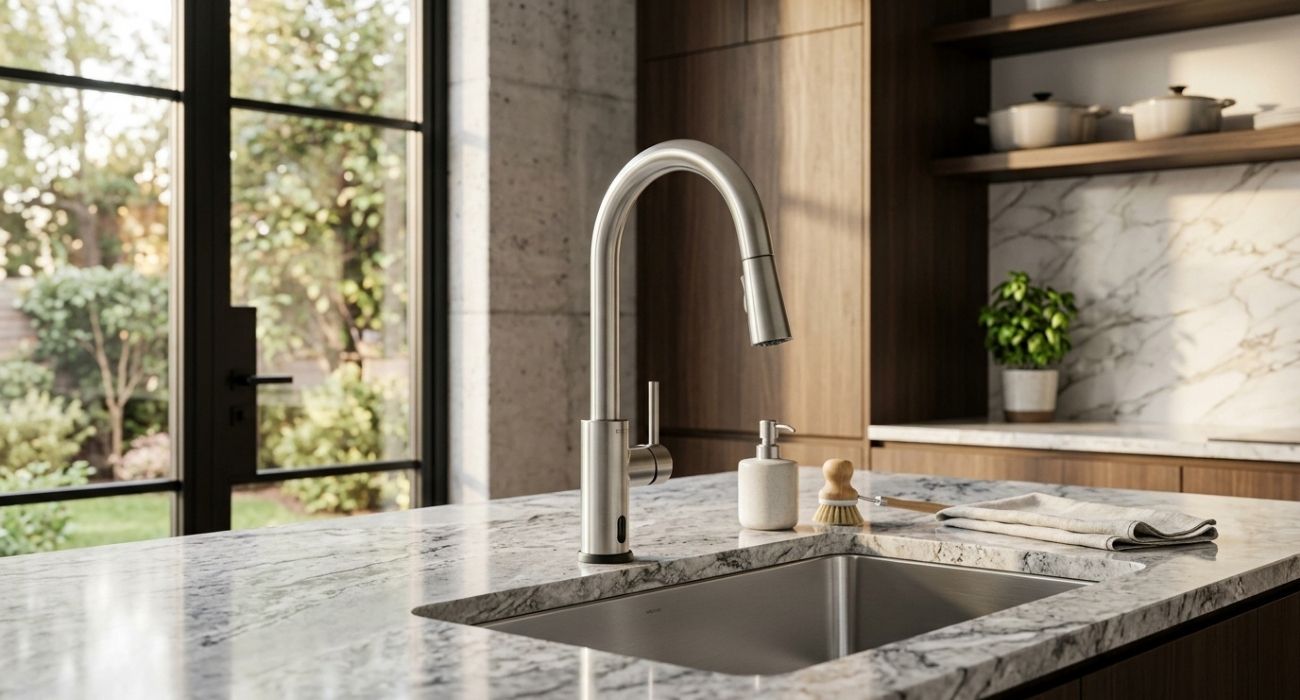 Step-by-Step: How to Inspect Your Sink Fixture
Before calling a professional or heading to the hardware store, you can perform a thorough assessment of your fixture to determine the next best step. Follow these diagnostic procedures:
- Shut Off the Water Supply: Locate the two oval or quarter-turn shut-off valves under the sink. Turn them clockwise until tight. Turn on the faucet to release any remaining pressure and verify the water is completely off.
- Inspect the Aerator: Unscrew the tip of the spout by hand (or gently with a towel-wrapped wrench). Check the mesh screen. If it is severely rusted or torn, replace it. If it is clogged with white debris, soak it in vinegar.
- Check for Base Pooling: Dry the entire deck area around the fixture. Turn the water supply back on and run the tap for two minutes. Watch closely at the base. If water slowly seeps out from under the escutcheon plate, the internal O-rings are failing.
- Examine Supply Lines Under the Sink: Use a flashlight to inspect the braided steel or copper supply lines beneath the sink. If you see water droplets, dark rust stains, or feel dampness on the supply line connections, the issue may actually be with the supply hoses rather than the fixture itself.
- Test Handle Torque: Turn the handles on and off. They should glide smoothly with minimal resistance. Grinding sensations indicate that mineral scale has penetrated the cartridge housing.
Frequently Asked Questions (FAQ)
How long should a standard bathroom or kitchen faucet last?
A high-quality brass fixture can last 15 to 20 years with proper maintenance. However, internal components like rubber washers, O-rings, and cartridges will typically need replacing every 3 to 5 years, depending on usage and local water quality.
Can hard water destroy a plumbing fixture?
Yes. The high concentrations of calcium and magnesium in hard water create scale buildup. This scale acts as an abrasive, grinding down internal rubber seals and fusing metal components together, which can eventually render the unit unrepairable.
Is it cheaper to repair a dripping tap yourself or hire a professional?
Replacing a basic washer or cartridge is highly cost-effective as a DIY project, usually costing under $30 in parts. However, if the fixture is severely corroded, attempting to dismantle it without professional tools can result in broken supply lines and severe water damage, making a professional more economical in the long run.
What does a sputtering water stream indicate?
Sputtering is almost always caused by an obstructed aerator. Mineral deposits or sediment from the municipal water lines can clog the small mesh screen at the end of the spout, disrupting the balance of air and water.
Should I replace the supply lines when installing a new fixture?
Yes, it is an industry best practice to install new flexible supply lines whenever a new faucet is installed. Old rubber seals inside the supply line nuts degrade over time and frequently fail if they are reused on a new connection.
Does a leaky faucet actually increase my water bill?
Absolutely. A continuous drip at a rate of one drop per second can waste over 3,000 gallons of water per year. Fixing these leaks can lower a standard household water bill by roughly 10 percent.
Conclusion
Deciding between repairing or replacing a plumbing fixture ultimately depends on its age, the extent of mineral damage, and overall functionality. While minor drips and squeaks can be quickly resolved with a new cartridge or O-ring, severely calcified, corroded, or obsolete units are a liability that warrant a complete upgrade. By monitoring your fixtures for early signs of wear and understanding the specific impacts of hard water, you can prevent minor leaks from evolving into major property damage. If you are struggling with persistent leaks, poor water pressure, or aging fixtures, professional assessment is the safest route. Contact our professional team today to schedule a comprehensive inspection and find the right solution for your home.
References
- United States Environmental Protection Agency (EPA) – WaterSense Leak Facts: https://www.epa.gov
- United States Geological Survey (USGS) – Hardness of Water Definitions: https://www.usgs.gov
- City of Phoenix – Water Quality and Hardness Information: https://www.phoenix.gov
- American Water Works Association (AWWA) – Residential Water Usage Data: https://www.awwa.org
