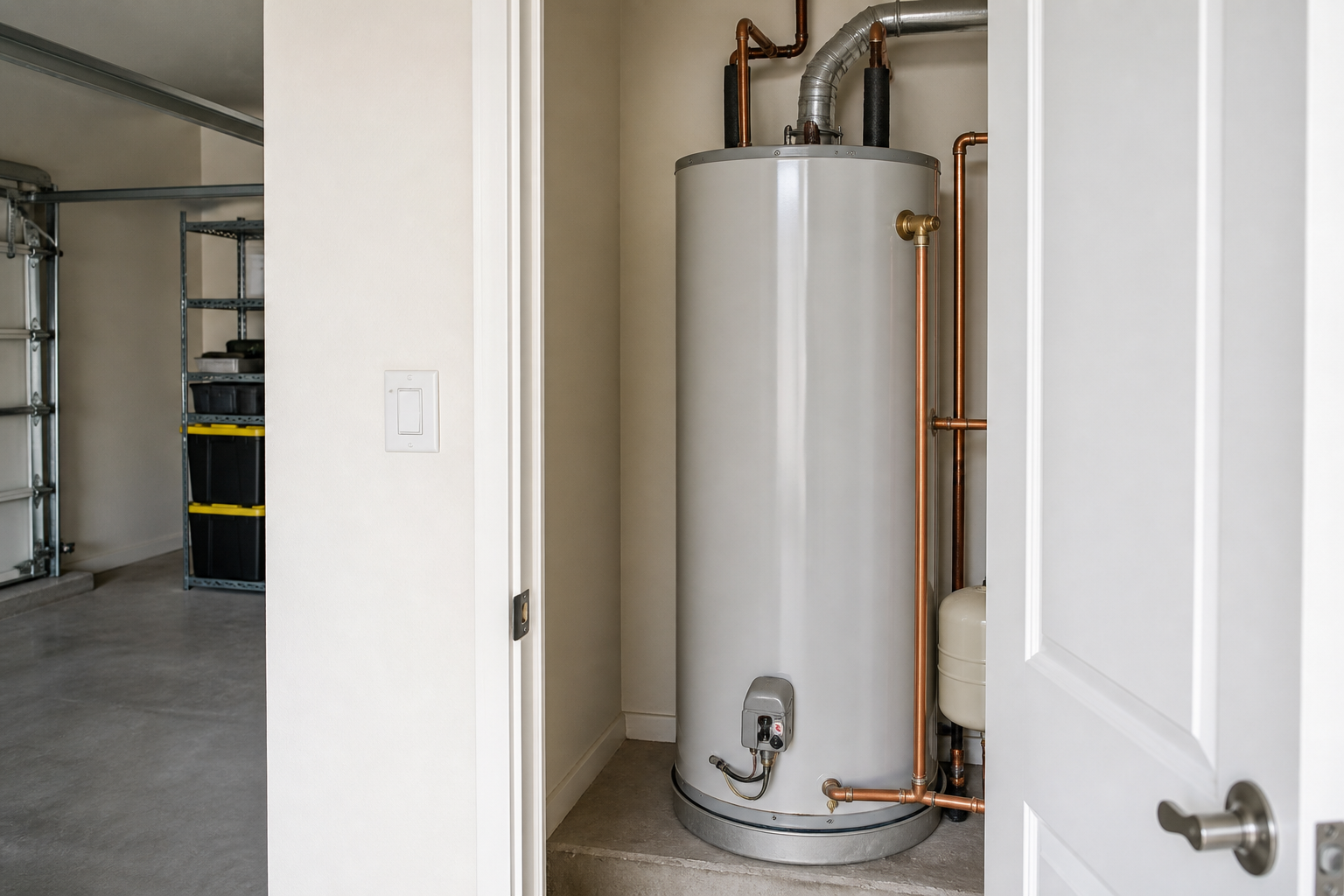
Water heater maintenance Phoenix homeowners schedule with a licensed plumber helps keep hot water reliable through summer heat and the demands of daily use. Tank and tankless units both depend on clean water paths, safe venting or combustion air, and components that wear over time. Phoenix hard water can leave sediment in tank-style heaters, while high ambient temperatures add load to equipment in garages and attics.
This article outlines five practical benefits of professional maintenance and how they apply to local conditions. It also explains how maintenance differs from emergency repair and when DIY flushing may be appropriate. For service details, see Water Heater Maintenance options from Rapid Fire Plumbing.
Key Takeaways
- Professional maintenance can catch corrosion, leaks, and valve issues before they cause water damage or loss of hot water.
- Flushing sediment from a tank water heater can help the unit heat more efficiently when mineral buildup is present.
- Licensed technicians inspect safety devices such as the temperature and pressure relief valve on tank units.
- Phoenix hard water makes periodic flushing and anode inspection especially relevant for tank heaters.
- Rapid Fire Plumbing services tank and tankless water heaters for repair, installation, replacement, and maintenance.
Benefit 1: Sediment Control in Hard-Water Areas
Phoenix-area water is commonly hard, meaning it carries dissolved minerals that can settle in the bottom of a tank water heater. That layer of sediment acts as insulation between the burner or heating element and the water above it. The unit may run longer to reach the set temperature, which can increase energy use and wear on components.
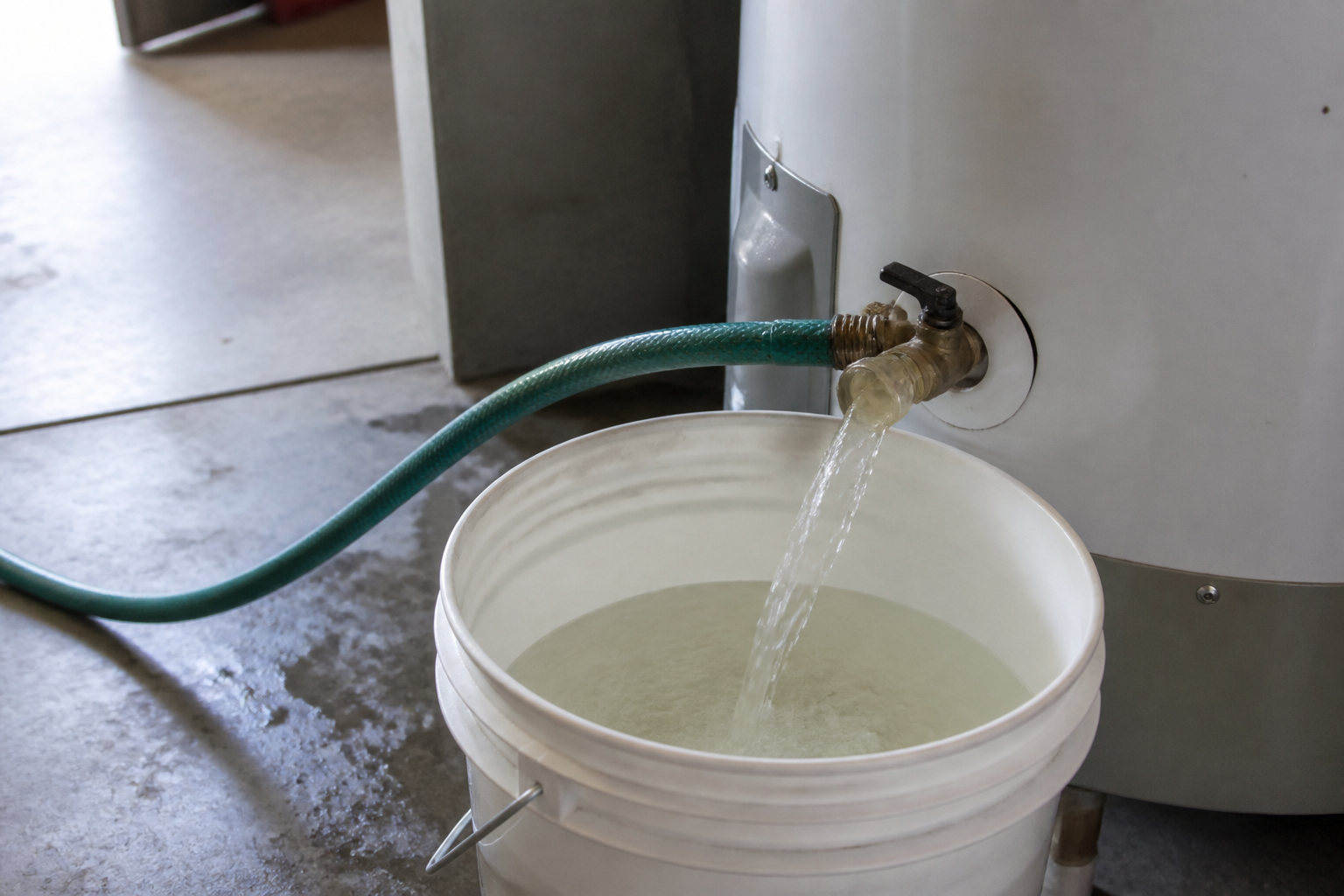
During professional maintenance, a plumber can drain and flush the tank to remove loose sediment when the unit design and condition allow. How much sediment appears depends on local water quality, usage, and how long since the last flush. Maintenance does not reverse corrosion that has already thinned the tank, but it can improve performance when buildup is the main issue.
Some homeowners flush tanks on their own between service visits. Rapid Fire Plumbing publishes guidance on how to flush your water heater without calling a pro for those comfortable with the steps. Professional service adds inspection of connections, valves, and venting that a flush alone does not cover.
Benefit 2: Early Detection of Leaks and Corrosion
A small drip from a fitting or relief valve can go unnoticed in a garage until it becomes a larger leak. Maintenance includes visual checks of the tank shell, inlet and outlet connections, the drain valve, and surrounding piping. Rust streaks, moisture on the floor, or bulging on the tank are signs that replacement or repair may be needed soon.
Catching problems early can limit water damage to drywall, stored items, and flooring. It also gives you time to plan replacement rather than facing an emergency when the tank fails without warning. Tankless units have different failure modes—scale in heat exchangers, flow sensor issues, and vent blockages—but regular service still focuses on finding wear before it stops hot water entirely.
Benefit 3: Safety Device Testing
Tank water heaters include a temperature and pressure relief (T&P) valve designed to open if pressure or temperature inside the tank exceeds safe limits. A stuck or improperly installed relief line is a safety concern. During maintenance, a licensed plumber can verify that the valve and discharge pipe meet current installation expectations.
Gas units also need correct venting and combustion air. Electric units need secure wiring and proper breaker sizing. These checks are part of why maintenance is best performed by an Arizona licensed plumbing contractor listed with the Arizona Registrar of Contractors (ROC).
Benefit 4: Consistent Hot Water and Lower Surprise Breakdowns
When heating elements, gas burners, thermostats, or tankless flow sensors drift out of spec, showers may run lukewarm or cycles may shorten. Maintenance can identify parts that are failing gradually rather than all at once. Addressing a worn anode rod on a tank heater, for example, can help reduce tank corrosion when replaced at the right time.
Phoenix summers push garage and attic temperatures high. Equipment in those spaces works in a hotter ambient environment than heaters in conditioned closets. That stress makes periodic professional review more useful, especially for older units.
Benefit 5: Clear Guidance on Repair vs. Replacement
Not every aging heater should be repaired. Maintenance visits produce information—age, leak history, efficiency, and parts availability—that helps you decide whether to invest in repair or plan replacement. Rapid Fire Plumbing provides water heater repair, installation, and replacement for tank and tankless models in Phoenix.
Professional Water Heater Maintenance ties together flushing, inspection, and honest recommendations. That is different from waiting until cold water at the tap forces an urgent call. When hot water fails suddenly, emergency plumbing services are available 24/7 from Rapid Fire Plumbing.
What Professional Maintenance Typically Includes
Exact steps vary by unit type and condition, but a maintenance visit often covers:
- Visual inspection of the tank or tankless unit, connections, and venting
- Check of the T&P relief valve and discharge routing on tank models
- Flushing to remove sediment when appropriate
- Review of anode rod condition on tank heaters where accessible
- Test of thermostat settings and basic performance
- Notes on corrosion, leaks, or parts that may need follow-up
Maintenance complements, but does not replace, manufacturer instructions and local code requirements. If you are unsure when your unit was last serviced, scheduling a visit establishes a baseline.
How Phoenix Climate Affects Water Heaters
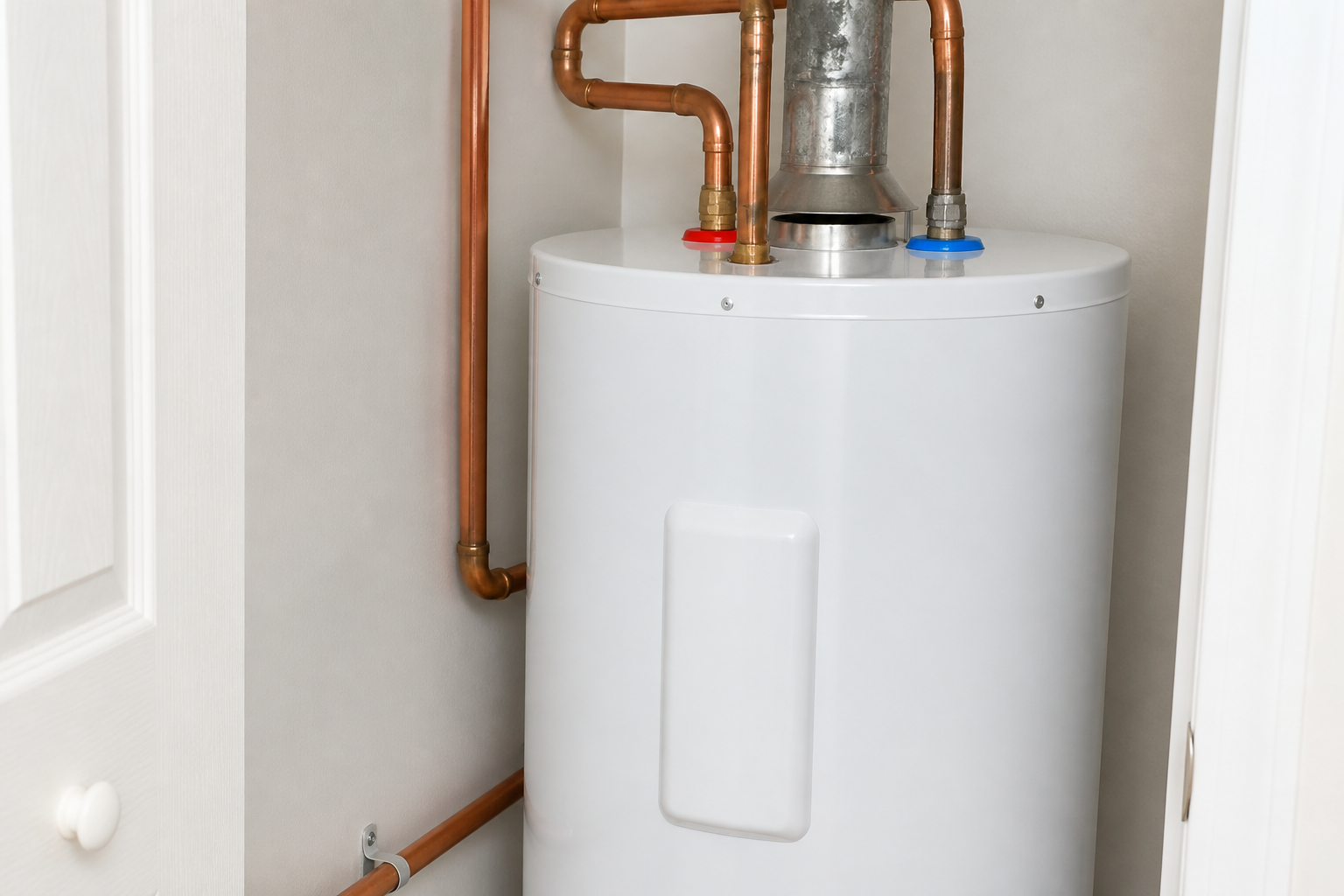
Desert heat changes how water heaters operate even when they are working correctly. Units in garages often sit in ambient temperatures well above indoor living spaces during summer afternoons. That environment can shorten the life of electronic controls and make the unit cycle more often to maintain tank temperature. Attic installations face similar heat loads and may be harder to access for routine checks.
Hard water adds mineral content that settles in tanks and can coat heat exchanger surfaces in tankless models. Over time, scale can reduce heat transfer efficiency. Flushing and descaling address different parts of that problem depending on whether you own a tank or tankless unit. Neither task eliminates the need to inspect gas venting, electrical connections, and relief devices on a regular schedule.
Monsoon humidity and dust can also affect vent terminations and combustion air openings on gas units. A maintenance visit includes a look at those exterior components when they are visible and safely reachable.
DIY Flushing vs. Professional Service
Flushing is one task many homeowners can perform with basic tools and careful steps. It removes loose sediment from the tank bottom. It does not inspect gas venting, test electrical connections, or evaluate whether the tank itself is nearing end of life.
Use the Rapid Fire Plumbing guide on how to flush your water heater without calling a pro if you choose DIY flushing between professional visits. Call a licensed plumber when you see rust-colored water that persists, hear popping sounds that worsen after flushing, notice leaks, or smell gas near a gas-fired unit.
Planning Maintenance Around Your Schedule
Water heater maintenance Phoenix homeowners book during regular hours can often be coordinated with other plumbing tasks in the same visit. If you are also concerned about supply pressure affecting fixtures, ask about testing during the appointment. Rapid Fire Plumbing publishes resources on testing home water pressure that complement heater service.
Routine maintenance is separate from emergency response. Rapid Fire Plumbing states 24/7 availability for urgent plumbing needs on its homepage. Scheduling maintenance before a failure helps you choose timing that fits your household rather than reacting to a cold shower on a busy morning.
Frequently Asked Questions
How often should a water heater be maintained in Phoenix?
Manufacturer guides and local water quality both matter. In hard-water areas, many tank heaters benefit from an annual flush and inspection. Tankless units often need descaling on a schedule the manufacturer specifies. Your plumber can recommend an interval after seeing your unit and water conditions.
Does maintenance extend water heater life?
Regular care can help a unit reach its expected service life by reducing sediment-related stress and catching failing parts early. It cannot overcome a tank that is already corroded through or a unit that is past its design life.
Is water heater maintenance required by code?
Maintenance is a best practice rather than a single statewide mandate for homeowners. Rental and commercial properties may face additional requirements. Gas venting and relief valve installation must meet applicable codes when installed or altered.
Can tankless water heaters be maintained the same way as tank units?
Tankless heaters need different procedures, often including descaling of the heat exchanger. Professional service accounts for manufacturer-specific requirements.
Who should perform water heater maintenance in Arizona?
Gas connections, venting, and pressure relief systems involve safety and code considerations. A licensed plumbing contractor registered with the ROC is qualified to perform maintenance and document conditions found.
Conclusion
Water heater maintenance Phoenix residents invest in can improve efficiency, support safety checks, and reduce the chance of sudden failures—especially where hard water and heat affect equipment. Sediment flushing, leak detection, and clear repair-or-replace guidance are practical reasons to schedule service before an emergency. For tank and tankless Water Heater Maintenance, contact Rapid Fire Plumbing at (623) 810-6166. Regular appointments can be arranged through the contact page during posted business hours.
References
- Arizona Registrar of Contractors (ROC) — contractor licensing in Arizona.
- International Plumbing Code (IPC), Chapter 6 — water supply and distribution provisions.
