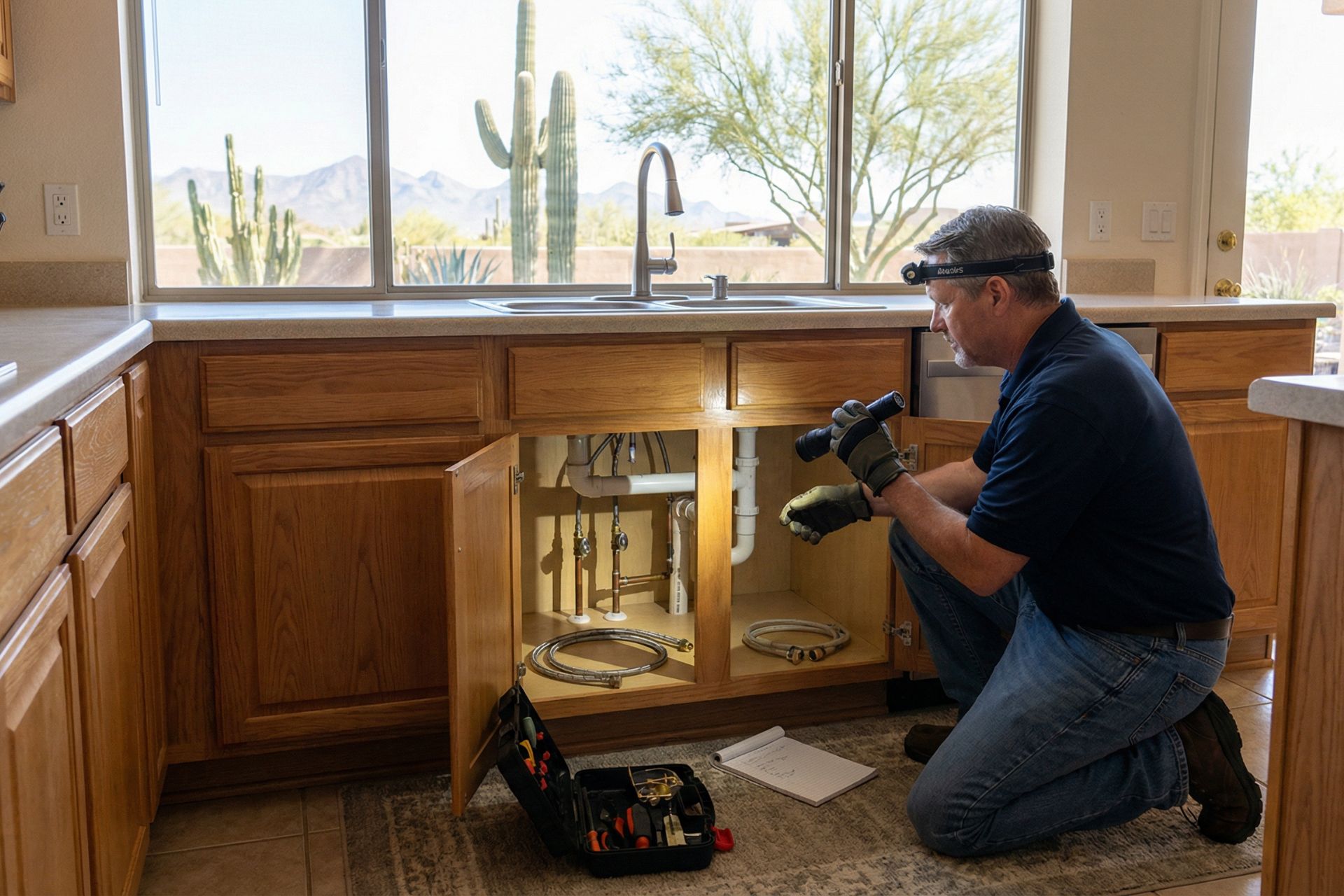
You can tell your drain needs professional cleaning if you experience persistent slow drainage across multiple fixtures, foul sewage odors emitting from the sink, strange gurgling noises when water empties, or frequent, recurring clogs that plunge away only to return days later. While a single slow-draining sink might just need a quick plunge, systemic issues indicate a deep blockage within your plumbing infrastructure that requires advanced remediation.
For homeowners in Arizona, maintaining clear pipes is a unique challenge. The combination of extremely hard water, dry desert soil that encourages aggressive tree root intrusion, and aging infrastructure means that minor blockages can rapidly escalate into severe plumbing emergencies. In 2026, relying on outdated DIY methods is no longer sufficient for protecting your home’s plumbing system.
The Hidden Dangers of Ignoring Clogged Drains in Arizona
Many homeowners treat a slow drain as a minor inconvenience rather than a symptom of a larger problem. However, ignoring these early warning signs can lead to catastrophic pipe failure. Research from the American Society of Plumbing Engineers (ASPE) indicates that 68% of severe residential plumbing emergencies originate from ignored minor blockages that were left untreated for more than six months.
In Phoenix, the arid climate exacerbates these issues. When organic matter, grease, and hair sit stagnant in a partially blocked pipe, the high ambient temperatures accelerate bacterial growth and the hardening of the blockage. Furthermore, the pressure buildup behind a stubborn clog places immense stress on pipe joints, increasing the risk of leaks hidden behind walls or beneath your foundation. Understanding the risks of DIY plumbing work is crucial, as improper handling often worsens these hidden dangers.
7 Undeniable Signs You Need Expert Drain Clearing
Recognizing the symptoms of a severe blockage early can save you thousands of dollars in water damage restoration and pipe replacement. Here are the seven definitive signs that it is time to call in an expert for professional drain cleaning in Phoenix.
1. Persistent Slow Draining Across Multiple Fixtures
If only your bathroom sink is draining slowly, the issue is likely localized to that specific P-trap. However, if your shower, bathtub, and bathroom sink are all draining sluggishly at the same time, the obstruction is located deeper in the main branch line. A systemic slowdown means the diameter of your main drainage pipe has been severely restricted, likely by a combination of biological film and mineral scale.
2. Unpleasant Odors Emitting from the Sink
A healthy plumbing system utilizes water barriers in the P-traps and a dedicated venting system to keep sewer gases out of your home. If you detect a persistent smell of rotten eggs, sewage, or decaying organic matter coming from your drains, you have a problem. According to the Centers for Disease Control and Prevention (CDC), these odors are often caused by anaerobic bacteria feeding on trapped food and grease deep within the pipe, which can negatively impact indoor air quality.
3. Strange Gurgling Noises in the Pipes
When water flows down a drain, it should be silent. If you hear a bubbling or gurgling sound—especially if flushing a toilet causes the shower drain to gurgle—your system is gasping for air. This indicates a blockage in either the main sewer line or the vent stack, forcing air to push its way past the water barrier in your P-traps. Plumbing noises should never be ignored, as they are the earliest auditory warning of a failing system.
“Ignoring a gurgling drain is like ignoring the check engine light on your car. It is the earliest warning sign of a systemic venting or blockage issue that requires immediate professional diagnostics.”
— Elena Rodriguez, Chief Inspector at the Arizona Residential Building Council
4. Frequent and Recurring Clogs
If you find yourself reaching for the plunger every week, you are only treating the symptom, not the disease. Recurring clogs mean that a solid mass is permanently lodged in the pipe. When you plunge, you are merely poking a small, temporary hole through the sludge, allowing water to pass until the hole collapses again a few days later.
5. Water Backing Up in Unexpected Places
This is a major red flag. If running your washing machine causes water to back up into the kitchen sink, or if flushing the toilet causes sewage to rise in the bathtub, you have a severe main sewer line blockage. The wastewater is hitting a solid wall and taking the path of least resistance back into your home’s lowest fixtures.
6. Presence of Fruit Flies or Drain Gnats
Drain flies breed in the gelatinous slime that coats the inside of partially clogged pipes. If you notice a sudden infestation of tiny flies hovering around your kitchen or bathroom sinks, it means there is a significant buildup of organic sludge deep within the drain that needs to be mechanically removed.
7. Unexplained Patches of Lush Grass in Your Yard
In the dry Arizona desert, an isolated patch of vibrant, rapidly growing grass is highly suspicious. This often indicates a cracked or leaking subterranean sewer line that is fertilizing the soil above it. Signs your sewer line might be clogged or damaged often manifest outdoors before they cause catastrophic backups indoors.

DIY vs. Professional Drain Cleaning: A Direct Comparison
When faced with a stubborn clog, many homeowners debate whether to tackle the issue themselves or hire a professional. The table below outlines the differences between common DIY methods and professional-grade solutions.
| Method | Effectiveness | Safety for Pipes | Best Use Case |
|---|---|---|---|
| Chemical Drain Cleaners | Low (Temporary fix) | Very Low (Causes corrosion) | Not recommended by professionals |
| Standard Plunger | Moderate | High | Minor, localized toilet or sink clogs |
| Handheld Drain Snake | Moderate | Medium (Can scratch pipes) | Hair clogs near the surface |
| Professional Hydro-Jetting | Extremely High | High (When done by a pro) | Severe grease, scale, and root blockages |
While some DIY drain cleaning methods are safe, such as using baking soda and vinegar for minor maintenance, they are entirely ineffective against solid obstructions, tree roots, or heavy mineral scaling.
How Hard Water in Phoenix Accelerates Drain Blockages
Arizona is notorious for its exceptionally hard water. According to data from the Water Quality Association (WQA), approximately 85% of homes in Maricopa County have water hardness levels exceeding 15 grains per gallon, classifying it as “extremely hard.”
This hard water contains high concentrations of dissolved calcium and magnesium. As water flows through your drains, these minerals precipitate out and cling to the interior walls of your pipes, forming a rock-hard substance known as calcium carbonate scale. Over time, this scale reduces the internal diameter of the pipe. Statistics show that just a 1/8-inch buildup of scale can reduce a pipe’s flow capacity by up to 25%. This rough, scaled surface acts like sandpaper, snagging hair, grease, and food particles, rapidly accelerating the formation of clogs. If you suspect mineral buildup, it is vital to learn how to know if your home has hard water damage.
The Professional Drain Clearing Process: What to Expect
When you hire an expert for drain clearing in Arizona, they do not simply guess where the clog is. Modern plumbing utilizes advanced technology to diagnose and resolve blockages with surgical precision. The standard process involves three critical steps:
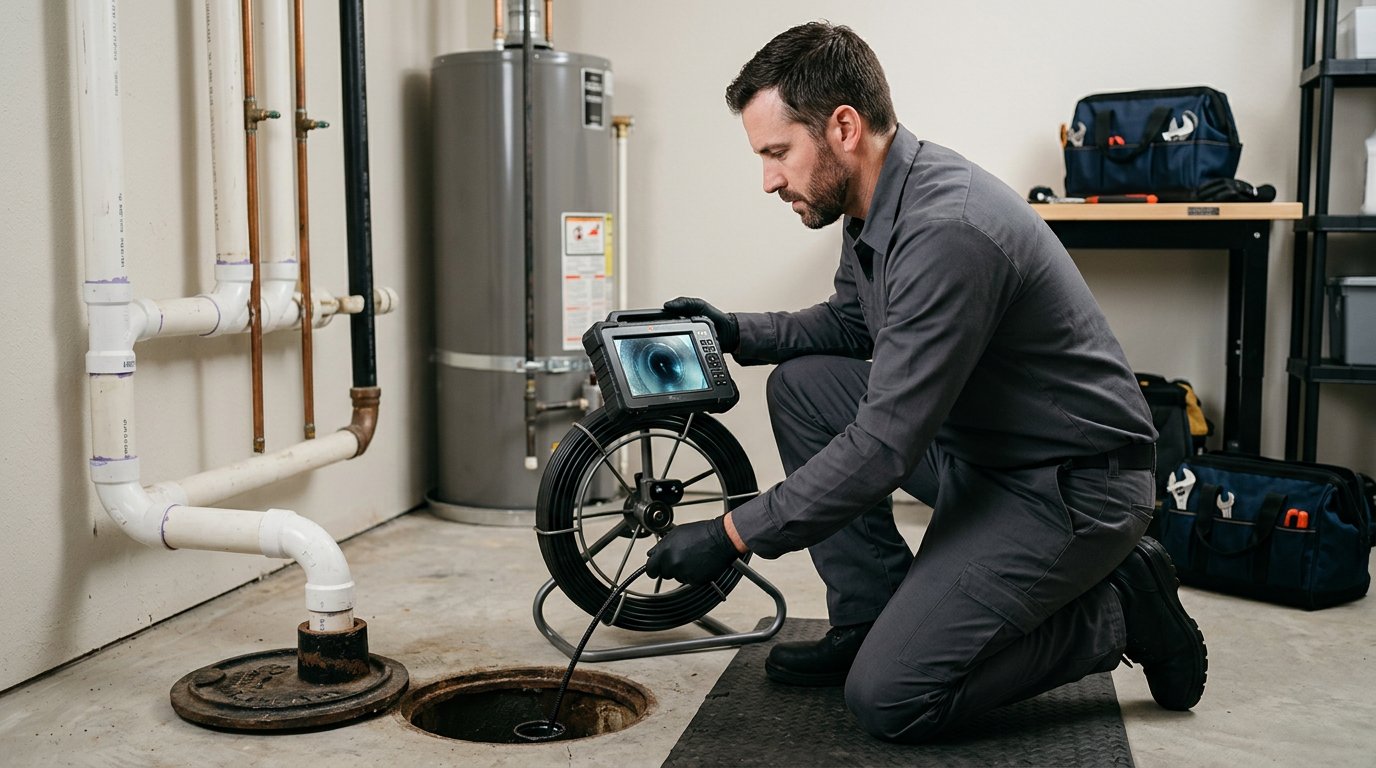
- High-Resolution Video Inspection: A specialized waterproof camera is fed into the drain line. This allows the technician to visually inspect the interior of the pipe, identifying the exact location, nature, and severity of the blockage. Industry data confirms that video pipe inspections identify the exact cause of a clog with 98% accuracy.
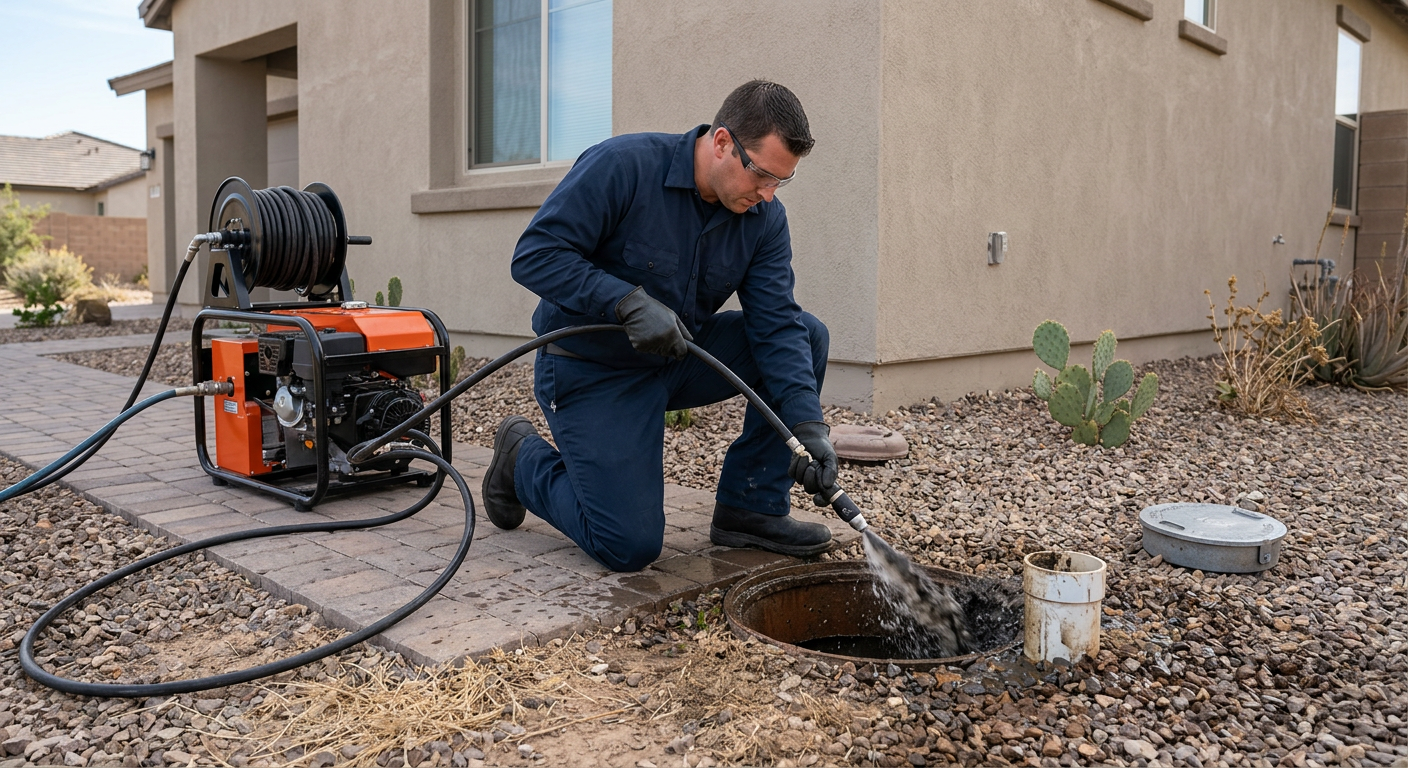
- Hydro-Jetting Remediation: Once the blockage is identified, the technician uses a hydro-jetting machine. This device blasts highly pressurized water (often exceeding 3,000 PSI) through a specialized nozzle. It slices through tree roots, obliterates grease blockages, and scours away hard water scale.
- Post-Cleaning Verification: A second camera inspection is performed to verify that the pipe has been restored to its original diameter and that no hidden structural damage exists.
“Hydro-jetting doesn’t just poke a hole through the clog; it restores the pipe’s interior to a like-new condition, which is absolutely critical for homes dealing with severe hard water scaling in the Southwest.”
— David Chen, Master Plumber and Director of Operations at National Pipe Solutions
The Environmental and Health Impacts of Chemical Drain Cleaners
When faced with a slow drain, many homeowners instinctively reach for a bottle of liquid drain cleaner. However, these caustic chemicals are highly destructive. The Environmental Protection Agency (EPA) warns that the sodium hydroxide and sulfuric acid found in these products can cause severe chemical burns to the skin and eyes.
Furthermore, these chemicals generate intense heat as they react with the blockage. This exothermic reaction can easily warp PVC pipes and accelerate corrosion in older cast-iron systems. In fact, chemical drain cleaners cause over $40 million in pipe damage annually in the United States. Beyond the physical damage to your home, these toxic chemicals eventually make their way into the municipal water treatment system. The Arizona Department of Environmental Quality (ADEQ) actively discourages the use of caustic drain cleaners to protect local groundwater reservoirs. Understanding the impact of plumbing on water quality at home is essential for responsible homeownership.
“Chemical cleaners are a temporary bandage that often causes permanent chemical burns to your PVC and older cast iron pipes. They are a liability, not a solution.”
— Dr. Sarah Jenkins, Materials Engineer at the American Plumbing Research Institute
Preventative Maintenance: Keeping Your Arizona Pipes Clear
The average lifespan of a residential sewer line in the desert Southwest is 40 to 60 years, provided it receives proper maintenance. Preventative care saves homeowners an average of $450 per year in emergency repair costs. To keep your drains flowing freely, implement the following best practices:
- Install Drain Catchers: Place mesh screens over all shower and tub drains to catch hair and soap scum before they enter the plumbing system.
- Manage Kitchen Waste: Never pour liquid grease, oil, or fat down the kitchen sink. Learn the proper techniques to safely dispose of grease. Additionally, avoid putting fibrous foods like celery, coffee grounds, or eggshells into the garbage disposal.
- Address Tree Roots Early: In Arizona, thirsty tree roots aggressively seek out the moisture inside your sewer lines. Once they breach a tiny crack, a massive blockage is inevitable. Tree root intrusion accounts for 55% of main sewer line blockages in older Arizona neighborhoods. Educate yourself on how tree roots can wreck your plumbing and schedule annual inspections if you have large trees near your sewer line.
- Schedule Annual Maintenance: Have a professional perform a preventative hydro-jetting service once a year to clear out accumulating scale and biological film.
Key Takeaways
- Persistent slow drains, foul odors, and gurgling noises are primary indicators that your plumbing system requires professional intervention.
- Arizona’s extremely hard water accelerates the formation of clogs by depositing calcium carbonate scale inside pipes, reducing flow capacity by up to 25%.
- Chemical drain cleaners are ineffective against solid blockages and cause millions of dollars in pipe damage annually; they should be strictly avoided.
- Professional hydro-jetting removes 99.9% of interior pipe sludge and scale, restoring pipes to a like-new condition safely and effectively.
- Over 30% of indoor water waste is linked to underlying drainage and pressure issues, making prompt repairs essential for water conservation in 2026.
Frequently Asked Questions (FAQ)
How often should I have my drains professionally cleaned?
For most residential homes in Arizona, scheduling a professional drain cleaning every 1 to 2 years is highly recommended. Homes with older plumbing, large trees near the sewer line, or exceptionally hard water may require annual maintenance to prevent severe blockages.
Can I use baking soda and vinegar instead of calling a plumber?
Baking soda and vinegar can be effective for minor, routine maintenance to keep drains smelling fresh. However, this mild chemical reaction is not powerful enough to break down solid obstructions, heavy grease buildups, or invasive tree roots.
What is the difference between snaking and hydro-jetting?
Snaking uses a metal cable to punch a hole through a clog or retrieve hair, which is effective for minor, localized blockages. Hydro-jetting uses high-pressure water to completely scour the interior walls of the pipe, removing scale, grease, and roots, providing a comprehensive cleaning.
Why does my sink smell like rotten eggs?
A rotten egg smell usually indicates the presence of hydrogen sulfide gas, which is produced by anaerobic bacteria feeding on decaying organic matter trapped in your drain. It can also occur if the water barrier in your P-trap has evaporated, allowing sewer gases to enter your home.
Will hard water permanently damage my pipes?
If left untreated, the mineral scale from hard water will continue to accumulate, severely restricting water flow and increasing internal pipe pressure. Over time, this can lead to premature pipe degradation, leaks, and the need for a complete home repiping.
Is it safe to use a plunger on a slow-draining sink?
Yes, using a standard cup plunger is generally safe and effective for minor sink clogs. Ensure you block the overflow drain with a wet cloth to create a proper vacuum seal before plunging.
Conclusion
Ignoring the early warning signs of a failing drain—from persistent “rotten egg” smells to those rhythmic, ominous gurgles—is a gamble that rarely pays off. In the unique Arizona climate, where extreme hard water scale acts as a magnet for debris and thirsty tree roots, a proactive approach is the only way to avoid a “plumb-astrophe.”
By moving beyond temporary DIY fixes and opting for professional Drain Cleaning Phoenix, you aren’t just clearing a path for water; you’re scouring away years of mineral buildup and protecting your home from the long-term damage caused by caustic chemicals. Keep your pipes flowing freely and your mind at ease by addressing these symptoms before they turn into emergencies.
Get Professional Help from Rapid Fire Plumbing
Contact Rapid Fire Plumbing at 623-810-6166 for expert drain cleaning services in Phoenix and surrounding areas. Whether you need professional hydro-jetting, video camera inspections, or stubborn clog removal, our experienced plumbers deliver quality solutions with transparent pricing and customer satisfaction guaranteed.
