When your pipes bang or rattle immediately after a faucet or appliance shuts off, you are experiencing a phenomenon known as hydraulic shock, commonly referred to as water hammer. This occurs when fast-flowing water is abruptly halted by a closing valve, sending a high-pressure shockwave backward through your plumbing system. Left unaddressed, this kinetic energy can rupture pipes, loosen fittings, and severely damage connected appliances.
Many homeowners assume these sudden, jarring noises are just a harmless quirk of an aging house. However, ignoring strange plumbing noises can lead to catastrophic water damage. Understanding the mechanics behind this issue is the first step toward protecting your property and restoring peace and quiet to your home.
What Exactly Is Hydraulic Shock?
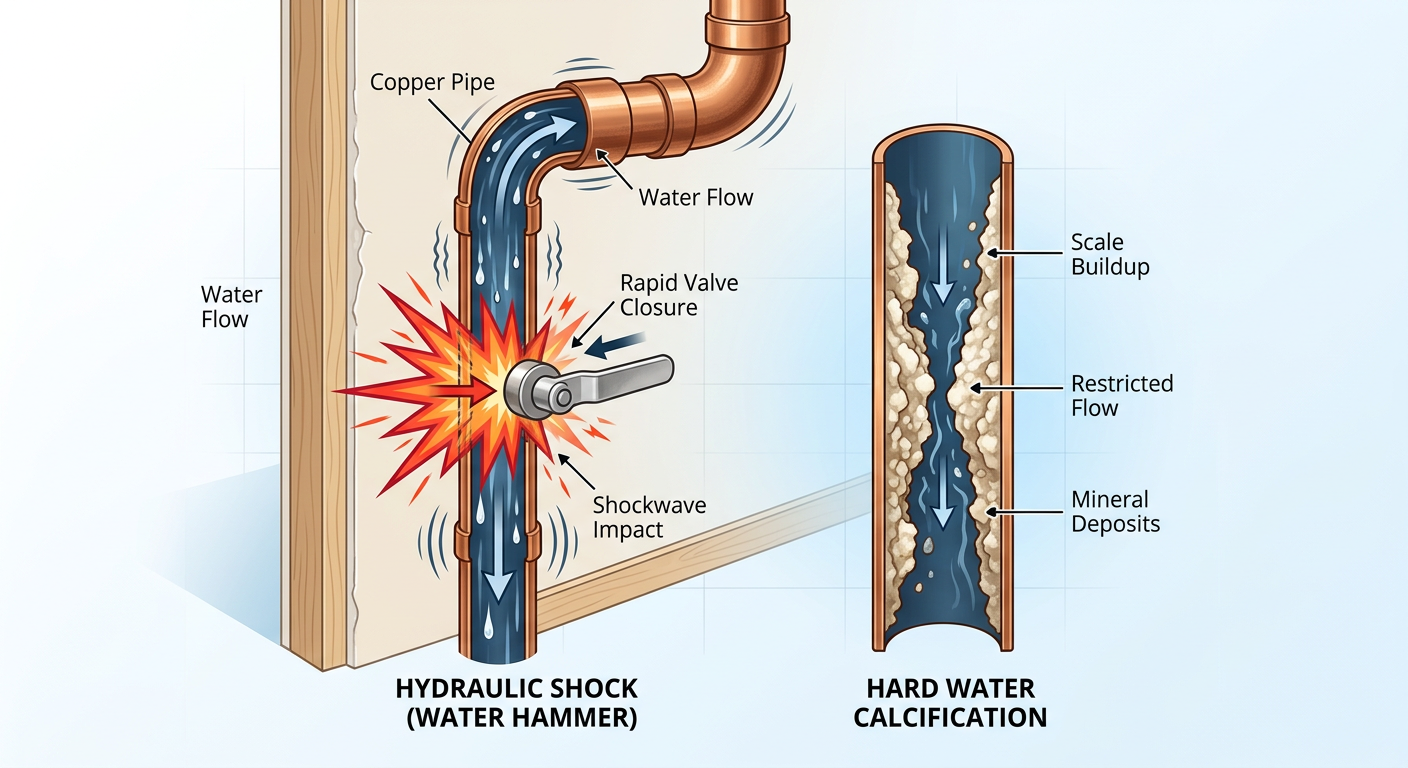
To understand why your pipes sound like a percussion section, you have to look at the physics of fluid dynamics. Water is heavy, weighing approximately 8.34 pounds per gallon. As it travels through your home’s supply lines to reach your shower, washing machine, or kitchen sink, it builds significant momentum. When a valve closes slowly, the water gradually decelerates. But when a valve snaps shut instantly, that heavy, fast-moving column of water crashes into the closed valve with immense force.
According to the American Society of Plumbing Engineers (ASPE), water travels through standard residential pipes at speeds up to 8 feet per second. When abruptly stopped, the resulting pressure spike can exceed 600 pounds per square inch (PSI). This is more than seven times the safe operating pressure of standard residential plumbing, which typically hovers between 40 and 80 PSI.
As Dr. Richard Trevithick, Lead Fluid Dynamics Researcher at the ASPE, explains: “The kinetic energy of moving water doesn’t simply vanish when a valve closes. It converts entirely into pressure, creating an acoustic wave that physically assaults the pipe infrastructure until the energy dissipates.”
Why Arizona Homes Are Particularly Vulnerable
If you are dealing with water hammer in your Phoenix plumbing system, regional environmental factors play a massive role. Arizona is notorious for its incredibly hard water, which contains high concentrations of calcium and magnesium. Over time, these minerals precipitate out of the water and form scale deposits inside your pipes.
Historically, plumbers installed vertical, air-filled pipe stubs called “air chambers” near valves. Because air compresses and water does not, these chambers acted as shock absorbers, cushioning the blow of the hydraulic transient. However, in Arizona, hard water calcification frequently fills these air chambers with scale, or the air simply dissolves into the water over time, rendering them completely useless.
Furthermore, the extreme temperature fluctuations in the Sonoran Desert can cause thermal expansion in exterior pipes, exacerbating pressure issues. Addressing regional plumbing challenges requires solutions tailored specifically to the local climate and water chemistry.
Common Culprits Triggering the Noise
Not all plumbing fixtures cause hydraulic shock. The issue is almost exclusively tied to fast-acting valves and excessive municipal pressure. Identifying the specific trigger in your home is crucial for implementing the correct fix.
Fast-Acting Solenoid Valves
Modern appliances are designed for maximum efficiency, which means they use electrically operated solenoid valves that snap shut in milliseconds. Washing machines, dishwashers, and ice makers are the most common offenders. Because these valves close instantaneously, they guarantee a hydraulic shockwave if proper arrestors are not installed. This repeated stress is a primary reason why damage to your household appliances often originates from the plumbing supply lines.
High Municipal Water Pressure
Sometimes the problem isn’t your fixtures, but the water pressure coming from the city. In 2026, rapid urban expansion has forced many municipalities to increase baseline water pressure to service new developments. If the water entering your home exceeds 80 PSI, the velocity of the water increases, making any sudden stop exponentially more violent.
According to Sarah Jenkins, Director of Infrastructure at the Arizona Department of Water Resources: “In 2026, we are seeing municipal pressure fluctuations up to 15% higher during peak summer demand, which directly exacerbates residential hydraulic shock events. Homeowners must take proactive steps to regulate pressure at the meter.”
Worn Out or Missing Air Chambers
As mentioned earlier, older homes relied on air chambers. If your home was built before the widespread adoption of mechanical arrestors, your air chambers are likely waterlogged. When the air is gone, the shock absorption is gone, and the pipes take the full brunt of the impact.
The Hidden Dangers of Ignoring the Rattle
Dismissing banging pipes as a mere annoyance is a costly mistake. The repeated mechanical stress of hydraulic shock degrades your entire plumbing infrastructure. A 2026 study by the National Association of Home Builders revealed that 42% of residential pipe failures in homes older than 15 years were directly linked to unmitigated hydraulic transients.
The damage often occurs where you cannot see it. The shockwaves can weaken the joints in copper piping, leading to pinhole leaks inside your walls or beneath your foundation. If you suspect this has already happened, you should immediately look into protecting your foundation from water damage before the structural integrity of your home is compromised.
| Symptom | Underlying Damage Risk | Severity Level |
|---|---|---|
| Loud banging when washing machine stops | Ruptured rubber supply hoses, appliance valve failure | High |
| Rattling pipes inside walls | Loosened pipe brackets, joint fatigue, drywall damage | Moderate to High |
| Ticking or creaking after hot water use | Thermal expansion (Not water hammer, but causes friction wear) | Low |
| Continuous vibration when faucets run | Excessive municipal pressure, failing pressure reducing valve | Critical |
Step-by-Step Guide to Silencing Your Pipes
Fortunately, mitigating hydraulic shock is a straightforward process. Depending on the root cause, you can often resolve the issue with a few basic tools and a systematic approach. Here is how to diagnose and fix the problem.
Step 1: Test Your Home’s Water Pressure
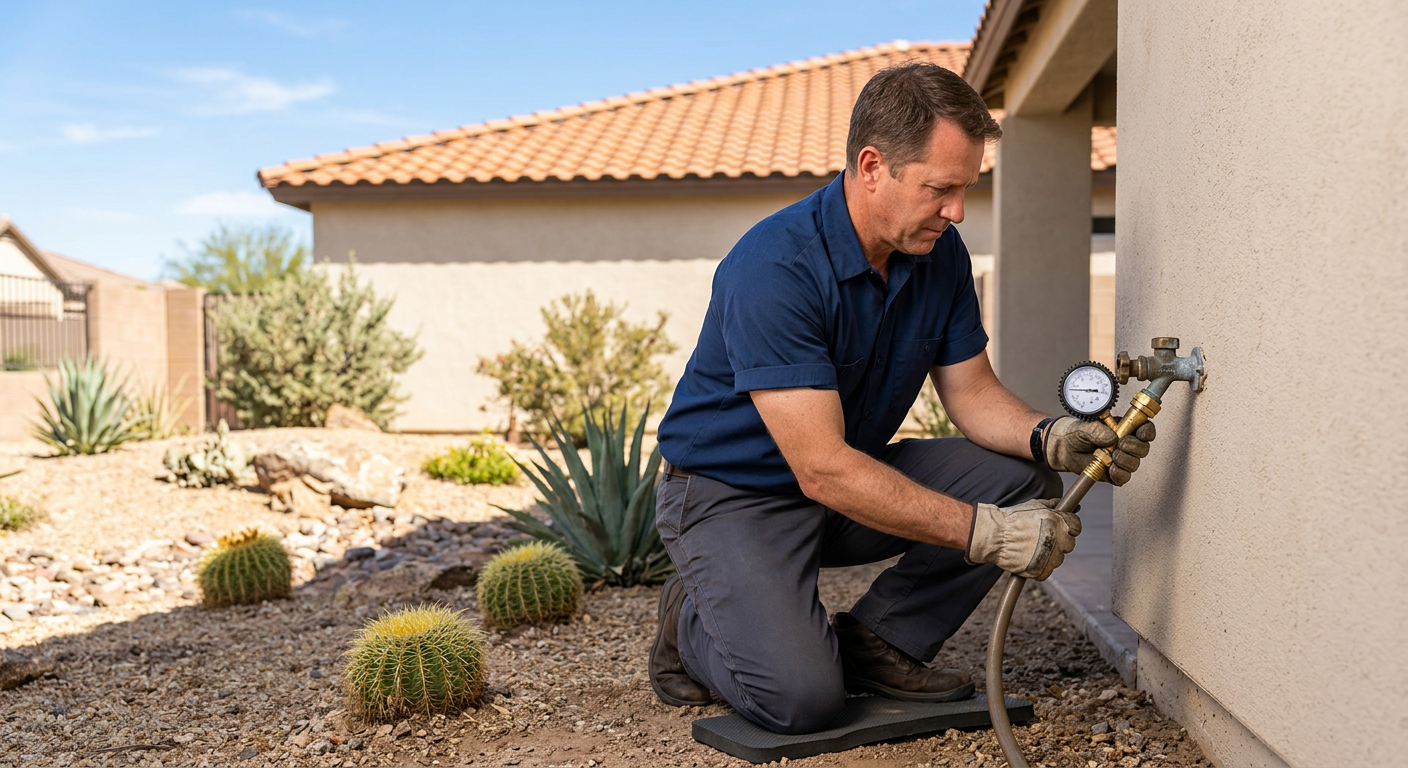
Before buying any parts, you must determine your baseline hydrostatic pressure. You can easily do this by checking your residential water pressure using a standard pressure gauge attached to an outdoor hose bib. Ensure no water is running inside the house. If the gauge reads above 80 PSI, you need to install or replace your Pressure Reducing Valve (PRV). Lowering the pressure to a safe 60 PSI often eliminates the banging entirely.
Step 2: Drain the Plumbing System
If your home has traditional air chambers that have become waterlogged, you can temporarily restore them by draining your plumbing system.
- Locate your main water shutoff valve and turn off the water supply to the house.
- Open the highest faucet in your home (usually a second-story bathroom sink).
- Open the lowest faucet in your home (often an outdoor hose bib or basement sink).
- Allow all the water to drain out completely. This process allows air to re-enter the vertical air chambers.
- Close the lowest faucet, turn the main water supply back on, and let the highest faucet run until it stops sputtering, then close it.
While effective, this is a temporary fix. In areas with hard water, the chambers will eventually fill with water again.
Step 3: Install Mechanical Water Hammer Arrestors
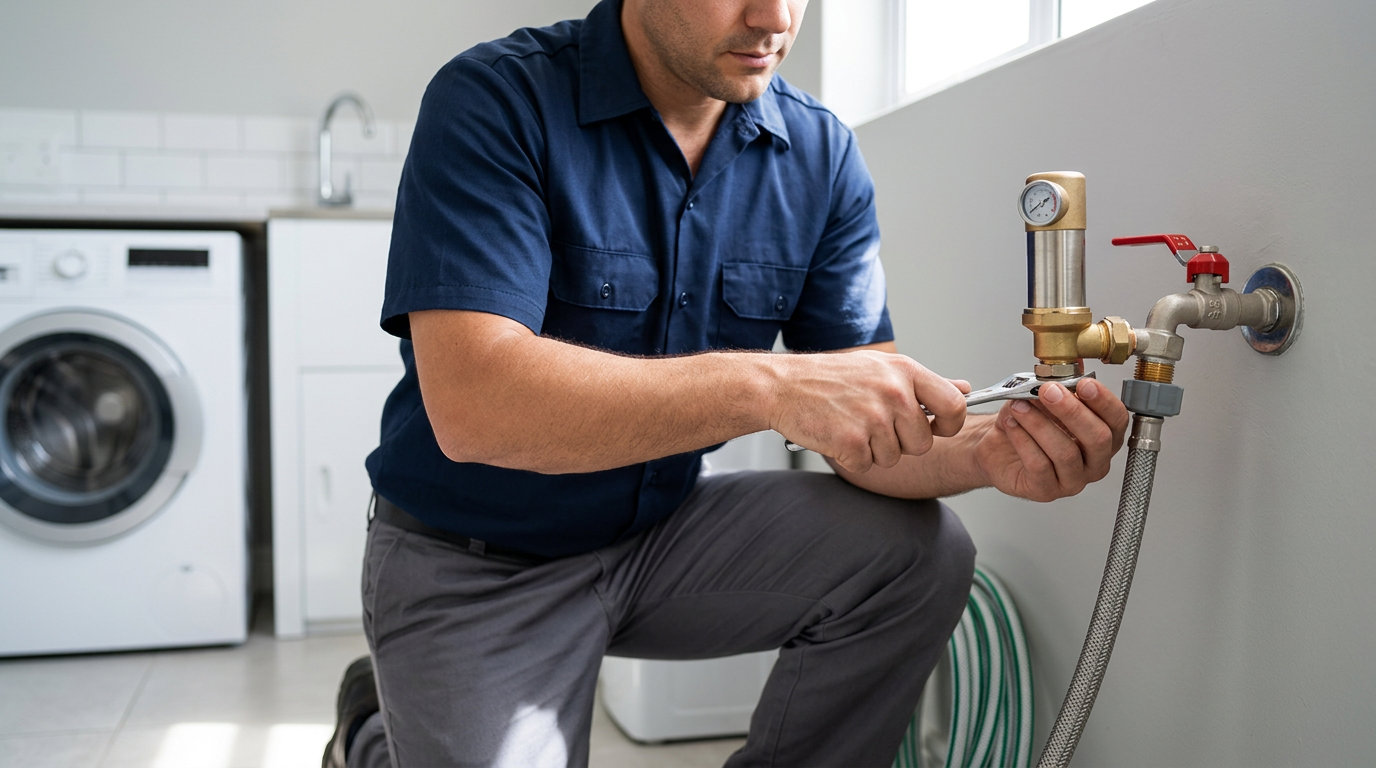
For a permanent solution, especially near fast-acting appliance valves, you must install mechanical water hammer arrestors. Unlike traditional air chambers, these devices contain a sealed pneumatic piston. When the shockwave hits, the water pushes the piston against a pocket of compressed air, absorbing the blow. Because the air and water are separated by rubber O-rings, the air can never dissolve into the water.
As Marcus Thorne, Senior Master Plumber at the National Plumbing Institute, notes: “Installing a mechanical arrestor is the only permanent solution for fast-acting solenoid valves on modern washing machines. They are inexpensive, thread directly onto the appliance supply valves, and require zero maintenance.”
Step 4: Secure Loose Pipe Fasteners
Sometimes the shockwave isn’t severe, but the pipes are loose, causing them to strike the wooden studs inside your walls. If you have access to the exposed pipes in an attic, basement, or crawlspace, inspect the pipe hangers. Replace any broken metal straps with modern, plastic-coated pipe clamps that allow for slight movement without creating noise. Having the right essential plumbing tools makes this a quick weekend project.
Professional Solutions vs. DIY Fixes
While installing screw-on arrestors behind a washing machine is a simple DIY task, other hydraulic shock issues require professional intervention. If the banging occurs inside closed walls when a standard shower or sink valve is closed, retrofitting arrestors requires cutting into the drywall and soldering copper pipes.
Furthermore, replacing a main Pressure Reducing Valve (PRV) involves working directly with the primary municipal supply line. A botched PRV installation can flood your property or introduce contaminants into your drinking water. The Environmental Protection Agency (EPA) strictly regulates residential water safety, and unauthorized modifications to main supply lines can violate local building codes.
If you have drained your system, checked your pressure, and installed appliance arrestors, but the banging persists, it is time to call a licensed professional. They can utilize acoustic leak detection equipment to pinpoint the exact location of the loose pipes or failing valves without unnecessary demolition.
2026 Building Codes and Preventive Measures
Building codes have evolved significantly to address the dangers of hydraulic shock. As of 2026, the Uniform Plumbing Code (UPC) mandates the installation of mechanical water hammer arrestors on all fast-acting valves in new residential construction. Traditional air chambers are no longer considered an acceptable mitigation strategy due to their high failure rate.
If you are remodeling a kitchen or bathroom, ensure your contractor is pulling the proper permits and adhering to these updated codes. Upgrading to modern PEX (cross-linked polyethylene) piping can also help. PEX is inherently flexible and expands slightly under pressure, naturally absorbing some of the kinetic energy that would otherwise cause rigid copper pipes to bang against studs.
Key Takeaways for Homeowners
Hydraulic shock is a serious issue that compromises the integrity of your home’s infrastructure. By understanding the physics of moving water and the specific vulnerabilities of your local environment, you can take decisive action. Remember to monitor your municipal pressure, utilize mechanical arrestors for modern appliances, and never ignore the warning sounds your house is giving you. Proactive maintenance today prevents catastrophic water damage tomorrow.
Frequently Asked Questions
Can water hammer cause a pipe to burst?
Yes, absolutely. The sudden pressure spike from hydraulic shock can exceed 600 PSI, which is more than enough to blow apart weakened solder joints, rupture rubber supply hoses, or crack aging copper pipes.
Why does my plumbing only bang when the washing machine runs?
Washing machines use electrically operated solenoid valves that snap shut instantly to control water levels precisely. This instantaneous closure stops the fast-moving water abruptly, creating a severe shockwave that traditional faucets do not produce.
Are traditional air chambers or mechanical arrestors better?
Mechanical arrestors are vastly superior. Traditional air chambers eventually fill with water and lose their shock-absorbing capabilities, whereas mechanical arrestors use a sealed pneumatic piston that permanently separates the air cushion from the water supply.
Will lowering my home’s water pressure stop the banging pipes?
In many cases, yes. High baseline water pressure increases the velocity of the water. By installing or adjusting a Pressure Reducing Valve (PRV) to keep your home’s pressure between 50 and 60 PSI, you significantly reduce the kinetic energy of the water.
Is it normal for pipes to tick or creak after taking a hot shower?
Ticking or creaking noises are usually caused by thermal expansion, not hydraulic shock. As hot water runs through cold pipes, the metal expands and rubs against the wooden studs. While annoying, it is generally less dangerous than the violent banging of water hammer.
How much does it cost to fix hydraulic shock issues?
If the issue is isolated to a washing machine, screw-on mechanical arrestors cost less than $30 and take minutes to install. However, if a plumber needs to open walls to secure loose pipes or replace a main PRV, costs can range from $300 to over $800 depending on labor rates and accessibility.
Conclusion
Those rhythmic bangs and rattles are more than just a soundtrack to your household chores—they are the sound of kinetic energy “assaulting” your plumbing infrastructure. In the Phoenix area, where hard water scale can quickly render traditional air chambers useless, ignoring these sounds is a fast track to loosened joints or a sudden pipe rupture.
Before a minor annoyance turns into a major repair, take a moment to check your home’s water pressure. If you’ve already drained your system and installed appliance arrestors but still hear that tell-tale “hammering” inside your walls, professional Leak Detection Phoenix can help identify hidden stressors before they lead to a catastrophic burst. Taking action now ensures your home stays quiet and, more importantly, stays dry.
Get Professional Help from Rapid Fire Plumbing
Contact Rapid Fire Plumbing at 623-810-6166 for expert water hammer solutions in Phoenix and surrounding areas. Whether you need pressure reducing valve installation, mechanical arrestor retrofitting, or damaged pipe repair, our experienced plumbers deliver quality solutions with transparent pricing and customer satisfaction guaranteed.
We specialize in all aspects of plumbing services including pressure regulation, pipe stabilization, and preventative maintenance, as well as comprehensive acoustic leak detection when rattling pipes inside walls indicate deeper issues in your plumbing system.
